Before Eighteen: What Egyptian Law Says About Child Marriage, and Why Children Pay for an Unregistered Contract
Egypt's constitution defines a child as anyone under eighteen, and the law bars registering that child's marriage. But the ban targets registration, not the marriage itself, so it slips into an informal 'orfi' arrangement, and the losses begin the moment the newborn needs a first document. On the International Day of the Girl Child, we lay out the texts and numbers as they stand, and why a school seat still outweighs any sermon.
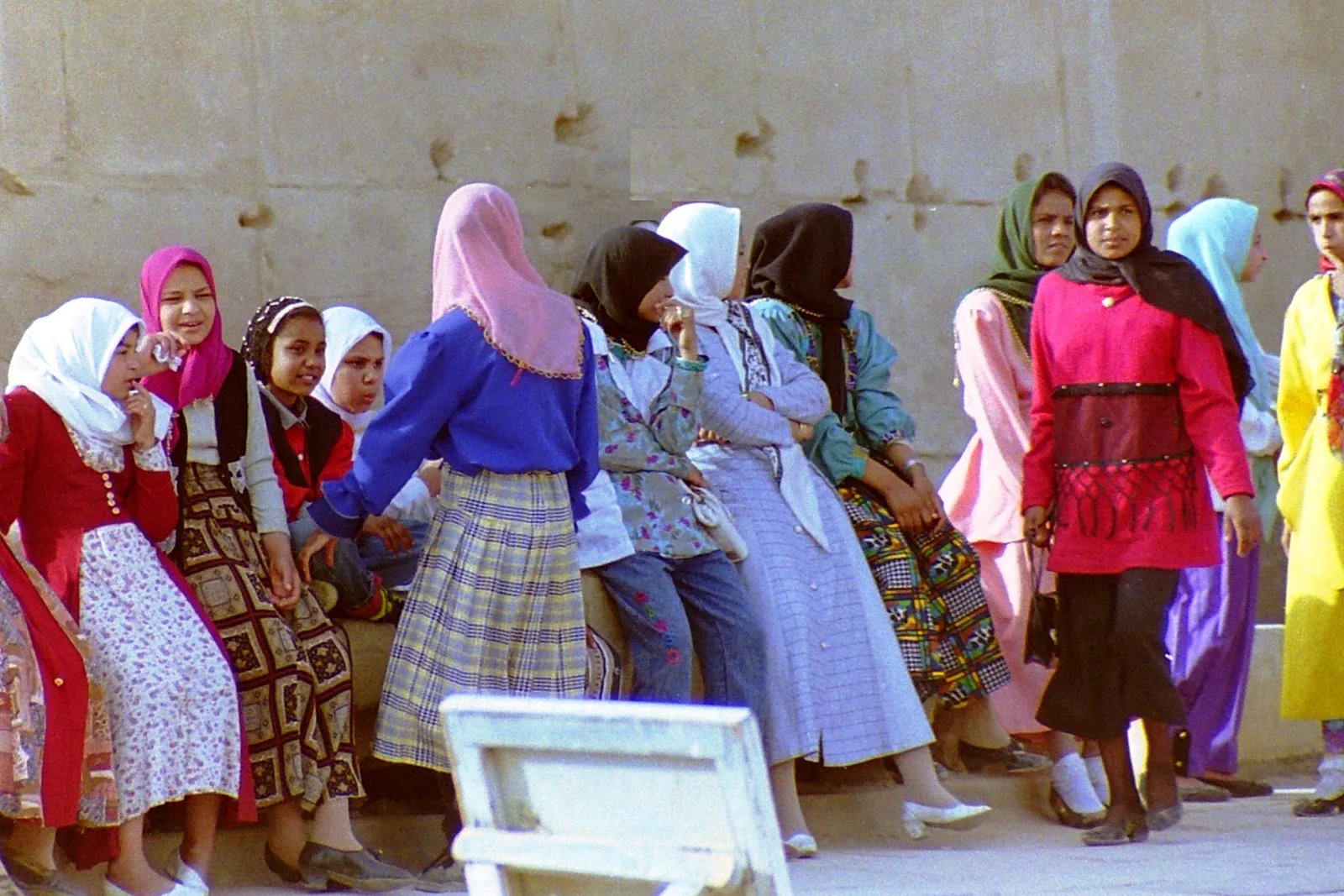
At a preparatory school on the outskirts of a small district, a homeroom teacher checks the November attendance sheet and finds a third-year seat that has been empty for two weeks. He asks, and gets the answer he has heard more than once before: 'The girl got engaged.' No one is lying to him; in everyday usage the word 'engagement' is elastic enough to stretch over what comes after it, and to conceal it. The school year runs its course with the seat still empty, as if no one had ever sat there — a scene that repeats itself in cities as much as in villages, though at different rates.
Two years on, the scene changes but the story does not. That same girl, now a mother at seventeen, stands with her family at a health office seeking a document for her child. The clerk is not stalling; he is simply asking for an official paper the family does not have, because the marriage was never registered in the first place — it was written up 'orfi,' informally, on a sheet of paper before two witnesses. This is where a case begins that can drag on for years before the family court, to establish the child's paternity — and the price is paid by a child who had no part in the decision.
We write this on October 11, the International Day of the Girl Child, established by the United Nations General Assembly under Resolution 66/170, adopted on December 19, 2011. It was first observed on October 11, 2012, with its inaugural theme devoted to ending child marriage under the slogan 'My Life, My Right: End Child Marriage,' and the issue has stayed at the center of the day ever since. The question worth asking calmly is this: what exactly is the Egyptian legal rule, as written in the constitution and the laws in force?
The starting point is the constitution. Article 80 states that 'anyone who has not reached the age of eighteen is considered a child,' and grants that child — among other rights the same article lists — the right to a name and identification papers, to free compulsory vaccination, to health and family care, and to safe shelter. The text leaves no room for interpretation on the definition of a child: eighteen years is the threshold, for both sexes. Note that the right to 'a name and identification papers' comes at the head of the article — precisely the right that stumbles first when the contract is never registered.
The operative rule sits in the Civil Status Law No. 143 of 1994, Article 31 bis, added by Law No. 126 of 2008 amending the Child Law No. 12 of 1996, published in the Official Gazette, Issue 24 bis, on June 15, 2008. The text's effect is that no marriage contract may be registered for a person of either sex who has not reached eighteen full Gregorian years, and that registration requires a medical examination of both parties wishing to marry, to confirm they are free of any disease affecting their health or that of their offspring, with both notified of the result.
Precision matters here. Under these provisions, the law bars 'registration' for those under eighteen; it does not, on its own, directly criminalize the marriage as such, so the blanket claim that 'marrying a minor is a crime punishable by law' is not accurate. But the door is not wide open either: Article 227 of the Penal Code punishes anyone who, before the competent authority, makes statements they know to be false, or submits false documents, for the purpose of proving that one of the spouses has reached the legally required age, whenever the contract was concluded on that basis; the same article sets an independent penalty for whoever the law has authorized to conclude the contract, if that official knows one of the two parties has not reached the required age.
The Cabinet approved a draft law banning child marriage with harsher penalties back in 2022, and in April 2026 the Speaker of the House of Representatives referred to the relevant committees several draft laws submitted by MPs to criminalize marrying off anyone under eighteen and to extend liability to anyone who takes part in it or facilitates it. To the best of our knowledge, as of this writing no law in force yet criminalizes this independently, and what is being discussed remains at the bill stage, not in force. Should new legislation be enacted, the picture will change, and readers should verify its publication date in the Official Gazette.
So what actually happens? When the registration route is closed, the marriage does not stop in many cases — it simply slides into an informal paper. Here the law is explicit: Article 17 of Law No. 1 of 2000 states that lawsuits arising from a marriage contract are not admissible upon denial unless the marriage is established by an official document, and are not admissible at all if the wife's age is under sixteen or the husband's under eighteen at the time the case is filed, with the sole exception of a suit for divorce or annulment, which is admissible if the marriage is established by any form of writing. In other words, the informal paper leaves the exit door ajar and shuts every other one, so alimony and financial rights become contested the moment either party denies the marriage.
When a child is born, the harm carries forward a full generation, but the practical facts here matter more than alarm: the law does not leave the newborn without paper until a court ruling is issued. Article 15 of the Child Law, as amended in 2008, makes the child's mother one of those required to report the birth, and allows her to register her newborn in the birth registers and obtain a birth certificate bearing her own name, on the condition that this certificate is relied on for nothing beyond proving the fact of birth. In other words, the child gets its first document, while the paternity record stays pending until the court rules.
In practice, for anyone facing this today, the path is not closed, even if it is long: a paternity-affirmation case is filed before the competent family court, and the civil registration is then completed based on the ruling. Families are entitled to seek legal aid from the courts' legal aid offices, from the National Council for Women's complaints office on 15115, or from the Child Helpline run by the National Council for Childhood and Motherhood on 16000. Because procedures vary from case to case, it is best to consult a specialized body early on.
There is also a health dimension that cannot be ignored, one the legislator itself acknowledged by tying registration to a medical exam. According to the World Health Organization, mothers aged 10 to 19 face a higher risk of pre-eclampsia, puerperal endometritis, and systemic infections compared with women aged 20 to 24, and their newborns are at greater risk of low birth weight, premature birth, and severe neonatal conditions. A girl who marries early is also generally less able to seek healthcare on her own.
But the picture is not all bleak, and that matters. According to 2021 data published on the Global Database on Child Marriage, 16% of women aged 20–24 in Egypt married before turning eighteen, and 2% before turning fifteen, compared with 27.3% in 1996 data. In other words, a quarter-century cut the rate by more than a third: from roughly a quarter of women to roughly a sixth. That is a real decline worth stating, because it means the trend can be reversed through policy — it is not some fixed social fate.
The breakdown of the numbers matters more than the totals. The rural-urban gap is clear in the same data: 20.6% in rural areas against 8.7% in urban ones. The breakdown by education breaks the common assumption: 31.5% among women with no schooling, 36.4% among those with only primary education — the highest share of all — and 13.7% among those with secondary education or above. In other words, it is not a straight line where less schooling simply means more early marriage; the real drop happens once girls reach secondary school and stay there.
This point alone reorders the priorities. The issue is not a sermon aimed at a family unfairly labeled 'backward' — families weigh the cost of transport and the distance of the secondary school from the village, and decide under real economic pressure — the issue is making it possible, and affordable, for a girl to stay in education past the preparatory stage. UNICEF's 2025 annual report on Egypt points to roughly 1.4 million children out of school, and to secondary enrollment falling to 69% among the poorest families against 87% among the richest. So ask about the absent student before her name is struck off the roll, look for a transport solution or a transfer to a closer school before dropout becomes a fact, and know that waiting until eighteen means a registered contract, enforceable rights, and a child with complete papers. The empty seat in the third year of preparatory school is not a footnote in an attendance sheet; it is the first page in a long file, and the easiest moment at which everything that follows could still be stopped.
Related Stories

Before the Katb el-Kitab: The Medical Certificate the Law Demands, What It Reveals, and Why It Cannot Stop a Marriage
A compulsory medical test before Egypt's marriage-contract registration, the katb el-kitab, ends in a certificate with a QR code that the ma'zoun or church authority requires. What does it detect, what does it cost, where is it done, and why does it matter so much in Egypt? Above all: why can its result never prevent a marriage? A calm guide for every engaged couple worried about "what if they find something in me?"
September 12, 2026 · 9 min read

A Two-Week Plan to Reset Kids' Sleep Before the September 12 School Bell
With Egypt's school year starting September 12, sleep specialists advise shifting children's bedtime and wake-up earlier by 15-20 minutes a night, starting now rather than the night before. Here is the plan, and the recommended hours for every age.
August 23, 2026 · 6 min read

'That's Wrong': Harassment Isn't 'Flirting' — Two Years or a 100,000-Pound Fine for Words, Five for Coercion
A word thrown on the street that the man who says it calls a 'joke,' and a longer route a mother makes her daughter take because it feels 'safer.' In 'That's Wrong,' we hold the behavior up against Law 141 of 2021, without exaggeration or minimization: two to four years in prison or a 100,000-pound fine for words and gestures, five years or more for sexual coercion. And we ask about the third party — the one who hears and does nothing.
October 10, 2026 · 8 min read