Know Your Rights: An Alimony Judgment in Hand but No One Pays? The Route Egyptian Law Sets Through Nasser Social Bank
A court judgment for alimony in hand, and not a pound arrives. Egyptian law in force as of this writing sets a second route alongside ordinary enforcement: Nasser Social Bank pays court-ordered support to those entitled to it, then recovers the money from the debtor. We trace the path from the family dispute settlement office to wage deductions, and flag a bill before the House of Representatives at the time of writing that may redraw it.
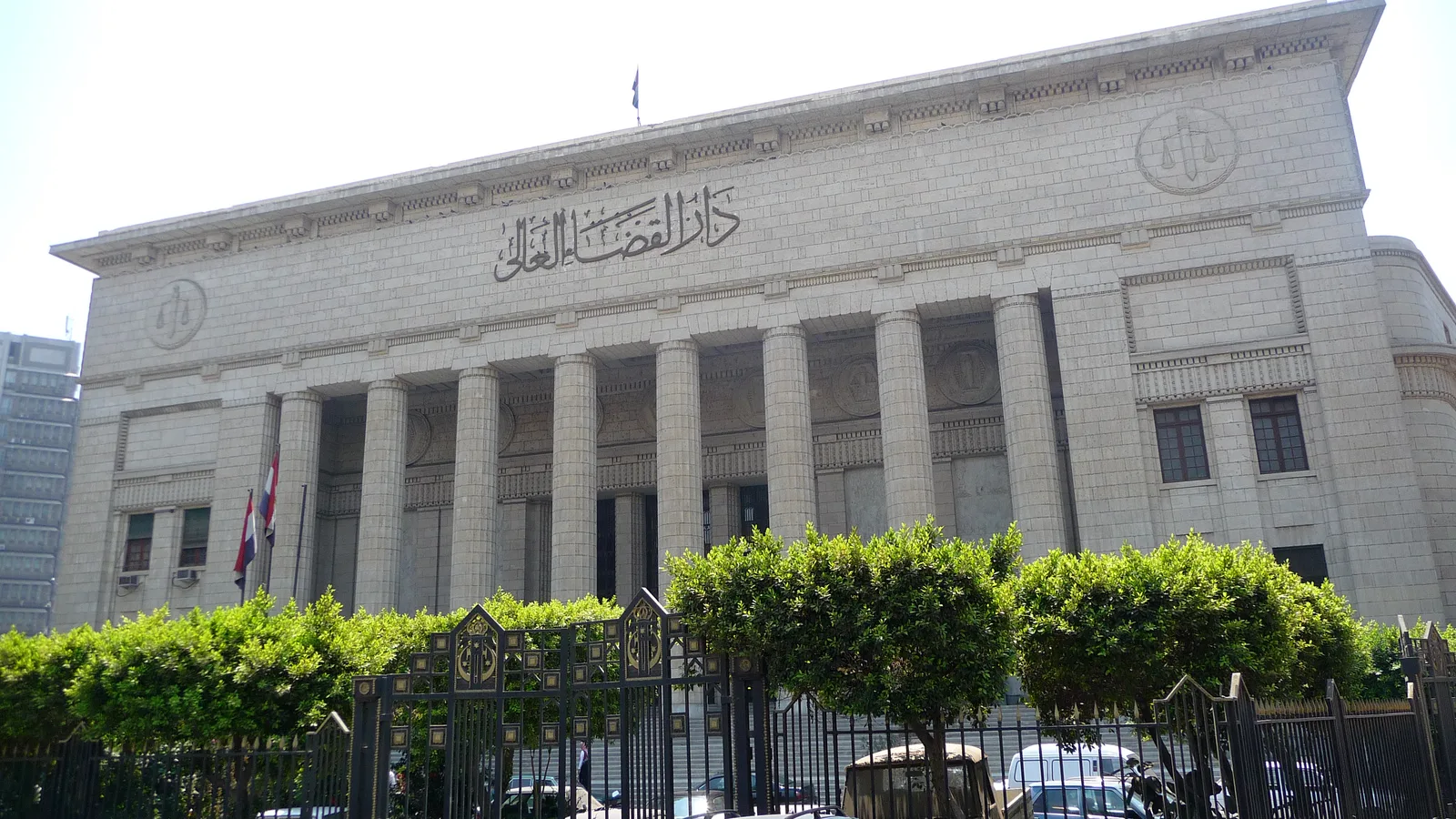
A scene familiar to many plays out every working day in the corridors of Egypt’s family courts: a person carrying an enforcement copy of an alimony judgment in a plastic bag, going from the clerks’ office to the bailiff to the police station, and heading home at the end of the day without a single pound. The person owed may be a wife or a divorced woman, children of school age, or elderly parents whom a court has awarded support from their son. The judgment is enforceable, and the problem lies not in the right itself but in collecting on it. This article is about that gap: from the moment the judgment is in your hand to the moment the money arrives.
Egyptian law has not left this door shut. Alongside the ordinary methods of enforcement, another route was written into Law No. 1 of 2000 on the Organization of Certain Conditions and Procedures of Litigation in Personal Status Matters, which is the law in force as of this writing: Nasser Social Bank pays court-ordered alimony and allowances to those entitled to them, then recovers from the judgment debtor for what it paid, under rules issued by decision of the justice minister with the approval of the minister responsible for social insurance. Those regulatory decisions are the practical reference and may change. What you read here is general guidance, not legal advice: it will not state any deduction percentage, any ceiling on amounts or any prison term, and for whatever changes by regulatory decision we refer you to the bank’s branch and official website, and to a lawyer.
The route begins before the judgment, not after it. The Family Courts Law, Law No. 10 of 2004, published, according to the legislation-publishing portals, in Issue 12 (supplement A) on March 18, 2004, and in effect since October 1, 2004, created under Article 5 one or more family dispute settlement offices within the jurisdiction of each summary court. These offices are attached to the Ministry of Justice and staffed by legal, social and psychological specialists. The office’s task is set out in the second paragraph of Article 6: its panel meets the parties and hears them, makes them aware of the effects of the dispute and the consequences of persisting in it, and seeks to settle it amicably. The law has been amended since it was issued; the latest amendment published for it, in December 2017, did not touch the articles cited here, according to those portals. The authoritative text in force is the one in the Official Gazette.
Two practical details apply to this office. First, applying to it is free of charge, under Article 7. Second, Article 8 requires the settlement process to conclude within 15 days of the application, a period that may be exceeded only by agreement of the parties. If a settlement is reached, the head of the office records it in minutes signed by the parties, and those minutes carry the force of an enforceable instrument. In other words, an amicable agreement on alimony does not remain a spoken promise but becomes a paper that can be enforced. If the efforts fail, the file is sent, along with the specialists’ reports, to the family court.
This stage has a decisive procedural effect. Article 9 provides that a lawsuit filed directly with the family courts, in matters where reconciliation is permissible, is inadmissible unless a settlement request was submitted first, though it allows the court to order the case referred to the office instead of ruling it inadmissible. However, Article 6 expressly exempts cases in which reconciliation is not permitted, urgent cases, enforcement disputes and interim orders. That exemption matters for anyone who comes to the court in an urgent situation or who is already at the stage of enforcing a judgment, so that they are not sent to a settlement office where none is required.
The law contains two features that ease the financial and geographic burden. Article 3 of the Family Courts Law provides that, before these courts, the rule of Article 3 of the 2000 law applies to the exemption of alimony cases and their equivalents, including actions to jail a judgment debtor who refuses to comply, and that rule exempts them from fees at every stage of litigation. Article 12 provides that the family court competent to hear the first case filed by either spouse has exclusive jurisdiction over all later cases brought by either of them. That means your file is not scattered among several courts but gathered before a single one.
If the judgment is in your hand and the debtor has not complied, the other route comes into play, as the law in force as of this writing lays it out. The backbone of a request to Nasser Social Bank is an enforceable alimony judgment or order that has been properly served, together with the particulars of the person against whom it is to be enforced. The list of documents and the deadlines for applying and for disbursement are matters that change by regulatory decision, and readers should not take them from an article; the reference is the bank branch in the district where you live and its official website.
The collection mechanism is the heart of this route. If the debtor receives a salary, wages or a pension, the body that pays him deducts the amount and remits it at the bank’s request, within the limits the law allows for attachment. Here we owe readers candor: the law has a schedule fixing the maximum that may be deducted to satisfy an alimony debt, which varies with the number and status of the beneficiaries, and it sets an overall ceiling that may never be exceeded and that is divided among the beneficiaries in proportion to what each is owed. Readers should not take that schedule from an article, because what applies to your situation is determined by the text before the court; for that, consult a lawyer and the bank branch.
Two warnings cannot be skipped. The first is that what the bank pays out is bound by rules and limits, and does not necessarily mean the full value of the judgment is paid. The second, and the more important for the other party, is that the bank’s payment of alimony neither extinguishes the original debt nor discharges the debtor: the bank pays, then comes back to him for what it paid. This route is therefore not a release from the obligation but a mechanism to ensure that a family does not go hungry while waiting out a dispute that may drag on.
Behind this disbursement stands an institution: the Family Insurance System Fund, created by Law No. 11 of 2004 and attached to Nasser Social Bank. Its aim is to protect the family against the risk of the person obliged to pay alimony failing to do so, and it pays wives, children or parents who hold interim or final judgments. In a report published by Al-Ahram Gate on December 12, 2024, on a meeting of the fund’s board after its reconstitution, it was stated that the fund pays out about EGP 92 million a month, and that total disbursements since its founding in 2004 through June 30, 2024 amounted to about EGP 8 billion. The two figures are given with their date and source as they appeared in that statement; they are neither today’s numbers nor a published official statistic.
If the debtor keeps refusing despite being able to pay, the law has other tools, which readers can understand in outline rather than by number. One is the action to jail a debtor who refuses to comply with an alimony judgment, which falls within the jurisdiction of the family courts. Another is a separate offense in the Penal Code, applying to anyone against whom an enforceable judgment for alimony or an allowance has been issued and who, despite being able to pay, refuses to do so for three months after being formally notified to pay; the case may be set in motion only on a complaint or request from the person concerned, so anyone who goes to the authorities two weeks after the warning has filed too early. Among the changes introduced by the 2020 amendment is that a final conviction on this charge entails the suspension of government services the convict needs for his professional activity, lifted only once he pays what has accrued against him in favor of the judgment creditor and the bank, with details to be set by decision of the justice minister. For time periods, fines and the articles of the law, the reference is the text before the court. Punishment is a means of compelling the defaulter to pay, and it does not erase the debt.
A legislative caveat remains that cannot be left out. The Cabinet approved on May 13, 2026 a draft law establishing and organizing the Solidarity Fund to Support the Egyptian Family, and on October 12, 2026 the speaker of the House of Representatives referred it to a joint committee for study. As of this writing in mid-October 2026, it had not been enacted and had not been published in the Official Gazette, so up to that date it was a bill before the House and not a text in force; anyone reading these lines after that date should check the Official Gazette. According to what has been published about it, it repeals Law No. 11 of 2004 and the articles on the family insurance fund in the 2000 law, and the new fund replaces the old one, assuming its rights and obligations, with a transitional provision keeping disbursement from the existing fund’s resources under the current rules until disbursement from the new one begins, six months after the law takes effect.
In practical terms, this means half of the route is fixed and the other half may move. The family dispute settlement office, the settlement requirement and its exemptions, the exemption of alimony cases from fees and the jurisdiction of a single family court are all in the Family Courts Law, which the bill does not repeal. The block of insurance and disbursement provisions in the 2000 law, which carries the bank’s obligation to pay, the employer’s deduction at the bank’s request, the deposit by those who are not salaried and the bank’s recourse against the debtor, is the part slated for repeal, according to what has been published. Outside it remain the ceiling on wage deductions and the route of jailing a defaulter who is able to pay, since they sit in articles not included in the announced list of repeals. The safe advice for someone reading this a month or a year from now is to ask first: who receives my application today? And then check the Official Gazette.
A last word in fairness. This is not a matter of men against women, nor a call to shame anyone: the person owed may be a wife, a divorced woman, children or elderly parents, and the person who fails to pay may be genuinely unable to, for the law turns on the ability to pay, not on a wish to punish. What we hope is that no one will be left helpless in front of a piece of paper, not knowing which door to take it to. Ask the family dispute settlement office, a lawyer or a branch of Nasser Social Bank. This material is general guidance and is no substitute for the advice of a specialist who examines your own papers.
Related Stories

Know Your Rights: Hacked or Blackmailed With Your Photos? What Law 175/2018 Criminalizes, and Where to Report It
A message arrives after midnight from a nameless account, carrying a photo, a threat to publish it, and a demand for money. That is exactly where this guide begins: what Egypt's Anti-Cybercrime Law No. 175 of 2018 criminalizes under Articles 14, 15, 24, 25 and 26, how to preserve digital evidence before it is lost, and where — and by whom — a report can be filed.
October 30, 2026 · 7 min read

Know Your Rights: No Hospital May Demand a Deposit — Egypt Mandates 48 Hours of Free Emergency Care
“Pay a deposit first” is a phrase many Egyptians hear at the ER desk in their worst moments — and it is against the law. The Constitution criminalizes refusing treatment when life is at risk, and Prime Minister's Decree 1063/2014 obliges private, university, investment and public-sector hospitals to treat emergencies free for 48 hours, and the Health Ministry confirms this applies everywhere. Here is the right, its limits, and how to complain.
October 23, 2026 · 8 min read

“A Cold Shot Cures a Cold”: A False Claim, and What Trials Say About the “Power” of the Vein
“Forget the pills, take a shot and you'll be back on your feet” is advice that returns with the first chill of every year. We test two claims: that a “cold shot” cures a cold, and that an injection is inherently stronger than tablets. Verdict: false. The evidence lies in the mixture itself, in randomized trials comparing vein with mouth, and in an official Egyptian guide. The route of a medicine is the doctor's decision alone.
November 22, 2026 · 9 min read