The Silent Killer in the Bathroom: The Danger Is Not the Gas Heater but an Unventilated Room and Neglected Upkeep
With the first cold snap each year, Egyptian homes light their gas water heaters and shut their windows, turning a small bathroom into a room with no fresh air. Carbon monoxide has no colour, smell or taste, and its early symptoms are easily mistaken for a cold or fatigue. Here is what official sources say about the real cause of the danger, and the order of actions in the first minutes that could save a whole family.
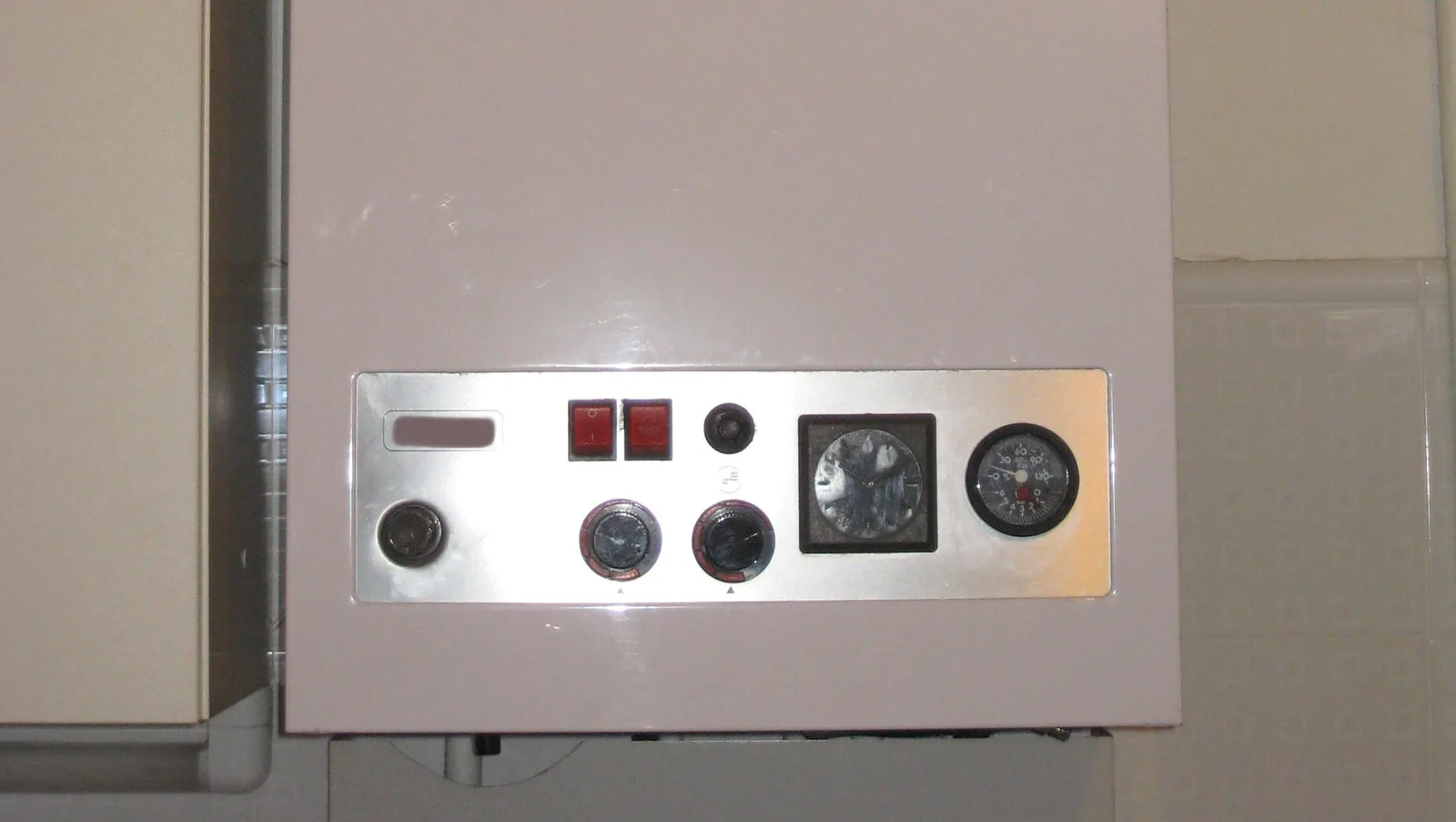
At this time every year, the rhythm of the Egyptian household quietly shifts. With the return of winter time at the end of October, evenings grow longer and colder, and bathing late at night or early in the morning becomes a small battle against the chill. Many people light the gas water heater, close the bathroom door so the first burst of steam does not escape, and stuff a towel into the gap in the window. Each of these moves makes sense by the logic of warmth, and together they turn a small, unventilated bathroom into the most dangerous room in the house. The danger does not come from the heater being a heater. It comes from three conditions meeting: an appliance that burns fuel, an enclosed space, and maintenance that has been neglected.
This distinction does not play down the risk; it is what the official sources themselves say. The World Health Organization’s 2010 guidelines for indoor air quality list among the main sources of carbon monoxide exposure at home fuel-burning appliances that are faulty, badly installed, badly maintained or badly ventilated, blocked flues, and stoves and heaters whose safety devices do not work. In France, the national public health agency, in a statement issued on 26 November 2025, puts at the top of its list of causes of poisoning appliances connected to a chimney or exhaust pipe, such as boilers, water heaters, stoves and fireplaces, when they are poorly maintained or poorly adjusted, followed by portable appliances and vehicles running in unventilated spaces. In other words, the issue is installation, maintenance and ventilation, not a cursed appliance.
That demolishes a common rule of thumb, repeated with total confidence: “If there is no smell of gas, the bathroom is safe” (in Egyptian Arabic, “mafeesh reeha”). The rule is wrong, and its being wrong is precisely why accidents keep happening. What people trust their noses to tell them has nothing to do with this danger. The United States Centers for Disease Control and Prevention (CDC) describe carbon monoxide as a colourless, odourless gas that kills without warning, and the French agency calls it invisible, odourless, non-irritating and impossible to detect. The absence of a smell is not the absence of danger, and it is no proof that the air in the bathroom is sound.
The physics behind such an accident is painfully simple. When a flame cannot get enough fresh air, or when the exhaust pipe is blocked or the appliance is clogged with grime, combustion is incomplete and carbon monoxide is produced. Once breathed in, the gas goes for haemoglobin, the molecule that carries oxygen in the blood, and takes oxygen’s place on it. The blood keeps circulating but carries far less oxygen, and the tissues begin to suffocate while the air looks perfectly ordinary.
That is why the first symptoms are so treacherous. The CDC lists the most common ones: headache, dizziness, weakness, upset stomach, vomiting, chest pain and confusion, and it states plainly that these are often described as flu-like. In an Egyptian home in November they are read as a simple cold, tiredness from work, or heavy air in the bathroom, so the person stays where they are, or steps out to lie down for a moment and falls asleep. The most dangerous sentence on the same page is that people who are sleeping or intoxicated can die from carbon monoxide poisoning before ever having symptoms.
Nor is the danger spread evenly across a household. The CDC says everyone is at risk, but infants, older people, and those with chronic heart disease, anaemia or breathing problems are more likely to become severely ill. This has a practical side: a small child and a grandmother are the least able to describe what they are feeling, or to open a heavy door and walk out on their own. Someone with chronic shortness of breath may take what is happening for their usual attack and sit calming themselves in the very place they should leave at once.
Here we must be honest with the reader about the figures. The documented numbers available are foreign, and we know of no verified, up-to-date Egyptian figure for carbon monoxide deaths. In the United States alone, according to a CDC page dated 12 January 2026, more than 400 people die each year from unintentional carbon monoxide poisoning not linked to fires, with more than 100,000 emergency department visits and more than 14,000 hospitalisations. In France, according to the national public health agency’s statement of 26 November 2025, about 3,000 people suffer accidental poisoning from the gas each year and about one hundred of them die; this is the most recent figure we could find at the time of writing, and the agency uses the statement to renew its awareness campaign as winter approaches. These are the figures of those countries, and projecting them onto Egypt would not be scientifically sound.
What we have on Egypt is far thinner, and we state it as it is. An Egyptian press report published on 12 November 2021 renewed the warning about the “silent killer” as the use of heaters and water heaters rose. It noted that earlier years had seen deaths caused by gas water heaters in homes, and it relayed advice from the poison control centre not to block ventilation openings and to leave the door open when using the gas stove or water heater, and it warned that the gas builds up in tightly sealed spaces such as bathrooms and kitchens. An open door is a bare minimum and is no substitute for a permanent air opening and a sound exhaust pipe, as explained below. This is a seasonal pattern reported by a press source, not an official count, and we are speaking of the pattern, not of people: no victim’s name, no family’s address.
The pattern leads to the most important part of this article: the order of the first minutes. If anyone in the bathroom or kitchen feels a sudden headache, dizziness or nausea for no clear reason, the first step is to get to fresh air: leave the room at once, open the door and window on the way out rather than before leaving, and take everyone else in the household with you. The second is to make any call from outside the space. The third is to seek medical help for everyone who was in the room, not only the most severely affected. In its statement, the French public health agency advises ventilating immediately by opening doors and windows, switching off combustion appliances if possible, evacuating the premises at once, and then calling the ambulance service. We put leaving ahead of everything else: do not stop to switch off an appliance or open a window if doing so delays your exit by a single second.
Two further points deserve plain speaking. Do not stay inside to make a call, and do not go back in to turn off a valve or fetch a phone; the time that takes is extra breaths of poisoned air, and going back is what adds a name to the list of casualties. If someone loses consciousness, do not try to treat them in the same room; get them out to fresh air first, then call for an ambulance. When a doctor sees them, say that the symptoms began in a bathroom or kitchen where a gas-burning appliance was running; that sentence alone can change the course of diagnosis, because the symptoms resemble flu.
On emergency numbers, we owe the reader an uncomfortable transparency. Short numbers for gas emergencies, ambulances and civil defence circulate on news websites, and at the time of writing we could not confirm any of them from an official site. We do not print a number we have not checked ourselves, because a wrong number at a moment like this does direct harm. The official route is this: take out your gas bill today, not at the time of an accident, and note the emergency number of the distribution company for your area, printed on it or published on its official website. Add the ambulance number published by the body responsible for it and the number of the operations room of your governorate’s health directorate, and save all of them in the phone of every family member and on a sheet of paper in the kitchen.
On prevention, the first thing to grasp is that a gap in the window is not ventilation. Real ventilation means a permanent, unblocked air opening that lets in enough fresh air for combustion, and a sound exhaust pipe that carries the products of burning outside the dwelling rather than into it; these are the very things the World Health Organization’s guidelines identify as failing. Simpler and stronger than all of that: a water heater does not belong inside the bathroom. If yours is inside, that is the first question to put to the gas company’s technician, before any talk of how long showers last or how hot the water is.
This is complemented by maintenance rules set out by the CDC: an annual service by a qualified technician of the heating system, the water heater and any other fuel-burning appliance; making sure gas appliances are properly vented to the outside; never heating the home with a gas oven; and never burning charcoal inside the house. The last includes the charcoal brazier (the mankal, in Egyptian Arabic) that some homes bring in for warmth or for the shisha, the water pipe, on a cold night, which is among the most dangerous things one can do in a closed room. The decisive constraint in Egypt remains that anything involving gas connections, safety valves and servicing the water heater is work for a technician certified by the gas company alone, with no do-it-yourself version.
One last layer of safety remains: a carbon monoxide alarm. The CDC recommends battery-operated or battery-backup detectors near every sleeping area, with the batteries checked when the clocks change, a habit that suits us perfectly as winter time returns at the end of October. But a detector does not excuse you from ventilation or maintenance; it only buys you the minutes your senses will not. Before the cold deepens, three decisions are enough: a water heater outside the bathroom, an air opening that is kept open and not blocked, and a certified technician who checks the appliance once a year. And one rule to drill into children and older people: a headache or dizziness in the bathroom means getting out to fresh air first and calling from outside afterwards, because “no smell” never means “no danger.”
Related Stories
Skin-to-skin contact from the first minutes: WHO’s 2022 recommendations and 2025 guide, alongside incubator care
Two days after World Prematurity Day, which the World Health Organization has moved to November 15, we explain to families waiting outside the newborn unit what the weeks mean, what the WHO advised in 2022 and in its 2025 guide on starting kangaroo care at once, why a critically ill baby is treated medically first, and why we have no reliable Egyptian figure.
November 17, 2026 · 8 min read

Bones Fail in Silence: Why Fractures Start Years Early, and Vitamin D Deficiency Under an Endless Sun
World Osteoporosis Day falls on October 20, yet a disease that causes no pain until it breaks a bone remains far from everyday conversation in Egyptian homes. An Egyptian survey of more than two thousand people aged forty and above found that only 6.8 percent had ever had a bone density scan. Here is how bone quietly hollows out from within, why sunshine alone is not enough, and what readers can do before the first fall.
October 20, 2026 · 7 min read

“A Cold Shot Cures a Cold”: A False Claim, and What Trials Say About the “Power” of the Vein
“Forget the pills, take a shot and you'll be back on your feet” is advice that returns with the first chill of every year. We test two claims: that a “cold shot” cures a cold, and that an injection is inherently stronger than tablets. Verdict: false. The evidence lies in the mixture itself, in randomized trials comparing vein with mouth, and in an official Egyptian guide. The route of a medicine is the doctor's decision alone.
November 22, 2026 · 9 min read