Skin-to-skin contact from the first minutes: WHO’s 2022 recommendations and 2025 guide, alongside incubator care
Two days after World Prematurity Day, which the World Health Organization has moved to November 15, we explain to families waiting outside the newborn unit what the weeks mean, what the WHO advised in 2022 and in its 2025 guide on starting kangaroo care at once, why a critically ill baby is treated medically first, and why we have no reliable Egyptian figure.
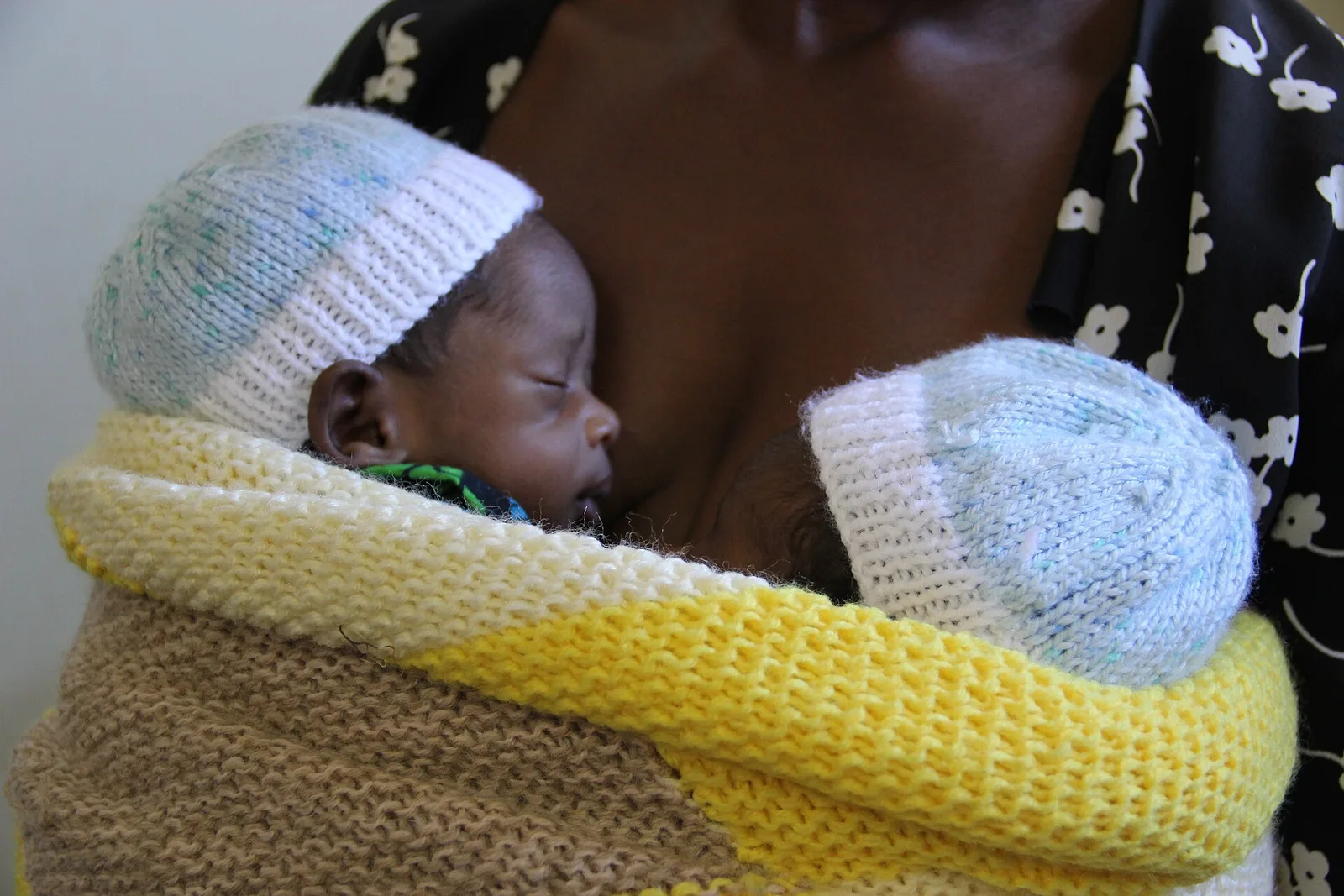
Around this time every year, mothers and fathers stand in the corridors of newborn care units, facing a door that opens for only a few minutes, having heard a single word that changes the meaning of the weeks ahead: premature. Because the subject is a very small baby, the rule comes before anything else. A baby born in critical condition is treated medically first. Skin-to-skin contact between mother and newborn is a clinical recommendation, carried out under the supervision of the treating team and within its treatment plan. It is neither a replacement for incubator care nor something set against it. What follows is not a decision for families to take on their own. It is background that can make their questions to the medical team sharper and their waiting a little less lonely.
World Prematurity Day falls on November 15, two days before the date of publication of this article. It was launched in 2008 by a European newborn-care foundation, known today as the Global Foundation for the Care of Newborn Infants, together with parent organizations, and was first marked in 2009. For years it was observed by families and civil society groups before it became official. Member states then adopted it as an official global health campaign at the 78th World Health Assembly, and the World Health Organization announced this on May 28, 2025. On its campaign page the WHO says the day was traditionally observed on November 17 and will be marked on November 15 from now on, to avoid clashing with other designated global days. The foundation that started the day says the new date applies from 2026, because November 17 is reserved for Cervical Cancer Elimination Day. Egypt is one of the WHO’s member states, so the occasion concerns it as it does any other.
Under the WHO definition, a premature baby is one born alive before 37 completed weeks of pregnancy. That is why the first thing a father hears in the corridor is not a weight or a length but a number of weeks. The week in which a child came into the world is the first indication of what the tiny body has already achieved and what it has not yet done, from the lungs to the ability to regulate temperature, suck and swallow. In the doctors’ language, weeks seem like a second age for the baby, counted alongside age in days.
The WHO divides preterm birth into three degrees according to weeks: extremely preterm, for babies born before 28 completed weeks; very preterm, for those born from 28 weeks up to before 32 weeks; and moderate to late preterm, for those born from 32 to 37 weeks. This division is not a mere linguistic nicety. It determines the kind of care to be expected and how long it will last, and it explains why the course of a baby born at 34 weeks differs from that of a baby born at 26 weeks so markedly that a family should not compare its situation with a neighbor’s in the waiting room.
The scale of the phenomenon is larger than many people imagine. The WHO estimates that about 13.4 million babies were born prematurely in 2020, which is more than one in every ten births that year. It is not a rare exception but an event that recurs in every society and at every income level. The WHO adds what explains why the issue ranks so high in child health worldwide: complications of preterm birth are the leading cause of death among children under five, with around 900,000 deaths in 2019. Preterm birth is not in itself a disease. What creates the danger is what follows from it, namely breathing difficulties, infection, low body temperature and feeding problems, and good basic care can do a great deal to reduce all of these.
Here the clearest gap in this subject comes into view, and it has to be reported with its source and its classification exactly as given. The WHO says that about half of the babies born at or before 32 weeks die in low-income settings, for lack of basic, inexpensive care, while the great majority survive in high-income countries. It also says that more than 90% of babies born before 28 completed weeks die in low-income countries, compared with fewer than 10% in high-income countries. These figures are classified by countries’ income level. They are not figures for any single country.
It must be said plainly: we do not have a reliable Egyptian national figure for the rate of preterm births to rely on in this article, and we found no recent official estimate in open sources with a stated year and method. The WHO itself cautions, in the metadata sheet for its preterm birth rate indicator, that national estimates are produced by a statistical model trained mostly on data from high-income countries, so estimates for countries without data should be read with caution. For that reason it is not right, for us or for any reader, to project the global figures, or the figures for an entire income group, onto Egypt, or to read the global survival gap as news about the fate of the Egyptian premature baby. The absence of a figure is not a marginal detail, because accurate data is the first tool any health system needs to know where to put its effort.
One of the most important changes in this field came in 2022, when the WHO issued new recommendations for babies born before 37 weeks or weighing less than 2.5 kilograms. Before that, according to the organization’s statement of November 15, 2022, it was usual to separate the newborn from the mother so that the baby could be stabilized in an incubator or under a warmer, for an average of 3 to 7 days. The new recommendation says that kangaroo care, meaning skin-to-skin contact between the newborn and the caregiver, should begin immediately after birth without an initial period in an incubator, and that mother and baby should stay together from birth and be separated only if the baby is in critical condition. On November 14, 2025, the WHO issued a clinical practice guide on kangaroo care, explaining to health workers and to families how to carry it out in health facilities and at home.
In its simple form, kangaroo care means placing the newborn on the mother’s chest, skin to skin, and covering the baby, so that the warmth of her body, the rhythm of her breathing and the heartbeat the baby knew before birth pass to the child. In its 2022 statement the WHO says research has shown that starting this care immediately after birth saves many more lives, reduces infection and low body temperature, and improves feeding. When it issued its guide in November 2025, it said this care is associated with a reduction of more than 30% in newborn deaths, a reduction of roughly 70% in low body temperature, and a 15% reduction in severe infection. It requires no equipment to buy, but it does need a prepared unit, a trained team and a place where a mother can sit for hours, and that is the work the recommendation asks health systems to do.
The right thing for a family to ask is not that the baby be taken out of care so they can hold it, nor to improvise over a dose, a feeding method or a discharge date. It is this: when does our baby’s condition allow us to start skin-to-skin contact, how do we train for it, and for how long each day? The decision to start, and its timing and duration, belongs to the treating team alone, based on the baby’s condition inside the unit. The WHO’s 2025 guide states that this care is practiced in health facilities at all levels of care, including special and intensive newborn care units, and not only after leaving them. The exception, as the WHO explained when the guide was issued, concerns a newborn who cannot breathe unaided or whose blood pressure and circulation have fallen dangerously, requiring urgent treatment.
It is only fair to say that the causes of preterm birth are a medical matter, not a field for blaming the mother. The WHO states that most preterm births happen spontaneously, that some occur for medical reasons such as infection, and that causes include multiple pregnancy, infection and chronic conditions such as diabetes and high blood pressure, with genetics a possible influence. It then adds a sentence that deserves a careful reading in every home: in many cases no cause is identified at all, and the organization itself says that more research is needed.
The 2022 recommendations did not stop at the chest and the bed. In its statement on them, the WHO said they include recommendations to ensure emotional, financial and workplace support for the families of very small and premature babies, because a mother who is expected to stay beside her baby for long hours every day cannot do so on good intentions alone. She needs leave, transport and someone to look after her other children. The WHO also notes that many survivors face lifelong disability, including learning difficulties and problems with sight and hearing, a further reason why follow-up after discharge should be part of the plan and not left to chance. In that spirit, the theme of the 2026 campaign, announced by the Global Foundation for the Care of Newborn Infants and centered on investing in follow-up care after a baby leaves the unit: “Small babies, big potential.” Caring for a premature baby is not one device or one recommendation. It is a chain that starts with care during pregnancy, passes through an equipped unit and a trained team, and continues with follow-up after discharge.
For a family standing in a hospital corridor, the meaning of this day is simpler than all of the above, and heavier. The weeks are a number to be understood, not a verdict to be pronounced. Incubator care and medical treatment are the foundation when a baby is critical. Skin-to-skin contact from the first minutes has become a global recommendation that stands beside incubator care, not against it. And one calm question to the treating team, when do we begin and how, is better than a night of searching the internet. That this day has become an official occasion on the WHO calendar, on November 15 every year, is in the end an acknowledgment that these babies, and their families in the corridors, deserve to be counted.
Related Stories

The Silent Killer in the Bathroom: The Danger Is Not the Gas Heater but an Unventilated Room and Neglected Upkeep
With the first cold snap each year, Egyptian homes light their gas water heaters and shut their windows, turning a small bathroom into a room with no fresh air. Carbon monoxide has no colour, smell or taste, and its early symptoms are easily mistaken for a cold or fatigue. Here is what official sources say about the real cause of the danger, and the order of actions in the first minutes that could save a whole family.
November 21, 2026 · 8 min read

Bones Fail in Silence: Why Fractures Start Years Early, and Vitamin D Deficiency Under an Endless Sun
World Osteoporosis Day falls on October 20, yet a disease that causes no pain until it breaks a bone remains far from everyday conversation in Egyptian homes. An Egyptian survey of more than two thousand people aged forty and above found that only 6.8 percent had ever had a bone density scan. Here is how bone quietly hollows out from within, why sunshine alone is not enough, and what readers can do before the first fall.
October 20, 2026 · 7 min read
“A Cold Shot Cures a Cold”: A False Claim, and What Trials Say About the “Power” of the Vein
“Forget the pills, take a shot and you'll be back on your feet” is advice that returns with the first chill of every year. We test two claims: that a “cold shot” cures a cold, and that an injection is inherently stronger than tablets. Verdict: false. The evidence lies in the mixture itself, in randomized trials comparing vein with mouth, and in an official Egyptian guide. The route of a medicine is the doctor's decision alone.
November 22, 2026 · 9 min read