Egypt's Rent Law, Old and New: The Story of Two Markets Under One Roof
Millions of Egyptian homes sit under decades-old leases at token rents while neighbours pay market rates. How did the gap between the old and new rent laws arise, what did the Constitutional Court rule, and what does the new transition law change? A balanced explainer of both sides.

In the same Cairo building, two nearly identical apartments can tell two different economic stories. One is rented under a contract signed decades ago for a sum that today barely buys a sandwich; the other, on a newer contract, costs thousands of pounds a month at market rates. This is the divide between Egypt's 'old rent' and 'new rent' systems, one of the longest-running and most emotionally charged files in Egyptian law, touching millions of families on both sides of the landlord and tenant relationship.
Rent control in Egypt began as an emergency wartime measure in the 1940s, when housing shortages made rents a matter of public order. What started as temporary became permanent and expanded over the following decades. The framework that defined the modern 'old rent' era was completed by Law 49 of 1977 and Law 136 of 1981, which froze rents at their contractual values, renewed tenancies automatically, and allowed them to pass to members of the tenant's family. A lease stopped being a contract for a period and became, in practice, an arrangement for generations.
For tenants, the old system offered security close to ownership without the price of ownership. Rent could not be raised beyond token statutory adjustments, the landlord could not end the contract at will, and when the original tenant died, a spouse or children living in the flat could continue the lease. Many families also paid substantial 'key money' when they first moved in, which they understood as buying a permanent right. For landlords, the same rules meant that a building could remain full for half a century while producing almost no income.
The turning point came with Law 4 of 1996, which removed newly built or newly vacated units from the old regime and returned them to the ordinary rules of the Civil Code. From that date, new leases were freely negotiated: the parties agree on the rent and the duration, and when the term ends, the contract ends. Egypt has since lived with two parallel rental markets, one frozen in the past and one moving with inflation, and the gap between them has widened every single year.
The scale of the divide is documented in official statistics. Census data have counted old-rent units in the millions, concentrated in the older districts of Cairo, Alexandria, and the Delta cities. Rents of a handful of pounds a month are common in this stock, sums that predate several waves of inflation and currency change. Landlords describe collecting annual rent that does not cover the cost of travelling to collect it, while an equivalent flat next door earns market rates that reflect what housing actually costs today.
The tenants' side of the story deserves equal weight. Many old-rent tenants are elderly people who have spent their entire adult lives in the same flat, raised children there, and organised their pensions around a rent fixed long ago. Others point to the key money their families paid on entry, often a large sum at the time, as evidence that they bought more than a temporary stay. For them, the old law is not a windfall but the basis on which decades of decisions were made, and sudden exposure to market rents would mean displacement.
The economic consequences run beyond the two parties. With rent frozen, landlords have had little incentive to maintain ageing buildings, and much of the old-rent stock has visibly deteriorated. Some units stand locked and unused because tenants keep them merely as cheap holdings, while newcomers to the city compete for the shrinking new-rent supply, pushing market prices higher. Economists have long described the situation as a distortion that hurts the housing market as a whole, even as it protects the individual households inside it.
Change ultimately came through the courts. In 2018, the Supreme Constitutional Court struck down the automatic extension of old leases held by companies and other juristic persons. Then, in November 2024, the court issued its landmark ruling on residential tenancies, finding it unconstitutional for the law to freeze rents permanently at their historical contractual values. The ruling did not evict anyone; instead it obliged parliament to design a new balance between the constitutional protection of property and the social protection of tenants.
Parliament answered in 2025 with a law that ends the old-rent era gradually rather than overnight. Residential old-rent contracts continue for a transitional period of seven years, and non-residential ones for five, after which they expire and the units return to the free market. During the transition, rents rise immediately to multiples of their old values, with minimum floors that vary by the area's classification, and increase annually thereafter. The state has coupled this with pledges to give eligible old-rent tenants priority access to alternative housing options.
The debate around the reform reproduces the file's old fault line. Supporters argue that property rights were suspended for two generations, that token rents were an injustice the constitution could no longer carry, and that a dated transition finally gives both sides certainty. Critics worry about elderly tenants on fixed incomes, ask whether alternative housing will materialise where people actually live and work, and note that seven years pass quickly for a family with nowhere else to go. Both arguments are made in good faith, and both describe real people.
For anyone touched by the file, the practical first step is to know which regime governs their contract: the date of the lease and the history of the unit decide everything. Old-rent landlords and tenants alike should follow official announcements on implementation, registration, and alternative-housing procedures, and keep every document related to the tenancy. The details of a transition this large will continue to be clarified in regulations and court rulings, and on a question that decides where families live, official texts and qualified legal advice beat rumour every time.
Related Stories
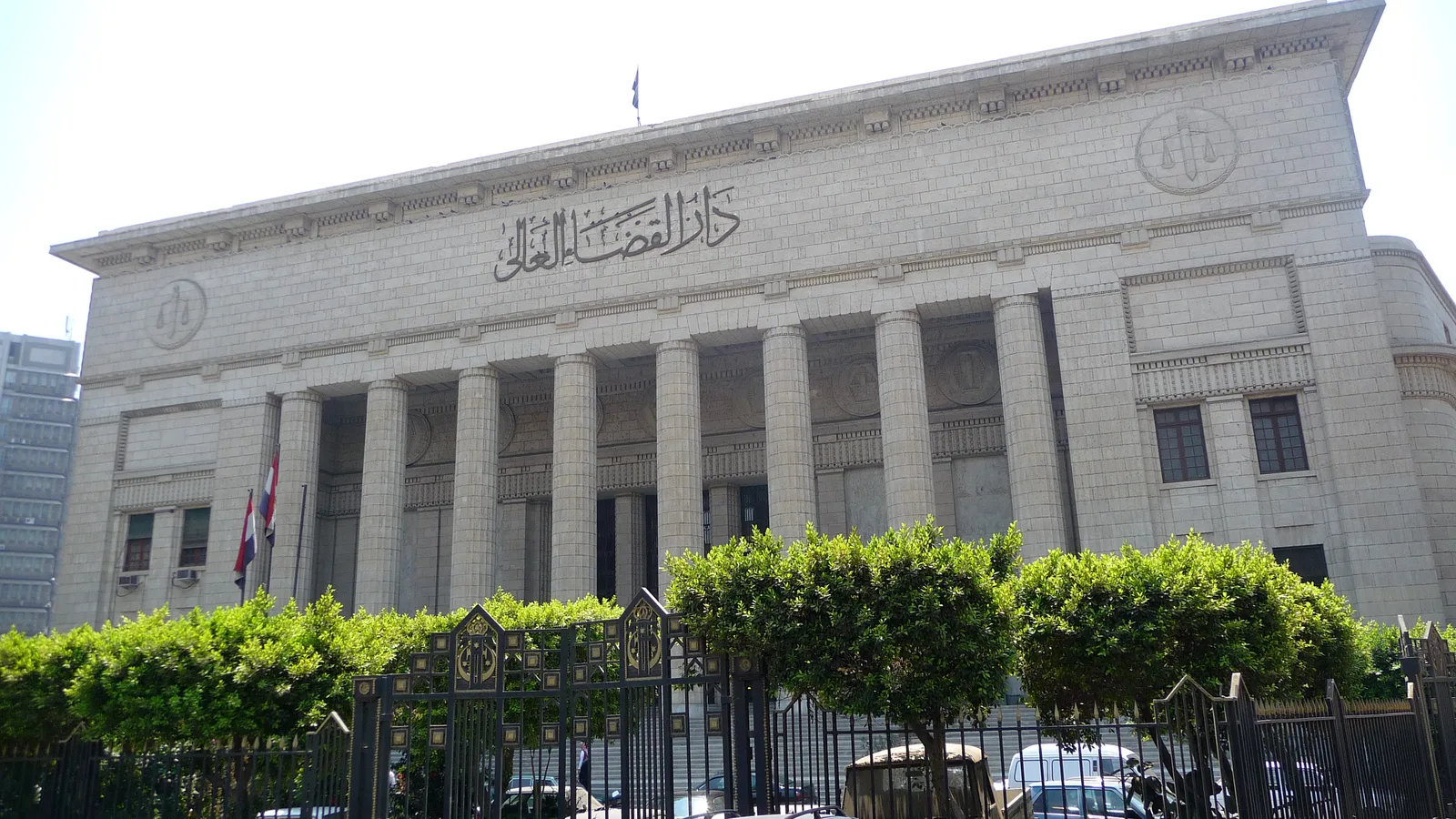
Egypt's New Criminal Procedure Code 174/2025 Takes Effect: What Has Actually Changed for Citizens?
After roughly seventy-six years, Egypt's old Criminal Procedure Code has been retired, and Law No. 174 of 2025 took effect with the start of the new judicial year. A measured look at what has actually changed: alternatives to pretrial detention, expanded from three to seven; detention periods and their ceilings; the presence of a lawyer; notification by modern means; and new safeguards for victims and witnesses.
October 18, 2026 · 8 min read

“A Cold Shot Cures a Cold”: A False Claim, and What Trials Say About the “Power” of the Vein
“Forget the pills, take a shot and you'll be back on your feet” is advice that returns with the first chill of every year. We test two claims: that a “cold shot” cures a cold, and that an injection is inherently stronger than tablets. Verdict: false. The evidence lies in the mixture itself, in randomized trials comparing vein with mouth, and in an official Egyptian guide. The route of a medicine is the doctor's decision alone.
November 22, 2026 · 9 min read

The Silent Killer in the Bathroom: The Danger Is Not the Gas Heater but an Unventilated Room and Neglected Upkeep
With the first cold snap each year, Egyptian homes light their gas water heaters and shut their windows, turning a small bathroom into a room with no fresh air. Carbon monoxide has no colour, smell or taste, and its early symptoms are easily mistaken for a cold or fatigue. Here is what official sources say about the real cause of the danger, and the order of actions in the first minutes that could save a whole family.
November 21, 2026 · 8 min read