August Peak: Egypt's Grid Tops 40,000 MW for the First Time, With No Load Shedding
Egypt's national grid crossed 40,000 MW for the first time during last week's heatwave, without a return to load shedding. How fuel supplies held after the Damietta drone strike, and what the new tariffs mean for your bill.
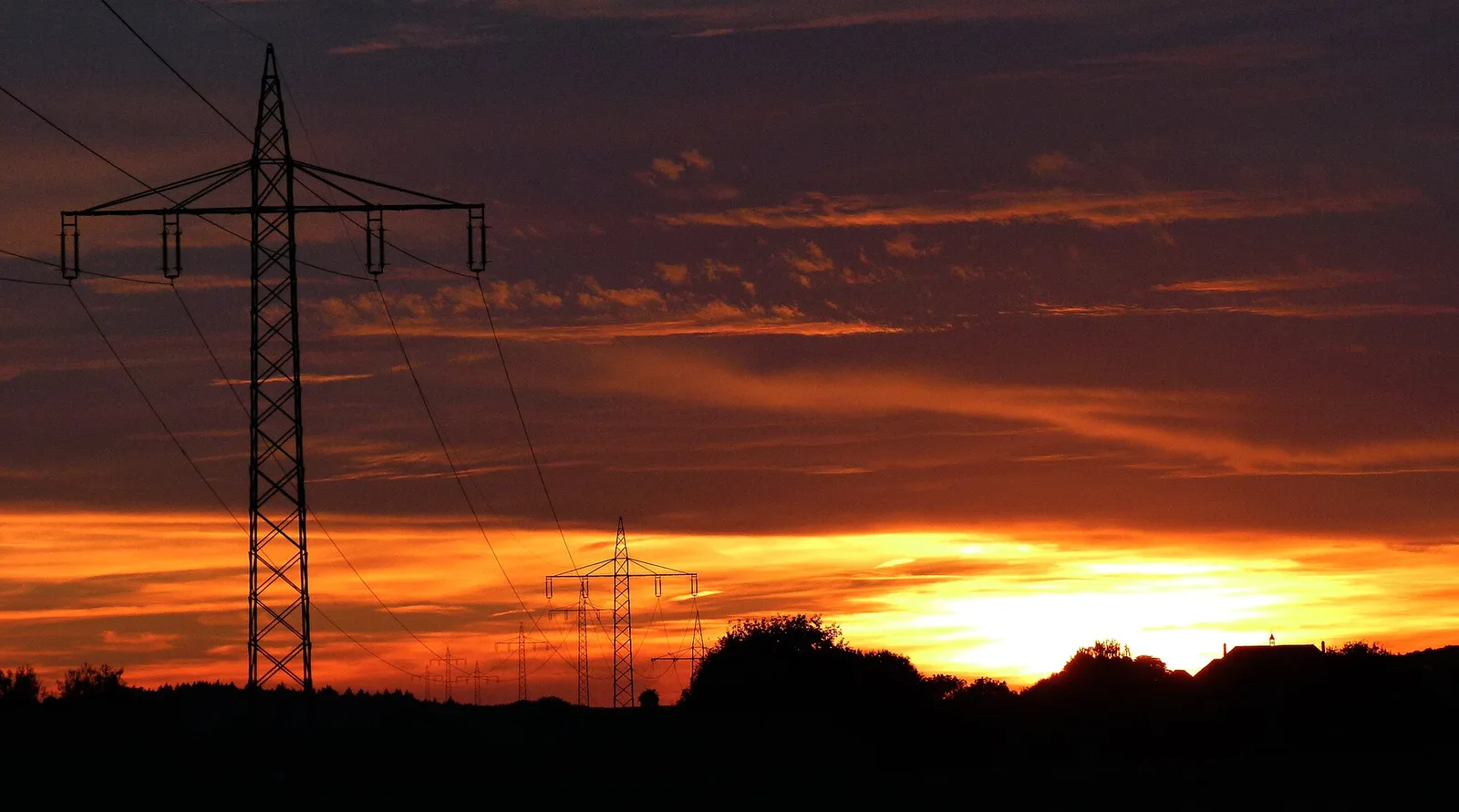
Egypt's national electricity grid crossed a threshold last week it had never reached before: 40,000 megawatts on Tuesday, 11 August, followed by 40,200 MW the next day, according to the Ministry of Electricity and Renewable Energy. The peak passed without a return to load shedding, in the second full summer the grid has completed without scheduled outages since they ended in July 2024.
The sequence shows how sharp the surge was. On Monday, 10 August, loads reached 39,300 MW; on Tuesday they jumped to 40,000 MW, surpassing the summer 2025 peak of 39,800 MW; and on Wednesday, 12 August, they hit the all-time record of 40,200 MW. The ministry said the unified grid absorbed demand across all governorates while keeping supply stable, and loads later settled around an average of 38,500 MW, according to ministry sources cited by Amwal Al Ghad.
Behind the jump was a heatwave that pushed temperatures to around 40 degrees Celsius in Greater Cairo and beyond it in Upper Egypt, with air conditioners running flat out. Before the season, the electricity and petroleum ministries had projected demand growth of 7 to 8 percent over last year, while a utility source told Masrawy in June that loads could reach 42,000 MW in August — a level not reached so far.
Load shedding — the scheduled cuts Egyptians lived with from the summer of 2023 as domestic gas output declined — ended for good in the third week of July 2024 by government decision. Prime Minister Mostafa Madbouly pledged in September 2024 that it would not return after more than 2.5 billion dollars was secured for fuel purchases, and electricity ministry spokesperson Mansour Abdel Ghani repeated in June that summer 2026 would pass 'without load shedding,' calling it a state decision.
Keeping the lights on carries a heavy fuel bill. On peak days, power stations burn more than 3.8 billion cubic feet of gas per day plus over 12,000 tonnes of fuel oil, according to ministry sources quoted by Amwal Al Ghad. With domestic gas production falling, Egypt has leaned on liquefied natural gas imports, which hit a record 8.92 million tonnes in 2025 according to Egypt Oil & Gas, while S&P Global estimated the country had procured around 150 cargoes to cover its needs through the summer of 2026.
To turn those cargoes into grid gas, three floating storage and regasification units operate at Ain Sokhna with a combined capacity of 2,250 million cubic feet per day, alongside the Energos Winter at Damietta with 450 million. A fifth vessel, the Hoegh Gandria, is due in the fourth quarter of 2026 under a ten-year charter, according to Egypt Oil & Gas.
The supply system faced an early test on 29 July, when fire broke out on a regasification vessel and a storage vessel at Damietta port. The Cabinet said preliminary investigations indicated a drone caused the incident, which left no casualties; no party has claimed responsibility. Petroleum Minister Karim Badawi said gas and fuel supplies to power plants were 'secure' and that operational alternatives kicked in immediately, while the specialist newsletter MEES headlined that the loss of Damietta's regasification capacity 'tests' Egypt's gas balance.
On the grid itself, much has changed since the 2023 crisis: the ministry built 34 new transformer substations and upgraded 40 others over the past year, according to its spokesperson, and placed emergency, maintenance and inspection teams on round-the-clock alert during the heatwave. Industry reports carried by Zawya point to plans to add 2.2 gigawatts of renewables and 1.3 gigawatt-hours of battery storage during 2026.
For your bill, there is an official change this month. New prices were applied to July consumption, collected from 1 August: the first bracket (up to 50 kWh) was frozen at 68 piasters, while the remaining household brackets rose by 12 percent — the second (51-100 kWh) to 87.36 piasters, the third (101-200) to 106.4, the fourth (201-350) to 173.6, the fifth (351-650) to 218.4, the sixth (651-1,000) to 235.2, and the seventh (above 1,000) to 289 piasters, as reported by Sada El-Balad, Roayah News and Al Arabiya. Prepaid 'coded' meters are billed at a flat 2.74 pounds per kWh after an increase of about 28 percent from 2.14 pounds last April, according to Masrawy.
Even without a price change, August bills run higher by design: the tariff is progressive, and every extra hour of air conditioning pushes monthly consumption into a costlier bracket, raising the average price you pay per kilowatt-hour. As a measure of summer's weight, households took the largest share of generated power in August 2025 — about 7,732 gigawatt-hours out of 25,782, roughly 30 percent — according to electricity sector data reported by Youm7.
The highest-impact savings start with the air conditioner, the focus of the ministry's advice as the main driver of the summer peak: set it no lower than 24 degrees Celsius, clean the filters regularly, and when buying, choose a high-efficiency unit sized to the room. Second, shift heavy appliances — water heaters, water pumps, washing machines — away from evening peak hours. Third, light only occupied rooms and use energy-saving bulbs. These are the recommendations the ministry's spokesperson set out at the start of the season.
The final test of the government's pledge is what remains of August, the grid's heaviest month, before loads typically ease as temperatures moderate in September. So far the numbers say the grid has withstood the highest demand in its history — while this month's bill, combining heatwave consumption with the new prices, will carry the clearest impact for household budgets.
Related Stories

Clocks Fall Back an Hour on Thursday Night, October 29: A Guide to the End of Daylight Saving Under Law 24 of 2023
On the night of Thursday, October 29, 2026, Egypt's daylight saving period ends and clocks fall back sixty minutes at midnight, turning 12:00 a.m. back into 11:00 p.m., with winter time beginning as Friday, October 30 starts. Here is the rule as written in Law No. 24 of 2023, why the change is timed to fall on a Friday, which devices won't reset themselves, and what it means for your day.
October 28, 2026 · 7 min read
“A Cold Shot Cures a Cold”: A False Claim, and What Trials Say About the “Power” of the Vein
“Forget the pills, take a shot and you'll be back on your feet” is advice that returns with the first chill of every year. We test two claims: that a “cold shot” cures a cold, and that an injection is inherently stronger than tablets. Verdict: false. The evidence lies in the mixture itself, in randomized trials comparing vein with mouth, and in an official Egyptian guide. The route of a medicine is the doctor's decision alone.
November 22, 2026 · 9 min read
The Silent Killer in the Bathroom: The Danger Is Not the Gas Heater but an Unventilated Room and Neglected Upkeep
With the first cold snap each year, Egyptian homes light their gas water heaters and shut their windows, turning a small bathroom into a room with no fresh air. Carbon monoxide has no colour, smell or taste, and its early symptoms are easily mistaken for a cold or fatigue. Here is what official sources say about the real cause of the danger, and the order of actions in the first minutes that could save a whole family.
November 21, 2026 · 8 min read