Social Security Law 12 of 2025: How Can Your Family Apply for Takaful and Karama, and What Stops the Payments?
On the International Day for the Eradication of Poverty, we open the file on "Takaful and Karama" from the family's side, not the press release's: what Social Security Law 12 of 2025 and its executive regulations, issued in July 2026, actually changed; the difference between conditional and unconditional support; the conditions a mother must know before standing in the queue; and why payments sometimes stop.
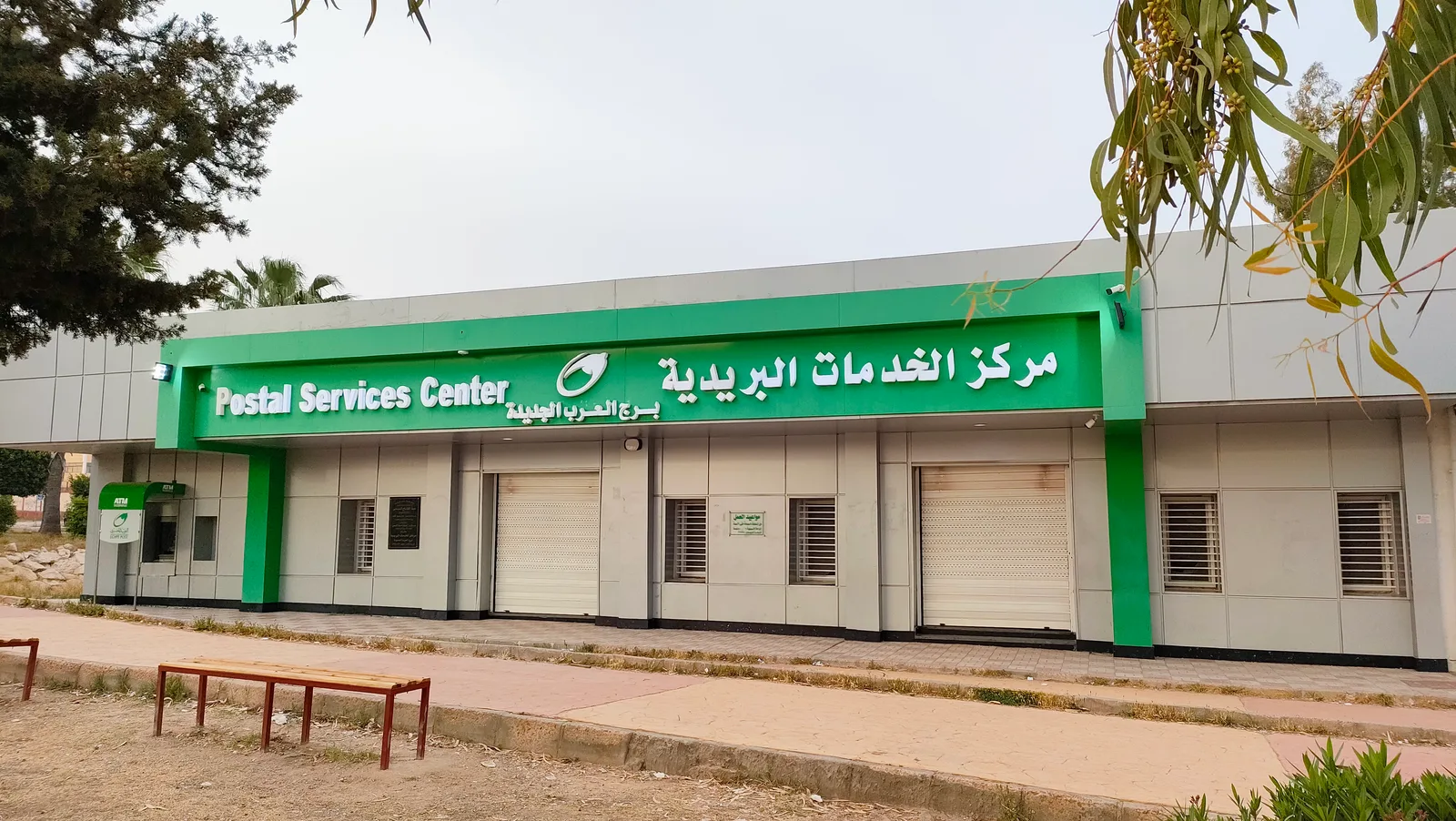
Shortly before nine in the morning, the queue outside the social solidarity unit in one rural district center is already full. Mostly women, along with a few elderly people, wait for the window to open. Each one clutches a clear plastic bag: a national ID card, birth certificates with dog-eared corners, a note from the school, and perhaps an old medical report. The question that repeats down the entire line, in almost the same words every time, is: "What paper am I missing?" It sounds like a small question. In truth, it is a question about a right, and about the road that leads to it.
Every year on 17 October, the United Nations marks the International Day for the Eradication of Poverty. We are not treating it here as a passing news item, but as an occasion to sit with an Egyptian family and read, calmly, what has actually changed in the social protection safety net, and what a mother — or a daughter handling her grandfather's papers — needs to know before standing in that queue. Poverty, after all, is not lived in reports; it is lived in a kitchen, a school notebook, and a doctor's examination.
The most significant development in this file is that social assistance has shifted from being treated as a "handout" to being a right set out in legislation. Social Security Law No. 12 of 2025 was issued in April of that year and came into force three months after its publication in the Official Gazette, replacing Social Security Law No. 137 of 2010 in its entirety — not merely its executive regulations. Its own executive regulations were then issued by decision of the Minister of Social Solidarity on 1 July 2026, which repealed the executive regulations of the old law. The difference is not a matter of form: once the conditions and procedures are written down, a citizen has a reference to stand on, instead of having to take on faith whatever is said in the queue.
The law distinguishes between two tracks that should not be confused. The first, "Takaful" (Solidarity), is conditional cash support for poor families, covering categories such as families raising children, families headed by a woman, families of conscripts and inmates, and families abandoned by their breadwinner; "conditional" means that continued payment is tied to obligations concerning the children — their education and health. The second, "Karama" (Dignity), is unconditional support, covering categories such as the elderly, people with disabilities, patients with severe chronic illnesses, orphans, women who are not their family's breadwinner, and unmarried girls. The list under both tracks is broader than this, so ask your local unit exactly which category applies to you. "Takaful" itself was launched in March 2015, and both programs have been running since then according to official statements, but the new law has now placed them within a single legislative framework.
Why does this distinction matter to the mother standing in the queue? Because it determines which door she is knocking on, and which papers she will be asked for; a family raising school-age children follows a different track from a woman applying on behalf of her elderly father. Much of the frustration in these queues comes from people swapping advice as though there were only one track, so papers are prepared for the wrong case, someone says "you're missing a document," and the truth is that the document belonged to a different track altogether.
On the "Takaful" track specifically, there are two conditions a mother should know before applying, not after: children aged six to eighteen must maintain school attendance of at least 80 percent in every term — not as a general annual average — and pregnant and breastfeeding mothers, along with children under six, must keep up with primary healthcare programs, including scheduled vaccinations. Those aged over eighteen and up to twenty-six have their own track, built around regular attendance in post-secondary or university education. This is the logic behind conditional cash transfer programs generally: tying continued payment to education and healthcare. Which is why the school notebook and the vaccination card are part of the file, not extra paperwork.
The application procedure itself begins at the social solidarity unit for your place of residence, and the application is submitted along with proof of payment of a nominal fee of ten Egyptian pounds, as set out in the regulations — though the text allows this fee to be raised periodically by decision of the competent minister, so confirm the current amount when you apply. The official channels here are the social unit itself and whatever the Ministry of Social Solidarity announces, including the hotline 19680, and the program's complaints link published on the official portal (tk.moss.gov.eg) as of this writing. Any middleman outside these channels who promises to speed up an application, or to guarantee its approval, is selling something they do not own.
The question on everyone's mind remains: on what basis is one application accepted and another rejected? Selection is not left to an employee's impression; it runs through what is known as the proxy means test, a method that measures a family's standard of living using indicators about its assets and housing conditions, then cross-checks what the applicant declares against official government data. So let us say it plainly: no one can promise a family acceptance, or estimate its eligibility in advance. The decision is made by an administrative body according to fixed criteria — it is not a promise handed out in a queue.
And what about the amounts? Here we urge readers to be wary of figures repeated in living-room conversations without a date attached. According to what the Ministry of Social Solidarity announced in December 2025, the number of beneficiary families rose from about 1.7 million in 2015 to about 4.7 million in 2025, with allocations reaching 54 billion Egyptian pounds for the 2025/2026 fiscal year; average support stood at around 900 pounds a month, with a minimum of 700 pounds and a maximum of four thousand pounds. Higher allocations, close to fifty-five billion pounds, were then earmarked for the program in the 2026/2027 budget, as announced. These figures are stamped with their dates and change from year to year — the reference for the current figure is the solidarity unit or the 19680 hotline, not memory, and not the neighbors.
One of these figures deserves a family's particular attention: close to seventy-five percent of beneficiaries, as announced in December 2025, are women. It is a known feature of "Takaful"'s design that payment priority goes to the woman who is the breadwinner within the household, an approach common to conditional cash transfer programs generally. Which is one more reason the mother herself should be the one who knows the conditions and follows up on the file — rather than having it managed on her behalf while she remains the last to know.
What remains is the part that frightens people more than the application itself: why does payment stop? A file, once accepted, is not a piece of paper filed away in a drawer — it is a living case that gets reviewed, and the law and its regulations have written rules for that. The first, and most often overlooked, is that a beneficiary must submit a declaration updating their data before the end of February every year; failing to do so exposes the support to temporary suspension, then permanent suspension if the lapse continues. The second is that breaching "Takaful" conditions — such as a drop in children's attendance rate or a lapse in health follow-up — is not met with immediate suspension, but with a graduated deduction from the value of support: thirty percent the first time, sixty percent the second, ninety percent the third, then final suspension the fourth time. The third is that providing false information, concealing a source of income, or a change in the family's standard of living that takes it beyond the eligibility threshold, is grounds for suspension. The fourth is that if two consecutive months pass without the due amount being paid, the matter is investigated to determine the cause.
The correct response is simple, yet rarely followed: go to your local solidarity unit and formally ask why payment was stopped, and request a review of your data, or use the announced complaint channels. Waiting two months hoping it will "sort itself out" is not a plan, and neither is collecting explanations from other people in the queue. It is wise for every family to keep a copy of its papers, and to notify the unit as soon as any change occurs in its data — new income, a change in household composition, or a change of residence — alongside submitting the annual update declaration on time. A voluntary update made on time costs far less than a suspension that arrives without warning in a tight month.
There is also something worth saying on a day like this: the law speaks of "social security" — that is, a floor beneath which no one falls at a moment of disability, old age, illness, or loss of a breadwinner. A family that knows its conditions and keeps up with its paperwork treats the matter as a regulated right, not a favor — and that alone changes the language used, both at home and at the window.
Let us return to the queue where we began. The woman carrying the plastic bag will keep asking, "What paper am I missing?" — a legitimate question. But the difference between one visit and the next is knowing, before you ask: which door you are knocking on; which conditions you have committed to; that the fee is nominal, and you should ask about its current amount; that the update declaration due before the end of February is not extra paperwork; and that a number like 19680, and a question asked in writing at the unit, beats two months of waiting. A right whose conditions we do not know remains a paper in a bag; a right we understand becomes a step we can actually take.
Related Stories
Before Eighteen: What Egyptian Law Says About Child Marriage, and Why Children Pay for an Unregistered Contract
Egypt's constitution defines a child as anyone under eighteen, and the law bars registering that child's marriage. But the ban targets registration, not the marriage itself, so it slips into an informal 'orfi' arrangement, and the losses begin the moment the newborn needs a first document. On the International Day of the Girl Child, we lay out the texts and numbers as they stand, and why a school seat still outweighs any sermon.
October 11, 2026 · 7 min read

Before the Katb el-Kitab: The Medical Certificate the Law Demands, What It Reveals, and Why It Cannot Stop a Marriage
A compulsory medical test before Egypt's marriage-contract registration, the katb el-kitab, ends in a certificate with a QR code that the ma'zoun or church authority requires. What does it detect, what does it cost, where is it done, and why does it matter so much in Egypt? Above all: why can its result never prevent a marriage? A calm guide for every engaged couple worried about "what if they find something in me?"
September 12, 2026 · 9 min read
Egypt's New Criminal Procedure Code 174/2025 Takes Effect: What Has Actually Changed for Citizens?
After roughly seventy-six years, Egypt's old Criminal Procedure Code has been retired, and Law No. 174 of 2025 took effect with the start of the new judicial year. A measured look at what has actually changed: alternatives to pretrial detention, expanded from three to seven; detention periods and their ceilings; the presence of a lawyer; notification by modern means; and new safeguards for victims and witnesses.
October 18, 2026 · 8 min read