Abu Simbel: the temple the world lifted 65 metres so it would not drown, and the sun that comes back to it on 22 October
Shortly before sunrise on 22 October, people stand in the darkness of the great hall waiting for a thread of light to travel some sixty metres through solid rock and fall on the face of Ramses. Behind that moment lies the story of a twenty-year international campaign that lifted the temple, block by block, above the waters of Lake Nasser. Here is your guide to understanding the spectacle and planning an Aswan trip a month ahead of the date.
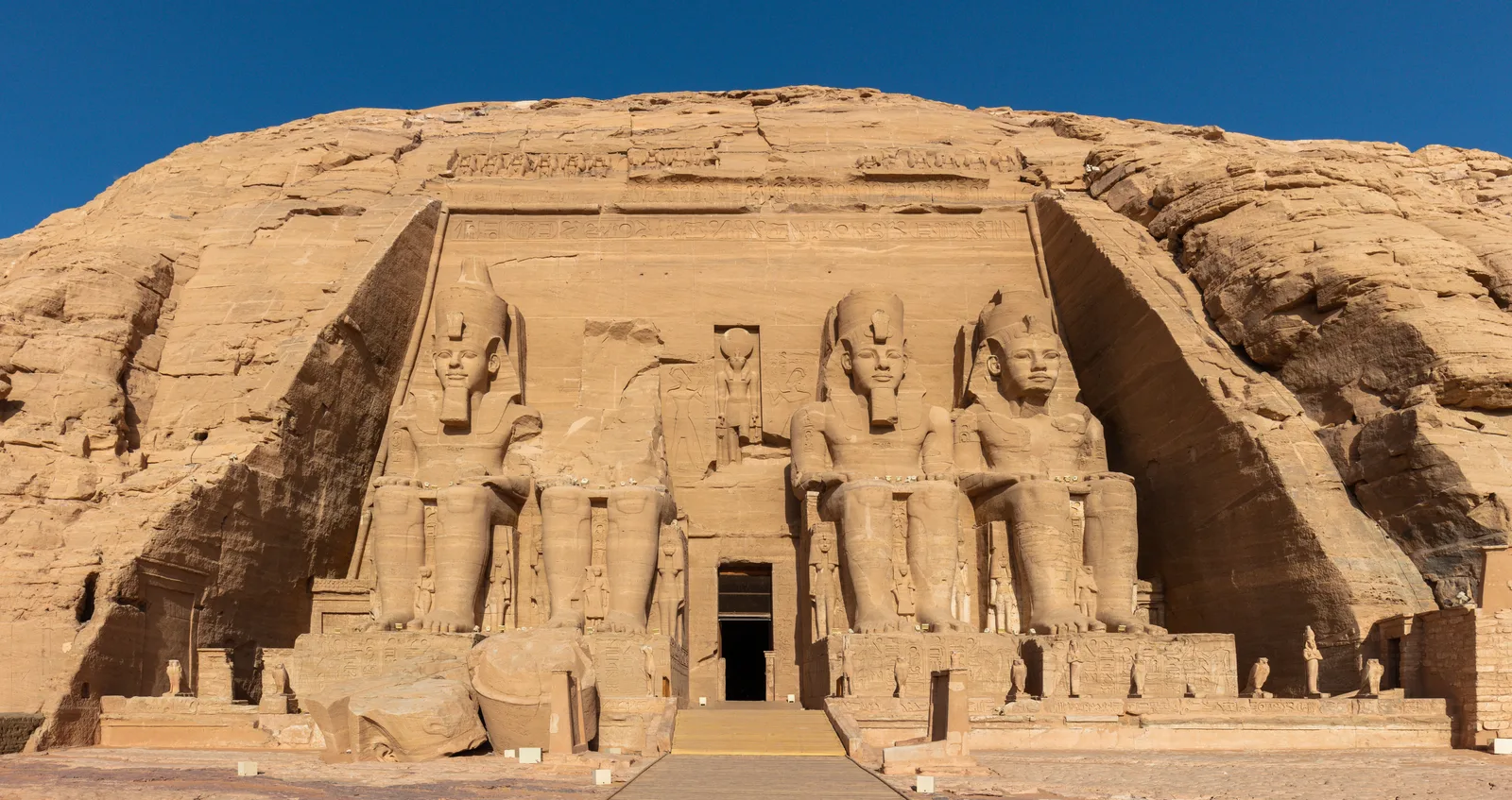
It is nearly five in the morning, and the air at Abu Simbel is colder than anyone arriving from Cairo with a picture of the hot south in their head would expect. A father and his daughter stand in a long queue in front of the facade of the Great Temple, where four colossal statues of Ramses II loom out of the dark as if keeping watch over the crowd. The girl asks: what exactly are we going to see? The father answers with what he has read: a shaft of sunlight will come in through the doorway, travel about sixty metres into the mountain and stop on the king's face. The answer stays incomplete until the moment happens for itself.
Inside, beyond the hall of eight pillars bearing the king in the guise of Osiris, a passage leads to the sanctuary, where four statues sit side by side: Ptah, then Amun-Ra, then the deified Ramses II, then Ra-Horakhty. On the mornings of 22 February and 22 October each year, according to the website of the Ministry of Tourism and Antiquities, the sun's rays pass through the entrance, cross the main hall and light up the statues within. Ptah, the god of creation and of craftsmen at Memphis, whom the guides here describe as a god of the underworld because of his link to Osiris in the composite form Ptah-Sokar-Osiris, remains in shadow or at the edge of the light, a detail the guides recount every year and which visitors are keen to verify with their own eyes.
Ramses II built the Great Temple around 1264 BC, carving it out of the living rock rather than raising it in masonry, and dedicated it to Amun-Ra, Ra-Horakhty, Ptah and to himself as a god among gods. A few steps away stands the Small Temple, which he dedicated to Hathor and to Queen Nefertari, and it holds something rare in the whole of ancient Egypt: statues of the queen on the facade carved at the same scale as those of her husband, not smaller as was the custom. Anyone standing before the two facades understands something about a man who wanted to tell the whole of the south that he was here, and that the sun itself entered his house by appointment.
Yet the rock on which the king stood was not always in this spot. The temple the father and daughter see today sits some 65 metres higher than its original position and about 200 metres further back. Between 1964 and 1968 the two temples were cut into blocks weighing up to thirty tonnes each, then the blocks were lifted one by one and reassembled on top of the plateau, in what is widely regarded as the greatest archaeological rescue operation in history.
The reason was the High Dam. As the dam went up in the 1960s, it became clear that Lake Nasser would swallow the old valley of Nubia and everything in it, temples, fortresses and tombs, from Abu Simbel to Philae. On 8 March 1960, at the request of Egypt and Sudan, UNESCO launched the International Campaign to Save the Monuments of Nubia, a campaign that ran for twenty full years until its conclusion was formally declared on 10 March 1980. Never before had the world come together to save stones that belonged not to a single country but to the memory of all humankind.
More than fifty countries took part in the campaign with money, experts and engineers, and no fewer than 22 monuments were moved from their original sites to higher ground. The rescue of Abu Simbel alone cost around forty million dollars at the prices of the day, an enormous sum at a time when Egypt was building its dam. In gratitude, Egypt gave four small temples to countries that had contributed to the rescue: the Temple of Dendur, which stands today in the Metropolitan Museum of Art in New York; the Temple of Debod in Madrid; the Temple of Taffeh in Leiden, in the Netherlands; and the Temple of Ellesyia in Turin, Italy.
Philae, the island of Isis that used to sink and resurface with every opening of the old dam, had a more complicated fate. Its temples were dismantled into some forty thousand blocks weighing between two and twenty-five tonnes and moved to the nearby island of Agilkia, about five hundred metres away, between 1972 and 1980, with the rebuilding completed in August 1979. That same year, 1979, the Nubian Monuments from Abu Simbel to Philae were inscribed on the World Heritage List: ten sites comprising the temples of Abu Simbel, Amada, Wadi el-Sebua, Kalabsha and Philae, and then, in Aswan itself, the ancient granite quarries and the Unfinished Obelisk, the Islamic cemetery, the ruins of the town of Elephantine, the Monastery of St Simeon and the Tombs of the Nobles.
There remains the question almost every visitor asks: if the temple was cut up, lifted and moved, how did the sun find its way back? The answer is that the engineers moved not only the stones but the orientation with them. The angle of the facade towards the east was preserved exactly as it had been, the blocks were returned to their places in the same order, and the temple was then covered with a huge concrete dome topped by an artificial mountain that no visitor can tell apart from the original. It is said among guides and writers that before the relocation the phenomenon fell on the 21st of both months and then slipped by a day, but that account does not appear in any of the official sources we consulted up to the time of writing; the website of the Ministry of Tourism and Antiquities itself mentions only 22 February and 22 October. So we will confine ourselves to saying that the sun enters today on 22 February and 22 October, and that its arriving on schedule after all that cutting and lifting is in itself a modern engineering miracle to set beside the ancient one.
For anyone who has read this far and decided to go, the timing of this article, roughly a month before the date, is deliberate: tickets, hotels and trains in Aswan get booked up early around these days, and waiting until the last week usually means higher prices or nothing left. Aswan can be reached by air, or by sleeper and ordinary trains from Cairo; the train journey takes a full night, which many regard as part of the pleasure of the trip rather than a burden on it.
From Aswan to Abu Simbel is about 280 kilometres by road heading south. The best-known way is the buses and cars that set off before dawn in convoy and arrive with the first light, which suits the morning of the solar alignment, the ta'amud as Egyptians call it, particularly well. There are also short domestic flights to Abu Simbel airport for those who would rather sleep an hour longer. We advise checking opening hours and ticket prices with official sources before travelling, since they change from one season to the next, and we are not setting down figures here that could be out of date before you reach the temple.
Take a light jacket for the pre-dawn chill, even though you are heading to the far south, comfortable shoes because the standing can go on for a long time, and enough water because the sun after sunrise shows no mercy. The crowds on alignment day are heavy, so be prepared to watch the moment from a distance, or on a screen that in some years is set up outside, if the queues do not work in your favour; the temple itself, with its facade, its halls and the reliefs of the Battle of Kadesh on its walls, is worth the journey on any day of the year. And for those who cannot travel on 22 October, the sun returns on 22 February, when the weather is kinder.
Do not make Abu Simbel the end of the journey. In Aswan itself there is the Temple of Philae, reached by small boat; the Nubia Museum, which tells the story of the rescue in photographs and models; the Unfinished Obelisk, lying in its quarry for thousands of years; and the Nubian villages on the bank of the Nile with their brightly painted houses. And the greatest thing your child may learn on this trip is not the name of a god or the date of a king, but that there were people who paid with their homes and their land so that the dam could rise, and people who came from fifty countries so that the stones would not drown.
When the father and daughter come out of the temple after sunrise, having seen what they came for, or some of it, they will walk across a plateau that human hands made some sixty years ago to look as though it had been here since the beginning of time. On the way back to Aswan, between the sand and the lake, the girl carries a new question: did they move the whole mountain? And the father, who now knows, answers: no, they moved the temple, they built the mountain again, and the sun found its way. That, in the end, is what we take away from Abu Simbel: that what we think is fixed in its place may once have been saved by many hands, and that light, if the angle is calculated for it, comes back. So if you go on 22 October, or in February, stop for a moment on that plateau before you go in, and remember that it is not a mountain.
Related Stories
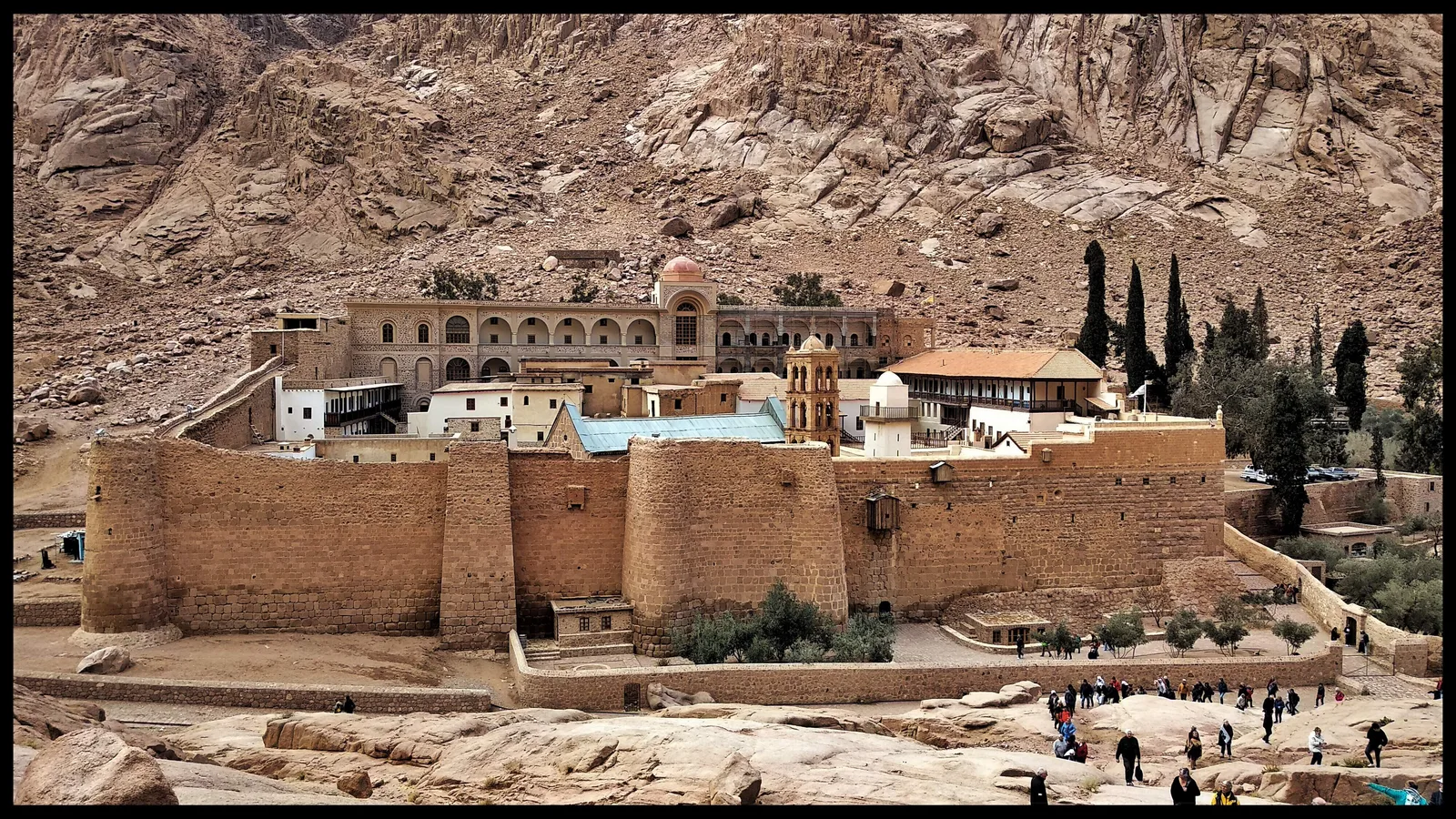
Sinai's High Mountains: St Catherine, an Ancient Monastery and Bedouin Trails
Above Sinai's beach resorts rises Egypt's highest ground: Jebel Musa and Jebel Katherina, a sixth-century monastery that has never closed, Bedouin orchards in the high wadis, and the Sinai Trail — a long-distance hiking route created and guided by the tribes themselves.
August 18, 2026 · 5 min read
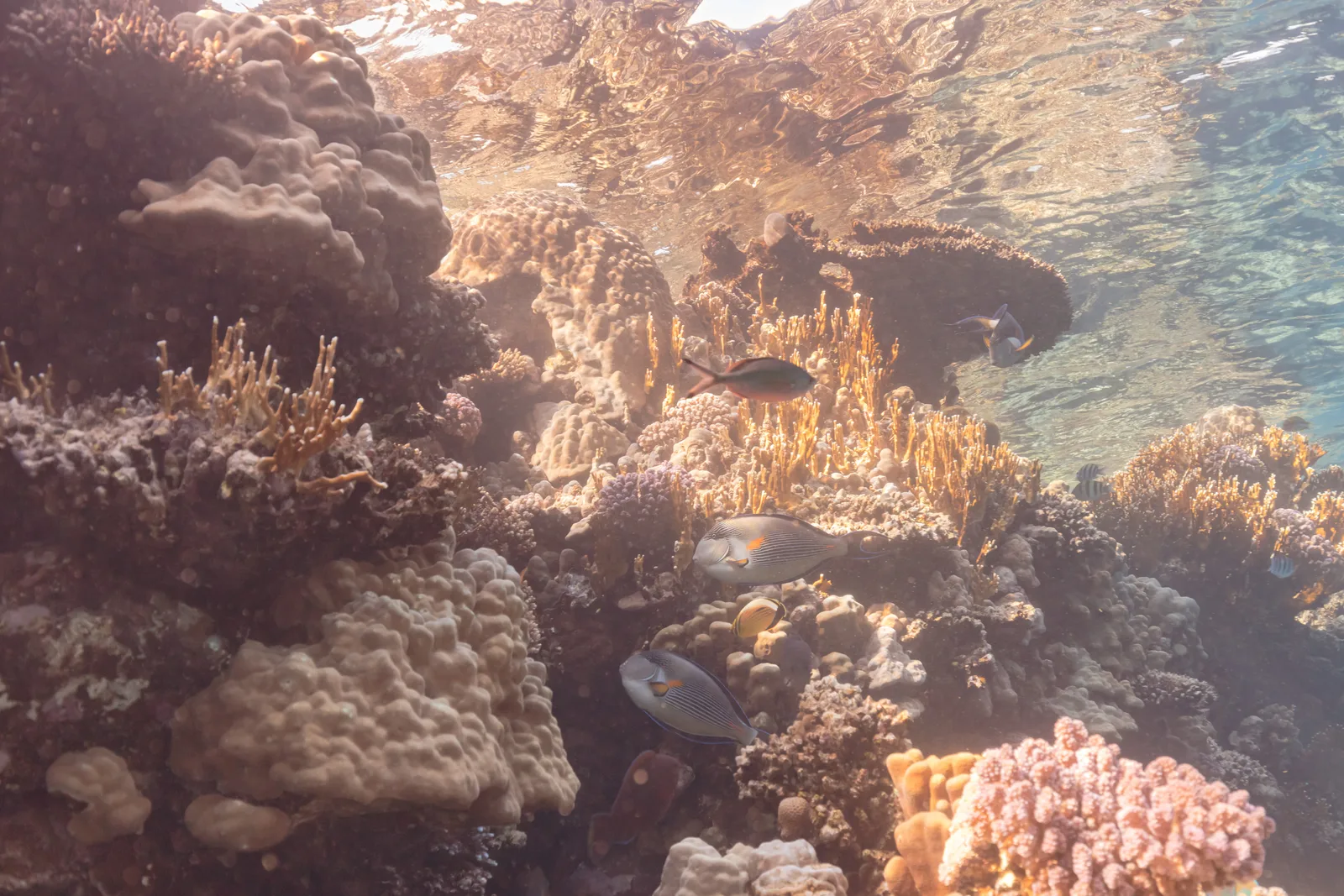
The Red Sea Beyond the Beach: Reefs, Rules, Dugongs and Dolphin Houses
Egypt's Red Sea coast is far more than resorts: heat-resistant corals studied worldwide, strict diving rules, seagrass bays grazed by dugongs and reef lagoons where spinner dolphins rest. A guide to the sea beyond the sand — and how to visit it without harming it.
August 18, 2026 · 5 min read
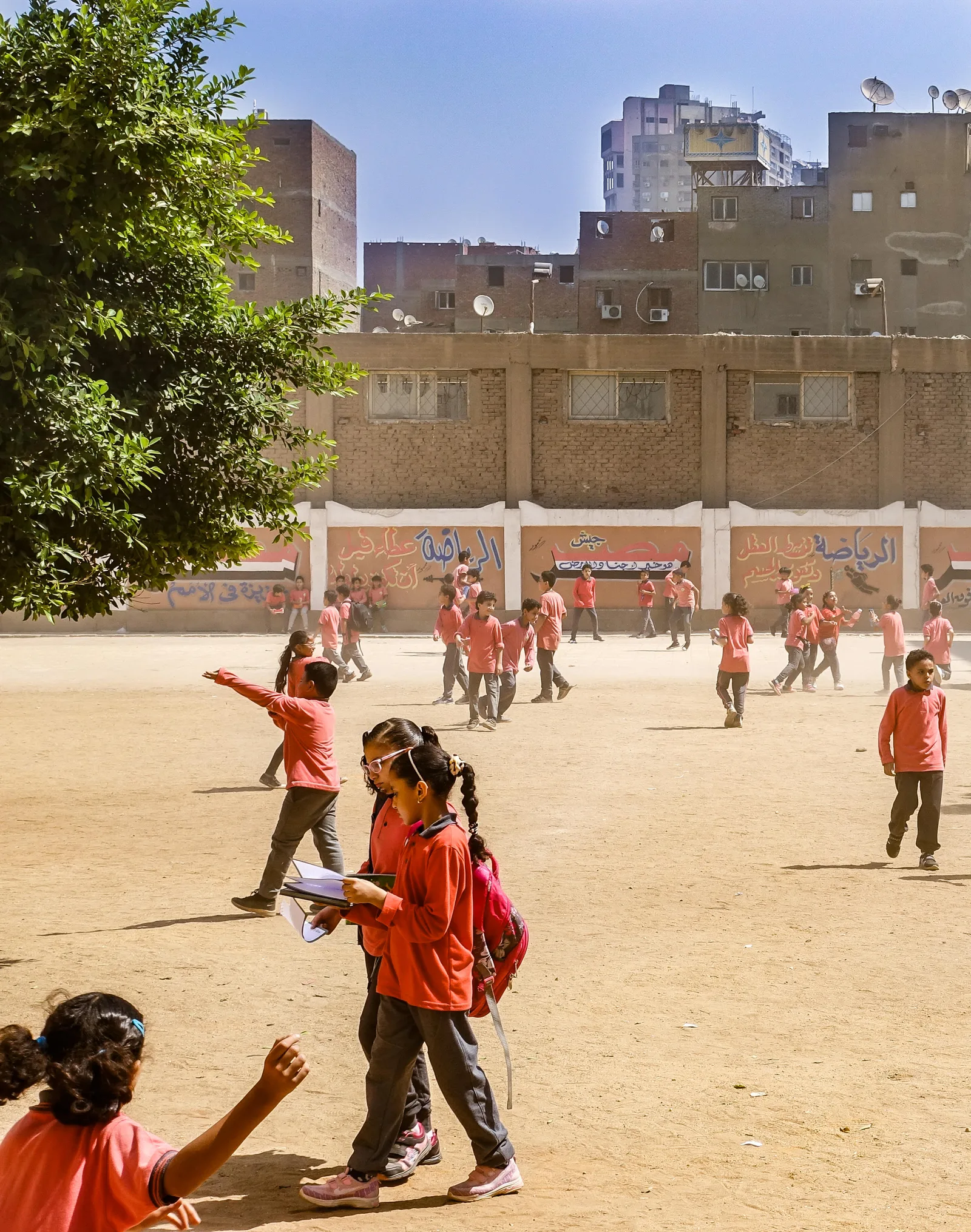
"Reading in Dim Light Ruins Your Eyes": What Ophthalmologists Confirm, and the Risk Parents Really Overlook
With evening study sessions back under a single bulb, the old warning returns: "You'll go blind." We checked the claim word for word and found ophthalmologists of one mind: dim light and sitting close to the screen tire the eyes; they do not damage them. But behind that reassurance stands a real danger most households overlook, and regional estimates put Egypt's children at the top of it.
September 19, 2026 · 7 min read