World Migratory Bird Day: Egypt's Sky, a Bridge Between Two Continents, as Storks Cross the Gulf of Suez Every Autumn
Saturday, October 10, 2026 marks the autumn edition of World Migratory Bird Day. Every autumn, hundreds of thousands of storks and raptors pass over Suez, Ain Sokhna, Hurghada and Gebel El Zeit on their way to Africa, peaking in late August and September and tapering into October. This is the story of the largest aerial crossing over our heads, where to stand and see it, and how radar now halts wind turbines to let the flocks pass safely.
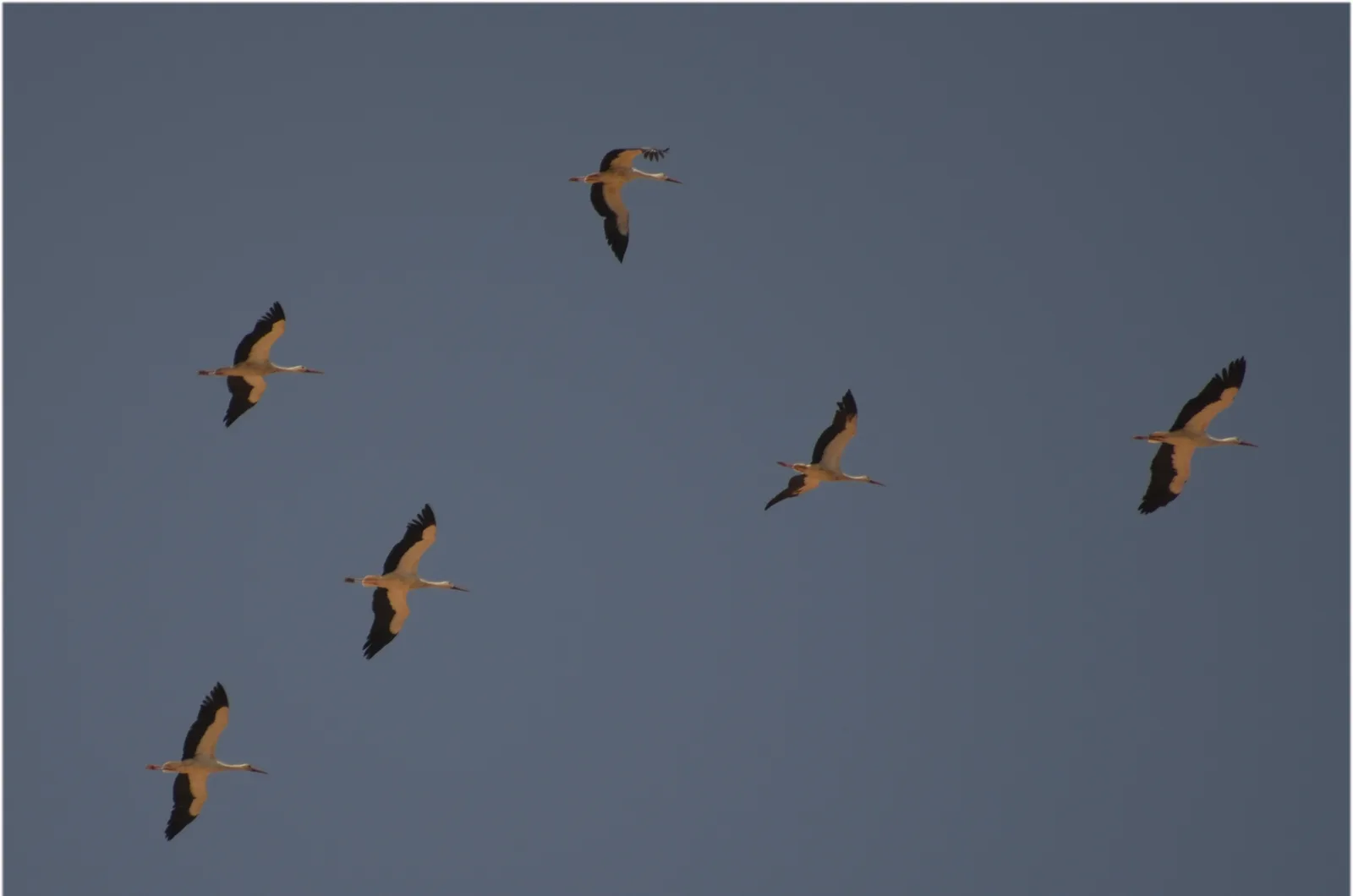
On a September afternoon, on the road down to Ain Sokhna, a car might pull over because a child in the back seat has suddenly lifted his head to the sky. Overhead there is no cloud, no smoke — just hundreds of white specks turning in a wide, slow circle, rising as if an unseen hand were winding them into a spiral, before the ring unravels into a long thread heading south toward the sea. These are flocks of white storks on their way from Europe to Africa, passing over our homes and roads every autumn, while most of us never think to look up.
Saturday, October 10, 2026 marks the autumn edition of World Migratory Bird Day; the occasion is marked twice a year, on the second Saturday of May and the second Saturday of October, because migration seasons differ between the two hemispheres, according to the event's official website. This year's theme is "Every Bird Counts — Your Sighting Matters," which puts the ordinary citizen at the heart of the story: what you see from your balcony can be information that science needs. Let's be precise from the outset: this date does not fall at the peak of the stork crossing over Egypt but toward its tail end — the peak comes weeks earlier, as we'll see — though October still has its own travelers passing the Gulf of Suez.
But why Egypt specifically? Because the Rift Valley and Red Sea route on which our country sits is, according to the sensitivity atlas published by Nature Conservation Egypt (NCE), "the only land bridge between the Eurasian and African landmasses." Large soaring birds — storks, raptors and pelicans — do not fly with the continuous flapping of a sparrow; instead they ride columns of hot air rising off the land, spiraling upward almost without a wingbeat before gliding to the next column. These thermal columns do not form over open sea, so the birds avoid broad stretches of water and their routes narrow at the narrowest crossing points.
This is how Egypt's sky became a "funnel" where the flocks of an entire continent converge. In its atlas, Nature Conservation Egypt estimates that more than two million soaring birds from around 53 species use the Egyptian stretch of this route every year. And in the project description of the Migratory Soaring Birds project, funded by the Global Environment Facility together with the UN Development Programme and BirdLife International, the route is described as the world's second most important corridor for soaring birds, crossed by more than one and a half million birds from 39 species, six of them globally threatened. We do not add the two figures together, since each comes from its own source and covers a different scope.
The scale of the phenomenon becomes clear in the field data. In a peer-reviewed study published in 2011 in the ornithology journal Bird Conservation International, Hilgerloh, Michalik and Raddatz recorded 145,432 soaring birds at Gebel El Zeit — on the western shore of the Gulf of Suez, opposite South Sinai — during the autumn of 2006, between August 20 and October 29, over 453.6 hours of observation. Of these, 134,599 were storks and 9,376 were raptors, with the white stork alone accounting for 91.4% of everything recorded.
The same study maps out the season's calendar with a precision useful to anyone planning to go and watch. Peak days in the autumn of 2006 fell between August 28 and October 13, yet 90% of white storks had passed before September 10, and 90% of European honey buzzards before September 20 — so, in the study's own words, only a modest passage was recorded in October. Even so, October was not empty: the great white pelican was the species recorded there in notable numbers, the black stork's peak day fell on October 1, and the lesser kestrel's peak day on October 3. In other words, October is the month of the stragglers, not of the multitudes.
The trouble is that the geography is one and the same: the narrow coastal strip the flocks are forced to cross is the very strip swept by strong, steady northerly winds that make it one of Egypt's best sites for generating wind power — a point the study states explicitly, noting that the strength of these winds created major pressure to build wind farms there. Of 57,179 birds recorded within a 2.5-kilometer radius of the observers, 32,248 were either grounded or flying no higher than 200 meters — 55.3% of the storks and 65.5% of the raptors. Two hundred meters was the threshold the researchers used to gauge risk, since the planned turbines' height was around 100 meters.
This is how the system known as “curtailment on demand” came about: radar and human spotters posted on high ground detect an approaching flock, so particular turbines are stopped for a few minutes until it passes, then set spinning again, rather than shutting down the whole farm. According to press reports on the Egyptian experience, the system began operating at Gebel El Zeit in the mid-2010s; the radars pick up flocks at a distance of up to thirty kilometers, and the time needed to halt a turbine has dropped from around three minutes to about fifteen seconds. We present these figures as reported in the press, since no official source documenting them was available to us as of this writing.
The system's track record has since moved beyond the press and into a scientific paper. In a paper presented by the monitoring team — Rocha, Tomé and colleagues — to the 11th Brazil WindPower conference in São Paulo in October 2020, the results of "radar-assisted curtailment on demand" were presented for two farms: a 50-megawatt one in Portugal crossed by around five thousand birds every autumn, and a 200-megawatt one at Gebel El Zeit in Egypt, passed by around four hundred thousand birds in spring. The paper describes the mortality outcome at both sites as "very low," against curtailment periods costing the plant no more than 0.04 to 0.15% of its equivalent operating hours per year. It is worth pausing on that exact wording: very low, not zero.
If you want to see the spectacle for yourself, the observation window the study used runs from late August to late October, with storks peaking in late August and early September while some raptors and pelicans linger into October. The best spots open to the public are the stretch from Suez city to Ain Sokhna, then Hurghada and its surroundings, Sharm El-Sheikh on the South Sinai side, and the Gebel El Zeit area. The best time is between mid-morning and late afternoon, once the ground has warmed enough for the rising air columns to form. Look for a slowly turning ring, not a lone bird.
You don't need expensive gear: good eyesight, a small pair of binoculars if you have one, a hat, a bottle of water, and a safe spot to stand away from traffic. Viewing etiquette is simple and non-negotiable: don't approach a flock that has landed to rest or drink, and don't clap or shout to flush it for a photo — every forced take-off costs the bird energy it needs for a journey of thousands of kilometers, and the same study found that roughly half of what was recorded near the ground was resting, not passing through. All along the route, nature-conservation organizations warn that setting up nets for migratory birds catches them at their weakest moments.
This year's theme opens a pleasant door to any citizen: "Every Bird Counts." Recording what you see — date, place, time, an approximate count and a photo if possible — on citizen-science bird-monitoring platforms or with local nature-conservation associations adds a small data point to a larger map used by researchers and wind-farm planners alike. Egypt, as far as we know, is party to the framework of international agreements protecting migratory birds, including the African-Eurasian Migratory Waterbird Agreement, which entered into force in November 1999.
This bond between us and birds is nothing new: the ancient Egyptians carved the falcon of Horus and the sacred ibis, a symbol of Thoth, on their walls, knowing that the sky above this valley was as inhabited as the land. So the next time you're driving the Sokhna road, or standing on a hotel balcony in Hurghada in the afternoon, take five minutes to look up. What you'll see is neither coincidence nor decoration in the sky, but traffic as old as the valley itself, passing overhead without noise or signals. And if you see the ring turning and rising, know that you are standing beneath a bridge between two continents — and that your country, with its geography and a radar that can stop a turbine for a few seconds, is one of that bridge's pillars.
Related Stories

Wadi El Hitan, When Fayoum Was a Sea: A Day Trip from Cairo to a 40-Million-Year-Old Seabed
About three hours from the Cairo gridlock, an Egyptian family stands before the skeleton of a whale with hind legs, 40 million years old, in a desert that was once a seabed. Why did UNESCO choose Wadi El Hitan as Egypt's first natural site on the World Heritage List? And how can a single day take in the fossils, the Wadi El Rayan waterfalls and the pottery of Tunis village? A practical guide to a journey that needs no visa.
September 24, 2026 · 7 min read
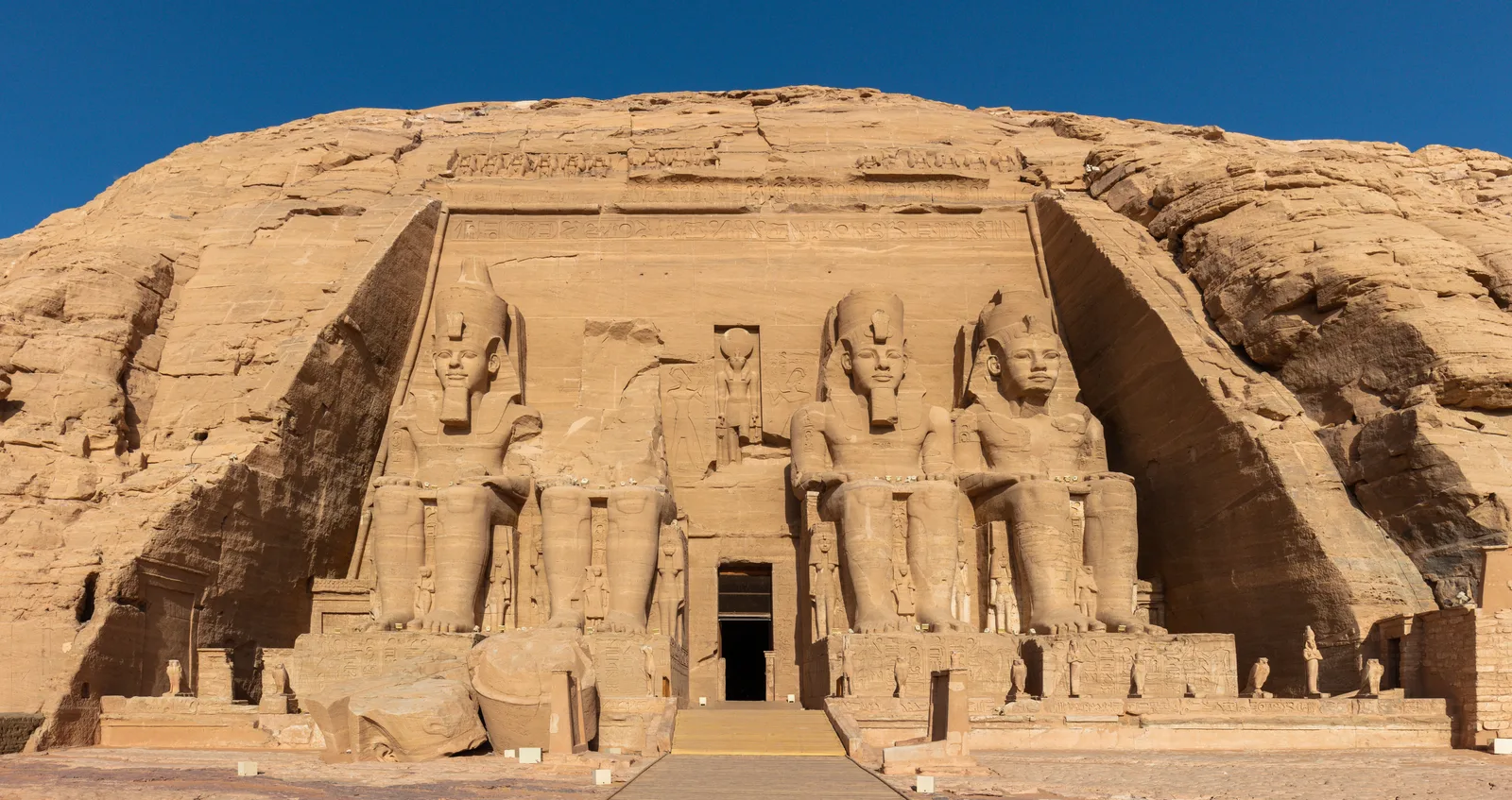
Abu Simbel: the temple the world lifted 65 metres so it would not drown, and the sun that comes back to it on 22 October
Shortly before sunrise on 22 October, people stand in the darkness of the great hall waiting for a thread of light to travel some sixty metres through solid rock and fall on the face of Ramses. Behind that moment lies the story of a twenty-year international campaign that lifted the temple, block by block, above the waters of Lake Nasser. Here is your guide to understanding the spectacle and planning an Aswan trip a month ahead of the date.
September 20, 2026 · 7 min read
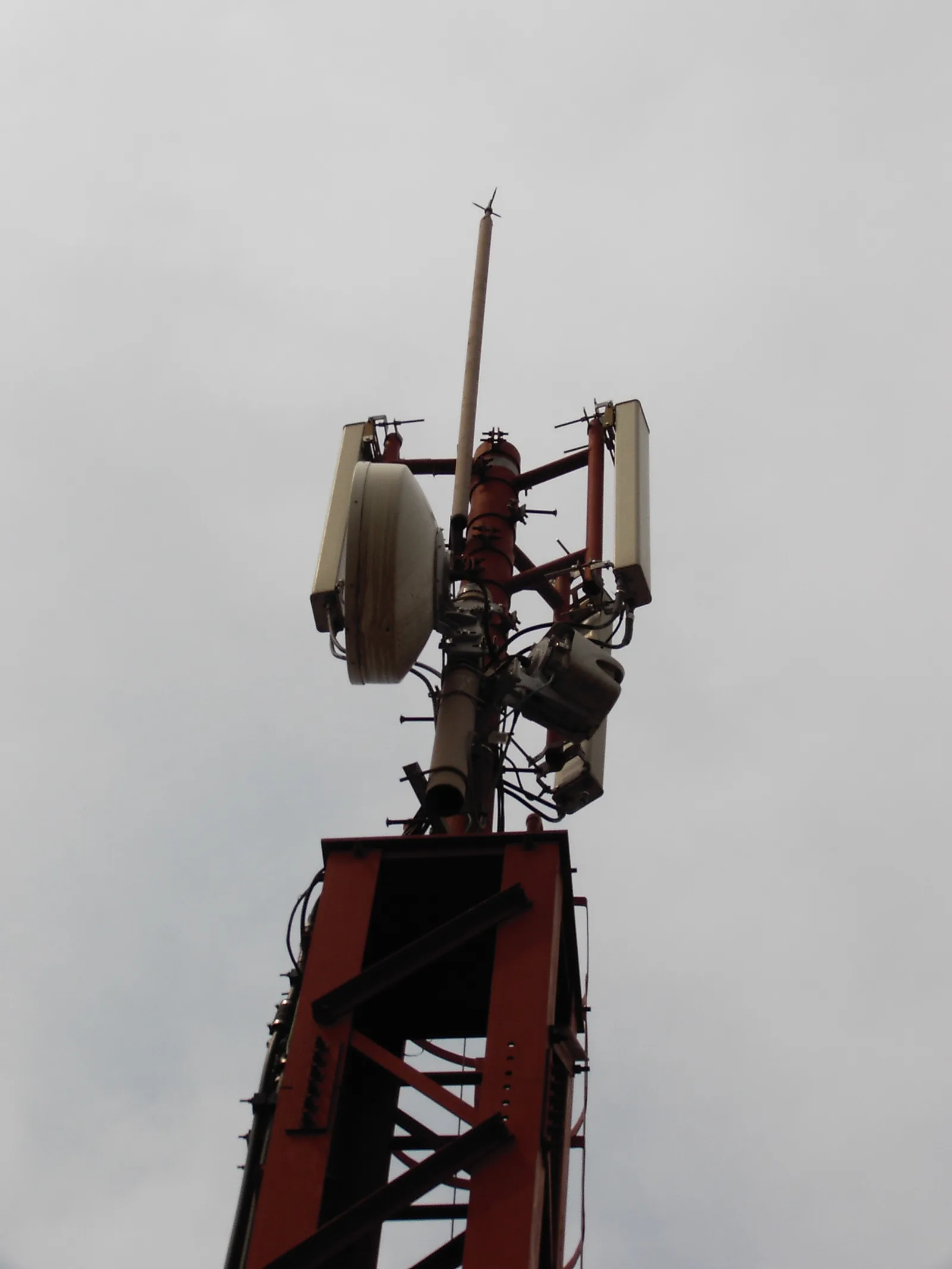
‘The Tower on Our Building Causes Cancer’ — What the Measurements and the WHO Actually Say
A signature sheet at the building entrance, and WhatsApp messages warning the rooftop antenna “will give our children cancer.” We checked the claim: WHO says exposure near base stations is 0.002%–2% of international guidelines, and a 2024 review it commissioned found no likely rise in childhood leukaemia near fixed transmitters. Verdict: no scientific basis — with an honest account of the 2B classification and the legitimate route for residents.
October 8, 2026 · 8 min read