Senate Member Immunity as the Text Puts It: Protection for Opinion, Prior Permission, a 30-Day Deadline
In everyday talk, “immunity” sounds like a shield against prosecution. The constitutional text says something narrower: protection for opinions expressed in the chamber or its committees, prior permission before any criminal step in felony and misdemeanor matters outside flagrante delicto, and 30 days to decide a request. A reading of the articles alone: what immunity protects, what it does not, and how Article 254 extends it to the Senate.
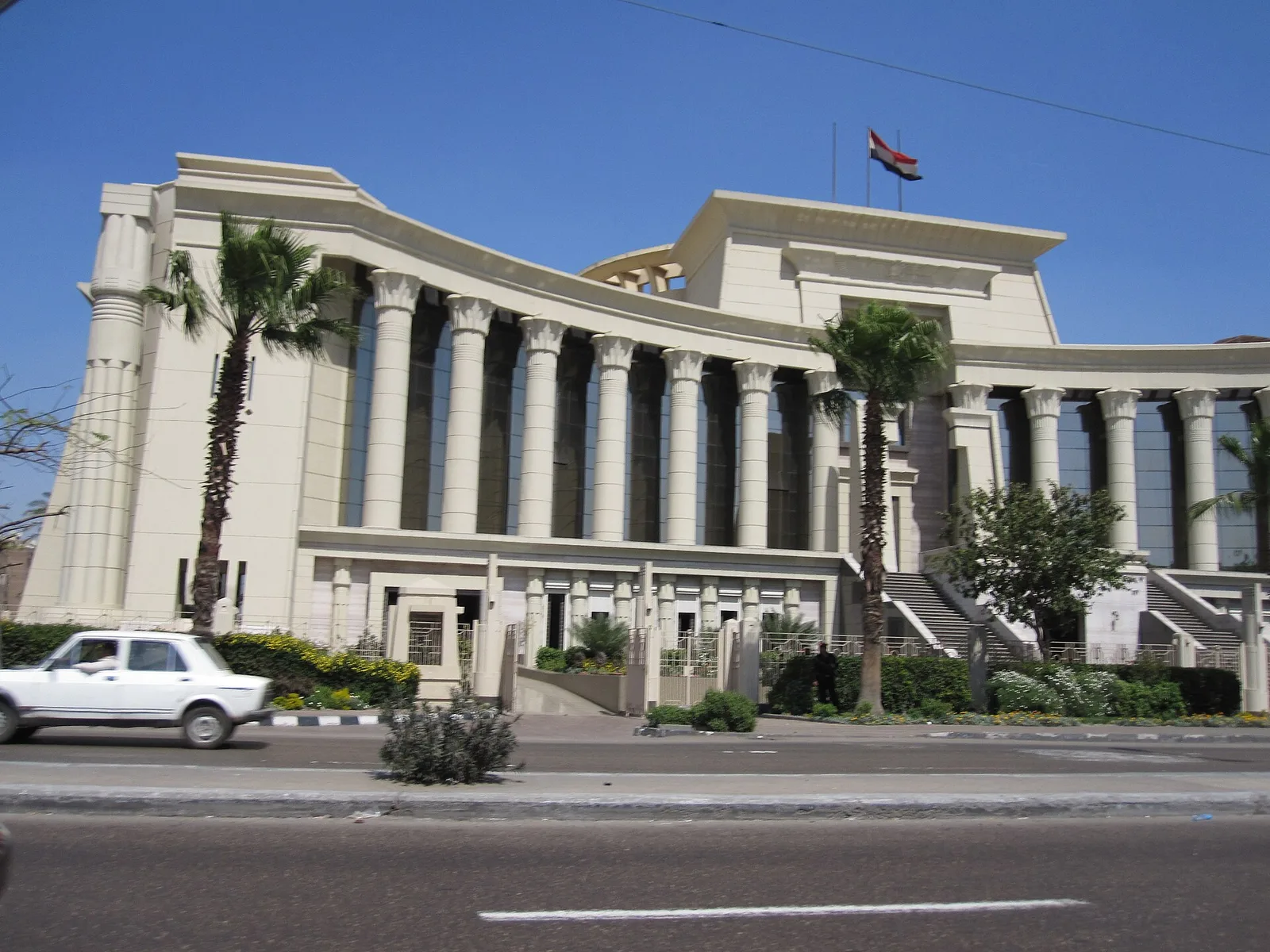
At this point in the parliamentary year, with the session several weeks old, there is a great deal of talk about the legislative chambers, and one word echoes in minibuses, in family group chats and in the waiting rooms of government offices: “immunity.” Many people know the word without knowing its limits, and so it is said as though it were a shield against prosecution altogether. The constitutional text says something far narrower and more precise. This piece is a reading of the provisions alone: no names, no particular incident, and no discussion of any case.
The first thing to say, before quoting anything, is where these provisions sit. The articles people cite when they speak of a member’s immunity, among them 112 and 113, are placed in the chapter on the House of Representatives, not in the part devoted to the Senate, and they do not apply to senators on their own. The route to them runs through Article 254 of the Constitution, which makes a number of articles apply to the Senate, including Articles 107 to 120, with the powers they set out exercised by the Senate and its president. Article 254 does not grant that application unconditionally; it expressly limits it to what does not conflict with the provisions of the Senate part. Its list is not a continuous run, either: it names articles by number and takes only the first and second paragraphs of Article 121. So anyone who reads the word “chamber” in Article 113 while talking about the Senate should read it as the Senate.
Then comes the distinction that settles half the argument: there are two kinds of immunity, not one. The first is substantive. It protects the opinion, not the person, and it is found in Article 112, under which a member of the chamber may not be held accountable for opinions expressed in the course of his or her work in the chamber or its committees. Every phrase in that sentence is a limit: opinions, not acts; matters relating to the performance of the member’s work, not any remark on any subject; in the chamber or its committees, not anywhere else. It is a protection with three clear boundaries, not a general license, and it extends to no deed or conduct.
The reason for this kind of protection is clear from the placement of the text itself. A member’s job is to question, to debate and to give an opinion on a draft law or a committee report, and that job cannot function if every opinion voiced inside the chamber becomes grounds for holding its author to account for that opinion. The protection belongs to the legislative and oversight function itself. It is not a personal privilege that the member carries in a pocket and uses wherever he or she pleases, which is why it does not reach what is said outside the chamber and its committees.
The second kind is procedural, and it is the source of most of the confusion. Article 113 provides that, except in a case of flagrante delicto, no criminal measure may be taken against a member “in felony and misdemeanor matters” without the prior permission of the chamber. That final phrase is not a verbal flourish that could be dropped. It defines what the gate covers: the restriction applies in felony and misdemeanor matters, not to everything that might be called a criminal measure across every grade of offense. And the restriction turns on the situation: where there is no flagrante delicto, the chamber’s permission must come before the measure.
The limits of this procedural immunity show in its subject and in its character. It applies in felony and misdemeanor matters, as noted, and it is given to the member as a member, so it hangs on the status of membership that the text speaks of, not on the person who holds it. It is also a restriction on a procedural step, not a ruling on the merits of the accusation. Permission is not an acquittal, and a request for it is not a conviction. The text neither erases an incident nor changes how the substantive law, which applies to everyone, classifies it. That is why describing immunity as an exemption from the law is inaccurate: the text arranges who may authorize the step and when, not what accountability consists of. And this is where the misunderstanding begins, when a restriction on procedure is read as a restriction on the law.
The rule has an exception written into the body of the same article: flagrante delicto, the state of being caught in the act. In that case no prior permission is needed, because the exception is written at the start of the provision, ahead of the rule. The text does not pair this exception with a duty of notification; it pairs notification with a different situation, that of the chamber not being in session, discussed below. The exception stops where flagrante delicto itself stops. That is a narrow factual state, defined by the Code of Criminal Procedure and not by the Constitution, and it is not a label to be attached to any incident. Whatever falls outside it stays under the basic rule: prior permission before the measure.
Next is the question of timing, which readers usually ask about: what if the chamber is not in session? The text leaves no gap here. Outside the session, the permission of the chamber’s bureau must be obtained, and the chamber is notified, at its first sitting, of whatever measure was taken. The bureau is a body of the chamber itself, not an outside authority, so in both cases the permission remains a parliamentary decision; the bureau’s composition and powers are matters for the internal bylaws, not for the text of Article 113, which names the bureau without describing it. Nothing in the text identifies a period when permission cannot be given, or a season when proceedings are suspended until sittings resume. What changes is the body that grants permission, and what was done remains known to the chamber rather than kept from it.
The deadline is the provision most often read backward. Many people read it as being in the member’s favor, assuming that if it passes without a decision, the member’s position is safe and the request lapses. The text says the opposite: “in all cases,” a request to take a criminal measure against a member must be decided within 30 days at most, failing which the request is deemed approved. This wording makes the deadline run in both situations, the chamber’s permission and its bureau’s permission outside the session. The deadline binds those who grant permission, not the party requesting the measure, and silence under it is not protection. Whatever benefit it holds for the member is that permission must be prior and explicit, and the matter settled within a known time, rather than the request hanging indefinitely.
On the other side of the scale are provisions that are rarely mentioned alongside the word “immunity” and that lean closer to restrictions. Article 109 bars a member, for the whole term of membership, from buying or leasing, personally or through an intermediary, any property of the state or of any public-law entity, public-sector company or public business-sector company. It does not stop at buying and leasing: it also bars the member from leasing or selling any of his or her own property to them, or exchanging it with them, and from concluding a concession, supply, contracting or similar agreement with them, and any such act is void. It requires the member to file a financial disclosure statement on taking up membership, on leaving it and at the end of each year, and it provides that any gift, in cash or in kind, received because of membership or on the occasion of it passes to the state treasury. It too is among the articles that apply through Article 254.
Article 110 deals with the heaviest consequence: the expulsion of a member. It allows this only where the member has lost trust and standing, or has lost one of the conditions of membership on which he or she was elected, or has breached the duties of membership, and only by a decision taken by a two-thirds majority of the chamber’s members. The most important point about it is that it is a parliamentary track separate from the track of criminal permission. The first is a matter for the chamber and the qualified majority set out in the text; the second concerns a criminal measure that depends on prior permission. Neither track substitutes for the other, and neither is its inevitable result.
The part of the Constitution devoted to the Senate has provisions of its own as well, among them Article 251 on the conditions for candidacy and appointment. It requires anyone who stands for membership of the chamber, or is appointed to it, to be Egyptian, to enjoy civil and political rights, to hold at least a university degree or its equivalent, and to be no younger than 35 Gregorian years on the day candidacy opens. The reference to the day candidacy opens is part of the condition, because it fixes the moment at which age is measured. The Arabic text is the reference wherever readings differ, since some circulating translations turn this condition upside down and read it as a ceiling rather than a floor. That is a practical note for every reader: check the text in its original language, in a source that quotes the Official Gazette, and only then speak about it.
Much of the detail lies in the chamber’s internal bylaws, issued under Law No. 2 of 2021, which govern the affairs and duties of membership, including the rules it sets for a member’s travel abroad and what it provides on members’ remuneration. We have not cited its article numbers or the wording of those rules here, because what we had to hand about them was reports quoting the text, not the text itself; anyone who wants the detail should consult the bylaws. As for the new Code of Criminal Procedure, Law No. 174 of 2025, it is in force, and the requirement of prior permission is at root a constitutional one, found in Article 113. What is described here is the procedure under the constitutional text, as of this writing; any other procedural detail is to be read in the text of the law and the bylaws, not in circulating anecdotes.
When the word comes up again in ordinary conversation, the question becomes more precise and calmer: which immunity do you mean? An opinion voiced in the chamber or its committees? Prior permission in felony and misdemeanor matters before a criminal measure? The flagrante delicto exception and its limits? The bureau’s permission outside the session and the notification that follows? Or the 30-day deadline after which the matter ends in approval of the request? Five different things are packed into one word, so people argue over a word and believe they are arguing over the law. The provisions are few, short and freely available, and reading them takes only minutes. It is the shortest route to making talk in the minibus or around the family table a conversation about texts rather than impressions.
Related Stories

Five Matters on Which the Constitution Requires the Senate’s Opinion, and What It Means for the Chamber to “Notify” It
Article 249 of Egypt’s Constitution limits the Senate’s opinion-giving role to five matters and ends with one sentence: “The Senate shall notify the President of the Republic and the House of Representatives of its opinion on these matters.” A plain reading of who refers a matter, what the text says, what it leaves unsaid, and where readers can check for themselves.
November 9, 2026 · 8 min read
A Second Chamber in Nearly 40% of the World's Parliaments: Where Does Egypt's Senate Stand?
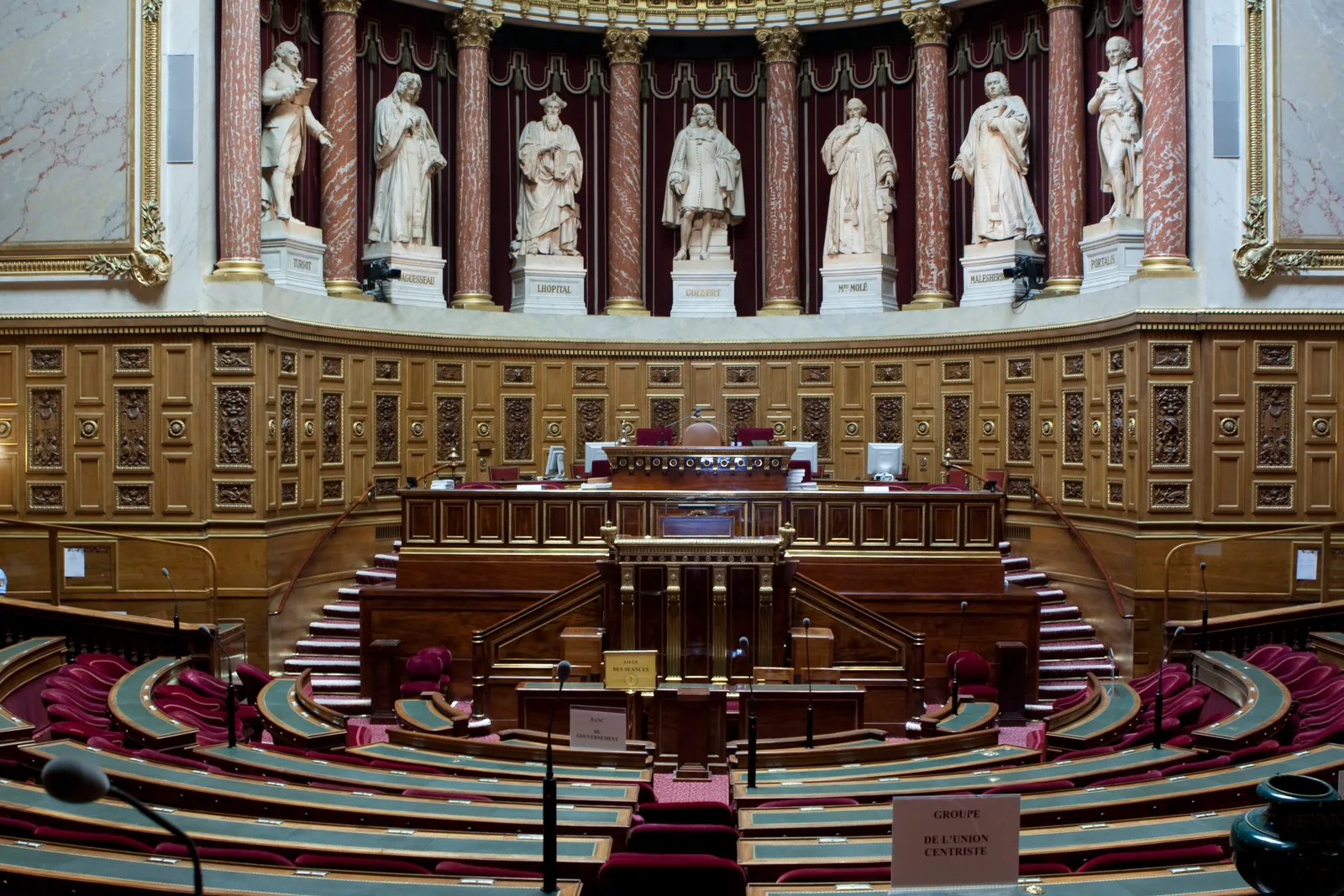
Of the roughly 190 national parliaments tracked by the Inter-Parliamentary Union, only about 78 to 79 have a second chamber. Why do countries opt for a second chamber at all, and what price do they pay for it? A tour through Washington, Paris, Berlin and London, and where Egypt's Senate stands on that map as it actually is — described, not ranked, with no verdicts on best and worst.
November 2, 2026 · 8 min read
Fourteen Committees, 727 Meetings: Where the Senate's Opinion Is Actually Made
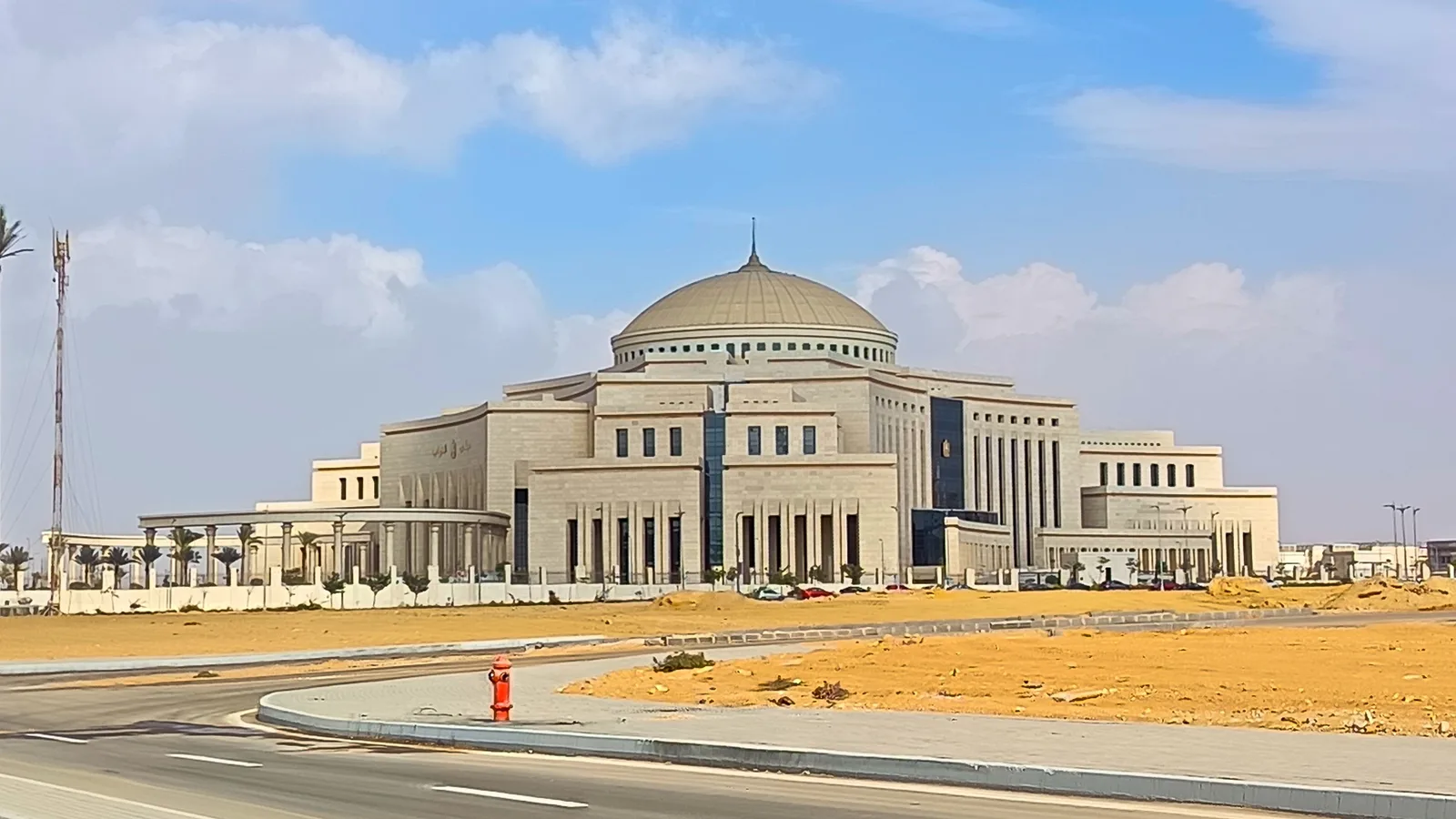
The plenary session is the storefront; the workshop is a room with a long table and stacks of paper. In this non-partisan explainer, we walk step by step through the Senate's fourteen specialized committees: who gets elected in October, how a bill is referred, who is invited to be heard, and how a report is written and then circulated to members at least twenty-four hours before the session.
October 7, 2026 · 8 min read