Before Giza, There Were Saqqara and Dahshur: A Day Trip to Egypt's Oldest Standing Stone and First True Pyramid
Pyramids were not born whole. At Saqqara, stone learned to stand on six mastabas; at Dahshur, one pyramid bent at its midpoint before its neighbor, the Red Pyramid, finally rose straight. A practical guide to a one-day trip to Egypt's oldest known stone monument and its first fully completed true pyramid, with opening hours, ticket prices and tips for descending underground.
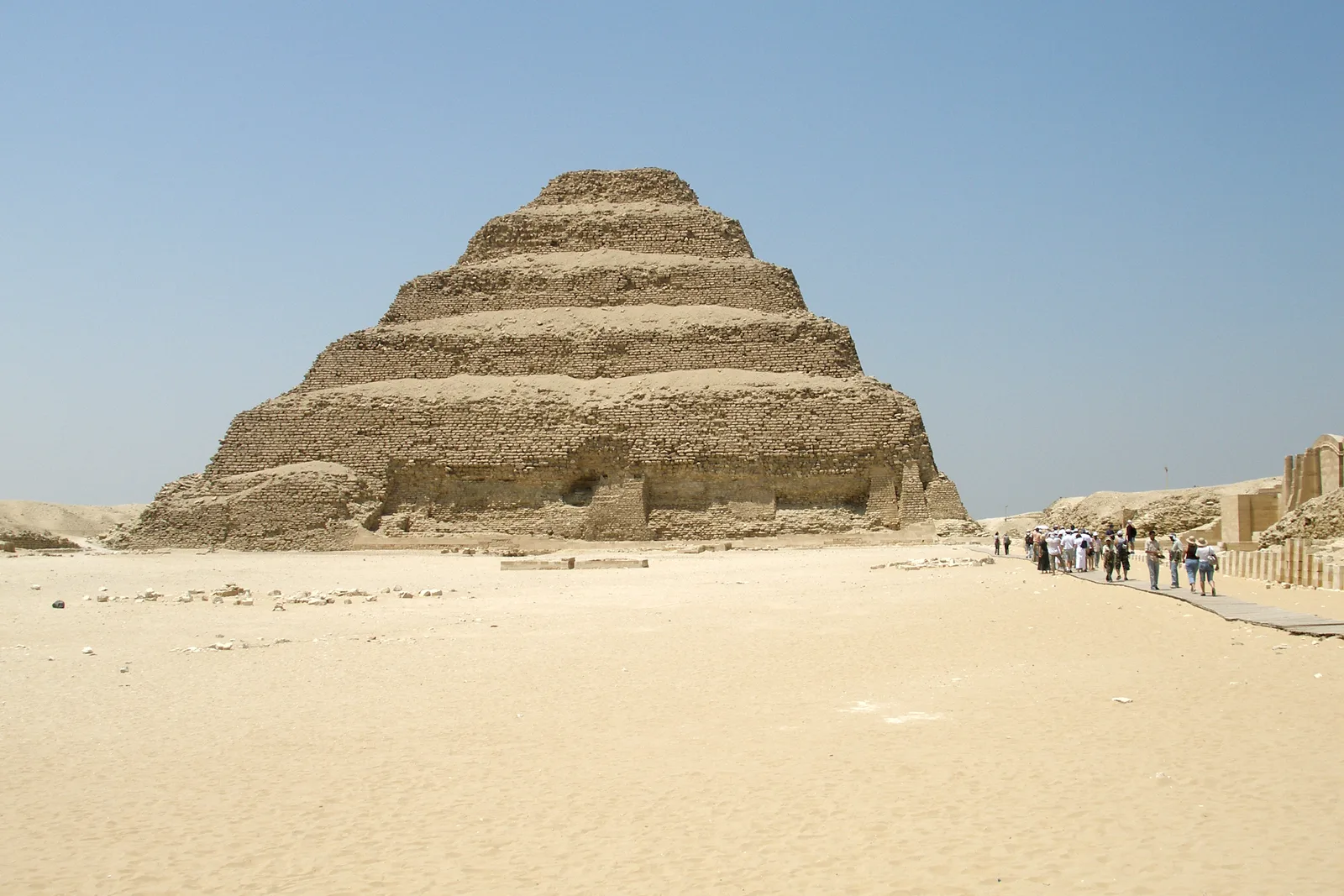
A few quiet minutes by the wall of King Djoser's complex at Saqqara, on a calm autumn morning, are enough to see the same scene play out again and again: a Cairo family stepping out of their car less than an hour after leaving the city's traffic behind. The air is dry and clean, the smell of sand arrives before anything else, and the silence is so vast that children's voices bounce off the stone. One child raises a finger and starts counting out loud: one, two, three... six. Six stone platforms, or mastabas, stacked one on top of the other like a staircase someone climbed toward the sky and forgot to climb back down. The father opens his mouth to explain, then realizes he has no idea where to even start.
The right place to start is this: pyramids were not born whole. We are so used to the image of Giza's three straight-sided pyramids that many assume the ancient Egyptians simply woke up one morning and built a perfect pyramid on the first attempt. In truth, the shape we know today is the endpoint of a long road of trial and error. It began at Saqqara, with stone learning to stand one platform above another; it passed through Dahshur, where a pyramid bent at its midpoint, most likely because of a structural flaw that threatened its stability; and it finally straightened out in a third pyramid just a short walk away. Anyone who visits Saqqara and Dahshur in a single day is not touring two cemeteries, but reading two consecutive chapters of an experiment notebook left open under the sun.
The first chapter belongs to Netjerikhet, better known as Djoser, a king of the Third Dynasty whom Egypt's Ministry of Tourism and Antiquities dates to roughly 2667–2648 BC. His architect was Imhotep, the man credited with the great leap forward: replacing mudbrick with stone built to last. The Step Pyramid, as the Ministry describes it, is made up of six stacked platforms that produce the very staircase children count today with their fingers. It is the oldest known stone structure in ancient Egypt and the first pyramid in history. It stands roughly sixty meters tall and is nearly four thousand seven hundred years old.
The complex was never meant to be just a tomb. The two courtyards stretching out in front of the pyramid re-enact the Heb-Sed festival, a royal jubilee at which the king renewed his legitimacy and his strength. In the eastern courtyard, solid stone buildings were carved to imitate the temporary pavilions used in the celebration, so that the renewal of the king's youth would continue after his death. At one end of the complex stands the "Southern Tomb," which the Ministry describes as an additional, symbolic tomb for Djoser. Its purpose is disputed among researchers, with one reading holding that it represented the king of Upper Egypt to balance his burial in the north, though no explanation has settled the debate. Stone here, in other words, was not just building material; it was an attempt to fix an entire ritual against time.
The pyramid stayed closed to visitors for years before reopening on 5 March 2020, after a restoration that ran fourteen years, from 2006 to 2020, at a cost announced at the time as roughly 104 million Egyptian pounds. Descending the sloping passage inside is unlike anything else: the walls close in, the air grows heavy, and you suddenly realize you are standing inside an idea forty-seven centuries old.
Saqqara is not Djoser alone. The same site holds the Serapeum, a network of underground galleries where the sacred Apis bulls were buried, from the Eighteenth Dynasty all the way to the Ptolemaic period. Near the entrance sits the Imhotep Museum, an excellent introduction for children before they head back out into the sun. Around the pyramid lie the tombs of the kingdom's senior officials, among them the tomb of Mereruka, with its everyday scenes of hunting, plowing, craftsmen at work and musicians playing. The site itself spans from Egypt's earliest dynasties all the way to the Coptic era, where the remains of the Monastery of Anba Irmiya (Saint Jeremiah) still stand.
From Saqqara, a short road leads south to Dahshur, where the second chapter opens with King Sneferu, founder of the Fourth Dynasty and father of Khufu. The Ministry's page on the site says Sneferu chose Dahshur's rocky plateau to build his first pyramid there, an attempt that turned into what it calls a "broken shape" — what we know today as the Bent Pyramid. Most researchers, however, credit Sneferu with an earlier project: the Meidum pyramid south of Cairo, which he converted from a step pyramid into a true pyramid after his predecessor, Huni, is thought to have started it — which would make Dahshur his second attempt, not his first. The angle of its lower section is about 54 degrees (the Ministry's own page gives 55), then suddenly breaks to about 43 degrees higher up, so that the pyramid looks, to anyone standing before it, as though it changed its mind halfway through. Few buildings in ancient Egyptian architecture expose a moment of hesitation this openly.
Why did it bend? The explanation most widely repeated among researchers — offered here as the leading reading, not a settled fact — is that the structure was carrying excess weight that put its stability at risk, forcing the builders to flatten the angle to cut the load and save what had already been built, a reading the Ministry's own page supports. Other researchers link the change in angle to what happened at Meidum, where the outer casing slipped and part of the structure collapsed, arguing that the builders here took precautions to avoid the same fate. The pyramid opened to visitors in July 2019 for the first time since 1965, along with a small pyramid beside it that some researchers believe was built for the king's principal wife. Going inside is no stroll: a descending corridor roughly eighty meters long leads down to two internal chambers.
A short walk away stands the Red Pyramid, named for the reddish tint of its stone in the sunlight. It rises about 105 meters above a base roughly 220 meters wide, at an angle of about 43 degrees, and it is the first true pyramid its builders managed to finish. In other words, the shape that would go on to become Egypt's icon was only perfected and completed here, after two faltering attempts before it. Standing in front of it minutes after seeing the Bent Pyramid feels like watching a lesson sink in before your eyes: the failed experiment was not wasted effort, but the very measurement on which the next success was built.
Dahshur holds more than Sneferu's legacy. Beside his two pyramids stand pyramids from the Middle Kingdom: the pyramid of Amenemhat II, the pyramid of Senusret III with the tombs of princesses around it, and the pyramid of Amenemhat III, known as the Black Pyramid. What strikes visitors most is that their cores were built of mudbrick, which today looks like dark, crumbling mounds, while Sneferu's stone is still standing after more than four thousand six hundred years — a quiet lesson in how fateful the choice of material can be.
As a practical matter, and as of this writing, the website of the Ministry of Tourism and Antiquities lists the following: Saqqara is open daily from 8 a.m. to 4 p.m., with a site entry ticket of 30 Egyptian pounds for an Egyptian adult and 10 pounds for a student, plus separate tickets for the interior of Djoser's pyramid (40 pounds), the Southern Tomb (40 pounds), the Serapeum (20 pounds) and the tomb of Mereruka (20 pounds) — or a combined ticket at 120 pounds for an adult and 60 pounds for a student, with an additional 25-pound parking fee for a private car or taxi. Dahshur is open from 8 a.m. to 5 p.m., with a ticket price of 10 Egyptian pounds for an adult and 5 pounds for a student. Hours and prices change, and access inside the pyramids can be temporarily closed for restoration work, so it is safest to check the official website and ask at the ticket window before setting out.
A few small details make all the difference to the day. Start early: both sites sit exposed to the desert with almost no shade, and the midday sun is harsh even in autumn. Bring water, a hat and sturdy, comfortable closed shoes, since the ground is sandy and uneven. The descending passages inside the pyramids are narrow, sloped and poorly ventilated, and are not suited to anyone with breathing difficulties, back or knee problems, or claustrophobia. Do not touch the carvings, do not climb on the stones, and ask about photography rules at each site, since they differ from one building to the next.
It is worth knowing, too, that this is no ordinary tourist stop. The whole area has been inscribed on the UNESCO World Heritage List since 1979 under the name "Memphis and its Necropolis — the Pyramid Fields from Giza to Dahshur," where the earliest platform tombs sit alongside step, bent and true pyramids alike. What you see in a single day, in other words, is not a scattered collection of monuments, but one continuous timeline you can walk on foot, from the first attempt to the final form.
By the end of the day, as the family heads back to the car with sand in their shoes and faces flushed from the sun, the child who counted the six platforms will have taken home something more valuable than a fact for a school exam. He will have taken home an idea: that what looks complete and majestic today was once a faltering attempt, its angle broken halfway through, before its builders corrected it the next time around. And that none of this lies in some distant country requiring a visa and a plane ticket — it is roughly an hour, give or take, from home, depending on where in Cairo you start and how bad the traffic is, and a combined ticket costing around one hundred and twenty pounds for an adult opens the door to forty-seven centuries. It might be worth reaching for your phone right now, not to scroll through photos of pyramids, but to book a Friday for the trip.
Related Stories
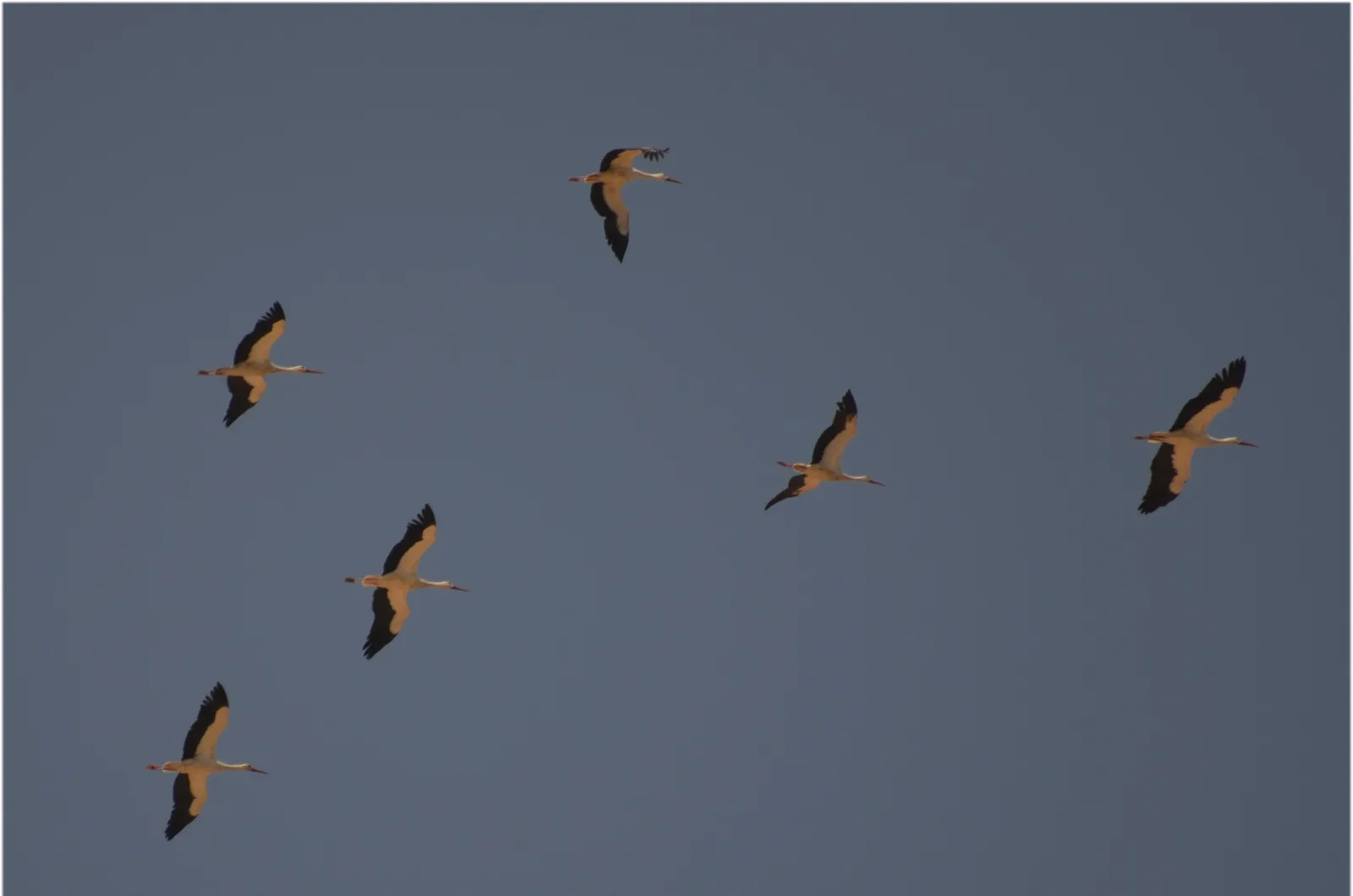
World Migratory Bird Day: Egypt's Sky, a Bridge Between Two Continents, as Storks Cross the Gulf of Suez Every Autumn
Saturday, October 10, 2026 marks the autumn edition of World Migratory Bird Day. Every autumn, hundreds of thousands of storks and raptors pass over Suez, Ain Sokhna, Hurghada and Gebel El Zeit on their way to Africa, peaking in late August and September and tapering into October. This is the story of the largest aerial crossing over our heads, where to stand and see it, and how radar now halts wind turbines to let the flocks pass safely.
October 9, 2026 · 7 min read

“A Cold Shot Cures a Cold”: A False Claim, and What Trials Say About the “Power” of the Vein
“Forget the pills, take a shot and you'll be back on your feet” is advice that returns with the first chill of every year. We test two claims: that a “cold shot” cures a cold, and that an injection is inherently stronger than tablets. Verdict: false. The evidence lies in the mixture itself, in randomized trials comparing vein with mouth, and in an official Egyptian guide. The route of a medicine is the doctor's decision alone.
November 22, 2026 · 9 min read
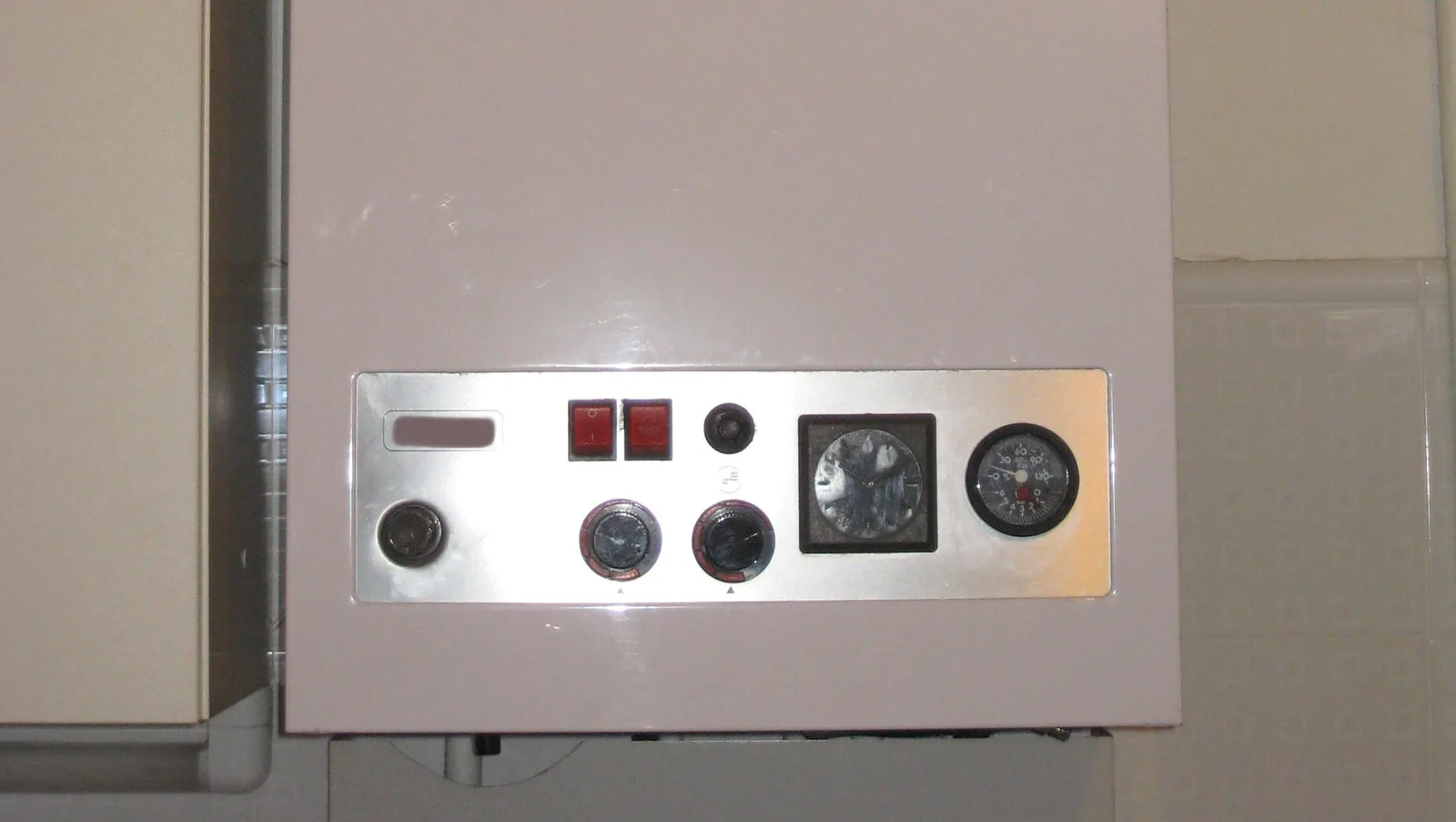
The Silent Killer in the Bathroom: The Danger Is Not the Gas Heater but an Unventilated Room and Neglected Upkeep
With the first cold snap each year, Egyptian homes light their gas water heaters and shut their windows, turning a small bathroom into a room with no fresh air. Carbon monoxide has no colour, smell or taste, and its early symptoms are easily mistaken for a cold or fatigue. Here is what official sources say about the real cause of the danger, and the order of actions in the first minutes that could save a whole family.
November 21, 2026 · 8 min read