“The nawwat have fixed dates the calendar knows in advance”: misleading. The season is real; the date is not science
Every November the same table returns to our phones: al-Miknasa on 16 November, Qasim on 4 December, as if rain kept an appointment in the calendar. Egypt’s meteorological authority says there is no fixed scientific start date for the nawwat and the names are popular, not official. The table’s attribution also shifts between two bodies, and we could not find it on either site. We debunk the claim, honour the heritage and show how to check.
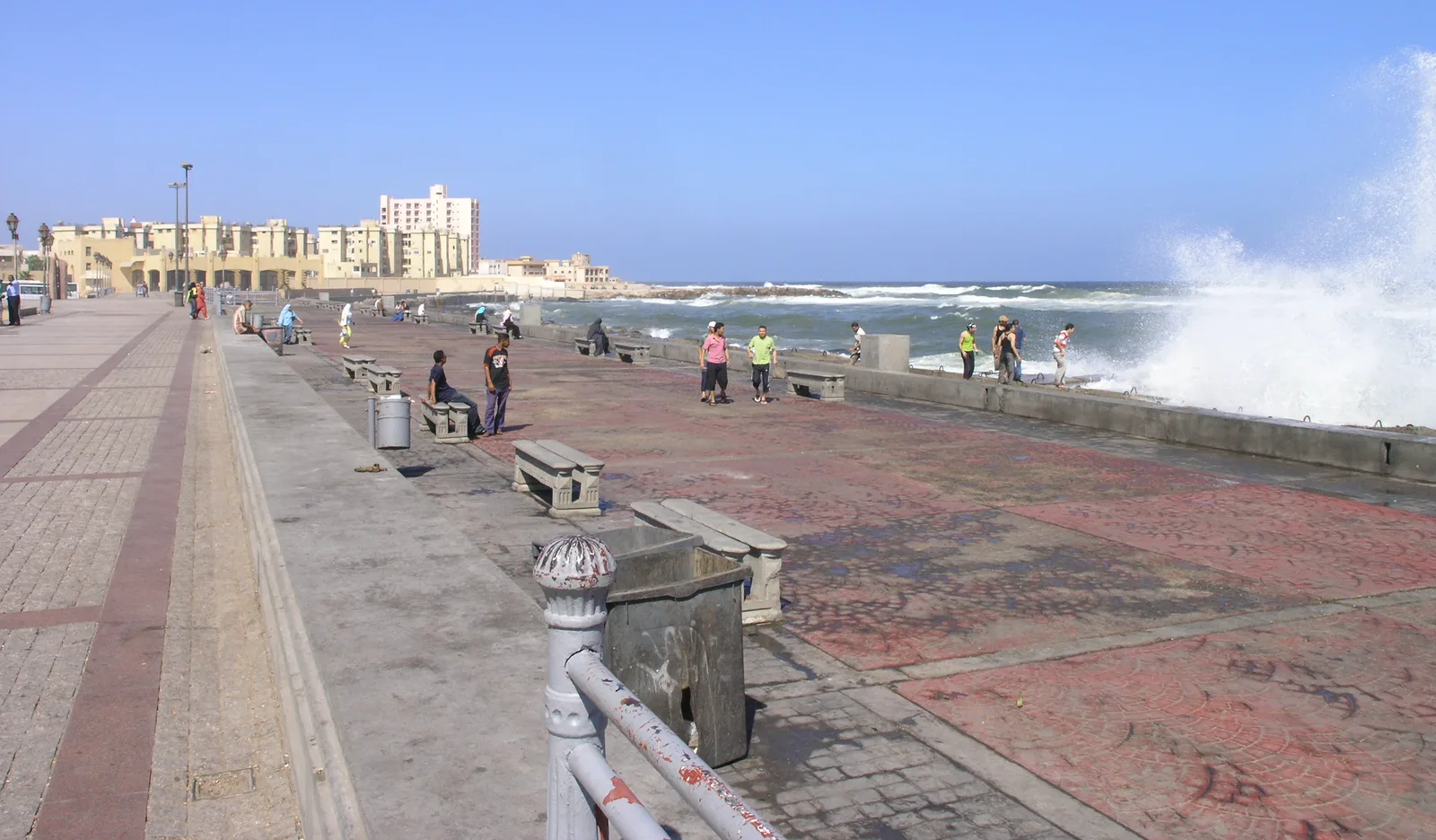
Around this time every year the same image returns to the phones of people in Alexandria, Damietta, Port Said and Rosetta: a table of names inherited from the sea, with dates written out with striking confidence. Al-Miknasa (“the Broom”), 16 November, four days; the remainder of al-Miknasa, 22 November, four days; Qasim, 4 December, five days; al-Fayda al-Saghira (“the Little Flood”), 19 December, five days. Many people arrange their weeks around this table: a shopkeeper lifts his stock off the floor, a family postpones a trip to the coast, a father checks the drain before the written date, a day labourer works out which days may bring no work. You are reading these lines today, 16 November, the very date the circulating table gives for the al-Miknasa nawwa.
The claim we examine here, in the form it takes on social media pages and family chat groups, is that “the nawwat have fixed dates the calendar knows in advance”. Our verdict: misleading. The limits of that verdict matter as much as the verdict itself. It concerns calendar precision alone, not the existence of the nawwat season. A season of instability in the cold half of the year on our northern coast is real and well known, and the fishermen’s experience that produced these names deserves respect. What is misleading is turning an inherited maritime calendar into something resembling a weather bulletin, and granting it a precision of day and duration that nobody has in advance.
The published basis for this fact-check is a statement by the General Authority for Meteorology, published by the Maspero website on 29 September 2026 and attributed to Dr Eman Shaker, head of the authority’s Remote Sensing Centre. She said in so many words that “there is no fixed scientific date for the start of the nawwat”, and that the matter depends on how the weather situation develops, not on the calendar. She explained that the word nawwa itself “is not a scientific meteorological term but a popular expression in common use”, employed by fishermen to describe periods of unsettled weather; that names such as “al-Salibiyya” and “al-Miknasa” are popular names “and not an official classification of weather depressions”; and that by the inherited count there are “about 14 nawwat”, a season that begins with al-Miknasa in mid-November and ends with al-Awwa in March. What was said is that there is no fixed scientific date, not that the nawwat have no basis in reality, and the difference between the two statements is large.
The circulating table and the inherited count come from the same stock. The authority describes the popular count as generations have handed it down: about 14 nawwat from al-Miknasa in mid-November to al-Awwa in March. That is the same count listed in an al-Watan newspaper table published on 25 October 2021 within precisely this window, from al-Miknasa on 16 November to the Awwa and Bard al-Ajuza (“the Old Woman’s Cold”) nawwa on 24 March. The table then adds four more that fall outside it: al-Khamasin on 23 April, al-Nuqta on 18 June, Riyah al-Salib on 30 September and Riyah al-Salibiyya on 20 October. So the figures 14 and 18 do not conflict, and the table and the popular count spring from a single source, maritime memory. That is also the limit of their value: the sum of handed-down experience, not the product of observation or calculation that could yield a date for any particular year.
The table’s attribution deserves a pause. Al-Watan published these dates and durations on 14 November 2020 and on 6 November 2024, attributing them to the official website of the Alexandria Port Authority, and published the same dates and durations on 25 October 2021, this time attributing them to the Egyptian Maritime Safety Authority. The content is the same; the body it is credited to changes. In fairness we must say that we did not see the table on the website of either body, and that the Alexandria Port Authority’s site would not open when we tried to check. What we have is what the press reported about them, not a document we saw ourselves. That is part of the verdict: a maritime calendar belongs on a navigation information board, not in a forecast bulletin, and it is no basis for a decision a citizen takes on a specific day.
What, then, does the meteorological service actually deal with? In the same statement the authority set out its professional vocabulary: weather depressions, fronts, air masses, wind systems and rainfall. These are systems that form, move and weaken according to the state of the atmosphere in that particular week. They may last hours or stretch over days, and they may cross one area while missing its neighbours by a few kilometres. That is why there can be no appointment carved into the calendar: the phenomenon follows the weather system, not the date, and at its best a calendar is a summary of years of experience, not an appointment for one year.
In the same statement the authority added a seasonal distinction worth noting. The character of weather situations in autumn differs from that in winter. In autumn the Mediterranean stays relatively warm, which raises the chances of instability, thunderclouds and locally heavy rain; in winter the chances of depressions and fronts increase. The eastern Mediterranean literature confirms that such situations are read through their weather systems, not their names. A study of flash-flood events in Cyprus, published in the journal Advances in Science and Research in 2008, analysed 43 cases between 1994 and 2006 and found that the conditions that set them up were either a depression or a convective-type situation. It sorted them into isolated, short-lived instability events and events tied to a broader, longer depression. The study says nothing of the nawwat or their names; it speaks of the weather system that produces the event.
Because this piece was written some time before the day it is published, we say it plainly: we do not know, and cannot know, what the weather will be in Alexandria, Damietta or anywhere else today or tomorrow, and we are not saying that any particular nawwa is coming or absent. We promise you no rain and warn you of no wind in these lines. The only reference is the bulletins and warnings the General Authority for Meteorology issues for specific weather situations. It is the body whose work is governed by Law No. 25 of 2023, promulgating the law on the reorganisation of the General Authority for Meteorology, issued and published on 21 May 2023 and in force from the following day; press coverage cites that law for the authority’s competence over meteorological services in Egypt. We mention it without an article number and without a penalty, and we admit that we were unable to open the text of the law itself. Any table or page that gives you a date from the calendar is not a source for a weather report.
To be fair in our verdict, we should say what is true in the story. The cold half of the year is the rainy season on our northern coast, and the coast, with Alexandria at its heart, gets a larger share of it than the interior because of its position on the Mediterranean. The instability that stops boats and floods low-lying streets is a reality that recurs every year, even if its dates and intensity differ. It also has precedents documented by date. One is a report that Al-Ahram Gate published on 10 December 2025, citing a member of the fishermen’s association in Azbet al-Burj, Damietta, saying that small and medium fishing boats were completely halted and barred from leaving the inlet as winds picked up and waves rose, with fishing to resume once the effect of the nawwa and the marine safety signals had passed. Damietta Port’s media centre, meanwhile, announced that the port was unaffected. Note the date: 10 December, not the 4 December that the table assigns to the Qasim nawwa. That is a precedent with its own day and year, not a forecast for this year.
The inherited calendar also has a value that this fact-check does not deny. The fishermen who coined these names were organising their livelihoods and passing on to their children the sum of years spent reading the sea, its colour and the wind, in an age with no satellites and no bulletins. Whoever calls a week al-Miknasa is condensing the idea that this time of year often brings a wind that sweeps and stirs up the sea. That is a summary of a climate, closer to a general average than to an appointment. The difference between an average and an appointment is all we are saying here, and anyone who denies this heritage or mocks it errs as much as the person who turns it into a weather bulletin.
The confusion carries a price that people pay in two directions. In the first, the shopkeeper waits for the written date and takes no precautions before it, so when a weather situation arrives in a week that has no name in the table, he is caught unprepared. In the second, some treat the table as fact: they disrupt their day, cancel a trip and spend on needless arrangements because the date has arrived, then the day passes quietly and serious warnings lose their weight for them afterwards. A false alarm and false reassurance are two faces of one mistake: taking the decision from the calendar instead of from the bulletin.
So that you need not take our word, or the word of the image that reached you, here is a practical way to check. First, find the body the words are attributed to and open its own site. If the table is not on its page, the attribution is unproven; and if you find it credited to one body in one year and another body in another, that alone is reason to stop. Second, ask what the figure is built on: observation and calculation, or a handed-down calendar? In our case the answer comes from the authority itself: popular names, and no fixed scientific date. Third, check the date of publication, since much of what circulates in November is screenshots of old articles that return every autumn. Fourth, tell apart two kinds of statement: a calendar that says this time of year is rainy, and a bulletin that says what to expect in the coming hours. The first is culture; only the second is a basis for a decision.
These names remain in their rightful place: the memory of a city that lived off the sea, and a general seasonal reminder that the cold months bring rain, so that preparing the roof, the gutter and the drain is seasonal work done ahead of the first spell, not put off until a day written in a table. The decision for the day itself, whether to travel, to send a boat out, to lift stock off the floor or to send a child to school along a road that floods quickly, has a single source: the General Authority for Meteorology’s bulletin and warnings on that day. Our grandfathers read the sea with their own eyes because they had nothing but their eyes, and we have today what they did not; using it is a way of honouring them.
Related Stories
“A Cold Shot Cures a Cold”: A False Claim, and What Trials Say About the “Power” of the Vein
“Forget the pills, take a shot and you'll be back on your feet” is advice that returns with the first chill of every year. We test two claims: that a “cold shot” cures a cold, and that an injection is inherently stronger than tablets. Verdict: false. The evidence lies in the mixture itself, in randomized trials comparing vein with mouth, and in an official Egyptian guide. The route of a medicine is the doctor's decision alone.
November 22, 2026 · 9 min read

“Parcel on hold: update your details via the link”: a text that doesn’t update your account but opens it to others
A text says your parcel is stuck or your details need updating; one link will fix it. The claim: a message asking you to update your details through a link is an official message from the post office or bank. Verdict: false. Egypt Post denies asking for confidential data or updates through unofficial links; the Central Bank warns against links and sharing codes. How to read the message, and what to do at once if you entered your details.
November 11, 2026 · 8 min read

‘The Flu Shot Is What Gives You Flu’ — What’s Actually Inside the Seasonal Vaccine?
With the first chill of autumn and the return to school, the same line comes back: ‘I got the shot and fell ill with flu a week later.’ We examine this one claim: does the seasonal flu vaccine spread the disease? Verdict: false. The reason lies in how the vaccine itself is made, in the two weeks the body needs to build immunity, and in other winter viruses wrongly blamed for it.
November 1, 2026 · 7 min read