“Parcel on hold: update your details via the link”: a text that doesn’t update your account but opens it to others
A text says your parcel is stuck or your details need updating; one link will fix it. The claim: a message asking you to update your details through a link is an official message from the post office or bank. Verdict: false. Egypt Post denies asking for confidential data or updates through unofficial links; the Central Bank warns against links and sharing codes. How to read the message, and what to do at once if you entered your details.
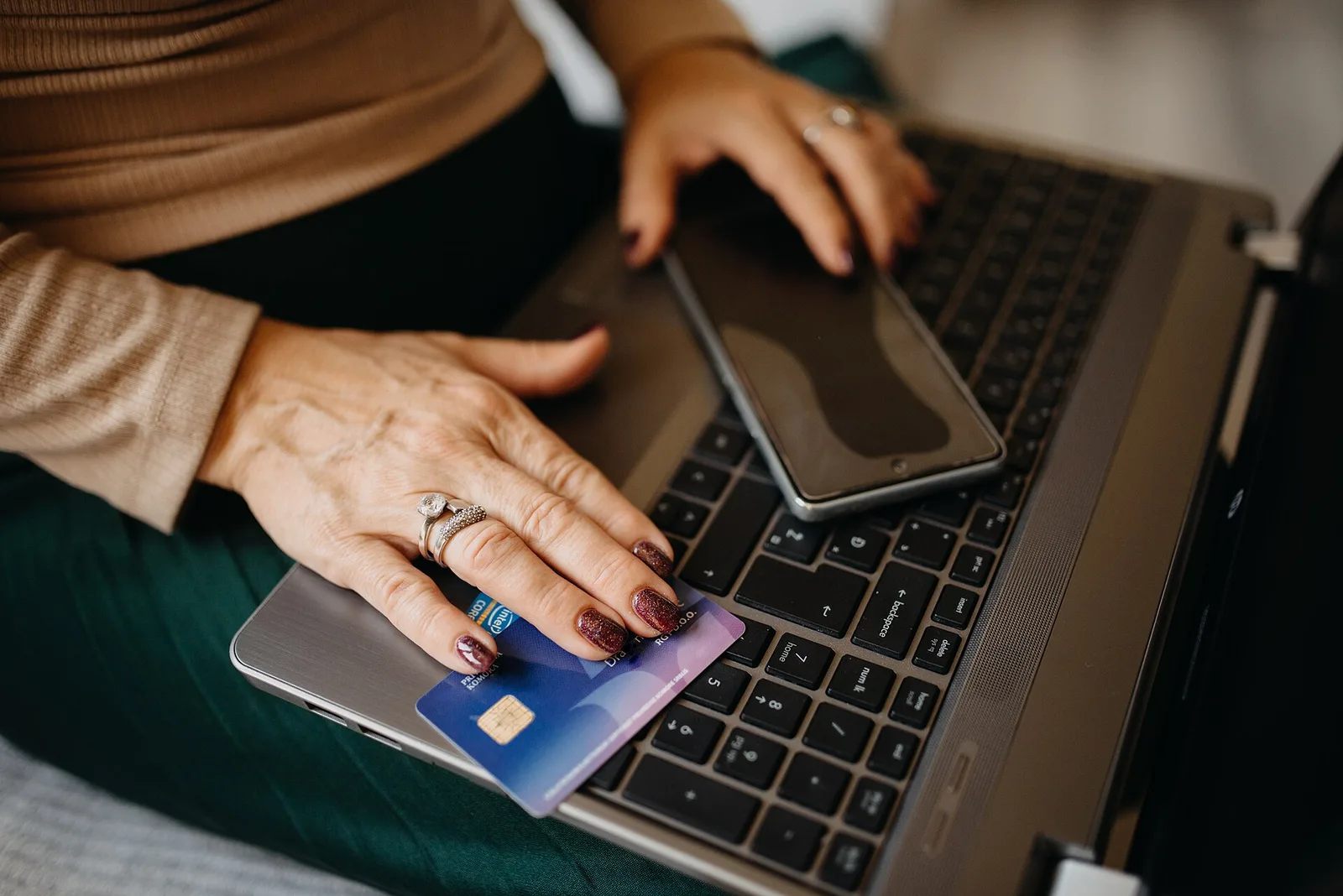
In these weeks of every year, when online stores are swamped with orders and parcels pile up on their way to homes before the year ends, the phone becomes part of the waiting. Many people in Egypt know the text that arrives at midday or just before bedtime: your parcel is on hold, or the address is incomplete, or your details need updating, followed by a single link and a sentence urging you to hurry. The message looks innocent because it matches exactly what is already on the recipient’s mind: they really are waiting for a parcel, they really do fear it will be sent back, and so they tap the link believing they are protecting their order.
The claim we examine here is precise, word for word: a message asking you to update your details through a link is an official message from the post office or the bank. The verdict: false. The precision matters, because the verdict does not deny that the postal service and banks send genuine messages to their customers, nor that parcels are sometimes delayed for ordinary reasons. What it rejects is the premise on which the message itself rests: that an official body asks you for your confidential data, or to update it, through a link sent in a text message. That request, in that form, comes neither from the post office nor from the bank.
The first piece of evidence comes from the body whose name is being borrowed. In an official statement from Egypt Post, carried by Egyptian news sites on May 23, 2025, the authority warned of fake text messages and emails, sent from local and international numbers and impersonating it, containing links used for phishing and pretending that a parcel is held up, that the address contains an error or that bank details need confirming. The authority said it does not ask customers for confidential information by message, nor for detailed data about their accounts or where they live, nor for passwords or secret codes, and that it does not ask for data updates or shipping fees through unofficial links; parcels, it said, should be tracked only through its official website or app. In plain terms for the reader, any message asking them to enter their details through a link is not from the authority.
The second piece of evidence comes from the banking regulator. According to Egyptian newspaper reports of August 13, 2026, the Central Bank of Egypt and the banks operating in the country launched a joint anti-fraud awareness campaign, with its messages published under the hashtag “Together We Fight Fraud.” The campaign urges customers not to respond to anyone trying to steal their data or money, not to disclose any banking or personal details during suspicious calls in which fraudsters may pose as bank staff or officials, and not to click any link that reaches them by text message or email, especially unknown links or those that ask for personal or banking data. The slogan itself is not new to Central Bank awareness work: it headlined an educational item attributed to the bank and published by Al-Masrafiyoun, a platform of the Egyptian Banking Institute, on September 25, 2025. As of this writing, that is the message the campaign has put on the record.
The most specific part of this guidance concerns the verification code. In Central Bank guidance relayed by Egyptian press coverage on August 29, 2026, the warning was against sharing the one-time verification code with anyone: the code is valid for a single use and is sent to the phone linked to the account to confirm a payment, and whoever obtains it can carry out transactions in the account holder’s name. The reason is simple. The code is not sent to you so that you can prove your identity to someone; it is sent to confirm a transaction that is already under way. Anyone who asks you for it is in effect asking you to complete, yourself, the transaction they have begun. That is why it is called the last line of defense: what comes before it can be contained by blocking the card and changing login details, but if it falls, everything falls.
What, then, is true? It is true that the post office and banks send messages, but their job is to inform, not to interrogate: a notice that a parcel has arrived, an alert about a debit from the account, a confirmation of a delivery time. A genuine message tells you what has happened and leaves you to check it yourself in a place you already know; a fake one asks you to enter your details in a place it has chosen. That is the practical difference that makes any deeper analysis unnecessary. Your bank does not need to ask for your card number, because it already has it, and the postal authority has no need of your card number at all to deliver a parcel to you.
So a message can be read before anything is tapped. Four signs are enough: urgency or a threat of suspension or cancellation if you do not act immediately; a link presented as the only solution; a request for data that is never legitimately asked for; and a context you did not initiate. The postal authority’s statement spelled out what must be given to no one and entered into no unofficial page or link: the numbers on the back of the card, its expiry date, the PIN, the national ID number, and any account information to people you do not know. The Central Bank’s guidance adds the temporary verification code. Another hallmark of phishing is a message that arrives in the name of one body when you are waiting for a parcel from another, or when you have ordered nothing at all.
None of this amounts to news of a particular wave of messages at a particular time; as of this writing, nothing indicates one, and the problem is seasonal by nature. With the peak of online shopping and year-end deliveries, more people are genuinely waiting for a parcel at the moment the message lands, and that alone is what makes the lie work. It is not convincing in itself; it is convincing because it matches an expectation that already exists. The fraudster does not need to know you; all they need is to send the message in the month when many people are waiting.
The golden rule after that is a single one: never verify a message with the message. Neither the link in it nor the number written in it can be used to check it, because both are the sender’s creation. Go back to a channel you chose yourself: the postal authority’s official website or its app for tracking parcels, and your bank’s app, or the customer-service number published on your bank’s official website, or your branch, to ask about your account. Reach the website by typing its address yourself, not by tapping what was sent to you. If you want to report a suspicious message impersonating the authority, take the reporting channel and number from the authority’s official website or app on the day you need them; numbers and channels change, and a number should never be taken from a message or from an article.
If the door has already been opened and you have entered your details, speed is all you have, and the steps are few and clear. Notify your bank at once through its official channel, ask for the card to be blocked or for activity on it to be frozen, change your login details for the bank’s app and any password you reused elsewhere, and then file a report with the competent authority. For the details of reporting, and for what the Law on Combating Information Technology Crimes, No. 175 of 2018, criminalizes, we have devoted a separate article, published on October 30, 2026. Do not count on a particular outcome, and do not expect a promise from us: speed raises the chance of limiting the damage but guarantees nothing, and each case is for your bank and the competent authority to assess.
There is one step that is not usually written into the advice: do not enter your details in a hurry, and do not enter them alone. Haste is itself one of the fraudster’s tools, and one minute spent asking someone at home is often enough to defeat the message. It is worth remembering a rule that Egyptian press coverage relayed from the Central Bank on October 7, 2026: shipping and postal companies, like banks, do not request customer data by phone call, and the rule is not to respond to any request to update data through an untrustworthy link. Most important is that the message reaches those with the least experience of such texts: whoever receives the family’s orders and does not follow these tricks, whoever buys from an app for the first time, and whoever thinks that familiarity with the phone alone will protect them. Give them one sentence to remember: no card number, no PIN and no verification code to anyone, even if they say they are from the bank.
The good news in all this is that the weakest link in this chain of fraud is the one in your hands. Without your action, the message is worthless paper: do not reply, do not argue, do not tap; delete it or ignore it, and report it through the official channel if you wish. Someone who never falls victim is better off than someone who seeks redress afterwards; refraining here is much cheaper than the cure, and it costs no more than two seconds of pause before a screen that is hurrying you.
Go back to that message with your parcel waiting behind it. The right path to the parcel is short and well known: open the authority’s app or website and enter the tracking number. If the parcel is held up, it will show there, and if it is not, the message was merely an open door into your account. The claim we began with, that a message asking you to update your details through a link is an official message from the post office or the bank, is false, and the bodies whose names are used have said so themselves. The sentence worth keeping on your phone is simpler than all of that: the link that asks for your details does not update your account; it opens it to someone else.
Related Stories
“A Cold Shot Cures a Cold”: A False Claim, and What Trials Say About the “Power” of the Vein
“Forget the pills, take a shot and you'll be back on your feet” is advice that returns with the first chill of every year. We test two claims: that a “cold shot” cures a cold, and that an injection is inherently stronger than tablets. Verdict: false. The evidence lies in the mixture itself, in randomized trials comparing vein with mouth, and in an official Egyptian guide. The route of a medicine is the doctor's decision alone.
November 22, 2026 · 9 min read

“The nawwat have fixed dates the calendar knows in advance”: misleading. The season is real; the date is not science
Every November the same table returns to our phones: al-Miknasa on 16 November, Qasim on 4 December, as if rain kept an appointment in the calendar. Egypt’s meteorological authority says there is no fixed scientific start date for the nawwat and the names are popular, not official. The table’s attribution also shifts between two bodies, and we could not find it on either site. We debunk the claim, honour the heritage and show how to check.
November 16, 2026 · 8 min read

‘The Flu Shot Is What Gives You Flu’ — What’s Actually Inside the Seasonal Vaccine?
With the first chill of autumn and the return to school, the same line comes back: ‘I got the shot and fell ill with flu a week later.’ We examine this one claim: does the seasonal flu vaccine spread the disease? Verdict: false. The reason lies in how the vaccine itself is made, in the two weeks the body needs to build immunity, and in other winter viruses wrongly blamed for it.
November 1, 2026 · 7 min read