The Arab League: The House of the Arabs, Whose Windows Look Out on Tahrir Square
A few steps from Tahrir Square stands "the House of the Arabs": one of the oldest regional organisations in the world, born in Cairo before the United Nations Charter itself. How do its summits and its secretariat actually work? Why do its resolutions bind only those who accept them? And what lies behind the departure to Tunis and the return home? A tour inside an old neighbour we walk past every day and barely know.
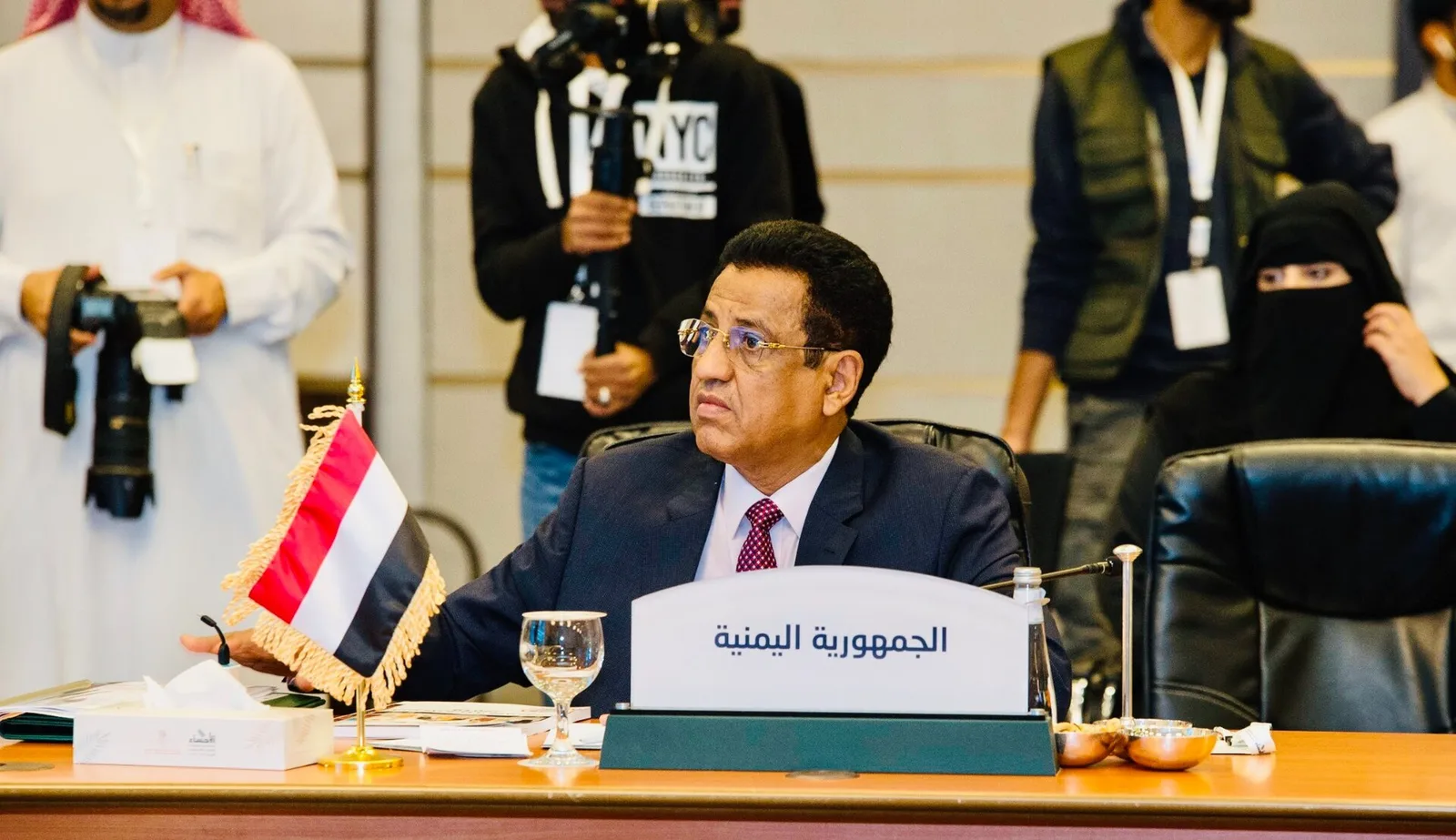
Stop for a moment in the heart of Tahrir Square, turn your back on the crowds and lift your eyes towards the stately building that looks out over both the square and the Nile. This is the headquarters of the League of Arab States, or "the House of the Arabs", as Egyptians have long called it. Beneath its windows thousands of hurried footsteps pass every day on their way to the metro, the museum and the car parks, and hardly a passer-by stops to ask what goes on behind that stone. In these halls kings and presidents have gathered, positions that shook the region have been proclaimed, quarrels have been buried and others revived. The irony is that many of us know the square inch by inch, yet know nothing of this ancient neighbour but its name.
Here is a first fact worth carrying into any conversation: the Arab League is one of the oldest regional organisations still standing anywhere in the world, and without question the oldest in our own neighbourhood. Its charter was signed in Cairo on 22 March 1945, months before the United Nations Charter itself came into being that same year. Seven states laid the foundation stone: Egypt, Syria, Lebanon, Iraq, Transjordan, Saudi Arabia and Yemen. The founders attached to the charter a special annex on Palestine, declaring from day one that the cause was no foreign affair but a permanent entry in the household ledger. In this, the Arabs reached the idea of an all-embracing regional body years ahead of a united Europe.
But the real beginning came months earlier, and in another Egyptian city. In the autumn of 1944, representatives of the Arab governments met in Alexandria, after long consultations conducted by Egypt's prime minister Mustafa el-Nahhas with the Arab leaders, and emerged with a preparatory document known as the Alexandria Protocol. It sketched the outlines of the house before a single stone was laid: a league bringing together independent states with full sovereignty, not a union in which borders dissolve, nor a higher government issuing orders. Note the sequence carefully: an Egyptian city hosted the draft, and an Egyptian city hosted the signature.
Nor was the choice of Cairo as permanent headquarters an accident or a courtesy. Egypt was then the most populous Arab country and the beating heart of the region's culture, press, arts and education: its universities graduated Arab students, its presses produced the books and newspapers read from the Mashreq to the Maghreb, and on its stages and screens a shared Arab taste was taking shape. Geographically it stood at precisely the hinge between the two wings of the Arab world, in Asia and in Africa. Politics, geography and culture converged on a single address, so it was only natural that the words written on the door should read: Cairo.
So how is this house run from the inside? Its backbone is the League Council, which brings together every member state and normally meets at the level of foreign ministers in two ordinary sessions each year, with the option of convening in emergency session whenever a file catches fire. Above it sits the summit: the gathering of kings and heads of state, first held in Cairo in 1964 at the invitation of President Gamal Abdel Nasser, and turned into a fixed, regular appointment at the turn of the millennium. Beneath these two levels runs a network of specialised ministerial councils for the economy, the media, health and much else. And the body that keeps the machinery running day to day is the General Secretariat: officials and diplomats who prepare the meetings, draft the resolutions and preserve the institution's memory.
And here we reach the key to understanding that is missing from most debates. Article 7 of the charter puts it plainly: what the Council decides unanimously binds all member states, and what it decides by majority binds only those who accept it. Read that sentence twice, for it explains decades of complaint about "resolutions that are never carried out". The League was never designed to be a government above governments; it was designed to protect each member's sovereignty even against the will of its brothers. So when you hear that the League has "decided" something and then nobody moves, understand that this is not necessarily some passing malfunction: it is the original blueprint of the house, drawn back in 1945.
That does not mean the house is without tools. The League produced early on the Joint Defence and Economic Cooperation Treaty of 1950, granted Palestine a seat among its members, and over the decades set up specialised organisations for education, culture and science, for labour, for agricultural development and more. It is the one room where all Arabs sit around a single table however bitter the feuds; a platform for aligning positions whenever the will exists; and a quiet mediator in many disputes that never reach the headlines. Its true value is that it is a framework always ready to hand, weakening or strengthening in exact proportion to what its owners put into it.
Against that, there are things the League cannot do, however much we may wish otherwise. It has no standing army under its command, no court that can rule against a member state and enforce the judgment, no elected parliament legislating for all, and no sanctions mechanism to force a holdout into line. Compare it with the European Union, which later built institutions binding on its members, and you grasp the difference between a club for coordination among governments and a union whose members voluntarily give up a share of their sovereignty. The League chose the first road from the outset, and so the ceiling of its decisions remains the ceiling of whatever its members will accept, no more and no less.
Because the headquarters stands in Cairo, custom from the very beginning has handed the post of secretary-general to an Egyptian diplomat. The first was Abdul Rahman Azzam, "Azzam Pasha", who took the keys in 1945, followed by Abdel Khalek Hassouna and then Mahmoud Riad. After a single exception, which we shall come to in a moment, the Egyptian line resumed: Esmat Abdel Meguid, then Amr Moussa, a household name at the turn of the millennium, then Nabil el-Araby, then Ahmed Aboul Gheit, who took office in 2016. Eight names span eight decades, seven of them Egyptian.
The exception belongs to one of the most tangled chapters of modern Arab history. After Egypt signed its peace treaty with Israel in 1979, the Arab states decided to suspend Egypt's membership and move the League's headquarters to Tunis, and for the only time the secretariat passed to a non-Egyptian: the Tunisian Chedli Klibi. For a full decade the building overlooking Tahrir stood all but silent, while the country that had conceived the League and housed it found itself locked out of its own home. Then the wheel turned: Egypt returned to its seat at the end of the 1980s, and the headquarters returned to Cairo in 1990. The lesson of that episode is that a house may anger its family until they walk out, yet its original address proves stronger than the quarrel.
Since its founding, the house has grown room by room. It began with seven states and expanded as Arab countries won independence one after another, until membership settled at twenty-two, the last to join being the Comoros in the 1990s. The house has known frozen seats too: Syria's membership was suspended for long years after 2011 before it returned to its place in 2023. The lesson repeats every time: seats may empty for a while, but they are never abolished, because membership here is closer to kinship than to a contract that can be torn up.
And now for the part that concerns you directly: how do you read a news story about the Arab League intelligently? Ask three questions before you either cheer or scoff. Who attended the meeting, and at what level, since leaders in the room are not the same as delegates? Was the decision taken unanimously or by majority, given that unanimity alone binds everyone? And does the decision come with a clear mechanism for implementation and funding, or is it merely a statement of position? Picture two readers facing the same story: one stops at the headline and is either outraged or delighted, while the other runs it past those three questions and knows exactly how much the paper in his hands weighs. Be the second reader.
The next time you cross Tahrir Square, give that building a longer look than usual. Behind those windows lie eight decades of Arab attempts to sit down together: quiet successes that make no headlines, noisy disappointments everyone knows by heart, and the complete memory of a region that never rests. The League is not the government of the Arabs and never was, but it is the one table that has stayed set since 1945, however often those seated around it have changed. Know its limits and you will not demand of it what it was never built to do; know its worth and you will not belittle a house that has stayed lived-in through all these decades. And remember that one of the oldest regional organisations in the world sits neither in Brussels nor in Geneva, but a few steps from a metro station you know very well.
Related Stories
A Hole in the Sky, Mended by a Treaty: The Montreal Protocol and Egypt’s Part in Saving the Ozone Layer
On 16 September the world marks the International Day for the Preservation of the Ozone Layer, the anniversary of a treaty ratified by every country on Earth that actually worked. From a 1974 scientific paper to the 1987 Montreal signing, Egypt's 1988 ratification and the 2023 Kigali Amendment: the story of a refrigerant cylinder in a technician's hand, and why scientists expect the sky to heal around 2040.
September 16, 2026 · 7 min read
Egypt's New Criminal Procedure Code 174/2025 Takes Effect: What Has Actually Changed for Citizens?
After roughly seventy-six years, Egypt's old Criminal Procedure Code has been retired, and Law No. 174 of 2025 took effect with the start of the new judicial year. A measured look at what has actually changed: alternatives to pretrial detention, expanded from three to seven; detention periods and their ceilings; the presence of a lawyer; notification by modern means; and new safeguards for victims and witnesses.
October 18, 2026 · 8 min read
Social Security Law 12 of 2025: How Can Your Family Apply for Takaful and Karama, and What Stops the Payments?
On the International Day for the Eradication of Poverty, we open the file on "Takaful and Karama" from the family's side, not the press release's: what Social Security Law 12 of 2025 and its executive regulations, issued in July 2026, actually changed; the difference between conditional and unconditional support; the conditions a mother must know before standing in the queue; and why payments sometimes stop.
October 17, 2026 · 8 min read