A Hole in the Sky, Mended by a Treaty: The Montreal Protocol and Egypt’s Part in Saving the Ozone Layer
On 16 September the world marks the International Day for the Preservation of the Ozone Layer, the anniversary of a treaty ratified by every country on Earth that actually worked. From a 1974 scientific paper to the 1987 Montreal signing, Egypt's 1988 ratification and the 2023 Kigali Amendment: the story of a refrigerant cylinder in a technician's hand, and why scientists expect the sky to heal around 2040.
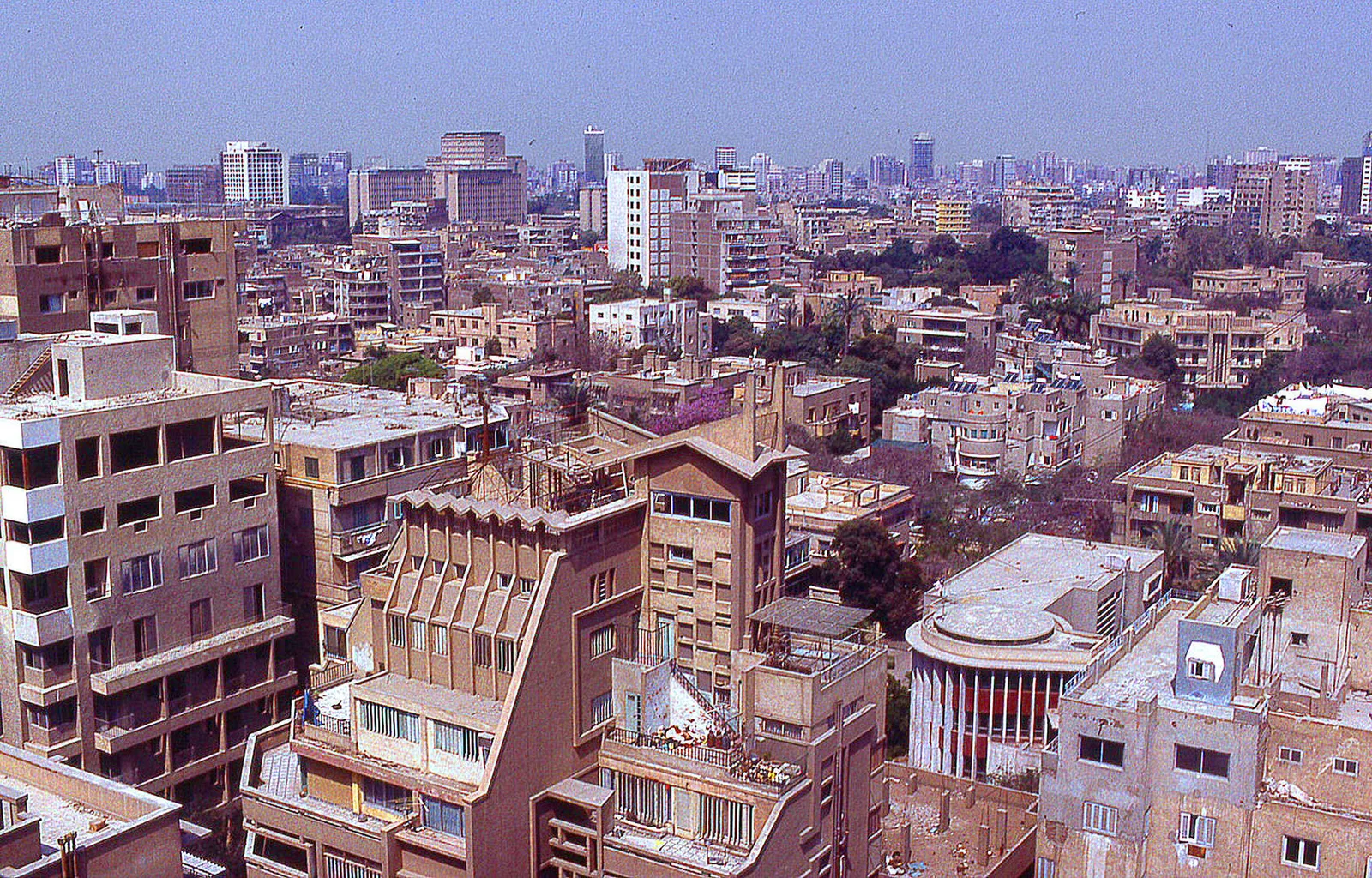
On a rooftop in one of Cairo's densely packed working-class neighbourhoods, in the kind of September afternoon heat that shows no mercy, an air-conditioning technician opens his metal toolbox and pulls out a small gas cylinder. A label gleams on its side, printed with letters and numbers that nobody bothers to read. He connects the hose to the outdoor unit, watches the pressure gauge and wipes the sweat from his face with his shirt sleeve. The homeowner does not know, and perhaps the technician does not either, that this small cylinder is the last link in a long chain that began in a laboratory at an American university half a century ago, passed through a Canadian city called Montreal, and ended with an Egyptian signature on a piece of paper in the summer of 1988.
The ozone layer, for anyone who has not met it since a school science lesson, is a thin band of ozone gas wrapped around the Earth in the stratosphere, tens of kilometres above our heads. Its job is to absorb the most dangerous portion of ultraviolet radiation before it reaches our skin, our eyes and our crops. It is a cosmic umbrella that nobody built, one that worked in silence for millions of years until we began, without meaning to, to punch holes in it.
The modern story begins in 1974, when the scientists Mario Molina and Sherwood Rowland published a paper in the journal Nature warning that chlorofluorocarbons, known by the abbreviation CFCs, were rising into the stratosphere, breaking down there and releasing chlorine atoms that devoured ozone molecules one after another. The irony was that these compounds were regarded at the time as an industrial miracle: non-flammable, non-toxic and cheap, they did their work in refrigerators, aerosol cans, air conditioners and insulating foams. To many, the warning looked like academic theorising far removed from people’s lives.
Then came the shock of 1985. Researchers from the British Antarctic Survey detected a sharp and recurring loss of ozone over Antarctica every spring, what the world would soon come to know as the “ozone hole”. It was no longer a matter of equations on a blackboard but a picture shown on the evening news. That same year, governments signed the Vienna Convention for the Protection of the Ozone Layer, a general framework that acknowledged the problem without binding anyone to specific figures. A first step, but one that opened the door.
On 16 September 1987, the Montreal Protocol on Substances that Deplete the Ozone Layer was adopted in the Canadian city of Montreal, and it entered into force on 1 January 1989. The crucial difference was that the Protocol did not stop at good intentions: it laid down binding timetables for cutting the production and consumption of harmful substances and then eliminating them altogether. As the evidence mounted, the timetables were tightened and the list of substances expanded through amendments named after the cities where they were adopted: London, Copenhagen, Montreal and Beijing, and later Kigali. Today the Protocol covers close to a hundred chemicals in several categories.
What makes this treaty exceptional is that, together with its parent Vienna Convention, it became one of the first two environmental treaties in history to achieve universal ratification, meaning that every member state of the United Nations has joined them, a milestone completed by 2009. And because what happened in Montreal deserved to be remembered, the United Nations General Assembly in 1994, by its resolution 49/114, proclaimed 16 September of each year the International Day for the Preservation of the Ozone Layer, commemorating the signing in 1987.
And where was Egypt in all this? The answer, according to Egypt’s country profile at the Ozone Secretariat of the United Nations Environment Programme, is that it did not lag behind: Egypt ratified the Vienna Convention on 9 May 1988 and the Montreal Protocol on 2 August 1988, months before the Protocol itself came into force. Egypt is classified among the “Article 5 countries”, the developing nations granted longer deadlines along with financial and technical support to meet their obligations. On the ground, the file is handled by the National Ozone Unit of the Egyptian Environmental Affairs Agency.
Egypt kept going, amendment after amendment. It ratified the London Amendment on 13 January 1993, the Copenhagen Amendment on 28 June 1994, the Montreal Amendment on 20 July 2000, the Beijing Amendment on 6 March 2009 and, finally, the Kigali Amendment on 22 August 2023. These are specifically the dates of Egypt’s ratification, not the dates on which the amendments were adopted internationally. As for funding, the Multilateral Fund for the Implementation of the Montreal Protocol had approved some 123.78 million US dollars for Egypt as of 31 December 2025, according to the same profile, money directed over the decades to industrial conversion projects and capacity building.
But what does all this mean for a refrigerator factory in 10th of Ramadan City, the industrial hub east of Cairo, or for an air-conditioning technician in Alexandria? It means that the gas circulating in the pipes of their appliances has changed more than once within a single generation. Factories that relied on CFCs for refrigeration and insulating foam had to retool their production lines to move to less harmful alternatives, and then to newer ones still when it emerged that the transitional generation of compounds, hydrochlorofluorocarbons or HCFCs, was not entirely innocent either. The technician who learned his trade on one particular gas found himself facing cylinders that called for different tools and different standards. As of this writing, we have no precise figures for the number of Egyptian factories converted, so we will confine ourselves to noting that the conversion took place with funding from the Multilateral Fund and under the supervision of the National Ozone Unit.
Then came the Kigali Amendment, adopted on 15 October 2016, which opened a new chapter. The substitutes that had replaced ozone-depleting substances, hydrofluorocarbons or HFCs, do not in fact harm the ozone layer, but they are powerful greenhouse gases that contribute to warming the planet. So the world agreed to phase down their use. The World Meteorological Organization estimates that implementing the Kigali Amendment could spare the Earth between 0.3 and 0.5 degrees Celsius of warming by 2100. And so a treaty born to shield the sky from radiation became a tool for fighting climate change as well.
So did the treaty work? On 9 January 2023, the World Meteorological Organization announced, drawing on the 2022 Scientific Assessment of Ozone Depletion produced jointly with the United Nations Environment Programme, that nearly 99% of banned ozone-depleting substances had been phased out. The assessment projected that the ozone layer would return to its 1980 levels around 2066 over Antarctica, around 2045 over the Arctic and around 2040 over the rest of the world, including the sky above us here. The hole has not “closed”, then, but it is on the road to recovery, and these figures belong to the 2022 assessment; the next scientific assessment may revise them up or down.
Why did the Montreal Protocol succeed where so many agreements have stumbled? To the best of our knowledge, three reasons come together. First, the science was clear and visible: a hole measured by satellites, beyond dispute. Second, the treaty was designed to evolve, so that whenever the science improved, the timetables were tightened by a new amendment instead of waiting for a treaty built from scratch. Third, and perhaps most important for a country like Egypt, the wealthy nations agreed to pay, through a Multilateral Fund, the cost of the developing world’s transition, so that no factory in 10th of Ramadan City was asked to shoulder alone the price of a decision taken in Montreal.
Success does not mean the story is over, though. Old appliances that still contain banned gases need safe disposal rather than venting into the air; the cylinders on sale in the market need oversight to ensure that what is on the label is what is inside; and refrigeration technicians need continuous training on alternatives, some of which may be flammable. All of it is quiet, daily work that never makes the headlines.
Back to the Cairo rooftop. The technician has closed the cylinder, switched on the air conditioner, heard the compressor settle into its rhythm, and gone down the stairs thinking about his next customer. It will not occur to him that a thin band of gas above his head is slowly healing because people in 1974 believed an equation, people in 1987 signed a document, and people in 1988 ratified it in Egypt’s name. Yet, without knowing it, he is part of the story: every cylinder used properly, and every old gas recovered instead of released, is one more thread in the mending of a hole in the sky. And by the time the children of this house reach middle age, around 2040, the umbrella may well be whole again above their heads.
Related Stories
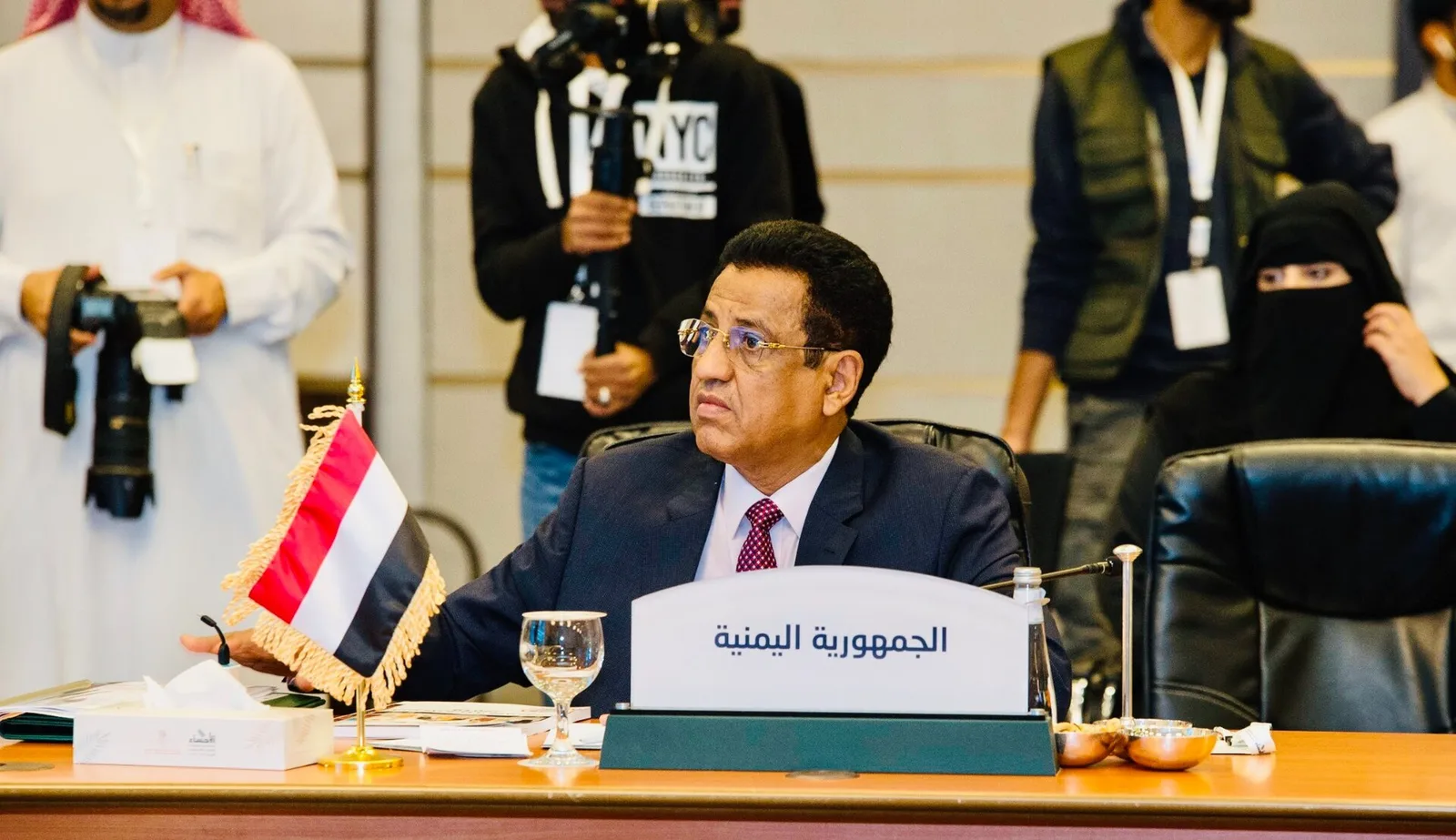
The Arab League: The House of the Arabs, Whose Windows Look Out on Tahrir Square
A few steps from Tahrir Square stands "the House of the Arabs": one of the oldest regional organisations in the world, born in Cairo before the United Nations Charter itself. How do its summits and its secretariat actually work? Why do its resolutions bind only those who accept them? And what lies behind the departure to Tunis and the return home? A tour inside an old neighbour we walk past every day and barely know.
September 2, 2026 · 7 min read
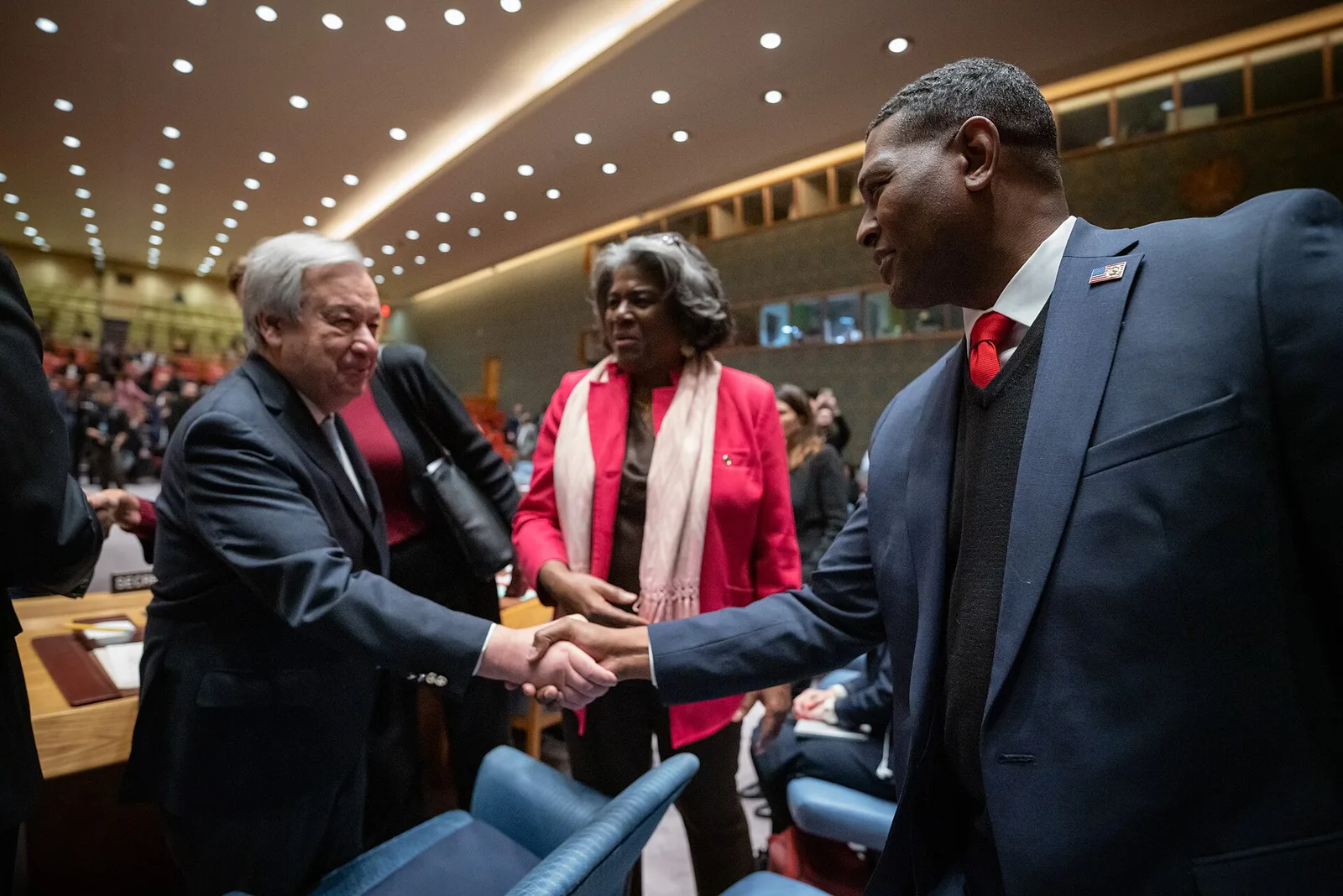
Beneath the Blue Ceiling: How the United Nations Works, and Who Holds the Veto at the Security Council
Every time a crisis flares, you hear that the Security Council has met and that some state has raised its veto. But what actually happens beneath the blue ceiling? A journey from the General Assembly hall to the horseshoe table: how a UN resolution is born, when it binds, how a single word kills it, and where Egypt sits in the picture.
August 26, 2026 · 8 min read
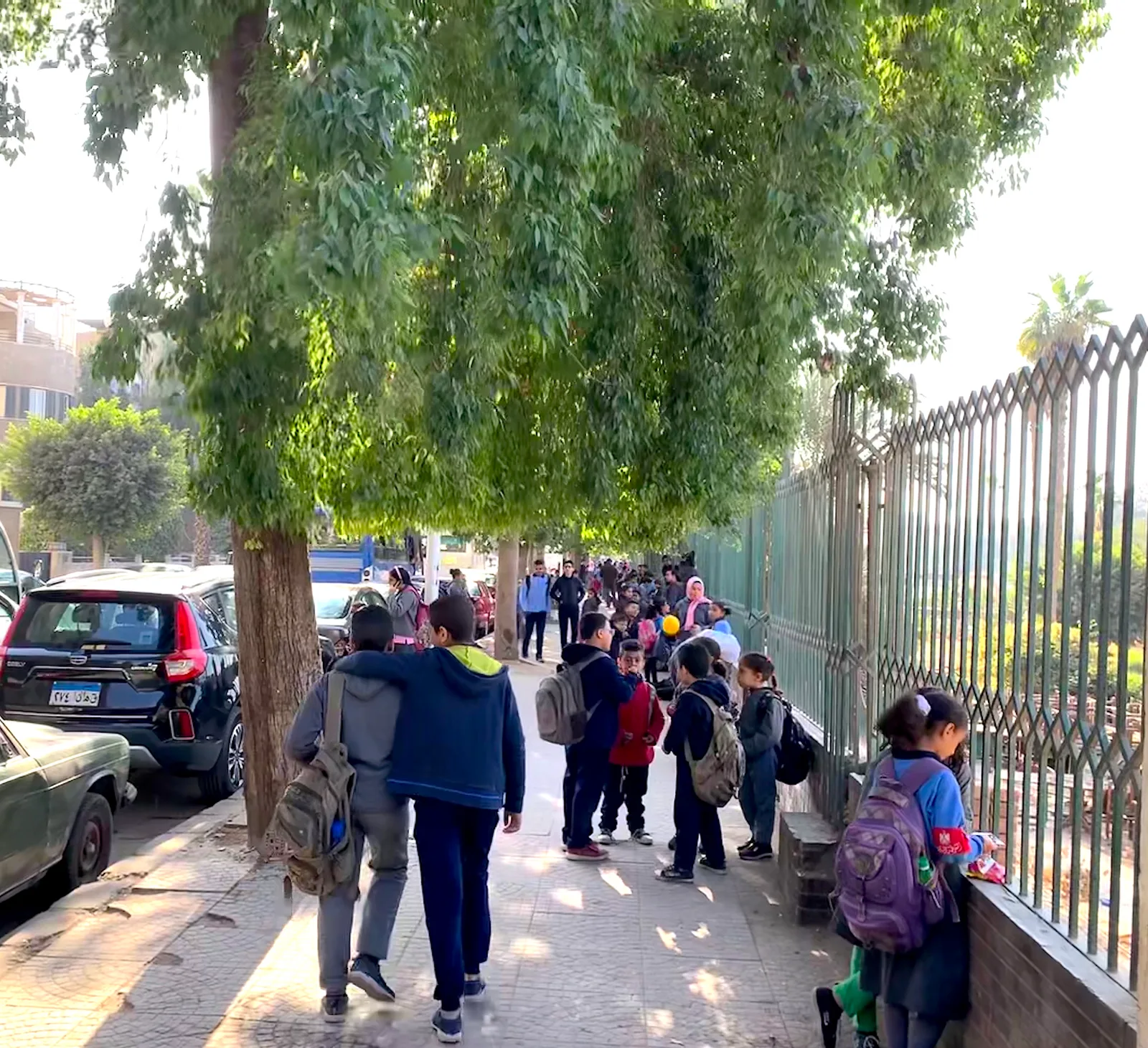
A Bag Heavier Than the Child: How Much Should a School Backpack Weigh, and How Do You Protect Your Child's Back?
With the first week of school, one question is asked in every home: how many kilograms can a child's back take? We explain the 15 per cent rule recommended by the American Academy of Pediatrics, read an Egyptian study from Menouf that found three-quarters of pupils complaining of back pain, then set out a bathroom-scale method and simple daily steps that lighten the load before it turns into a pain that follows the child for life.
September 15, 2026 · 7 min read