Seventy Years Since the Tripartite Aggression: Nine Days That Birthed the First Peacekeeping Force
In the autumn of 1956, it wasn't just the map that changed but the rules of the game: the UN General Assembly met in emergency session, Resolution 998 demanded a plan for an emergency force within forty-eight hours, and the first blue-helmeted soldiers reached Egypt by mid-November. A story documented in dates, whose protagonists are international law and a city called Port Said.
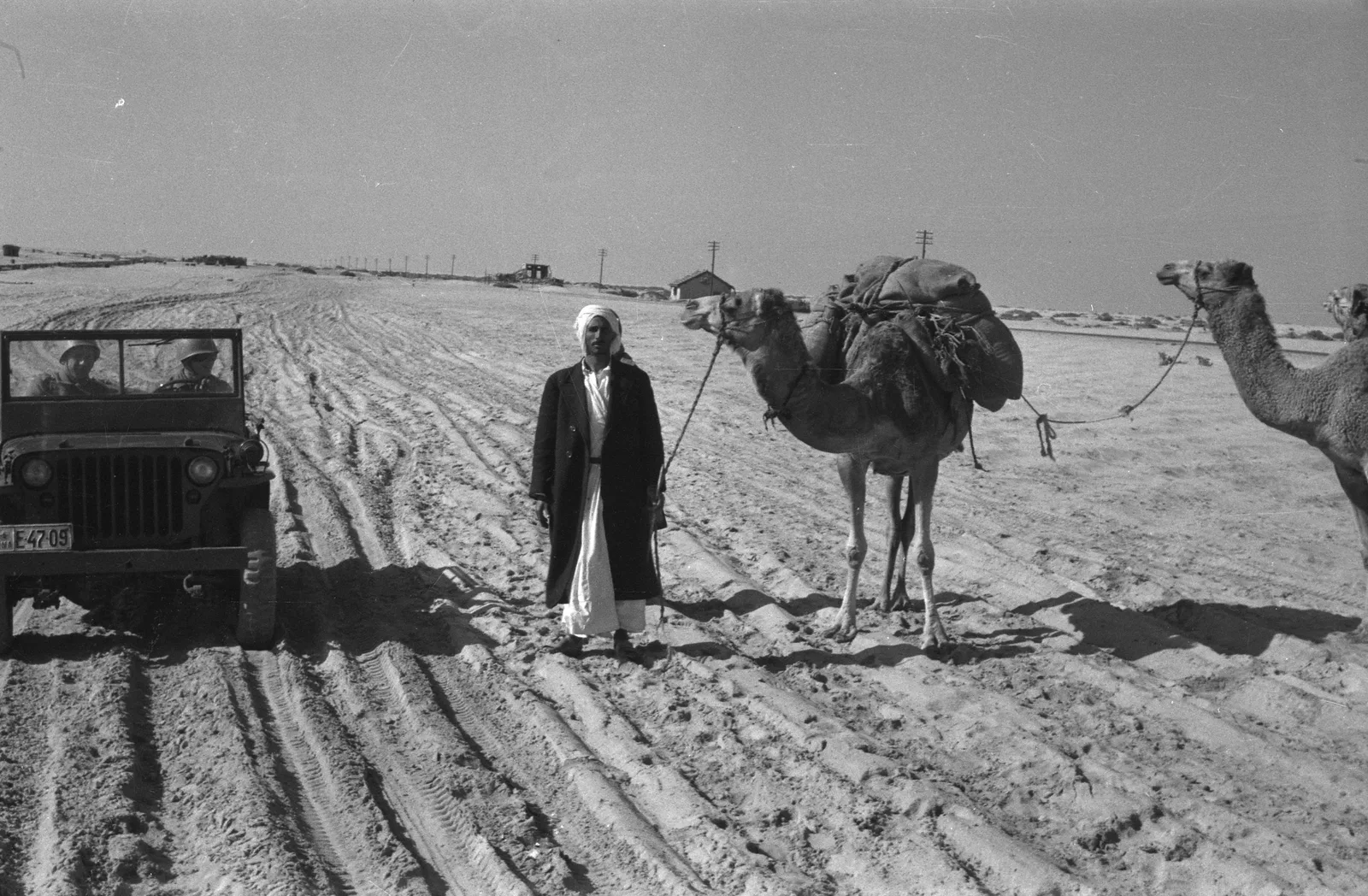
On the Corniche in Port Said, one evening in late October, a father and his daughter stand waiting for the ferry to Port Fuad, as ships glide past slowly, as if strolling down a wide avenue. The little girl asks her father why this city alone has a national holiday of its own — she has never heard that cities could have holidays. The full answer cannot be given while waiting for a ferry, because it begins in a distant autumn seventy years ago, passes on its way through a meeting hall in New York where an idea with no name yet was born, and ends on a day in December that became a holiday on the city's calendar.
The beginning is documented, date by date: on October 29, 1956, Israel's military operation in Sinai began. The United Nations page on the first emergency force records that Israeli forces crossed the border that morning, while military accounts date the first paratroop drop near the Mitla Pass to the afternoon, around five o'clock local time. Three months earlier, on July 26 of the same year, the nationalization of the Suez Canal Company had been announced; we mention it here only as the immediate trigger, not as the subject of this story. Our story today is not about a waterway or about trade, but about how the world rearranged itself in nine days.
The following day, October 30, a joint British-French ultimatum was issued with a twelve-hour deadline. On October 31, an air assault began on targets inside Egypt, followed a few days later by a troop landing near Port Said. This is the sequence exactly as it still appears on the United Nations website today, and any reader can open the page and check the dates for themselves — which, in our view, is the most important thing to take from an anniversary like this: that the numbers and dates are available, and that they are enough.
The details of the landing are preserved in the other side's records too. On November 5, British paratroopers dropped on Gamil Airfield west of Port Said, while French forces took Port Fuad on the opposite bank. At dawn on November 6, at 4:30 a.m., a seaborne assault on Port Said began, backed by tanks, according to Britain's National Army Museum. Two small towns separated by a stretch of water, with a ferry crossing much like the one the little girl is waiting for now, found themselves at the heart of a major military operation.
What happened in Port Said afterward is summed up in a single line by the Cairo Governorate's online portal: a complete siege from November 5 until the aggression's forces withdrew on December 23, 1956, with no water, no food, and no safety — roughly seven weeks by the calendar. We speak here of popular resistance as a collective act by the people of an entire city, without naming individuals or attributing any particular act of heroism to any particular name; the documentation available to us supports a collective description, not a roster of names.
While that was unfolding on the coast, something else was unfolding in New York. On November 1, 1956, the General Assembly's First Emergency Special Session convened — the first of its kind in the Organization's history — held under the "Uniting for Peace" procedure (General Assembly Resolution 377), which allows the Assembly to take up a matter when the Security Council is unable to act, as the UN's own page records. In other words, it was the body where every member state sits, not the Security Council where any of its five permanent members can block a decision with a veto, that ended up holding the file.
On November 4, that First Emergency Special Session adopted Resolution 998. Its text was, in essence, a simple administrative request with enormous consequences: that the Secretary-General submit, within forty-eight hours, a plan to establish a United Nations emergency force. Forty-eight hours to invent something that appeared nowhere in the Organization's Charter, whose only precedent was unarmed military observers dating back to the UN Truce Supervision Organization in 1948; an armed force standing between two armies was something entirely new. The following day, November 5, Resolution 1000 was adopted by the same session, establishing the command of that force. Twenty-four hours between the request and the command.
The idea itself deserves a pause, because it was the true offspring of that autumn. A force not sent to fight either side, but to stand between two parties once the fighting had stopped; one that would not enter a state's territory without its consent; made up of soldiers from countries with no stake in the conflict; wearing an improvised emblem — surplus American helmets left over from the Second World War, hastily painted blue — that later became the symbol of peacekeeping the world over, flying the Organization's flag rather than the flags of their own armies. This model, which we see today on more than one continent and read about in news bulletins as though it were some age-old given, truly begins right here.
The ceasefire took effect at midnight between November 6 and 7, according to Britain's National Army Museum, while the UN's own page fixes it at midnight between November 7 and 8, GMT. Nine days, then, between the operation's start on October 29 and the guns falling silent on November 7. But it is a common mistake to conflate the end of the fighting with the end of the occupation; the cities remained under foreign feet for weeks afterward, and the full withdrawal took months, not days. A ceasefire is a line in a record; withdrawal is a long journey measured on the calendar.
Then came implementation. On November 15 and 16, 1956, the first units of the emergency force arrived in Egypt in two waves rather than on a single day, made up of Colombian, Danish, and Norwegian troops; further contingents kept arriving until the force reached its target strength of roughly six thousand personnel in February 1957. Soldiers from countries that Port Said knew little about landed in an Egyptian city to carry out a mission that, only weeks earlier, had not been written in any military manual.
The hardest question remains: what was the human toll? Here, specifically, we must admit the limits of our knowledge. On November 21, 1956, Britain's Minister of Defence told the House of Commons he stood by a figure of one hundred dead and five hundred and forty wounded in Port Said. In that same debate, members of parliament confronted him with far higher estimates — an Egyptian figure of twelve thousand casualties, the Indian prime minister's reference to "several thousand," and accounts from British and American correspondents — all of which the minister dismissed outright as fabrication, exaggeration, and propaganda. Then an official British report published on December 21 of that same year put the number of Egyptian dead in Port Said at around six hundred and fifty — several times the minister's figure. Egyptian and independent estimates run higher still, and the gap between the various accounts remains unresolved to this day. For that reason, we present each figure attributed to its source and its date, and we do not adopt any single number as the final truth.
The end of this chapter has clear dates, even if sources differ on the very last day. The United Nations records that the British and French withdrawal was completed on December 22, 1956, with the emergency force taking over Port Said, while the Cairo Governorate's portal dates December 23 as the day the last foreign soldier left the city — the day Port Said celebrates as a national holiday every year. The Israeli withdrawal from Egyptian territory was completed on March 8, 1957, and the canal was reopened to navigation that April. In Britain itself, Anthony Eden left the premiership in January 1957 and was succeeded by Harold Macmillan.
The emergency force remained in Egypt for nearly a full decade, until the Egyptian government requested its withdrawal on May 18, 1967; the pullout began the following day and was completed in late June of that same year, closing the chapter opened in November 1956. We stop here at history's own boundaries, projecting nothing from what happened seventy years ago onto any conflict underway today; every era has its own circumstances, and the value of this anniversary lies in reading it through its dates, not through projections onto the present.
So what does all this say to the father standing on the Corniche? It says his daughter's answer can fit into two minutes: the city has a holiday because the last foreign soldier left it on a specific day, a day recorded in an official document he can pull up with her on his phone before the ferry arrives. But it also says something further: that what happened in those nine days was not written on the battlefield alone, but in the text of a resolution, in a forty-eight-hour deadline, and in the idea that there is a law one can turn to. And perhaps that alone is worth telling a little girl waiting for a ferry on an October evening.
Related Stories
World Toilet Day: Four in Ten Egyptians Fall Outside “Safely Managed” Sanitation, UN-Water 2024 Data
On November 19 the world marks World Toilet Day. UN-Water data for 2024 says 57% of Egyptians use safely managed sanitation, meaning about four in ten fall outside that measure. But what does “safely managed” actually mean, and how does it differ from access? A definition first, then the number, then what ministry statements and the Decent Life targets say.
November 19, 2026 · 8 min read

From Sharm el-Sheikh to Antalya: What Is COP, and What Remains for Egypt From Hosting the 2022 Climate Conference?
The name “COP” is back in the news. The 31st climate conference is scheduled for Antalya from 9 to 20 November 2026, per the UN climate secretariat’s timetable. This article reports nothing from its sessions. It explains what COP is, how it decides by consensus, and what remains for Egypt from hosting in Sharm el-Sheikh in 2022: a decision creating a loss and damage fund, and funding targets rather than money spent.
November 8, 2026 · 9 min read
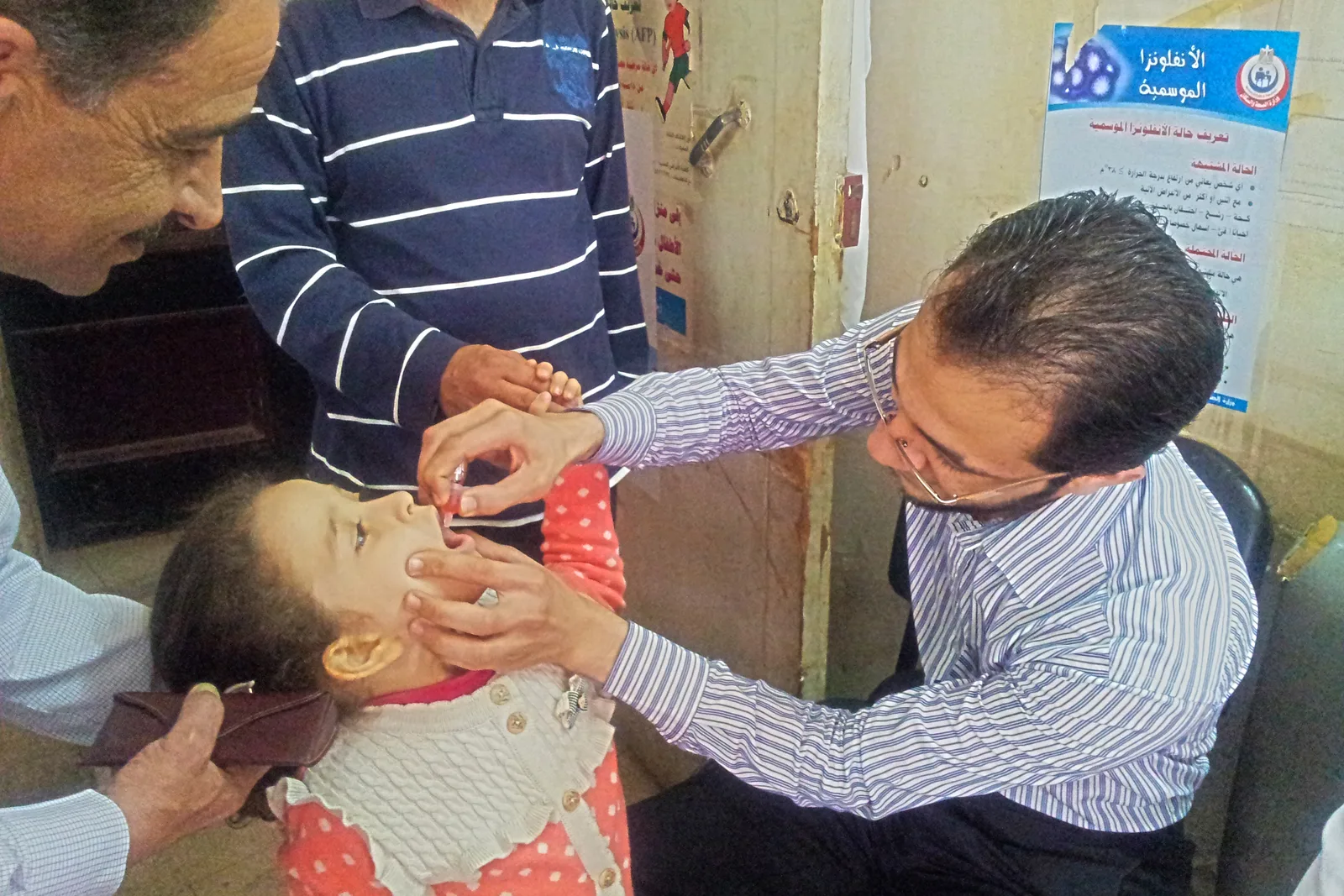
World Polio Day: How Egypt Beat the Virus in 2006 — and Why the Story Isn't Over
In 1988 the virus was paralyzing roughly 350,000 people a year in more than 125 countries. Egypt's last case was recorded in Deirut in May 2004, and in February 2006 the World Health Organization declared the country polio-free. So why didn't the campaigns stop there? The answer turned up in a Cairo sewage sample in 2012.
October 24, 2026 · 8 min read