World Toilet Day: Four in Ten Egyptians Fall Outside “Safely Managed” Sanitation, UN-Water 2024 Data
On November 19 the world marks World Toilet Day. UN-Water data for 2024 says 57% of Egyptians use safely managed sanitation, meaning about four in ten fall outside that measure. But what does “safely managed” actually mean, and how does it differ from access? A definition first, then the number, then what ministry statements and the Decent Life targets say.
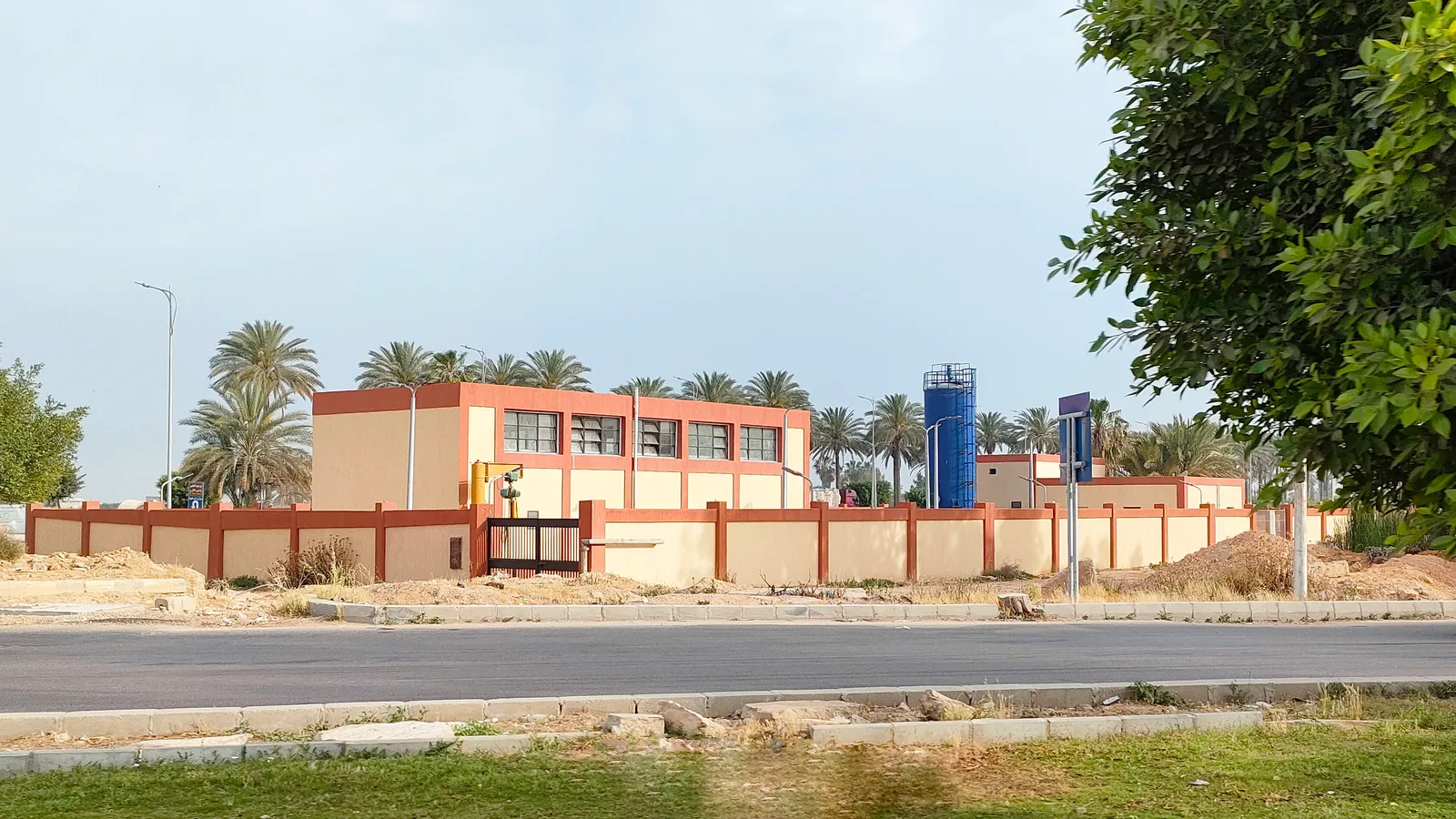
In many Egyptian village homes there is a clean, tiled bathroom door at the edge of the courtyard, yet what leaves it does not flow into a network that ends at a treatment plant. It goes into a pit or a settling tank that is emptied by a vacuum truck whenever it fills. This is a pattern shown by published data, not the story of any one household: in UN-Water's 2024 data, 20% of the volume of household wastewater flow in Egypt comes from settling tanks. On November 19 each year the world marks World Toilet Day, an occasion whose name sounds amusing but whose subject is among the most serious for people's health and dignity. Measured against the highest rung of the UN sanitation ladder, whose condition is explained below, about four in ten Egyptians are outside what the United Nations calls safely managed sanitation services in the 2024 data. That does not mean they have no toilet. The difference in definition is the whole story.
As of this writing, the day's page on the United Nations website says the 2026 campaign is titled “Safe Toilets: An Equal Future,” and that this year's theme is sanitation and gender equality, and how safe sanitation protects the health and dignity of women and girls. The page sets out the global picture using World Health Organization and UNICEF figures for 2025: about 3.4 billion people, four in ten worldwide, lack safe toilets, and 1.7 billion have no place at home to wash their hands with soap and water. These are global numbers and must not be projected onto Egypt. Note too that an identical ratio does not mean an identical meaning: four in ten worldwide have no safe toilets, whereas four in ten in Egypt are outside the top rung of the ladder, not without a toilet. Each figure has its own yardstick, which we explain now.
The yardstick behind these figures is called the “sanitation ladder” by the WHO/UNICEF Joint Monitoring Programme, and it has rungs rather than two boxes. At the bottom is open defecation, then unimproved facilities, then an improved facility shared between households, which the literature calls limited service, then an improved facility used by one household alone, called basic service. Only at the top comes the “safely managed” service: an improved facility that is not shared, where waste is safely disposed of on site or is transported and treated elsewhere. In other words, the top rung asks not only about the bathroom but about the fate of what leaves it. A home with a private improved bathroom therefore stays off this rung if its waste is carried away to a place with no treatment.
Here lies a second fundamental distinction that comes before any comparison: the difference between the availability of a service and its actual use. A sewer line running down a street, or a treatment plant built in a district, is availability, and coverage reports usually count it. The UN measure instead counts who actually uses the service inside their home, with the treatment condition added. That makes the two figures different in nature rather than contradictory. Confusing them does more than anything else to spoil public debate on this subject.
With the definition in place, the number makes sense. The SDG 6 data portal, published by the UN-Water system, records for Egypt in 2024 that 57% of the population use safely managed sanitation services, 79% use safely managed drinking water, and 63% of household wastewater is safely treated. The gap to 100 on the first indicator is 43%, meaning about four in ten people fall outside the top rung of the ladder by the 2024 measure. That is not four in ten without sewerage, and not four in ten without a toilet.
The same portal adds a detail that explains where the gap goes: 80% of the volume of household wastewater flow in Egypt passes through sewer networks, 20% comes from settling tanks, and a small share from other facilities. This is a distribution of flow, not of households. It means part of the gap stems from waste that does not end up in documented treatment, not from the absence of a facility itself. The gap is therefore one of treatment and transport as much as of pipes, which makes it a matter of infrastructure and public responsibility, not of residents' behavior.
Alongside the UN measure there are national figures that come from officials' statements rather than statistical bulletins, so they are attributed by name and date. On March 30, 2026, the Egyptian press quoted Eng. Randa El-Menshawy, then Minister of Housing, Utilities and Urban Communities, telling the House of Representatives' Plan and Budget Committee, during discussion of the final accounts for fiscal year 2024/2025, that sanitation coverage rose from 50% in 2014 to 70% in 2025, and that drinking water coverage rose from 95% to 99% over the same period. In an older statement published on May 8, 2023, Dr. Sayed Ismail, Deputy Minister of Housing for Infrastructure Affairs, said drinking water coverage had reached about 98.7% and sanitation coverage about 66.7%. The same two figures were attributed to the same official in a report published on December 8, 2021, so they have been in circulation since at least 2021 with no declared data year.
These statements are not identical, and it would be wrong to pick the best of them or the lowest. Declared drinking water coverage ranges from 98.7% in the 2021 and 2023 statements to 99% for 2025; sanitation coverage was given as about 66.7% in the two earlier statements and then as about 70% for 2025. The ministry has not published the methodology behind these percentages, and they most likely measure the reach of the service rather than actual use inside the dwelling. That makes the comparison between 70% declared coverage and 57% safely managed use a difference of yardstick, not a contradiction between two institutions. The same applies to drinking water: the distance between 99% declared coverage for 2025 and 79% safely managed use for 2024 does not mean one of the figures is wrong, because the UN definition requires an improved source located in the dwelling or its yard, available when needed, and free of contamination.
For villages there is a broader government program, the Decent Life (Hayah Karima) initiative, and its figures are given here as its own bodies announced them: declared targets and allocations, not independently assessed results. In statements carried by the parliamentary press on September 19, 2023, the initiative's general supervisor at the Ministry of Planning said the total cost of the first phase was about 350 billion Egyptian pounds, to carry out about 23,000 projects in 1,477 villages across 20 governorates for about 18 million citizens, of which about 210 billion pounds had been disbursed, with an average implementation rate of about 85%. On sanitation he spoke of 1,441 targeted projects, with 9 treatment plants, 739 projects and 287,000 household connections completed, aiming to raise service availability in the targeted villages from 20% to 90%, and a second phase targeting 1,667 villages for about 21 million citizens, with 478 sanitation projects and 66 treatment plants. These are the figures of a single dated statement, they differ from one statement to another, and allocations should not be read as money spent. This is neither praise nor criticism.
Between these large numbers and a single house in a village lies a distance measured in small details. The network reaching the street is not enough: the house needs a household connection, internal work linking the bathroom to the network, and subscription procedures. Until that happens, the pit or tank remains a recurring cost that the household itself pays each time it fills, a cost that weighs more heavily on lower-income families than on others. From the standpoint of the UN measure, the day a home's connection is tied to a network whose contents end up treated is the day that home moves to the top rung of the ladder, not the day its bathroom is built.
The issue also has a health side, presented here as a general statistic, not a diagnosis or medical advice. UNICEF's Egypt page on water, sanitation and hygiene, citing the 2014 Demographic and Health Survey, says that about 15% of the rural population lacked adequate sanitation, compared with about 1% in urban areas, and adds that 8.4 million people are deprived of improved sanitation, most of them in rural areas, with no declared year for that figure. These are figures from that period, not the reality of 2026, and a rural percentage should not be compared with a national one. What remains generally true is that safe sanitation, safe drinking water and handwashing with soap and water are basic factors in children's health, and that any symptoms in a child are a matter for a doctor, not for articles.
In schools there is a recent global picture worth one paragraph, with the caveat that it is global, not Egyptian. The WHO/UNICEF Joint Monitoring Programme report on water, sanitation and hygiene in schools, issued in 2026 with data for 2025, estimates that 78% of the world's schools had a basic drinking water service, 77% a basic sanitation service and 72% a basic hygiene service, and that reaching universal coverage in 2030 requires accelerating progress on sanitation about fivefold. The data available to us contain no published Egypt-specific value in this series, and we will not supply an Egyptian figure that has not been published.
In the end, World Toilet Day is not a call to embarrass anyone or to shame a village, but a call to read a number by its yardstick. The distance between the UN measure and declared coverage is a matter of definition, not a quarrel, as noted above. For a reader in Shubra, Assiut or Aswan, or one living in the Gulf who is asking about the family home, the practical question is not whether there is a bathroom in the house but where what leaves it goes, and whether it is treated or merely carried away. The answer to that question is what turns a basic service into a safely managed one, and it is the responsibility of utilities, budgets and publicly declared implementation timetables, not of a family bearing the cost alone.
Related Stories
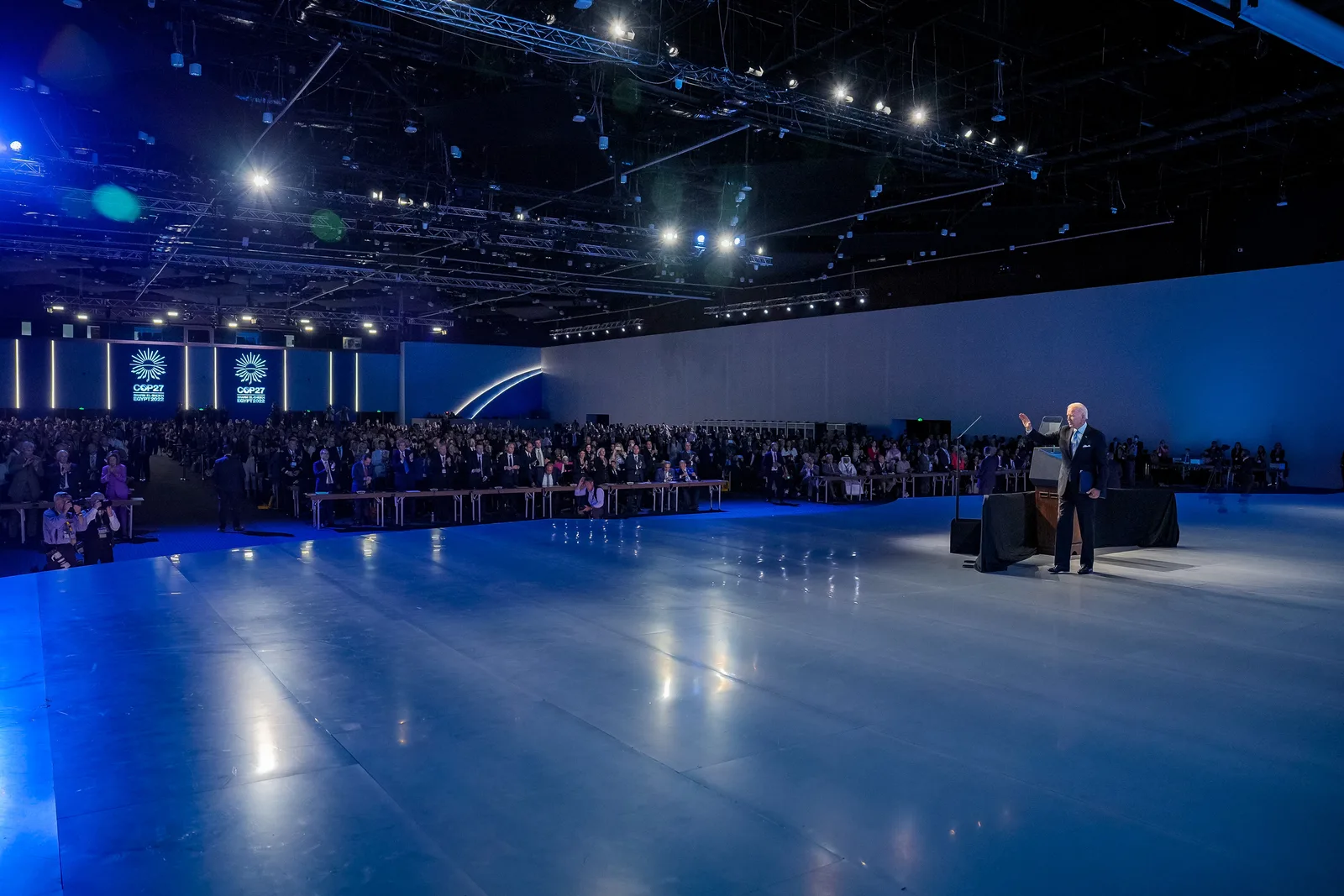
From Sharm el-Sheikh to Antalya: What Is COP, and What Remains for Egypt From Hosting the 2022 Climate Conference?
The name “COP” is back in the news. The 31st climate conference is scheduled for Antalya from 9 to 20 November 2026, per the UN climate secretariat’s timetable. This article reports nothing from its sessions. It explains what COP is, how it decides by consensus, and what remains for Egypt from hosting in Sharm el-Sheikh in 2022: a decision creating a loss and damage fund, and funding targets rather than money spent.
November 8, 2026 · 9 min read
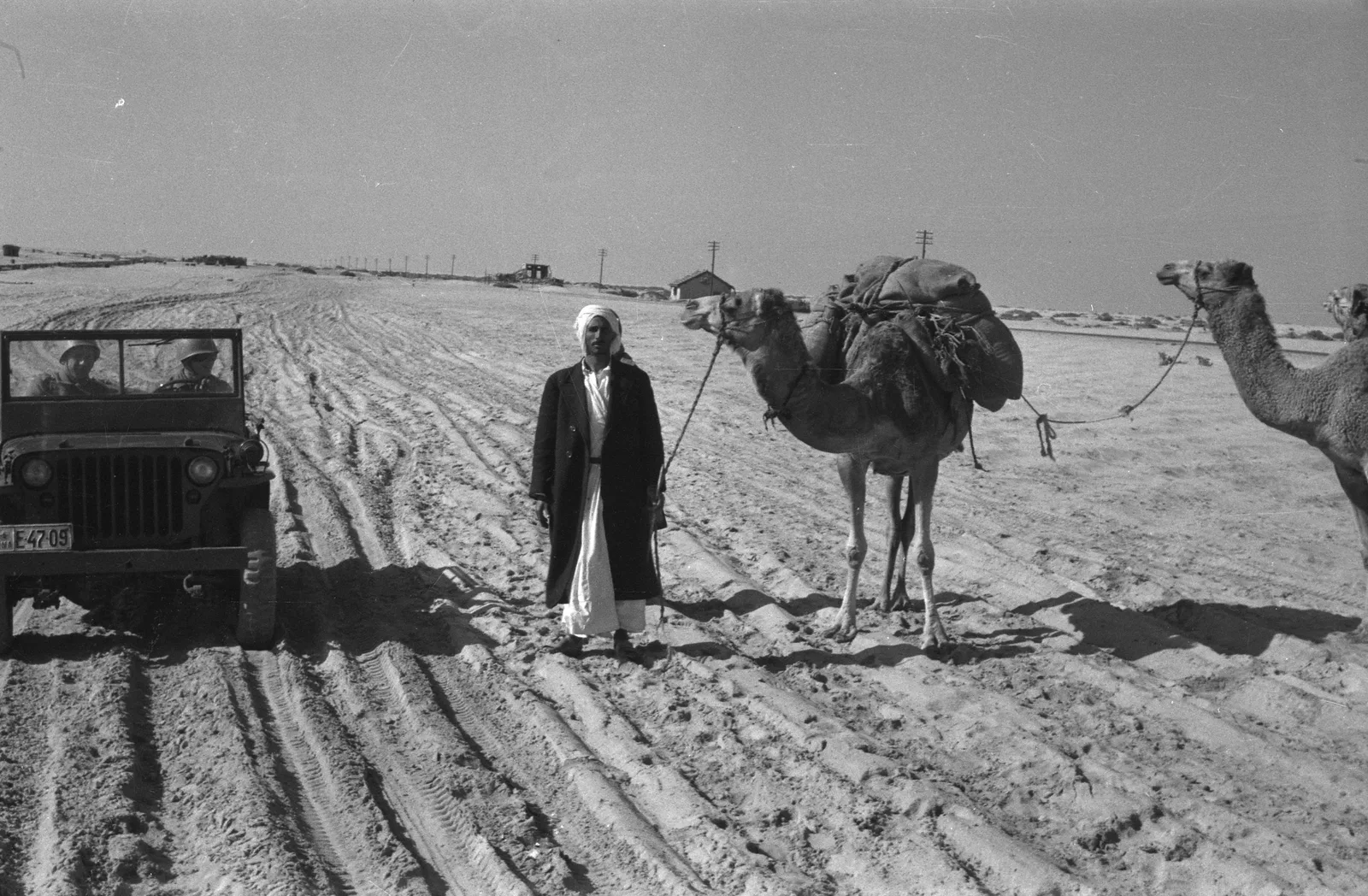
Seventy Years Since the Tripartite Aggression: Nine Days That Birthed the First Peacekeeping Force
In the autumn of 1956, it wasn't just the map that changed but the rules of the game: the UN General Assembly met in emergency session, Resolution 998 demanded a plan for an emergency force within forty-eight hours, and the first blue-helmeted soldiers reached Egypt by mid-November. A story documented in dates, whose protagonists are international law and a city called Port Said.
October 29, 2026 · 8 min read
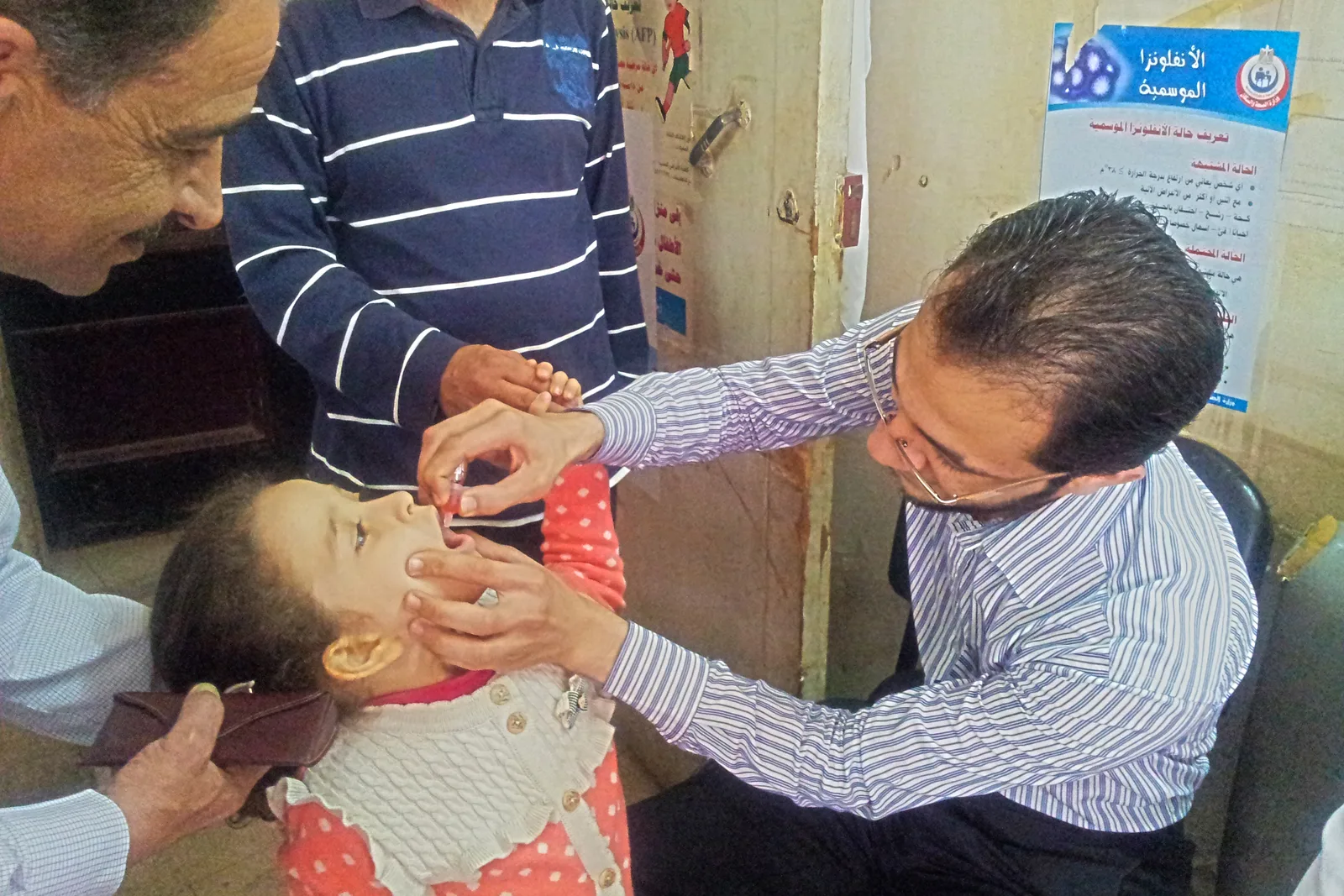
World Polio Day: How Egypt Beat the Virus in 2006 — and Why the Story Isn't Over
In 1988 the virus was paralyzing roughly 350,000 people a year in more than 125 countries. Egypt's last case was recorded in Deirut in May 2004, and in February 2006 the World Health Organization declared the country polio-free. So why didn't the campaigns stop there? The answer turned up in a Cairo sewage sample in 2012.
October 24, 2026 · 8 min read