More Than a Match: A Century of the Al Ahly–Zamalek 'Summit' as Egyptian Homes Live It
From the first meeting in 1917 to the 2020 African final, Al Ahly against Zamalek has never been just ninety minutes. It is a date that splits a single living room into red and white and then brings it back together. A calm look at how the two clubs came to be, at their records, and at the rituals of derby day in Egyptian homes.
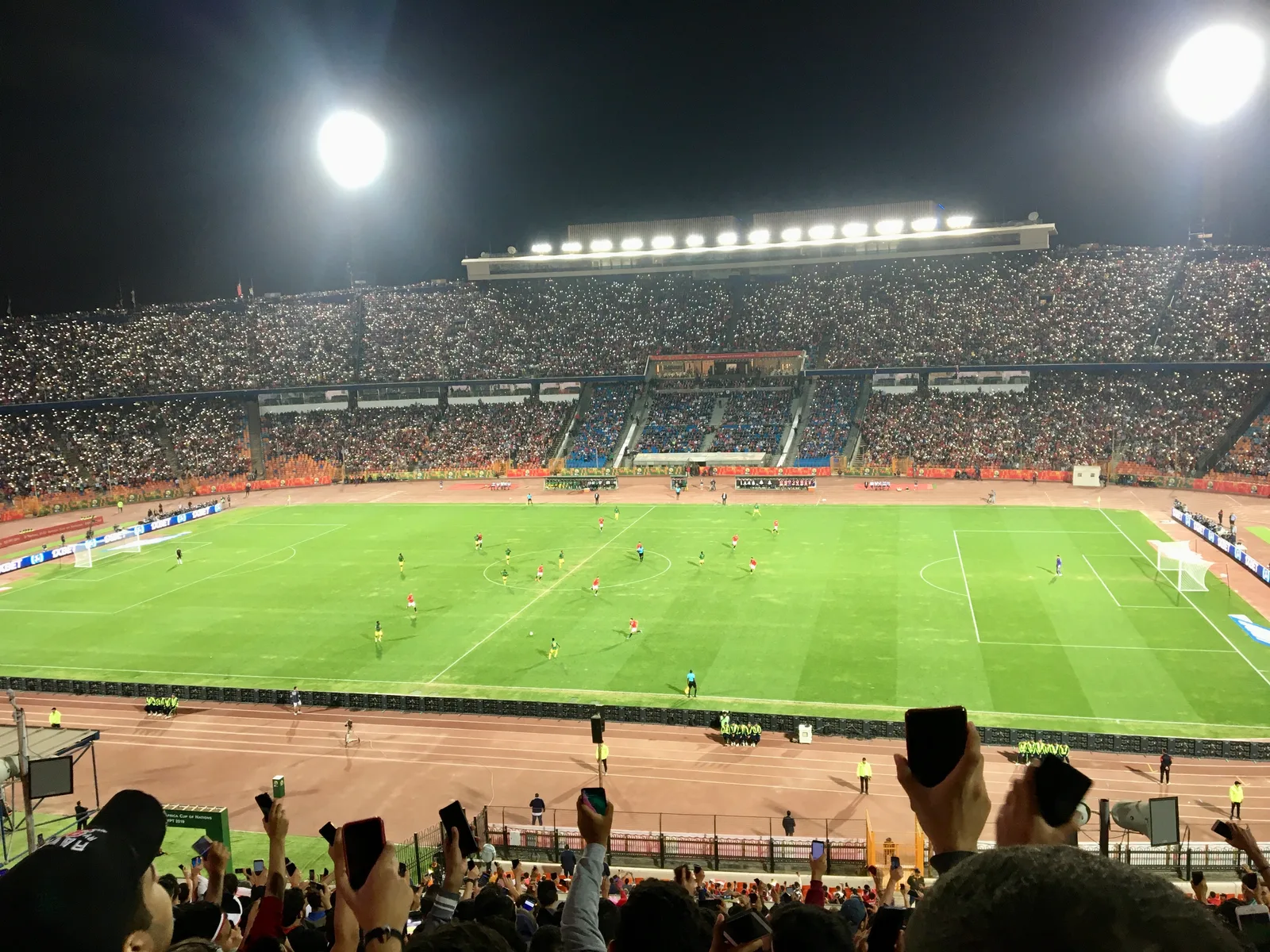
In a house in one of Cairo's working-class neighbourhoods, in a flat in Alexandria, or in a spacious family home in a village in Upper Egypt, the same scene has played out for decades: the tea tray comes out earlier than usual, the television is turned up a couple of notches above normal, and the room divides itself in two of its own accord. The father sits in the red corner, the eldest son in the white one, and the mother watches from the kitchen doorway, laughing at the distance between them. In the minutes before kick-off a strange silence takes hold. Then the match begins, and with it an argument that will not end until days after the final whistle.
This is no ordinary football match. It is one of the oldest and most famous sporting rivalries on the African continent, which is why Egyptians simply call it 'al-Qimma', the Summit, with no need to name either team. Everyone knows that the Summit means Al Ahly and Zamalek, that derby day has its own rituals in homes, coffeehouses and workplaces, and that the result sets the mood of millions of Egyptians for at least a full week.
The story begins more than a century ago. On 24 April 1907, Al Ahly was founded on an idea put forward by Omar Lotfy Bey, then president of the Higher Schools Students' Club, to a committee that included a number of prominent figures from the state and society. It was to be a club for students of the higher schools at a time when sporting clubs in Egypt were all but the preserve of foreigners. Hence the name 'Al Ahly', meaning the club of the people of the country. Nearly a century later, the Confederation of African Football named it Africa's 'Club of the Century', and today it plays its biggest matches at Cairo International Stadium, which holds around seventy-five thousand spectators.
Less than four years later, on 5 January 1911, the second club in the story was born under the name 'Qasr El Nil Club'. It later became known as 'the Mixed Club' because it brought Egyptians and foreigners together, and for a time it carried the name of King Farouk I before settling on 'Zamalek' after the July 1952 revolution, after the Zamalek district on the Nile island at the heart of Cairo. Over time the club acquired its famous nicknames, 'the White Knight' and 'the School of Art and Engineering', names that say more about a style of play the club became known for than about statistics.
On 9 February 1917, according to the most widely circulated accounts, with the First World War still raging, the two sides met for the first time, and Al Ahly won by a single goal to nil. No one that day could have imagined that this match would become a fixed appointment in the lives of Egyptians for more than a hundred years, or that the meetings between the two clubs would come to be counted in the hundreds, competitive and friendly alike, across every competition over the course of a full century.
And because a long history is never short of surprises, the biggest win in the derby's history belongs to Zamalek, who triumphed six-nil twice, in 1942 and 1944. On the other side, Al Ahly holds the continental record with twelve CAF Champions League titles and twenty-two appearances in continental finals, according to a tally published by the Confederation of African Football in January 2025. The first of those titles came in 1982 against Asante Kotoko of Ghana, when Mahmoud El Khatib scored three of Al Ahly's four goals in the final.
Zamalek, for their part, have lifted the CAF Champions League trophy five times, in 1984, 1986, 1993, 1996 and 2002, a tally that places them among the continent's most crowned clubs in its most important competition, to the best of our knowledge at the time of writing. It is perhaps this long rivalry on the African stage, and not the domestic one alone, that has made the derby more than an ordinary league match: it is a contest between two clubs, each of which sees itself as Egypt's ambassador beyond its borders.
That continental rivalry reached its peak on 27 November 2020, when the two sides met in a continental final for the first time, at Cairo International Stadium, in the first CAF Champions League final ever contested by two clubs from the same country, and in stands left empty by the coronavirus pandemic. Al Ahly went ahead early, Zamalek equalised before the end of the first half, and Al Ahly then settled the match with a goal in the closing minutes to win two-one. Whatever the reader's allegiance, that night stands as proof that Egyptian football can make an entire continent watch, from behind its screens, a match between two teams from a single city.
The match has a distinctiveness that shows in the small details. It is customary to bring in foreign referees to officiate it, in the interest of neutrality and to avoid any suspicion of bias, a tradition rarely applied to a domestic league match anywhere else. One of the two clubs' meetings drew an attendance estimated at around one hundred and twenty thousand spectators, among the highest ever seen in Egyptian stadiums, according to the available sources. The BBC has ranked it among the five toughest derbies in the world, and international sports reports routinely list it among the fiercest local rivalries anywhere.
But numbers alone do not explain why a grandfather in his eighties and his ten-year-old grandson sit before the same screen with the same fervour. The explanation lies in society, not in statistics: the derby is a family inheritance, passed from one generation to the next like a dialect or a surname. A child usually picks a team before learning the rules of the game, having inherited the colour from a father, an uncle or a neighbour, or perhaps choosing the other colour on purpose to have an independent voice in the house. That is how those divided rooms come about, rooms that the disagreement separates far less than the occasion unites.
On derby day the map of the city shifts a little: the coffeehouses fill with those whose homes have no screen big enough, weddings and visits are postponed, and colleagues at work agree a temporary truce that ends at the first whistle. The next morning the result becomes the first greeting in the lift, at the school gate and in the queue for bread. Victory turns into a legitimate right to a week of friendly 'tareeqa', the good-natured ribbing Egyptians are known for, and defeat into patient endurance while waiting for the next round.
And because that warmth is the most precious thing about the derby, preserving it is every supporter's responsibility. Legitimate passion is one thing; turning a disagreement over a match into a rift between two brothers or two friends is something else entirely. Perhaps the finest thing a child watching the first derby of their life can learn is that their father, who wears the other colour, hugged them after the goal, that defeat does not cancel out love, and that the two clubs together, with their histories and their trophies, are a shared asset of Egyptian football that neither side owns without the other.
The match ends, the television goes back down to its usual volume, the empty tea glasses are gathered up, and the red corner and the white corner become one room again, as they were. The son goes off to bed smiling or scowling, and the father switches off the light thinking about the match that will come in a few months' time. Somewhere between winning and losing, the more enduring truth remains: whatever brought them together in front of the screen tonight is the same thing that will bring them together at the breakfast table in the morning, and the Summit, however fierce it gets, is in the end the story of a single Egyptian home.
Related Stories
'Crocodile of the Nile': Abdel Latif Abou Heif, the Alexandrian who became Swimmer of the Century
In the summer of 1963 a heavily built man from Alexandria swam sixty miles through the cold water of Lake Michigan over nearly thirty-five hours, with Americans following him from the boats. This is the story of Abdel Latif Abou Heif, three-time world champion and 'Marathon Swimmer of the Century' by the verdict of the International Swimming Hall of Fame, a man whose street name many people know without knowing his story.
September 18, 2026 · 8 min read
From the Steamship Helwan to the Round of 16: Ninety Years of Egypt's World Cup Journey
Only four appearances in nine decades: a sea voyage to Naples in 1934, the summer of Italia '90, the disappointment of Russia 2018, and then the summer of 2026, when Egypt got past the group stage for the first time in its history. A calm reading of what changed each time, away from the heat of the moment, together with a correction of the 1934 scoreline that foreign sources still get wrong to this day.
September 9, 2026 · 7 min read
From Nosseir to Elgendy: A Century of Egypt's Olympic and Paralympic Medals
From El-Sayed Nosseir's gold in 1928 to Ahmed Elgendy's record-breaking title in Paris, and from Fatma Omar to Sherif Osman on the Paralympic powerlifting platform: a century of Egyptian Olympic and Paralympic medals, won above all through strength.
August 18, 2026 · 7 min read