Five Sports in One Day: How Modern Pentathlon Is Scored, and Why an Obstacle Course Replaced Riding
A total of 1,555 points at Versailles, and a 13-point margin that the international federation's report read as 13 seconds at the finish line. An inside look at modern pentathlon: how scoring turns every mistake into seconds, how a child trains in five sports in one week, what the sport demands of a pool, a track and a fencing hall, and why riding is no longer part of it.
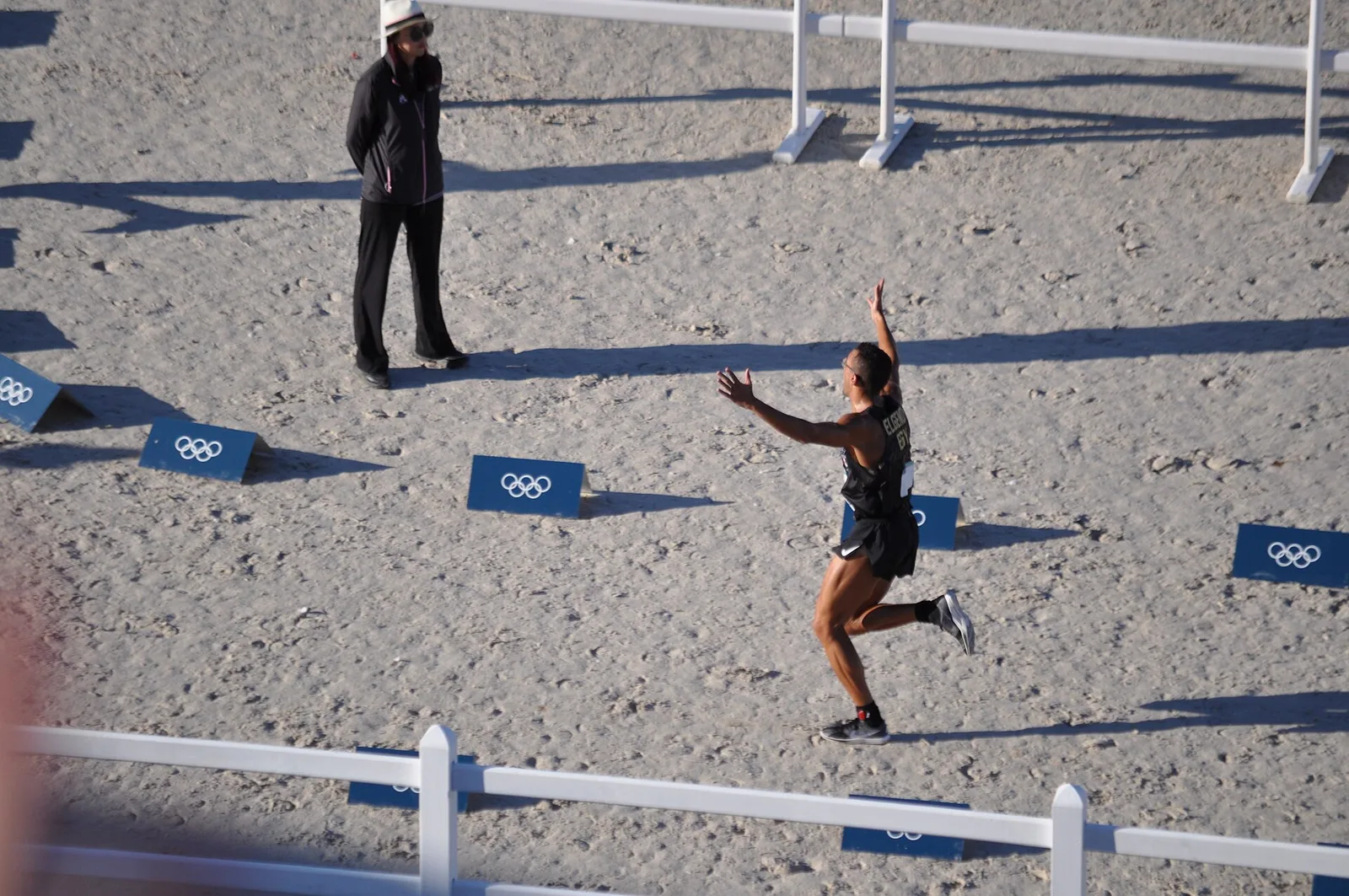
Around this time every year, in clubs across Cairo, Alexandria and the Delta towns, many parents know a familiar scene that repeats without fanfare: a child carrying a bag with swimming goggles, a fencing glove and running shoes, and a weekly schedule that shuttles between a pool, a hall and a track. When many Egyptians asked, after the summer of 2024, which sport had raised their country's flag on the highest Olympic podium, the answer was a name some of them were hearing for the first time: modern pentathlon. This article is not a celebration of a medal. It is an attempt to explain the sport from the inside: how its points are counted, how a child is trained for it, what it demands of facilities, and what has changed in its rules since Paris.
The fixed point in this story is August 10, 2024, at the modern pentathlon venue in Versailles, near Paris, where Ahmed Elgendy finished the competition with 1,555 points. The International Modern Pentathlon Union (UIPM), in its report on the final, called the total a new world record and described Elgendy as the first athlete from Africa to win the “Grand Prize” in modern pentathlon. That is the federation's wording as published; in the record books of the Olympic Games it means he is the first African to win gold in this sport. Taishu Sato of Japan took second place with 1,542 points and Giorgio Malan of Italy third with 1,536, according to the same report. It was Egypt's only gold medal at those Games, and Elgendy had already won silver in Tokyo 2020.
The gap between first and second was 13 points, and that single sentence is the doorway to understanding the sport. In modern pentathlon, 13 points is not an abstract number in a table to be added up at the end; it becomes 13 seconds on the ground in the final discipline, which is why the UIPM report read it as a margin of seconds at the finish line rather than points on paper. The sport does not add up five results and then rank them. It converts the points from the early disciplines into a starting order for the last one: the leader starts first, each athlete behind starts one second later for every point of difference, and whoever crosses the line first wins.
The final discipline is called the laser-run, running and shooting combined. In the format used today, the race begins at the shooting range rather than with a preliminary running lap, as the UIPM sets out in its description of the event: the athlete hits five targets with a laser pistol on each visit to the range, running laps separate the visits, and every second spent at the target is counted against the athlete in the final time. There are five sports, but today they are held as four disciplines, because running and shooting have been merged into one. That is the whole philosophy of the sport: the pentathlete is not required to be the best in any one sport, but to avoid collapsing in any of them. Someone who swims well and fences well, then loses seconds at the target, watches what was built leak away; someone who falls slightly behind in the early disciplines can recover everything if the hand stays steady.
But the sport Egypt won in Versailles is not quite the sport athletes train for today, and that is an essential part of any honest explanation. On November 12, 2022, at the UIPM congress, 69 of the 83 valid votes (out of 97 possible) backed adding the obstacle discipline to the federation's rules, a share the federation announced as 83.3%, while 11 voted against and 3 abstained. That gave the federation a mandate to propose to the International Olympic Committee a format in which the obstacle discipline replaces riding at Los Angeles 2028. In 2023 the IOC then voted to include modern pentathlon in its new format in the Los Angeles 2028 program.
Paris 2024 is therefore the last Olympic Games at which riding appeared inside modern pentathlon, according to the program approved for Los Angeles 2028, in which the obstacle discipline takes its place. This is neither a forecast nor a rumor but a decision announced publicly, with its date, on the UIPM website. Since the 2025 season, the order of disciplines for senior athletes has been fencing, then obstacle, then swimming, then the laser-run. The UIPM announced that the first senior appearance of this format was at a World Cup stage held in Cairo from February 25 to March 1, 2025, and that its first day opened with the women's qualification.
The details of the current format, as the federation publishes them in its competition guides, help the reader picture a competition day. In fencing, a ranking round sets athletes' positions in the elimination bracket, followed by fast knockout bouts of one minute each under the fencing rules in force for the 2026 season. In the obstacle discipline, two athletes race head to head over a 70-meter course with eight obstacles. By a decision of the UIPM Executive Board on January 26, 2026, the swim was shortened from 200 meters to 100 meters freestyle, so a time of 1 minute 10 seconds is worth 250 points and every 0.2 seconds faster or slower adds or subtracts one point. A fifth visit to the shooting range was added at the start of the laser-run, with no change to the running distance of five laps of 600 meters each, where a time of 13 minutes 20 seconds is worth 500 points and every second equals one point.
These numerical tables explain the shape of training better than any story about talent. Athletes in this sport train not to win but to hit a time: they know that a hundred meters of swimming in a given time is worth a certain number of points, and that every five seconds cut from a running time is worth five points in the final total. Most of their progress can therefore be measured in an ordinary club: a swimming lane and a stopwatch, a track and a stopwatch. Fencing and shooting are the face of the sport that cannot be measured by the clock alone, because they come down to quick decisions and a steady hand under strain.
Training a child in five sports at once is not a matter of stacking five sessions. A coach cannot produce five champions in one body, and pentathlon coaching literature agrees on a different logic for arranging the week: technical skills in swimming and fencing are built at a young age because they are not easily recovered later; running endurance is increased slowly as the body grows; and shooting practice is more useful at the end of a session than at the start, because the skill required is hitting the target with a racing pulse and short breath. This contradiction is the hardest thing about the sport: it asks an athlete to push to the limit and then become completely calm in front of the target.
What this sport demands of any country is an accumulation of facilities, not a single champion: a pool with measured lanes, a fencing hall with wiring and touch-registering equipment, a track or field fit for repeated running, a laser shooting range, and an obstacle course built to specification. They are rarely all found in one place, so a young athlete moves between distant sites in the same city, a burden the family bears in time and transport before the child bears it in effort. This, rather than talk of individual talent, is what explains why the sport remains confined to a limited number of clubs in any country.
Riding was the heaviest item in this equation: horses, arenas, equipment and veterinary care, and a contest in which the athlete handles a horse that is not the athlete's own and that the athlete has not trained with for long, so a whole round can be lost because the horse refused a jump or knocked it down. In its statement on the 2022 congress, the UIPM set out its arguments for the replacement: a sport closer to young people, better suited to television, and more secure in its place on the Olympic program. In practical terms, a 70-meter course with eight obstacles can be run by a number of children in a single session, whereas a riding round needs a prepared horse, space and a care team.
Because the same 2022 congress approved, in a separate vote, an amendment to the competition rules allowing the obstacle discipline into the world championships for under-22, under-19 and under-17 athletes and into continental championships from 2023, a child who starts today at any club is not learning an old sport and then being retrained. From the first day, that child trains for the format in which the child will compete on reaching the senior ranks. This is a change in the economics of the sport more than in its spirit, because the logic that translates mistakes into seconds has stayed the same.
Egypt's place on the map of this sport can be read from the UIPM's own calendar. Besides the Cairo stage that opened the 2025 season, a World Cup stage was held at the American University in Cairo sports complex from April 8 to 12, 2026, the first stop of the 2026 season, and before it began the federation announced a list of nearly 200 athletes from 33 countries. Hosting an international stage in one city means, in a sport like this, that all the required facilities exist and sit close enough together to stage back-to-back events in front of broadcast cameras. That is information about facilities more than about results.
For all these reasons the sport deserves to be explained, not reduced to a medal. The figure of 1,555 that the UIPM recorded in Versailles is not a single moment of the competition but the product of years of small seconds: a second in a swimming lane, a second at a shooting station, a touch in a one-minute bout. The child who carries a bag today between the pool, the hall and the track is not necessarily being prepared for a podium, since most who practice this sport never reach one. But the child is learning what this sport teaches better than any other: that the final result is not a single explosion but the sum of what you did not lose along the way.
Related Stories
Outside the Center of Gravity: Hana Goda, Omar Assar and an African Ceiling Cracking in Table Tennis
From Seoul 1988 to Paris 2024, 37 of table tennis's 42 Olympic gold medals went to China alone. In this closed world, Hana Goda became, in April 2026, the first African woman to reach the quarterfinals of the World Cup, after Omar Assar had already reached fifth place in Tokyo. The story of a breakthrough from outside the center of gravity, and what it means for a father searching for a table for his son.
October 26, 2026 · 7 min read

“A Cold Shot Cures a Cold”: A False Claim, and What Trials Say About the “Power” of the Vein
“Forget the pills, take a shot and you'll be back on your feet” is advice that returns with the first chill of every year. We test two claims: that a “cold shot” cures a cold, and that an injection is inherently stronger than tablets. Verdict: false. The evidence lies in the mixture itself, in randomized trials comparing vein with mouth, and in an official Egyptian guide. The route of a medicine is the doctor's decision alone.
November 22, 2026 · 9 min read
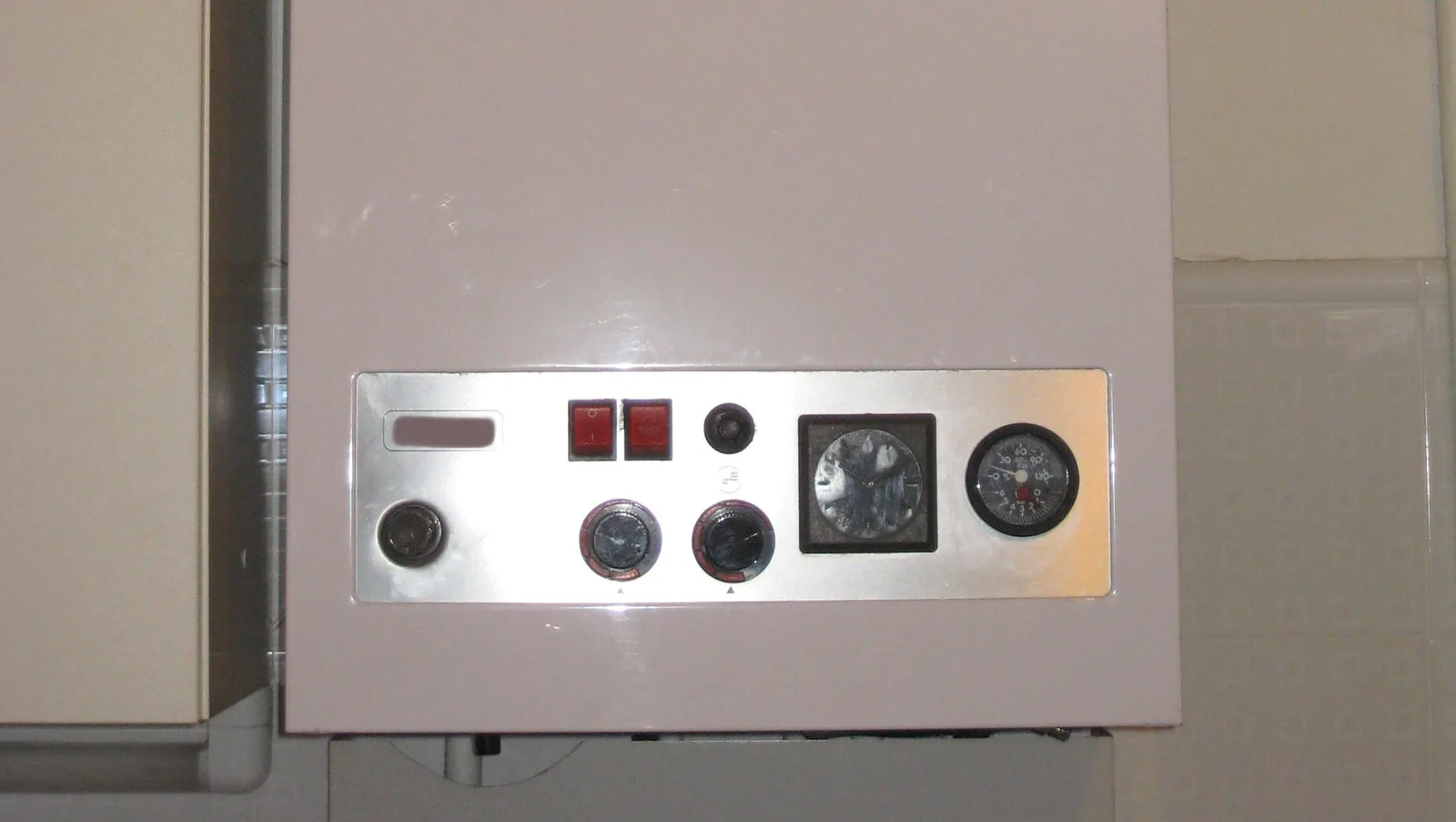
The Silent Killer in the Bathroom: The Danger Is Not the Gas Heater but an Unventilated Room and Neglected Upkeep
With the first cold snap each year, Egyptian homes light their gas water heaters and shut their windows, turning a small bathroom into a room with no fresh air. Carbon monoxide has no colour, smell or taste, and its early symptoms are easily mistaken for a cold or fatigue. Here is what official sources say about the real cause of the danger, and the order of actions in the first minutes that could save a whole family.
November 21, 2026 · 8 min read