Outside the Center of Gravity: Hana Goda, Omar Assar and an African Ceiling Cracking in Table Tennis
From Seoul 1988 to Paris 2024, 37 of table tennis's 42 Olympic gold medals went to China alone. In this closed world, Hana Goda became, in April 2026, the first African woman to reach the quarterfinals of the World Cup, after Omar Assar had already reached fifth place in Tokyo. The story of a breakthrough from outside the center of gravity, and what it means for a father searching for a table for his son.
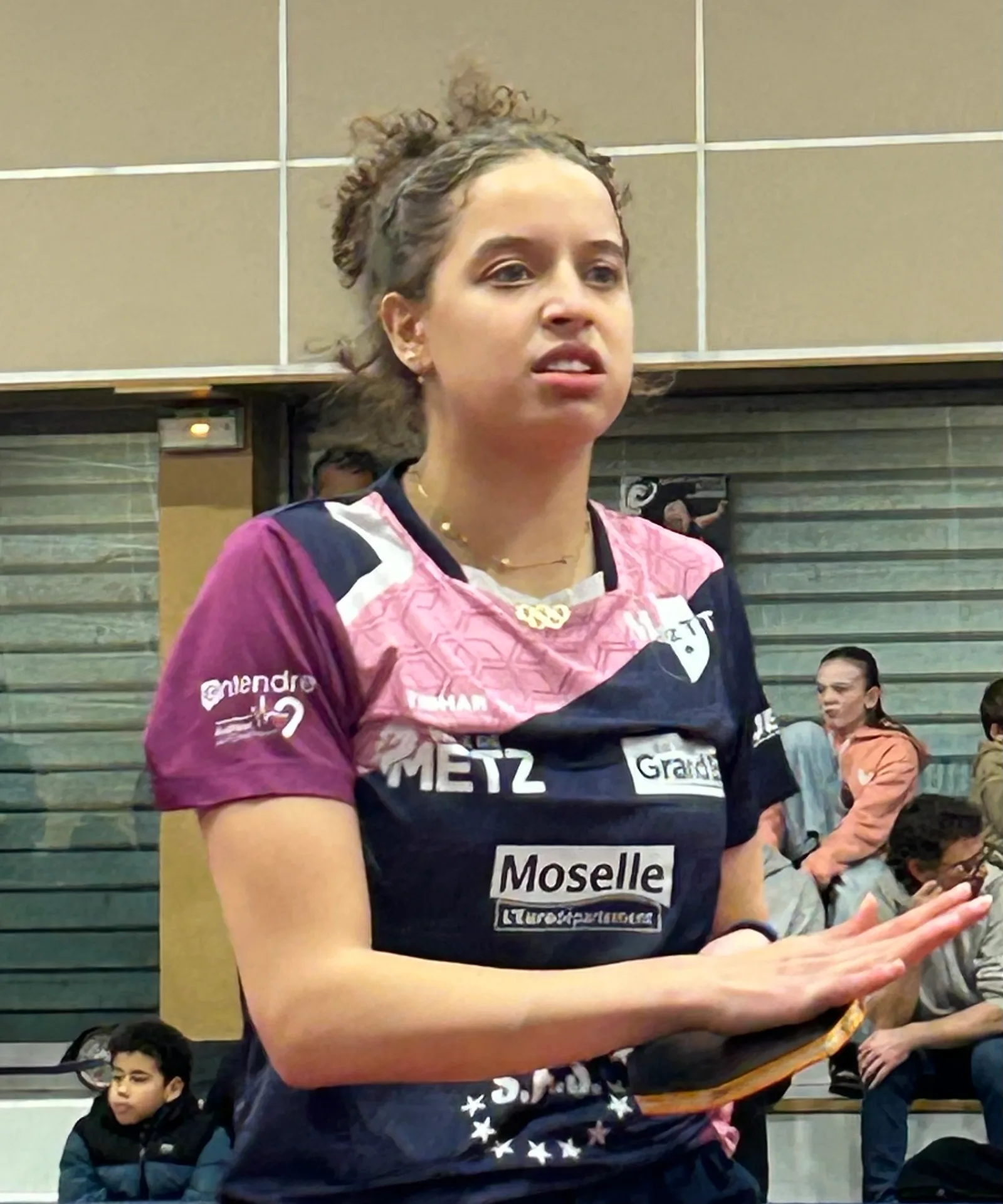
After the afternoon prayer, in the hall of a small club in one of the old neighborhoods, a single unmistakable sound repeats: tock… tock… a light plastic ball bouncing off the wooden tabletop, then ricocheting from paddle to paddle. Around the club's only table, six children stand in line, each waiting for whoever is in front of him to lose so he can take his turn. On the wooden bench in the corner sits a father, one eye on his son and the other on his phone, asking himself a very practical question: is there a future in this game, or is it just something to pass the time until it's time for lessons?
The question deserves a more precise answer than yes or no. We told the story of Egyptian squash in these pages before ("How Did Egypt Build the Squash Empire That Rules the World?", August 18), the story of a country that became the game's own center and its yardstick. Table tennis is a different story in structure: here, Egypt does not rule — it pushes in from the outside, toward a center of gravity that has sat in the Far East for decades. And the difference between being the capital and being the one knocking at the door changes the meaning of every win and every loss.
Let's be precise about the size of that center. Since the sport entered the Olympics in Seoul in 1988 and through Paris 2024, forty-two gold medals have been awarded, thirty-seven of them to China alone, according to published records. At Paris 2024, China swept all five golds; at Tokyo 2020 it took four of five, with the mixed doubles gold — new to the program that year — going to Japan's Jun Mizutani and Mima Ito. Rising up from Africa in a sport this concentrated is not like rising up in an open one; you are not competing against a single player, but against an entire system of schools and training partners.
On April 3, 2026, in Macau, Hana Goda — eighteen years old, born December 12, 2007 — played the round of sixteen at the World Cup against France's Jia Nan Yuan. The match ended 4-3 in her favor after seven turbulent games, making her the first African woman to reach the quarterfinals of the World Cup singles, and only the second African ever to reach that stage, after Nigeria's Quadri Aruna in Düsseldorf in 2014. Twelve years separated the two breakthroughs — a span long enough to tell us just how narrow the door was that she walked through.
In the quarterfinal she faced China's Sun Yingsha, ranked world No. 1 in the April 2026 rankings. Goda lost — but she lost 3-4 across seven games, a scoreline that says more than the word "loss" on its own. Two weeks later, on April 19, 2026, she reached the highest world ranking of her career to date: No. 20, the highest of any African woman. It is worth stressing that rankings in this sport shift weekly, which is why we date every figure to its day; readers may well be encountering these lines after rounds that have since reshuffled the order.
None of this fell suddenly from the sky. In early 2020, at twelve years old, she topped the world junior girls' singles rankings, becoming — by contemporary reports — the first Egyptian and the first African at the top of that category. On May 28, 2022, she won the Africa Cup in Lagos at fourteen years and 167 days old, making her the youngest champion in the tournament's history. At the 2023 African Games in Accra she took the singles gold in a final against her compatriot Dina Meshref. Six years of gradual ascent, not a single leap captured in one headline.
And because honesty is part of the story, the road has not been an unbroken climb. At the Paris 2024 Olympics, Goda went out in the round of 64, the competition's opening round, against the Netherlands' Britt Eerland in four straight games — a harsh result. The ceiling we're describing is real and heavy, and anyone who reads the career of any player in this sport will find more losses in it than wins. The only difference is that some losses become a rung on a ladder, while others end the journey quietly, with no one writing about them at all.
Before Goda's generation, Omar Assar, born July 22, 1991, was knocking on the same door. At the Tokyo 2020 Olympics he finished the men's singles competition in fifth place after losing to China's Ma Long in the quarterfinal — as far as we know at the time of writing, the best Olympic result by an Egyptian in this sport. He reached the highest world ranking of his career, No. 13, on May 6, 2024 — another figure dated to its day, not a permanent label attached to his name.
Fairness demands we not tell this story as if it were an Egyptian story alone. Nigeria's Quadri Aruna reached the men's singles quarterfinal at the Rio 2016 Olympics and climbed to No. 10 in the world on June 13, 2022. What's unfolding, then, is an African wave, not a lone Egyptian exception suspended in a vacuum — and within it, Egypt carries the greatest weight, not the only one. That is a meaningful distinction, not a courtesy: whoever thinks himself a miraculous exception stops at the first wall, while whoever knows he is part of a wave goes looking for the next one and works to build it.
As for Egypt's continental weight, that is measured in numbers, not impressions. At the 2024 African Championships, held in Addis Ababa from October 12 to 19, Egypt took five golds out of seven and fourteen medals out of twenty-eight, crowned by Omar Assar in men's singles and Hana Goda in women's singles. Alongside them stood Dina Meshref, born March 10, 1994, who held the Africa Cup for seven straight editions between 2014 and 2020 after first winning it in 2011, then reclaimed it in Kigali in 2024 — and remains active in the sport.
Why does the ceiling stay this high, for all that? Because dominance in table tennis is not bought with a single talent or a summer camp; it is built through daily training density and sparring partners at the same level, in the same hall. The prevailing impression among people who follow the sport — and we hold no official figure on this — is that a player in the countries of the Far East finds a world-class training partner two tables away, while an African player has to travel to find the right opponent. As for federation budgets, we have no official figures, and we won't invent any.
So what makes a player, in a sport with such limited funding? An early start; a table available every day, not once a week; a coach who stays with the player for years so his school does not change every season; and regular exposure abroad, not seasonal. In a report published by Egypt Independent on January 2, 2020, Egypt's table tennis federation president at the time, Moataz Ashour, was quoted as saying that a dedicated coach accompanied Goda at her tournaments, and that she was competing in roughly ten local and international events a month. That is the raw material — not miracles.
We return to the father on the wooden bench in the corner. Table tennis is one of the few sports that does not ask a child about his height, his build, or his muscle strength, and does not need a large field or grass: a reasonable space around the table is enough for serious training, and a first paddle will not drain a household budget. At the same time, it is a school for nerves before it is a school for muscles: sustained concentration, split-second decisions, and accepting defeat dozens of times in a single session without breaking.
Caution is warranted too: do not turn the child into a championship project before he loves the game, and do not measure his progress in medals over the first two years. Most likely — and this is a judgment call, not a certainty — what remains from these years is not a trophy in the hall's cabinet, but the habit of discipline, and a friend's face on the other side of the net. Then the line ends, your son takes his turn, and the same sound returns: tock… tock… He may never reach Macau, but he will grow up knowing that the ceiling an Egyptian girl knocked on in April 2026 was not impossible — only a ceiling no one before her had knocked on with enough patience.
Related Stories
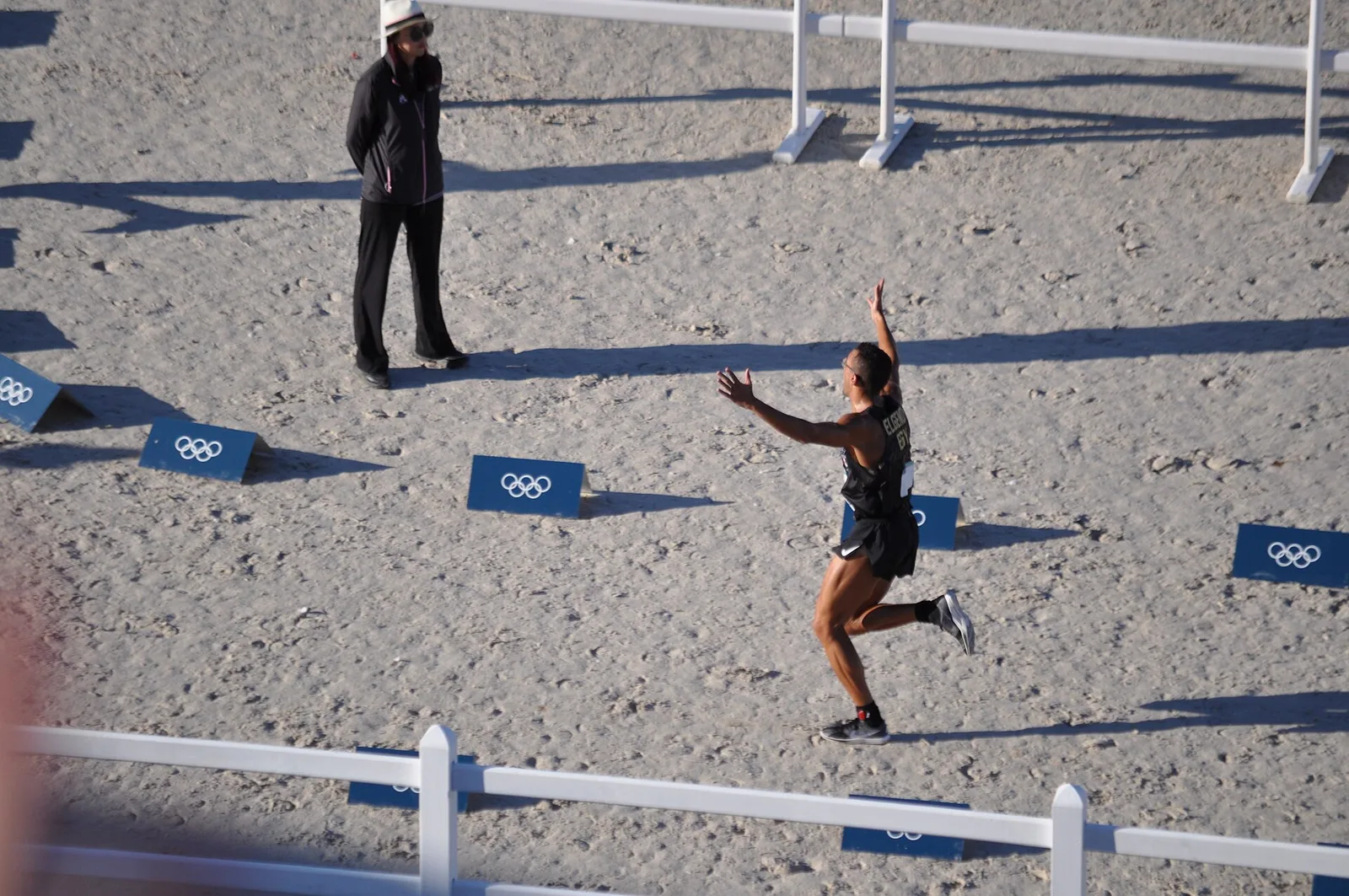
Five Sports in One Day: How Modern Pentathlon Is Scored, and Why an Obstacle Course Replaced Riding
A total of 1,555 points at Versailles, and a 13-point margin that the international federation's report read as 13 seconds at the finish line. An inside look at modern pentathlon: how scoring turns every mistake into seconds, how a child trains in five sports in one week, what the sport demands of a pool, a track and a fencing hall, and why riding is no longer part of it.
November 7, 2026 · 8 min read

“A Cold Shot Cures a Cold”: A False Claim, and What Trials Say About the “Power” of the Vein
“Forget the pills, take a shot and you'll be back on your feet” is advice that returns with the first chill of every year. We test two claims: that a “cold shot” cures a cold, and that an injection is inherently stronger than tablets. Verdict: false. The evidence lies in the mixture itself, in randomized trials comparing vein with mouth, and in an official Egyptian guide. The route of a medicine is the doctor's decision alone.
November 22, 2026 · 9 min read

The Silent Killer in the Bathroom: The Danger Is Not the Gas Heater but an Unventilated Room and Neglected Upkeep
With the first cold snap each year, Egyptian homes light their gas water heaters and shut their windows, turning a small bathroom into a room with no fresh air. Carbon monoxide has no colour, smell or taste, and its early symptoms are easily mistaken for a cold or fatigue. Here is what official sources say about the real cause of the danger, and the order of actions in the first minutes that could save a whole family.
November 21, 2026 · 8 min read