Raising Children in the Age of Screens: What Pediatric Science Actually Recommends
Between panic and surrender, the world's pediatric bodies offer calm, evidence-based guidance on children and screens: what the age limits really say, why sleep comes first, why content beats the clock, and how a family media plan works in practice.
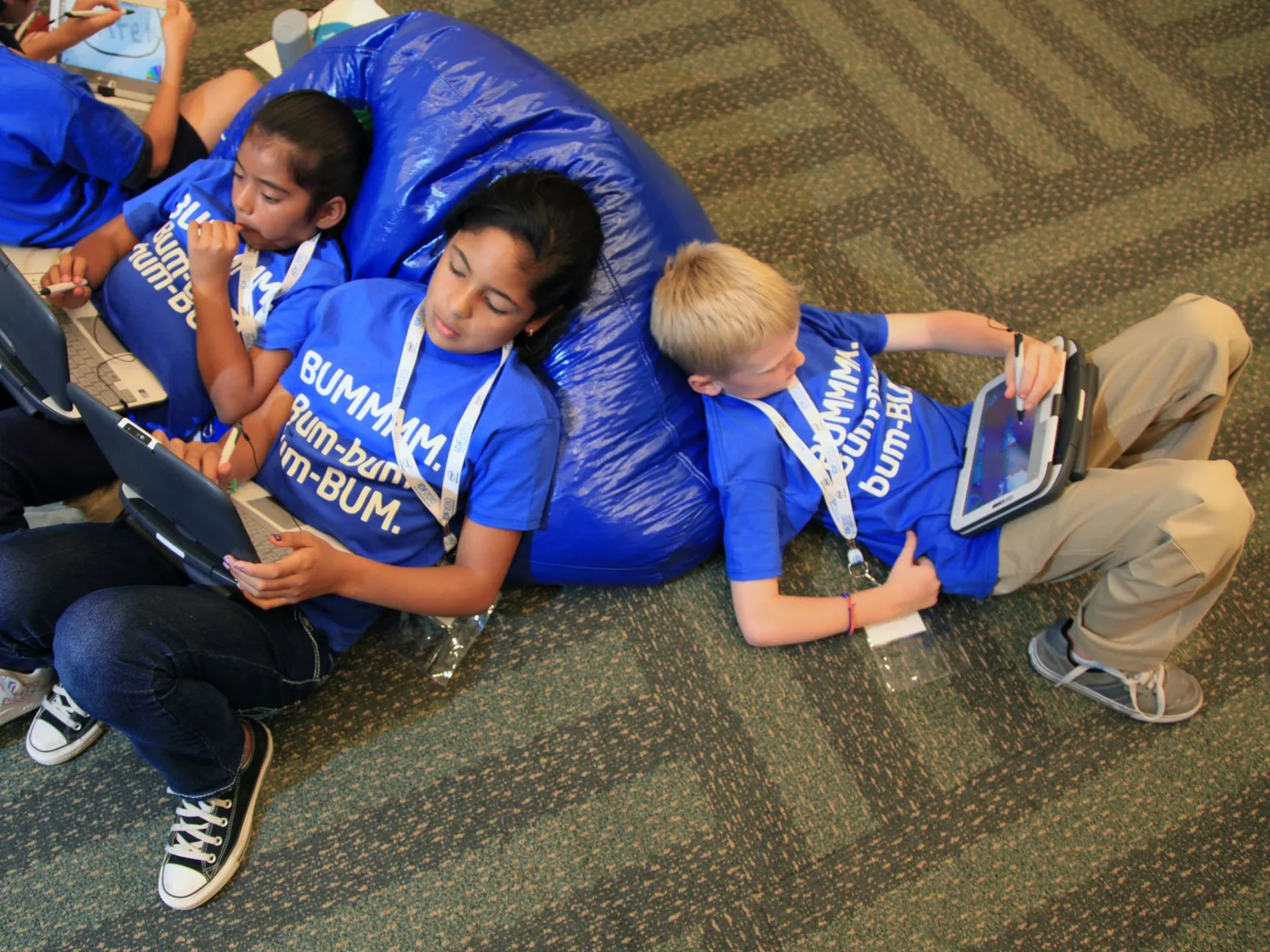
Few parenting questions cause as much daily friction in Egyptian homes as the screen: the phone that quiets a toddler at a family gathering, the tablet that buys a parent an hour of peace, the television that runs all evening. Between voices declaring screens a catastrophe and others waving the worry away, parents deserve something better than slogans. The world's major pediatric bodies — including the World Health Organization and the American Academy of Pediatrics — have studied the evidence and issued practical guidance. It is calmer, and more useful, than the shouting suggests.
For babies and toddlers under about two years, the guidance is at its firmest: avoid screen media almost entirely, with one warm exception — live video calls with grandparents and relatives. The reason is not that screens emit some mysterious harm, but that infants learn language and thinking from live human faces, voices, and back-and-forth interaction, and laboratory studies consistently find they learn very little from video. Every hour in front of a screen at this age is an hour taken from the interaction that actually builds the brain.
For children between two and five, the widely cited ceiling is about one hour a day — and the World Health Organization adds plainly that less is better. Just as important as the amount is the type: slow-paced, well-designed educational programmes, watched together with an adult who talks about what is on the screen, are a world apart from an endless stream of algorithm-fed clips. At this age, a parent sitting beside the child — naming, asking, laughing — converts passive watching into something closer to shared reading.
For school-age children and adolescents, pediatric bodies no longer insist on a single magic number of minutes. Instead they recommend consistent family rules built around priorities: enough sleep for the child's age, at least an hour of physical activity daily, time for homework, meals, and face-to-face family life — and screens fit into whatever remains. The American Academy of Pediatrics encourages families to write an explicit 'family media plan', so the rules are agreed in advance rather than renegotiated in nightly battles.
The strongest and most consistent evidence concerns sleep. Screens in the evening delay bedtime, and the light they emit suppresses melatonin, the hormone that signals the body to sleep; the stimulation of games and videos does the rest. The practical rules are simple and non-negotiable in most pediatric guidance: no televisions or phones in the child's bedroom, all screens off roughly an hour before bed, and devices charged overnight outside the room. A child who sleeps well gains more from that single habit than from many other interventions combined.
What a child watches matters as much as how long. Fast-cut, frantic content trains attention to expect constant novelty; violent content is linked to aggression in a large body of research; and recommendation algorithms are engineered to prolong watching, not to serve a child's development. Choosing specific programmes rather than open-ended autoplay, using child profiles and parental controls as imperfect helpers, and above all watching alongside the child and discussing what appears — these shift the balance from the platform's interests to the family's.
One quiet culprit deserves special mention: the television running in the background all day. Studies find that background TV reduces the quantity and quality of parent-child conversation and interrupts young children's play — the very activities through which they learn. The fix costs nothing: switch the set off when no one is actively watching, and keep mealtimes free of screens for everyone. A silent room in which an adult chats with a child is a richer classroom than it appears.
Researchers increasingly frame the issue as displacement: the harm of screens lies largely in what they replace. Childhood needs free play, movement, boredom that breeds imagination, paper books, and above all conversation — the 'serve and return' of a child speaking and an adult responding, which language science identifies as the engine of vocabulary growth. A family that guarantees these things need not panic over a reasonable amount of screen time; a family that loses them cannot compensate with the finest educational apps.
Parents' own habits are part of the prescription. Children copy what they see, and a parent scrolling through dinner teaches more powerfully than any rule announced aloud. Pediatric guidance also warns against making the screen the default tool for calming every tantrum: children need practice managing boredom and frustration, and a device that removes every uncomfortable moment removes the practice too. Occasional use on a long journey is real life; automatic use in every quiet moment is a habit worth breaking — for the adults first.
The practical path for a family is neither prohibition nor surrender but a clear agreement: screen-free zones such as bedrooms and the dining table, screen-free times such as the hour before sleep, content chosen rather than drifted into, and attractive alternatives kept ready — a ball, colouring pens, a kitchen task, a story. Change goes more smoothly by degrees than by sudden bans, and video calls with faraway relatives remain warmly encouraged at every age. The screen is a tool in the house; the family, not the algorithm, sets its terms.
Related Stories

Before the Katb el-Kitab: The Medical Certificate the Law Demands, What It Reveals, and Why It Cannot Stop a Marriage
A compulsory medical test before Egypt's marriage-contract registration, the katb el-kitab, ends in a certificate with a QR code that the ma'zoun or church authority requires. What does it detect, what does it cost, where is it done, and why does it matter so much in Egypt? Above all: why can its result never prevent a marriage? A calm guide for every engaged couple worried about "what if they find something in me?"
September 12, 2026 · 9 min read
A Two-Week Plan to Reset Kids' Sleep Before the September 12 School Bell
With Egypt's school year starting September 12, sleep specialists advise shifting children's bedtime and wake-up earlier by 15-20 minutes a night, starting now rather than the night before. Here is the plan, and the recommended hours for every age.
August 23, 2026 · 6 min read

Back to School on a Budget: A Family Guide to September 12
With Egypt's school year opening on September 12, a practical guide to the back-to-school budget: the official fees, a use-what-you-have inventory, spending priorities, realistic savings tactics — and how to rein in the biggest line item, private tutoring.
August 18, 2026 · 6 min read