"Cough Hard to Survive a Heart Attack Alone": A WhatsApp Message Egyptian Homes Pass Around, and Medicine Says Otherwise
A chain message reaches nearly every phone in Egypt: if you have a heart attack alone, cough hard and in rhythm until your heart steadies. The American Heart Association flatly rejects "cough CPR," the message confuses a heart attack with cardiac arrest, and every minute spent coughing instead of calling the free 123 ambulance line is taken from the patient's life. This is what medicine says.
It is past one in the morning, and the house is silent except for the whir of the fan. A phone suddenly lights up on the bedside table, and a half-asleep hand reaches over to turn it face up: the family WhatsApp group, where an aunt has forwarded a long message headed by a red heart and an exclamation mark, with a few words of her own beneath it: "Just in case, kids." The same message arrived months ago from a colleague at work, before that from a neighbor, and it will arrive again tomorrow from someone else. And because the aunt is kind and means only well, her nephew reads half of it, types "Thanks, Auntie," and goes back to sleep, while the message continues its journey to other homes.
The text shifts slightly from one version to the next, but the core is the same: you are driving, or sitting alone at home, when a severe pain in the chest spreads to your arm and jaw, and there is no one around to help you. The remedy, according to the message, is to cough hard and deep, roughly one cough every two seconds, each preceded by a deep breath, and to keep going until the heart returns to its rhythm or the ambulance arrives. It usually closes with a line designed to make the reader feel guilty for not sharing it: "Send this to ten people; it could save a life."
Let us give the conclusion up front, because this is a matter of life: the claim is untrue, and our verdict in the Truth section is: false. Coughing saves no one from a heart attack. The most authoritative body on the subject, the American Heart Association, states on its official website that it does not endorse so-called "cough CPR," and says plainly that it is not taught in CPR courses for non-professionals, for the simple reason that it is of no use outside a hospital.
The first problem with the message is that it conflates two entirely different conditions, joined by the heart and separated by everything else. A heart attack, or myocardial infarction, occurs when an artery supplying the heart with blood and oxygen becomes blocked; part of the muscle begins to die, but the heart, for the most part, keeps beating. Cardiac arrest is when the heart stops beating regularly, or slips into a lethal electrical disturbance, and the person collapses unconscious within seconds. In the first, the patient is conscious and complaining of pain; in the second, the patient does not complain, because they cannot.
And this is where the message collapses from within. If what has struck you is a heart attack, your heart is already beating, and there is no sense in coughing to make it beat; a cough does not open a blocked artery or dissolve a clot, which is what the cardiologists at the Cleveland Clinic in the United States explain in plain terms: coughing does not help a heart attack patient, and it should not delay the call to emergency services. And if what has struck you is cardiac arrest, you are unconscious, and you will be able neither to cough nor, for that matter, to read the message. The American Heart Association puts it simply: this coughing does nothing for someone who has become unresponsive.
So where did the idea come from? In fairness, cough CPR does have a genuine medical origin, but a very narrow one. Inside a hospital, and specifically in cardiac catheterization labs, a doctor may ask a conscious patient hooked up to monitors to cough forcefully for a few seconds when a sudden disturbance in heart rhythm appears on the screen, because the rise in pressure inside the chest during a cough temporarily keeps blood flowing to the brain until the medical team can step in. That is all there is to it: a brief maneuver, under monitoring, on a doctor's instruction, in a place where the electric-shock device, the defibrillator, is one step away.
The message took this narrow exception and turned it into a general rule, carried it from the catheterization lab to the driver's seat and the bedroom, and stripped out the doctor, the screen and the machine. As far as we know, the message was not born on WhatsApp; it began circulating by email in the late 1990s, then moved from one generation of social media to the next, was translated into many languages, and came back each time more persuasive and less accurate. Its long life is not proof that it is true, only proof that fear for loved ones moves faster than verification.
The real danger is not in the coughing itself, which in most cases will harm no one. The danger is in the minutes. A heart attack patient loses part of the heart muscle with every minute the artery stays blocked, and the effective treatment is to reopen that artery, by catheterization or with clot-dissolving drugs, in a hospital. For a cardiac arrest patient, the only hope of bringing the heart back to a beat is an electric shock and immediate resuscitation, not coughing. Every second a person spends trying to cough "in the right rhythm" instead of calling for help is a second taken from the balance of their heart.
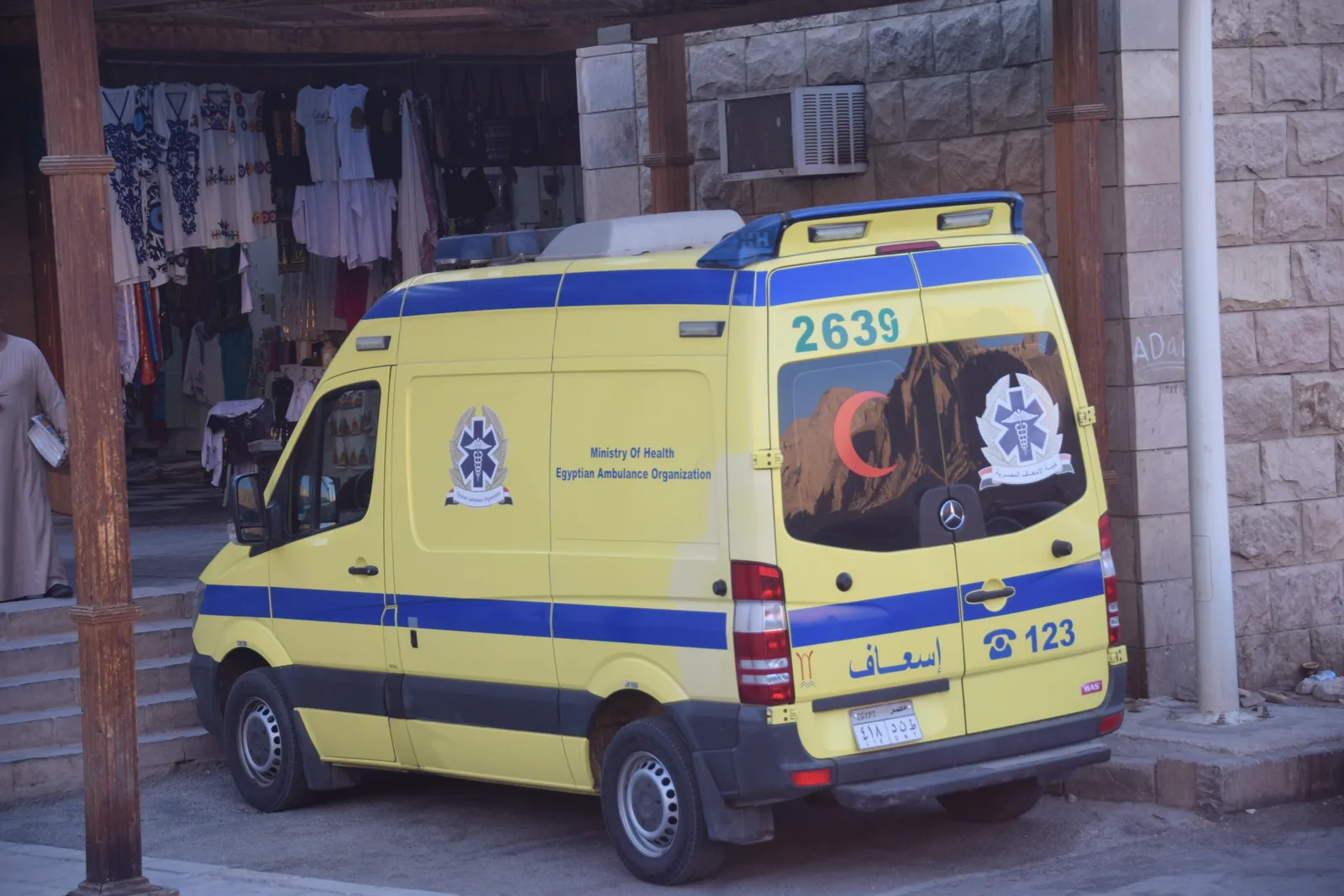
And because the message builds its fear on the idea that you are "alone, with no one to help you," it is worth reminding readers that in Egypt there is one number that should be the first thing your hands do: 123, the ambulance hotline. As of the time of writing, Egypt's emergency ambulance service is entirely free of charge. The Egyptian Ambulance Organization confirmed, and the spokesman for the Ministry of Health and Population relayed on October 10, 2024, that first aid and the transport of emergency cases, including cardiac arrest, coma and accident victims, to the nearest hospital remain free around the clock via the 123 hotline, and that the pricing announced at the time applied only to non-emergency services such as covering events and transporting patients after recovery.
So what should you do if you feel a pressing pain in the chest, shortness of breath, pain spreading to the arm, jaw or back, or a cold sweat and sudden dizziness, and you are alone? Call 123 immediately and say clearly where you are and what you are feeling. Then sit or lie down somewhere safe, open the door of the apartment if you can so the paramedics can reach you, and do not try to drive yourself to the hospital, because losing consciousness behind the wheel turns your emergency into a catastrophe for you and for others. If the ambulance operator on the phone or your doctor advises you to take an aspirin, do so; but on your own initiative, do not try the remedies in chain messages.
And if you are the witness rather than the patient, and you see someone collapse in front of you, unresponsive and not breathing normally, calling 123 is still the first step; ask the ambulance operator to guide you through what to do until the vehicle arrives, and do not hang up before they confirm the call has been received. Do not waste time asking the patient to cough; someone who is unresponsive cannot hear you. Better still, look around you for a real course in cardiopulmonary resuscitation, because that skill, not the WhatsApp message, is what has actually saved lives.
A reader might ask: what is the harm in forwarding the message, just as a precaution? The harm is that it adds no information; it replaces correct information with wrong information that looks more "practical." It tells the patient that the solution is in their own hands, so they put off calling for help, and it tells their family that they have done their part simply by forwarding it. The real precaution is for everyone in the house to memorize the number 123, to know the signs of a heart attack, and to know that the road to the hospital is far shorter than the road to the "right rhythm" of coughing.
Tomorrow, on World Heart Day, we return to the bigger picture in a separate article on heart disease in Egypt and the risk factors that feed it, with the figures and their sources. This investigation set out to stop at a single claim and a single message, because at the critical moment a single message can be more dangerous than all the statistics put together.
Let us return to the phone glowing on the bedside table. In the morning, the nephew will see that his aunt's message has collected red hearts from half the family, and that no one read it to the end. The best reply, one that neither hurts the aunt nor lets the message continue on its way, is a short note in the same group: "Auntie, coughing doesn't help with a heart attack, and the American Heart Association itself says so. What actually helps: call 123, the ambulance is free, and sit down, don't drive." A message like that will not be forwarded by ten people, but it might save a life the next time a phone lights up after midnight, with someone on the other end feeling a pain in their chest.
Related Stories

"Reading in Dim Light Ruins Your Eyes": What Ophthalmologists Confirm, and the Risk Parents Really Overlook
With evening study sessions back under a single bulb, the old warning returns: "You'll go blind." We checked the claim word for word and found ophthalmologists of one mind: dim light and sitting close to the screen tire the eyes; they do not damage them. But behind that reassurance stands a real danger most households overlook, and regional estimates put Egypt's children at the top of it.
September 19, 2026 · 7 min read

“Tea After Meals Blocks Iron”: The Mothers’ Warning Science Confirmed, and a Simple Fix
It is rare for a warning from the Egyptian kitchen to be backed so clearly by the laboratory. Black tea taken with a meal cuts the absorption of iron from bread, lentils and vegetables by startling margins, and milk does not rescue it. But the answer is not to banish the tea tray; it is to hold it back by a single hour, and to put a wedge of lemon on the table. We lay out the evidence, and why it matters for Egypt in particular.
September 10, 2026 · 7 min read

Horoscopes and Palm Reading Under the Microscope: Why Do We Believe Predictions That Fit Everyone?
One personality profile handed to an entire class — and most students judged it "remarkably accurate." Astrologers who failed a test they themselves had helped design, in the pages of Nature. We take apart the secret of predictions that fit everybody, and hand you a practical test for any "reading" before you pay a penny for it or build a decision on it.
September 5, 2026 · 7 min read