Wadi El Hitan, When Fayoum Was a Sea: A Day Trip from Cairo to a 40-Million-Year-Old Seabed
About three hours from the Cairo gridlock, an Egyptian family stands before the skeleton of a whale with hind legs, 40 million years old, in a desert that was once a seabed. Why did UNESCO choose Wadi El Hitan as Egypt's first natural site on the World Heritage List? And how can a single day take in the fossils, the Wadi El Rayan waterfalls and the pottery of Tunis village? A practical guide to a journey that needs no visa.
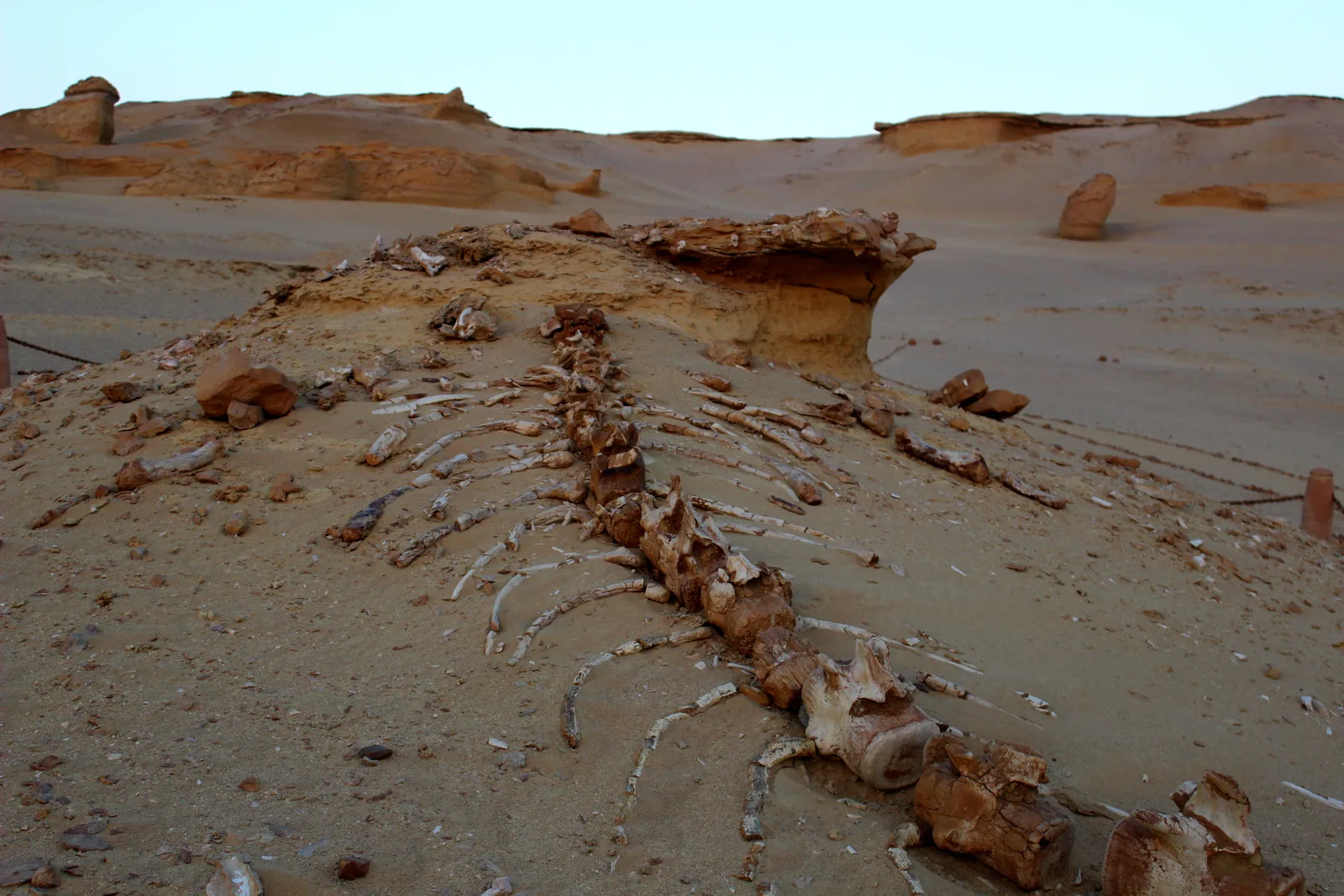
At five in the morning a family car pulls onto Cairo's Ring Road. In the back seat, two children clutch water bottles and sandwiches wrapped in foil, along with a single question they have been repeating since the night before: “Were there really whales in the desert?” Their father smiles and says nothing, because he did not believe it himself the first time he read the sentence. Some three hours later, when the asphalt gives way to a sand track and then to a vast silence, the whole family will stand before a skeleton nearly the length of a bus, with something at its tail end that you will not see on any whale you know: two small hind legs. Only then will the father find his answer. Yes, there was a sea here.
The place is called Wadi El Hitan, the Valley of the Whales, and it lies at the north-western edge of the Wadi El Rayan Protected Area in Fayoum governorate, about 150 kilometres south-west of Cairo. Some 40 million years ago these sands were not sands at all but the floor of an ancient sea that geologists call the Tethys, the vast body of water that covered northern Egypt before it receded and left behind the Mediterranean we know today. The whales that died in it were buried under sediment, layer upon layer; then the movement of the Earth's crust lifted the seabed and the wind carved at it for millions of years, until the bones began emerging from the rock as though someone had laid them there yesterday.
The scientific story that makes this valley unique begins with a question that sounds naive: where did whales come from? Science is settled on the point that whales are mammals that suckle their young and breathe air as we do, and that their ancestors were four-legged land animals living along the water's edge. Over millions of years they spent ever more time in the water; their bodies lengthened, their forelimbs became flippers, and their hind limbs shrank until they vanished. Wadi El Hitan preserves precisely the final chapters of that journey, because its fossils belong to the archaeocetes, the “ancient whales”, at their last stage, when they still carried stunted hind legs that were useless for walking but stood as witness to a land-dwelling origin not yet erased.
The valley's two most famous residents are Basilosaurus, a long, slender whale resembling an enormous serpent, and Dorudon, far smaller at between three and five metres, whose juvenile skeletons have also been found here, suggesting the area was a sheltered place where whales came to give birth. The fossils are dated to between 39 and 41 million years old, and the first skeletons were discovered in the winter of 1902 to 1903, more than a century ago, yet the site remained all but unknown to the public for decades because of its remoteness and the roughness of the road. It is a different story from that of Mansourasaurus, the Egyptian dinosaur we have written about before: that creature went extinct more than 30 million years before the whales of Fayoum swam in their sea.
In July 2005 UNESCO's World Heritage Committee inscribed Wadi El Hitan on the World Heritage List, making it Egypt's first natural site on the list; every Egyptian site registered until then had been the work of human hands. It was inscribed under criterion (viii) of UNESCO's criteria, reserved for places that represent major stages in the Earth's history and the record of life upon it. Put more simply: this valley is the clearest open page anywhere in the world on the moment whales moved from land to sea.
The valley's condition today is reassuring. The latest assessment by the International Union for Conservation of Nature (IUCN), UNESCO's advisory body on natural sites, was published in 2025 and described the site's state of conservation as “good”. It found that damage caused by visitors is minimal and effectively managed, although cases of names being carved into the rocks have been recorded, and that what warrants attention is natural erosion and the long-term effects of climate change. According to the same assessment, visitor numbers rose from around 12,000 in 2008 to around 53,000 in 2023, meaning that visitors, many of them Egyptians, have begun discovering a treasure that had lain beneath their feet all along.
A visit is an open-air walking trail among dunes and wind-sculpted rocks, with the skeletons exposed where they were found, inside simple barriers and beside explanatory panels. That is why the best time to go is autumn, winter and early spring, when the sun loses its edge and a walk of an hour or two becomes feasible. At the entrance to the site stands the Fossils and Climate Change Museum, opened on 14 January 2016 in cooperation between the Ministry of Environment, the United Nations Development Programme and the Italian government. It houses a complete skeleton of Basilosaurus isis, which is, as far as we know, the largest intact skeleton of the species anywhere in the world.
But Fayoum does not end with the whales. The valley is part of the Wadi El Rayan Protected Area, declared in 1989 over some 1,759 square kilometres, about 75 kilometres from the city of Fayoum and less than two hours from Cairo. At its heart lie two lakes, an upper and a lower, linked by the Wadi El Rayan waterfalls that most Egyptian families know from school-trip photographs. What many do not know is that the two lakes are not natural at all: they formed from agricultural drainage water from Fayoum's farmland that was channelled into this desert depression, so that human hands created a body of water of roughly 113 square kilometres, whose shores became a wetland that has been listed under the international Ramsar Convention since 4 June 2012.
Among the sands of the reserve lives one of the world's last populations of the rhim, or slender-horned gazelle, an endangered species, alongside small numbers of Dorcas gazelle, fennec foxes and migratory birds that alight on the lakes during their seasonal passage. That is why the rules for visitors here are not bureaucratic fuss: do not leave the marked trails, do not leave behind a single plastic bag, do not carve your name on a rock, and do not touch the fossils or pocket a stone as a “souvenir”, because every piece of rock in this valley may be part of a record 40 million years old.
On the way back, with shoes full of sand and heads full of questions, the family can turn off towards Tunis village on the south-western shore of Lake Qarun. The village is quiet, and there is a pottery workshop in almost every lane. Its story began in 1984, when the Swiss potter Evelyne Porret (1939–2021) moved there and founded a school to teach children pottery, which remains, as far as we know, the largest pottery school in Fayoum. The village children learned the craft and then taught it to their own children, and Tunis became a destination for artists and visitors, with an annual pottery festival of its own. Best of all, a child here can sit at the potter's wheel and shape a small dish with their own hands to carry home.
In practical terms, the whole trip can be done in a single day by private car or through organised tour programmes, allowing about three hours each way for the road between Cairo and Wadi El Hitan. The road is paved for most of its length, with a sandy stretch at the end where those without a four-wheel-drive vehicle would do well to arrange things with local people. Entry fees and opening hours change from time to time, which is why we give no specific figures and advise checking with the official authorities before setting out. The golden rule: leave very early, carry more water than you think you need, along with a hat and comfortable shoes, and do not count on a mobile signal in the desert.
What deserves a pause, beyond the practical instructions, is the meaning. We live in a country accustomed to measuring its greatness by what human beings have built: the pyramids, the temples, the citadels. Wadi El Hitan says something else: that this land was great millions of years before any human set foot on it, that beneath the sands of the Western Desert lies a record of life that few countries possess, and that protecting it is not an environmental luxury but a duty to the memory of the planet. When UNESCO chose this place, it was not honouring rocks but a moment in the history of life that Egypt happened to be the one to preserve.
On the road back to Cairo the two children sleep in the back seat, one of them cradling a small clay dish that has not yet dried. At the first congested traffic light on the Ring Road the gridlock returns as it always was, but something has changed: the father who did not believe the sentence yesterday now drives past a giant billboard and thinks that all this asphalt and concrete was once the floor of a sea. Tomorrow his son may ask him, “So, are we going back?”, and your own child may ask you the same question. This time, the answer is ready.
Related Stories
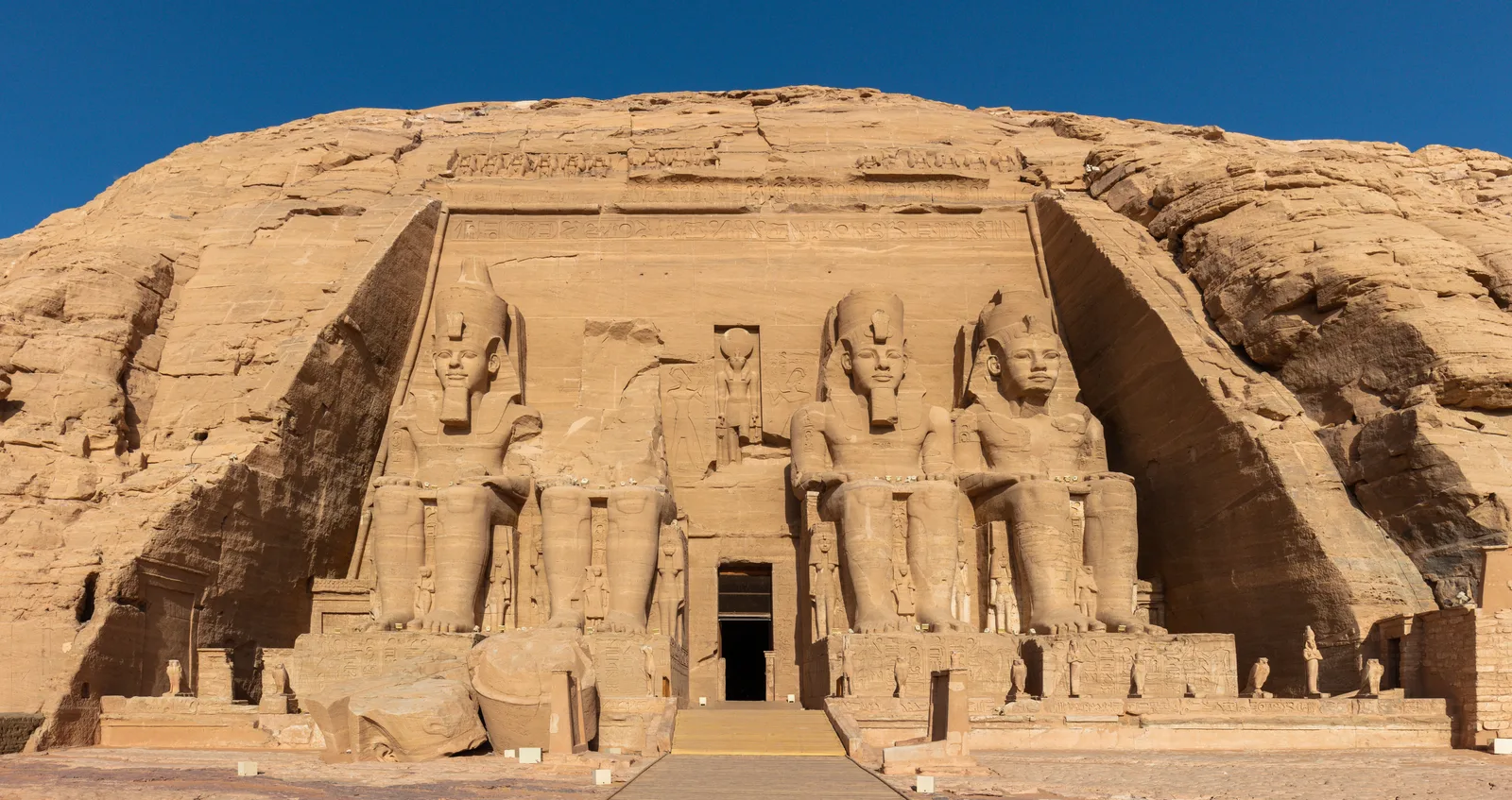
Abu Simbel: the temple the world lifted 65 metres so it would not drown, and the sun that comes back to it on 22 October
Shortly before sunrise on 22 October, people stand in the darkness of the great hall waiting for a thread of light to travel some sixty metres through solid rock and fall on the face of Ramses. Behind that moment lies the story of a twenty-year international campaign that lifted the temple, block by block, above the waters of Lake Nasser. Here is your guide to understanding the spectacle and planning an Aswan trip a month ahead of the date.
September 20, 2026 · 7 min read
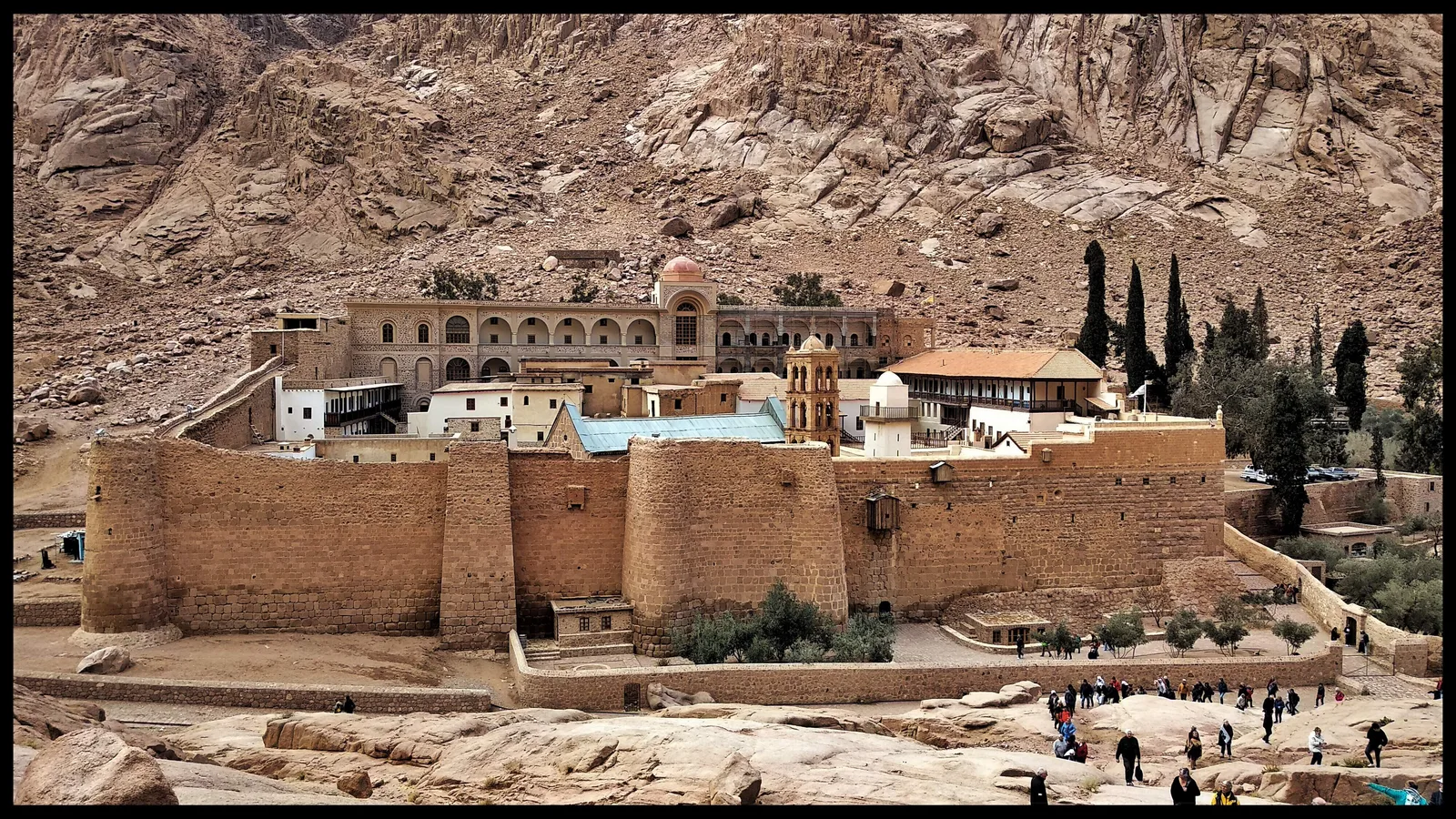
Sinai's High Mountains: St Catherine, an Ancient Monastery and Bedouin Trails
Above Sinai's beach resorts rises Egypt's highest ground: Jebel Musa and Jebel Katherina, a sixth-century monastery that has never closed, Bedouin orchards in the high wadis, and the Sinai Trail — a long-distance hiking route created and guided by the tribes themselves.
August 18, 2026 · 5 min read
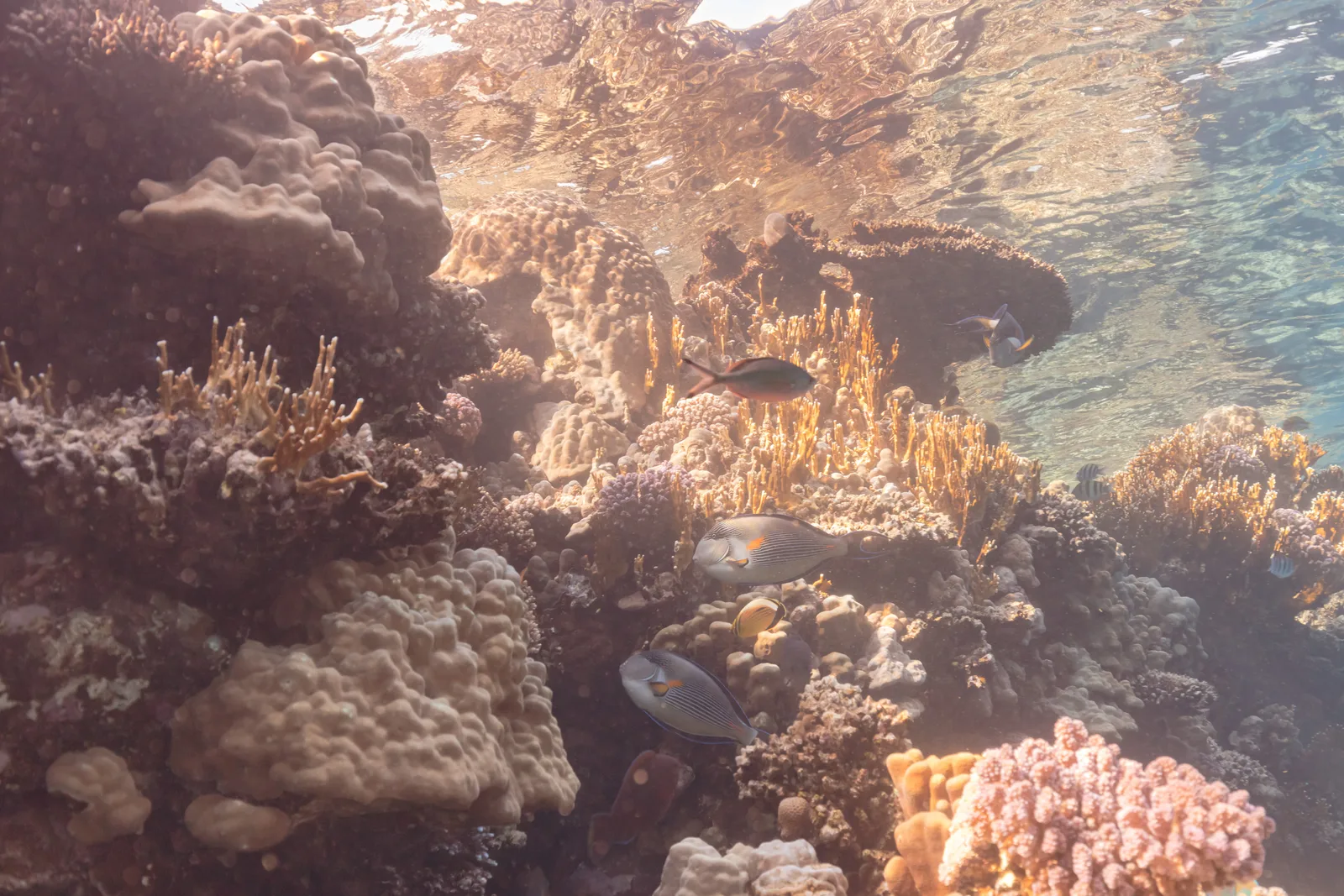
The Red Sea Beyond the Beach: Reefs, Rules, Dugongs and Dolphin Houses
Egypt's Red Sea coast is far more than resorts: heat-resistant corals studied worldwide, strict diving rules, seagrass bays grazed by dugongs and reef lagoons where spinner dolphins rest. A guide to the sea beyond the sand — and how to visit it without harming it.
August 18, 2026 · 5 min read