The Accessible Bay Is No Luxury: Taking an Accessible Parking Space Is Theft of the Right to Move
"Just one minute and I'm gone" — with a single sentence, a whole person's freedom is stolen. The accessible bay and the ramp are not privileges; they are a lifeline of movement protected by law and by accessibility codes. This article calls the behaviour by its name, shows you how to stand firm but courteous when someone takes the space, and explains why one minute of your time can cost somebody else an entire day.
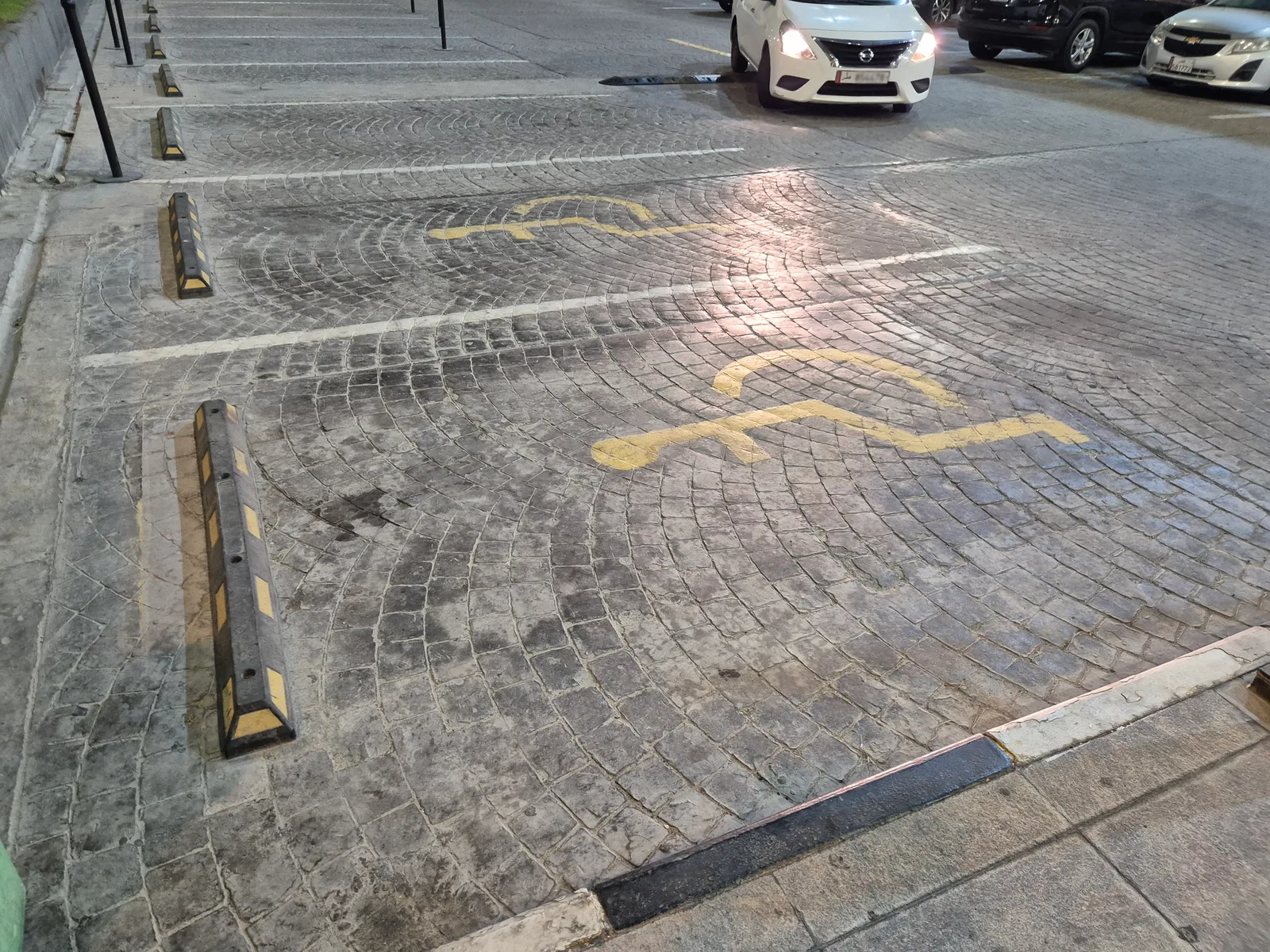
Picture this scene with me, because it is a cautionary tale that repeats every single day in different forms: a woman drives towards a parking space marked with the blue wheelchair symbol, only to find it taken by a gleaming car whose owner left it there for "just one minute" while he bought his coffee. She circles once, twice, three times, then turns around and drives home, because every other space is too narrow to let her open the door fully and lift out her wheelchair. Nobody insulted anyone, no argument broke out, and yet a silent injustice took place: a human being was robbed of an entire day. This is the truth so many people overlook — one minute of your time can be worth a whole day of somebody else's.
Let us call things by their names, without hedging: taking a parking space reserved for people with disabilities is not "a small mistake", nor is it "just what everyone does when the streets are this crowded". It is theft of the right to move. Robbery does not apply to money alone; whoever blocks a person's only way out and back in steals their freedom, their dignity and their independence. The irony is that the offender rarely sees himself as an aggressor — he thinks he has been clever, finding an empty spot right by the door. But true cleverness lies in seeing what is not visible: that this empty space is not empty at all. It is a written promise made to one particular human being.
Why this space in particular? Because it is not simply a rectangle painted near the entrance as a courtesy. The accessible bay is deliberately wider than the others, because a wheelchair user needs to open the door to its full angle and transfer their body from the seat to the chair in a safe area. It is deliberately close to the entrance, because every extra metre can be a genuine burden for someone walking on two crutches or pushing their own wheels with their arms. And it is usually connected to a ramp that links the asphalt to the pavement, turning the whole route into one unbroken chain. Break a single link in that chain, and the entire chain falls apart.
The ramp is another chapter in this quiet, everyday injustice. A simple slope of concrete or metal that some people see as the perfect place to park a motorbike, display goods, or stop "just for a second". But that slope is the only bridge between a wheelchair and the world; block the bridge, and you lock a human being on the pavement, inside the house, or inside the car. Imagine a stranger padlocking the only door of your home every morning and going about his business, then acting surprised when you get angry. The rule, then, is absolute: a ramp is a passageway, and passageways are never to be occupied, not even for a moment.
Real disability, as specialists in the field have insisted for decades, does not lie in the body alone but in the environment that hems it in. A person who moves through a city equipped with ramps, accessible bays and lifts lives, works and studies like any other citizen. But when the bays are taken and the ramps are blocked, the incapacity is not created by the body — it is created by the selfishness of others. A medical appointment is missed, a day's wages are docked, a family visit is cancelled, a child waits for his father outside the school and the father never arrives. Every occupied space is a link in a chain of deprivation the offender never sees, yet it tightens around an entire day of somebody else's life.
The law here is neither silent nor neutral. Egypt enacted the Rights of Persons with Disabilities Law No. 10 of 2018, built on one simple and powerful idea: accessibility is a fundamental right, not a favour and not charity. Before that, Egypt acceded to the international Convention on the Rights of Persons with Disabilities, which makes adapting roads, buildings and public facilities an obligation on states rather than an option, while the Constitution likewise provides for safeguarding the rights of persons with disabilities. There are also engineering accessibility codes setting the specifications for bays, ramps and circulation routes in buildings and public places. So whoever takes a reserved space is not merely offending against good manners: he is standing against an entire system — a law, a constitution and international covenants — on top of a moral penalty that no statute of limitations can wipe away.
Every offender has an excuse ready, and every one of them collapses at the first question. "Nobody uses it anyway" — are you waiting for the rightful user to stand in front of you before you will acknowledge his right? The space is reserved by force of law, whether its user arrives a minute from now, an hour from now, or never comes at all today. "I'm only stopping for a minute" — and your minute may be precisely the moment when the person who needs the space arrives, only to wait in vain or leave empty-handed. "The owner of that car over there walks perfectly well" — not every disability is visible to the eye; many medical conditions cannot be read in a person's gait or in their face, and judging people from a passing glance is an injustice piled on top of an injustice.
If you want to understand this from the other side, run a short thought experiment on yourself. Imagine that you cannot get out of your car unless the door opens all the way; that every errand in your life hangs on a single rectangle near the entrance; that you circle every day with your heart in your throat, wondering: will I find it free or taken? Imagine explaining to your child why the two of you drove away from the club gate without ever going in. Anyone who has lived that tension for a single day never forgets it, and anyone who has not should take the word of those who have. Empathy is not a delicate feeling we put on for special occasions; it is behaving as though the rightful user were watching you.
Because "Voice of the Citizen" believes that principles without practical conduct are just so much talk, here are strict rules that allow no exceptions. Never park in a reserved bay: not for "a minute", not for "half a minute", not even while waiting inside the car with the engine running — your very presence is the obstacle. Do not park on the hatched area next to the bay where one exists; that is the space where the wheelchair comes out, not spare tarmac. Do not block the ramp with a car, a motorbike, merchandise, or even by standing on it while you talk on your phone. And if you hold a legitimate permit to use these spaces, display it clearly behind your windscreen, so that you leave no room for doubt or suspicion.
If you see someone in the wrong, courteous firmness is your weapon — not shouting, and not public shaming. Step up and say, calmly, one complete sentence: "This space is reserved for people with disabilities, and somebody may need it at any moment; please move your car." Many drivers back down at once when they are reminded gently, because most people are careless rather than cruel. If he digs in and turns arrogant, do not get into a confrontation and do not take matters into your own hands; report it to the site's security staff or its management, because the presence of the sign means somebody is responsible for enforcing it. Righteous anger needs no raised voice — only a steadiness that will not bargain.
And there is more to be said to shop owners, malls, building managers, hospitals and clubs: a reserved bay you do not protect is not accessibility, it is decoration. Faded markings on the ground need repainting; the sign must be legible in broad daylight and under night lighting; and, most importantly, the security guard must know that asking an offending driver to move is part of his job, not an awkward favour. Widen the idea, too: is your ramp at a reasonable gradient, or so steep that it has become a hazard in itself? Does it actually lead to a door that opens and an entrance that is clear? Accessibility is a complete system, and the reserved bay is its front door.
There is a secret that engineers and planners the world over know: everything designed for people with disabilities ends up serving everyone. The ramp a wheelchair climbs is also climbed by a pushchair, a suitcase, the careful steps of an elderly person, and the foot of a young man injured on the football pitch yesterday. A city that respects the most vulnerable users of its streets becomes gentler with everybody; a city that tramples the rights of a minority is simply rehearsing to trample everyone's rights. That is why defending the accessible bay is not a donation to somebody else but an insurance policy on yourself: good health lasts for no one, and any of us — through an accident, an illness or old age — may need that blue rectangle one day.
In the end, come back with me to the opening scene: the empty blue rectangle near the door. From today, do not read it as an opportunity; read it as a covenant between you and a person you have never met, who may arrive a moment from now or may not come at all today, but whose right is standing there, waiting for him. Drive past it, park further away, and walk the extra two minutes; they are the cheapest price you will ever pay to be genuinely decent. And teach it to your children the way you teach them not to take what is not theirs: an accessible parking space is not a luxury, and taking it is not cleverness — it is theft of the right to move, and you are far too big to be a thief.
Related Stories
'That's Wrong': Harassment Isn't 'Flirting' — Two Years or a 100,000-Pound Fine for Words, Five for Coercion
A word thrown on the street that the man who says it calls a 'joke,' and a longer route a mother makes her daughter take because it feels 'safer.' In 'That's Wrong,' we hold the behavior up against Law 141 of 2021, without exaggeration or minimization: two to four years in prison or a 100,000-pound fine for words and gestures, five years or more for sexual coercion. And we ask about the third party — the one who hears and does nothing.
October 10, 2026 · 8 min read

Keda Ghalat (That's Just Wrong): Harming an Animal Has Been a Crime Under Egypt's Penal Code Since 1937
A neighbour sets out poisoned bowls beside the school wall; a cart driver beats his donkey across the face to make it haul a load beyond its strength. Many assume that "just an animal" means no law protects it. In fact, Articles 355, 356 and 357 of the Penal Code punish killing, poisoning and harming animals with penalties that go as far as prison. On the eve of World Animal Day, we explain what the law says and what the right thing to do is.
October 3, 2026 · 6 min read
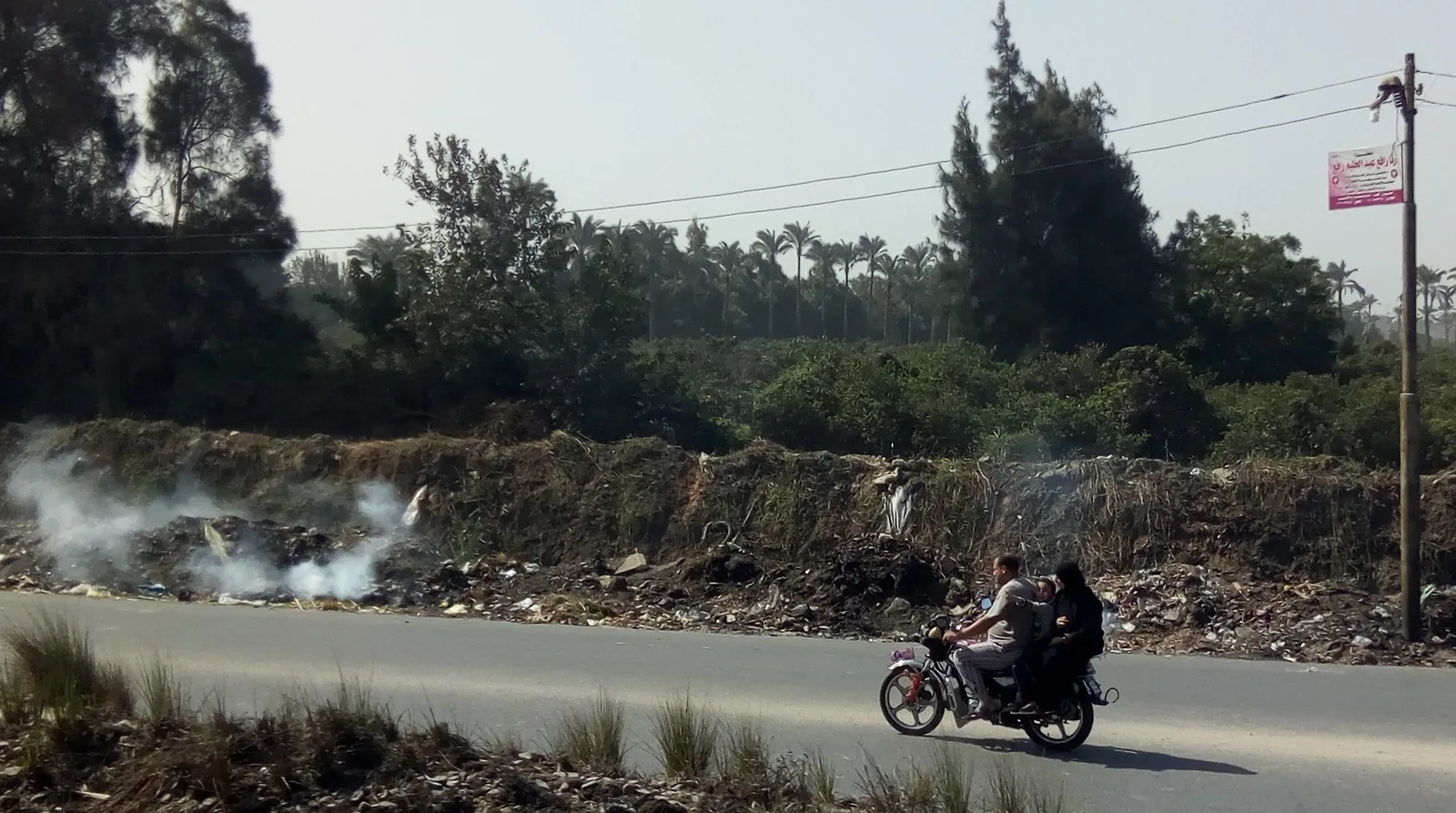
Four on a Motorcycle and No Helmet: A Bare Head Is the Dearest Thing a Family Can Lose on the Road
In the second week of school the same scene repeats: a father driving, one child in front, another behind, the mother clutching the bags, and not a single helmet among them. Press reports citing CAPMAS show deaths jumping from 190 to 897 between 2020 and 2024, while a Cochrane review finds a helmet alone cuts the risk of death by 42%. The law has punished the bare head since 1999, fine raised in 2008. So why do we not comply?
September 23, 2026 · 8 min read