Four on a Motorcycle and No Helmet: A Bare Head Is the Dearest Thing a Family Can Lose on the Road
In the second week of school the same scene repeats: a father driving, one child in front, another behind, the mother clutching the bags, and not a single helmet among them. Press reports citing CAPMAS show deaths jumping from 190 to 897 between 2020 and 2024, while a Cochrane review finds a helmet alone cuts the risk of death by 42%. The law has punished the bare head since 1999, fine raised in 2008. So why do we not comply?
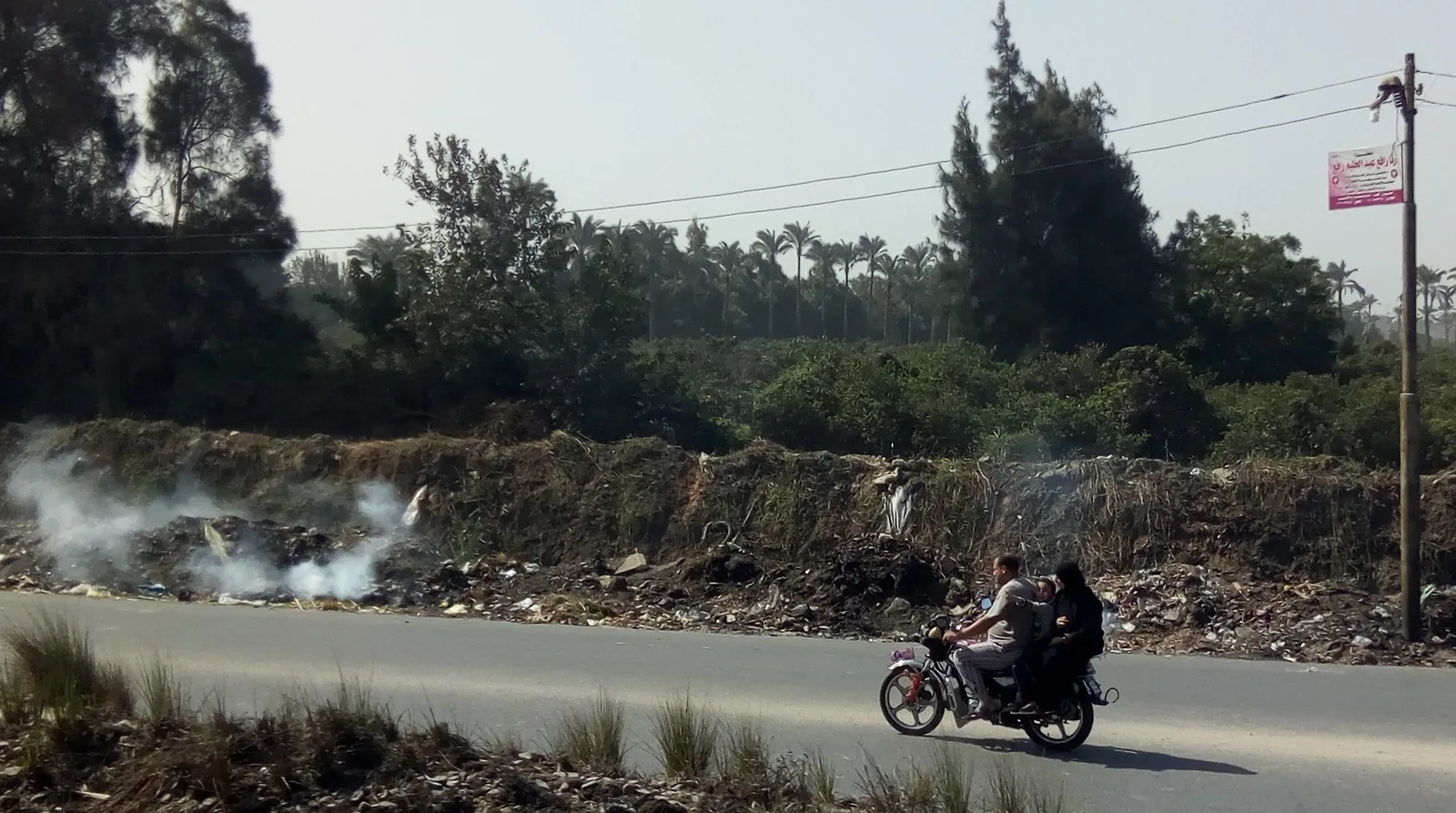
A quarter to seven in the morning, on a side street in one of our cities. A father settles himself onto a small Chinese motorcycle; his younger son sits in front of him on the fuel tank in his blue school smock; the mother climbs on behind, hugging two bags and a bottle of water; then the elder daughter scrambles onto the last few inches of the seat and clings to her mother's shoulders. The motorcycle pulls out into the traffic between a microbus, one of the shared minibuses that carry much of Egypt's commuters, and a donkey cart, four bare heads swaying with every bump. Nobody turns to look, because the scene repeats every morning in the second week of the school year, and it has become so ordinary that we no longer see it.
That is exactly what this column tries to do: to look again at what we have grown so used to that it has become invisible. The behaviour we pause on today is simple to describe and heavy in its price: riding a motorcycle without a helmet, loading it with more than one passenger behind the rider, and placing children in front of the rider or wedged between the adults as if they were extra cargo rather than passengers with heads that can be broken.
Let us start with the figure that prompted us to write. According to what more than one press report has cited from data of the Central Agency for Public Mobilization and Statistics (CAPMAS), deaths in motorcycle accidents in Egypt rose from around 190 in 2020 to around 897 in 2024, roughly a fivefold increase between 2020 and 2024, and now account for around 17% of all road-traffic deaths. In that same year, more than 222,000 new motorcycles were licensed. We report these figures as the press coverage gave them, tied to their year, and with an honest caveat: part of that jump may reflect better recording of vehicle type in accident data rather than a rise in deaths alone. Yet any reading of these numbers, cautious or strict, arrives at the same conclusion: every year, hundreds of families lose someone who was riding a motorcycle.
The bigger picture makes the paradox sharper still. The annual bulletin on car and train accident outcomes says that road-traffic deaths in Egypt fell from 5,861 in 2023 to around 5,260 in 2024, while injuries rose to around 76,000 in 2024. In other words, the Egyptian road as a whole kills slightly fewer people than it did, while the motorcycle in particular kills far more. Those who want the fuller picture of road safety will find it in an earlier article on this site; here we concentrate on what lies between the ears.
Why the head in particular? Because a motorcycle has no body shell to protect its rider, no seat belt and no airbag. The whole body is the chassis, and the head is its weakest and most precious point. When a rider is thrown from the seat at forty kilometres an hour, the first thing to meet the asphalt or the kerb is usually the skull, and the brain inside it is jolted and slams against the wall of bone. A head injury does not knit like a broken arm; it can leave its victim alive but without memory, or without the ability to speak or to work.
And here comes the most important scientific evidence on the subject. A systematic review published by the Cochrane Library in 2008, led by the researcher Liu and colleagues, gathered sixty-one observational studies from different countries and concluded, from the higher-quality studies among them, that a helmet reduces a motorcyclist's risk of death by 42% and the risk of head injury by 69%. The review states in its own words that the results were remarkably consistent despite the differing methods of the studies, particularly with regard to death and head injury. The World Health Organization, for its part, says in its fact sheet on road traffic injuries that correct helmet use reduces the risk of death in a crash more than sixfold and cuts the risk of brain injury by up to 74%.
Translated into the language of an Egyptian household, as an approximation built on the Cochrane figure rather than a precise formula: a helmet cuts the risk of death by around 42%, which means that for roughly four out of every ten people who die in motorcycle crashes without a helmet, the risk would have been clearly lower had a sound helmet, strap fastened, been on their heads. As of the writing of these lines we know of no official figure for the rate of helmet use in Egypt, but anyone who stands for ten minutes at any intersection can see with their own eyes that the bare head is the rule and the helmet the exception, and that where a helmet exists at all, it is usually dangling from the handlebars or resting on the tank, not on a head.
The law on this question is neither absent nor new; it is older than many people think. Law No. 155 of 1999 inserted into Article 74 bis of the Traffic Law the offence of "failure by the driver of a motorcycle to use protective headgear", with a fine of between fifty and one hundred Egyptian pounds; Law No. 121 of 2008 then raised the fine, in item four of the same article, to between one hundred and three hundred pounds, doubled if the offence is repeated within six months of the date of a final conviction. Since 2018, press reports have circulated provisions of a new draft traffic law that adopts a points system and places the helmet offence in Article 77, with a two-point deduction and a fine of between two hundred and four hundred pounds. But that draft had not been enacted as of the writing of these lines; indeed, in February 2026 the government withdrew a separate package of amendments that the Cabinet had approved in December 2025, in order to submit a consolidated version to the House of Representatives that has yet to be passed. So the text in force, to the best of our knowledge, is the 2008 one, and we do not assert otherwise. But the substance has been settled for at least a quarter of a century: a helmet is a legal obligation, not a personal choice.
More important than the size of the fine is understanding the law's limits. The 2008 text refers to the driver of the motorcycle, whereas the World Health Organization's Global Status Report on Road Safety 2023 records that Egypt has a national helmet law covering both rider and passenger. Whether or not the text being applied covers the passenger, the asphalt does not read the law: the head behind the rider hits the ground with the same force, and the head of a child seated on the tank is the first thing to strike the handlebars at any sudden braking. As for loading the motorcycle with more passengers than it can carry, the Traffic Law's executive regulations, according to what more than one report has cited from their Article 168, stipulate that no additional passenger may be carried unless the motorcycle is fitted with a dedicated seat for them and footrests for each passenger, which, to the best of our knowledge, is not something four people on a small motorcycle have. And more important than the text: an overload upsets the motorcycle's balance, lengthens its braking distance and turns any minor skid into a catastrophe for four people at once.
So why do we do it? The reasons are understandable, and we do not make light of them. In many neighbourhoods the motorcycle has become the family's only means of transport since fares went up; the school is kilometres away; and a good helmet is not cheap for a family that counts every pound. Add to that the feeling that the distance is short, the speed is low and the road is familiar. Yet it is the familiar road that makes us forget caution, and the helmet we hesitate to buy costs far less than the treatment of a single head injury.
The right behaviour needs no eloquence: a helmet for every head that rides a motorcycle, driver or passenger, man, woman or child. A helmet sized to the head, not larger, with the strap fastened under the chin, not left loose, because an unfastened helmet flies off before the head touches the ground. Only one passenger behind the rider, feet on the footrests, not dangling. And a child is not cargo: if there is no seat for them and no helmet in their size, their place is not on the motorcycle at all, however close the school and however late the hour.
And because families ask about alternatives, let us say it plainly: a school run for four people takes two trips on the motorcycle, with two helmets, or a shared ride with neighbours in a car or a school bus, or walking if the distance allows. All of these are a little more burdensome than what we are used to, but they are not measured in the minutes we save; they are measured in the years we may lose.
To those who say the fine is trivial and nothing will deter them, we say: that is true, and that is precisely why we are not betting on the fine. The real price is not one hundred pounds or three hundred, nor points on a licence that future laws may bring; it is what we saw on that first morning: four people at forty kilometres an hour, ten centimetres of air between them and the kerb, and nothing protecting their brains but luck. And luck, as the figures we have cited show, now fails more than eight hundred families a year.
Tomorrow at a quarter to seven the same scene will return to the side street. The only difference we hope for is that the father, as he settles onto the seat, catches sight of the helmet hanging from the handlebars, and this time puts it on his head and tightens the strap, then looks at his little son on the tank and decides that today's school run will be made in two trips. He may be a quarter of an hour late, and he will come home in the evening to a house with four heads intact. That is the whole difference.
Related Stories
"A Hook-Up on the Cable" Is No Clever Trick: Electricity Theft Is a Crime the Whole Neighbourhood Pays For
A bare wire dangling from a lamp post to a balcony, an air conditioner on a meter that never moves, and a fuse blowing for the third time, plunging a bill-paying neighbour into darkness. Article 71 of the Electricity Law calls this unlawful appropriation of current, punished by prison and a fine, while a tougher amendment awaits the House of Representatives. What does a whole street lose from one hook-up? And what is the right alternative?
September 14, 2026 · 7 min read
A Camera Over the Wounded: Filming and Sharing Accident Victims Is Not “Documentation” but a Violation Punishable by Law
Raised phones ring the injured man before paramedics do, and the video reaches family group chats before the news reaches his relatives. Kedda Ghalat (“that’s wrong” in Egyptian Arabic) names the behaviour, explains why it obstructs rescue and strips dignity, what the Constitution, Law 175 of 2018 and the Telecommunications and Intellectual Property Laws say, why Article 309 bis does not apply on a public road, and what to do instead.
September 7, 2026 · 8 min read
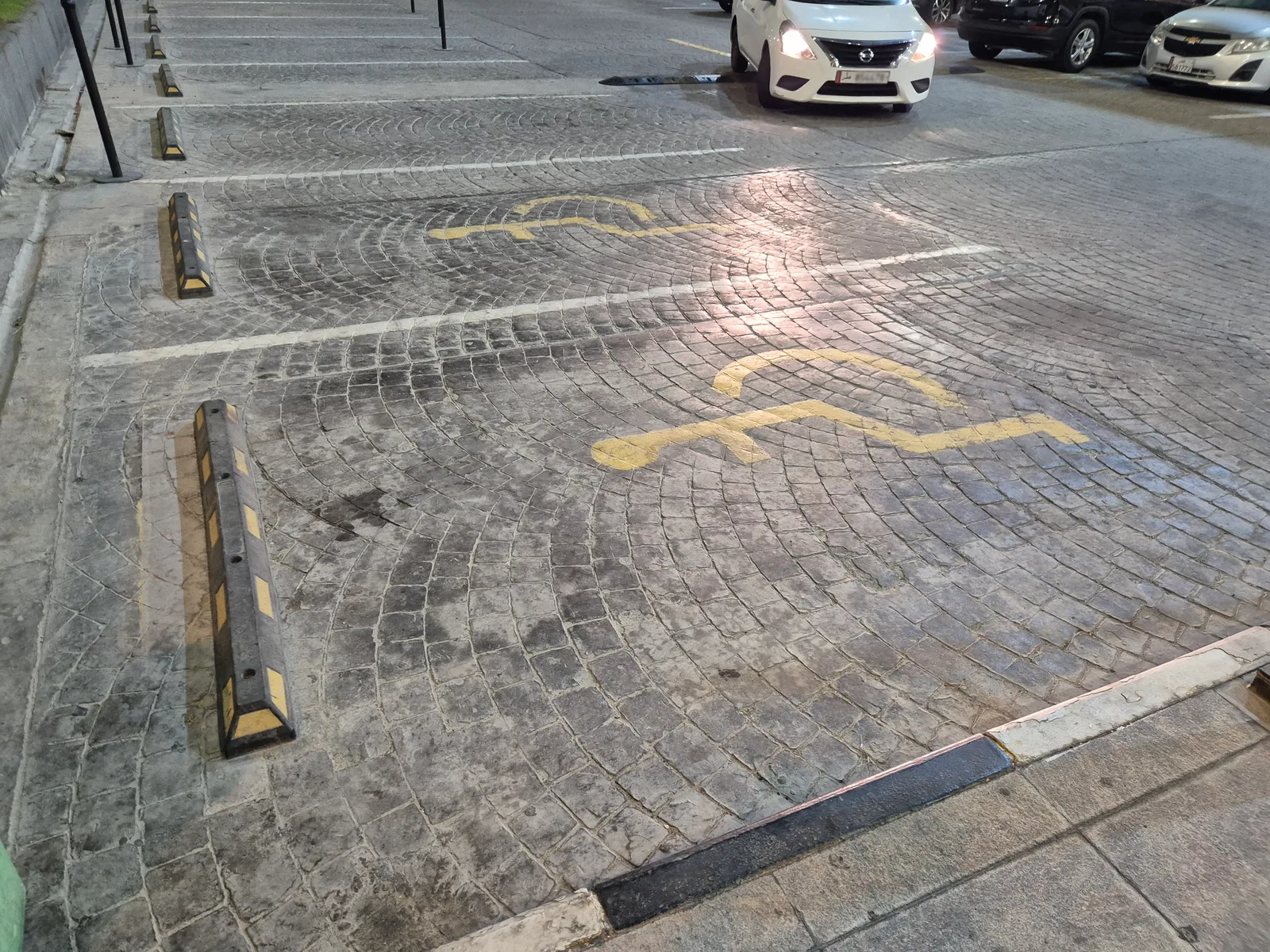
The Accessible Bay Is No Luxury: Taking an Accessible Parking Space Is Theft of the Right to Move
"Just one minute and I'm gone" — with a single sentence, a whole person's freedom is stolen. The accessible bay and the ramp are not privileges; they are a lifeline of movement protected by law and by accessibility codes. This article calls the behaviour by its name, shows you how to stand firm but courteous when someone takes the space, and explains why one minute of your time can cost somebody else an entire day.
September 1, 2026 · 7 min read