“That’s Wrong”: One Glance at the Screen — WHO Says Drivers Who Use Phones Are About Four Times as Likely to Crash
On the World Day of Remembrance for Road Traffic Victims, marked today on the third Sunday of November, we look at a habit seen on every street that seems harmless: the phone in hand behind the wheel. The World Health Organization says drivers who use a phone are about four times as likely to crash, and that hands-free kits are not much safer, because the problem is attention, not the hand.
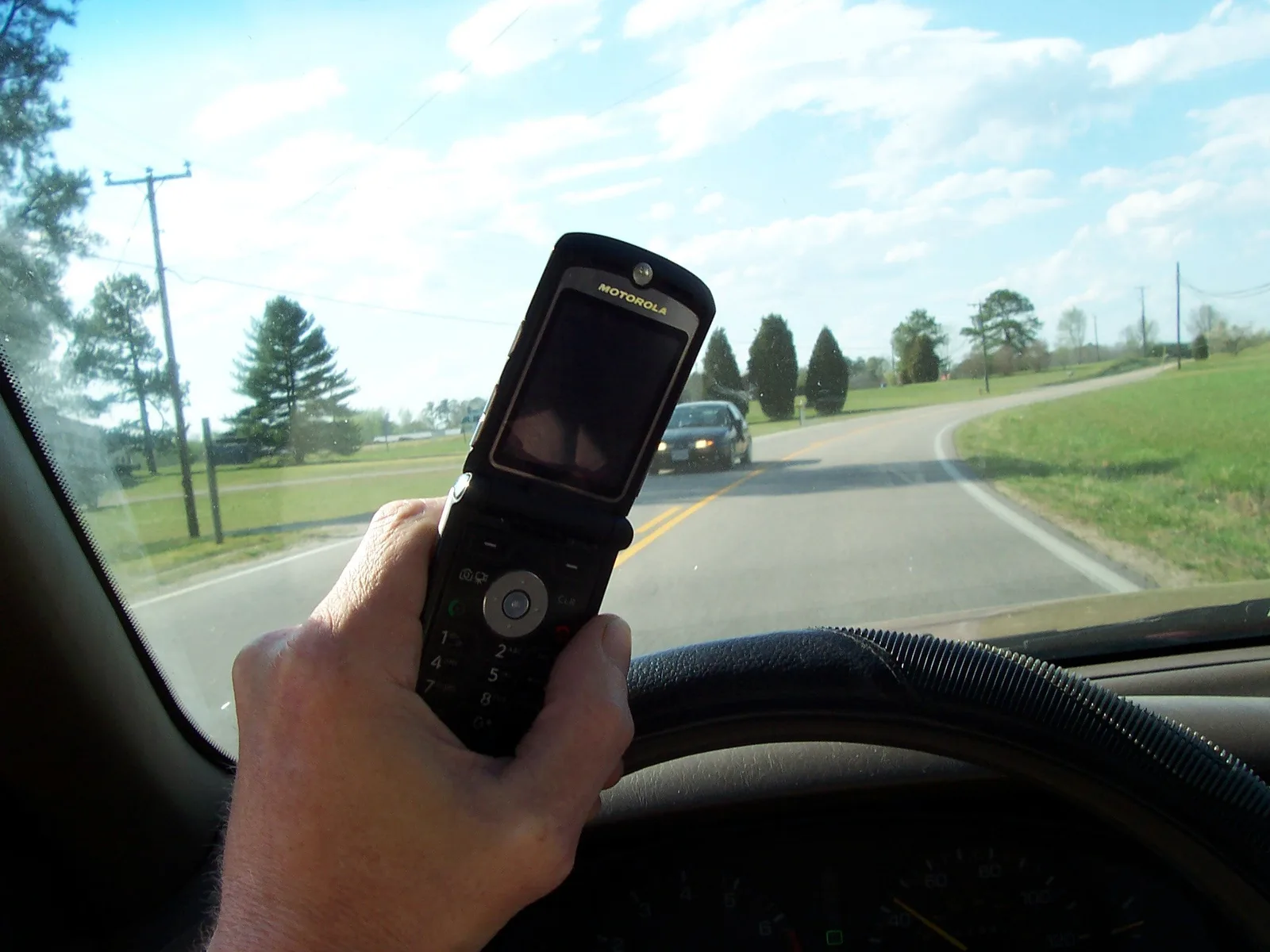
Many people know this scene well, because it repeats itself in every Egyptian city at every hour of the day: a long red light, a row of stopped cars, and then a screen lighting up on the passenger seat or in the door pocket. A hand reaches for it almost without thought, and the eyes begin to read. It all takes a few seconds. Then the light turns green with the phone still open, and the car moves off while half the driver’s attention is somewhere in a line of text. Usually nothing happens, and that is exactly what lets the habit persist and be passed on: because it has not yet produced a crash, it seems harmless. But road safety is not measured by what has not happened. It is measured by the risk we impose, each time, on ourselves and on others.
Today, Sunday, November 15, marks the World Day of Remembrance for Road Traffic Victims, which falls every year on the third Sunday of November. The United Nations page for the day does not spell out that rule in so many words, but it dates last year’s observance to November 16, 2025, which was the third Sunday of that month, and it credits the day’s creation to UN General Assembly resolution 60/5. The same page, citing the World Health Organization’s 2018 global report, says road traffic injuries have become the leading cause of death for people aged 5 to 29, and that the most vulnerable road users, namely pedestrians, cyclists, riders of two- and three-wheeled vehicles and their passengers, account for about half of the world’s road deaths. The day exists first for remembrance and condolence, but it is also an annual chance to review one behavior we can change without a new law, without a budget and without waiting for anyone.
We take up one behavior in particular today: the phone in hand behind the wheel. In its fact sheet on road traffic injuries, in the version dated July 20, 2026, the World Health Organization states plainly that drivers who use a mobile phone are about four times more likely to be involved in a crash than those who do not, and that texting raises the risk of a crash substantially. The organization places all of this under distraction, meaning anything that pulls the mind, the eyes and the hands away from the task of driving and toward another task. In the same fact sheet it estimates global road deaths at about 1.16 million a year, and non-fatal injuries at between 20 million and 50 million, many of them leaving lasting disability.
Here comes the sentence that surprises many people: the World Health Organization says hands-free phones are not much safer than hand-held ones. We report the wording as it stands. We do not turn it into a legal ruling, or into advice to buy a device or to do without one. What the statement means is that the heart of the problem is not the occupied hand but the occupied mind. A hand can return to the wheel in a moment; attention does not return as quickly, because a conversation carries its owner somewhere else: to a distant room, to a problem at work, to a piece of news that needs a reply. Someone who drives with a mind elsewhere is driving with open eyes and only half the awareness.
Driving is, at bottom, an unbroken series of small, connected decisions: a child who may step out from between two cars, a bicycle appearing from the right, a car ahead braking for no visible reason, a pothole, a dog, a plastic bag blowing across the road. All of these can be handled as long as the driver sees them at the first moment, and the driver loses the ability to handle them if they arrive late. What we usually call a quick glance at the screen is not a stop. It is the car continuing to move, with its full mass, along a road that no one is watching at that instant. None of this needs exaggeration: anyone who has looked up from a screen to find the distance ahead completely changed knows exactly what is meant.
As for the scale of the loss in Egypt, the official figures count it. According to the Central Agency for Public Mobilization and Statistics (CAPMAS) in its road accident data for 2025, road deaths rose 10.8 percent to 5,829 in 2025, against 5,260 in 2024. The number of injured reached 84,553, and the death rate was 5.4 per 100,000 people. Pedestrians led all categories of road users in deaths, with 2,132, more than a third of the total. They are the group with no metal around them to offer protection.
One frank sentence is needed here so that the above is not misread: the CAPMAS figures are aggregate numbers, not broken down by cause of accident, and we present them only as background to the scale of the problem. This data does not attribute any of these deaths to the mobile phone, and neither do we. What we have documented are two separate things that must not be merged: a large annual loss that the state counts in its own figures, and a measured risk from one specific behavior that the World Health Organization counts in its own. Putting them on the same page does not mean one explains the other. It means we are talking about a road whose losses are real, and about a behavior whose danger is already known and does not wait for a crash to prove itself.
Under Egyptian law, the Traffic Law and its amendments prohibit using a hand-held mobile phone while driving, and penalties escalate according to the text in force. Because what circulates in the press and on social media about article numbers and fine amounts is contradictory, we print no article number and no fine in pounds here; anyone who needs the text should consult the Official Gazette or the General Traffic Administration. What matters to the reader is that the ban covers hand-held use, and that what the World Health Organization says about hands-free systems is not a statement about the law but about safety. The law is a minimum, and safety goes well beyond it.
On traffic guidance, the place of this behavior is beyond dispute. Among the safety instructions that the Egyptian press carried from the General Traffic Administration, in guidance published in 2017, “using the mobile phone, because it leads to loss of concentration while driving” comes first among the things a driver must beware of, alongside “being occupied with anything other than the road” and “overconfidence in your driving, because another driver’s mistake may exceed your skill.” The same guidance lists these warnings side by side with checking the tires, brakes and lights before setting off. In other words, the phone is treated as a safety item, not as a personal habit that concerns its owner alone.
The right behavior is so simple it is irritating, because its simplicity strips away every excuse. Before the wheels turn, the phone goes out of reach: in the bag, in a pocket, or in a holder away from the line of sight, silent or on a driving mode that mutes notifications by itself. If you are expecting a call that cannot be postponed, pull over somewhere safe where waiting is allowed, talk, reassure the caller, and then move off; two minutes of stopping cost less than anything that might follow. Even when waiting at a light or in stopped traffic, the car remains on a road that is moving around it and ahead of it, so it is safest to leave the phone where it is until the end of the trip. If a passenger is with you, the passenger answers, writes and reads the map. And if you catch yourself with the phone in your hand while driving, the right move is to put it down and not carry on, rather than finish the message quickly.
Then there is the other end of the call, a party always forgotten in this conversation. Someone who phones a person they know is on the road takes part in creating that moment, and has the right, indeed the duty, to start the way many people now do: “You’re driving? Call me when you get there.” In the family and at work, the same habit is built from the opposite side: do not expect an instant reply from someone who is driving, do not hold anyone to account for a call they did not answer behind the wheel, and do not ask anyone to follow work messages from the road. In the end it is collective habits that make the road, not instructions alone; and when it becomes known among people that whoever is driving does not reply, half the pressure pushing the driver toward the screen falls away.
One aspect cannot be measured in numbers: children in the back seat learn to drive years before they get a license. They see where the phone sits during the trip, they see whether a reply is postponed or not, and they come away with a silent rule that they carry into the first car they drive. None of this is a rebuke to any group, age, profession or neighborhood; it is a common habit that many of us have shared at one time or another, and anyone who denies having done it once should reflect on it calmly. Changing a common habit does not begin with blaming others. It begins with a single decision that each person takes in their own car before moving off.
The World Day of Remembrance for Road Traffic Victims is not a day for raising a slogan and forgetting it at sunset. It is a day that reminds us that every number in a statistical table had a name, a home and a seat at a table, and that the road is not fate but the sum of small decisions made by thousands of people at the same moment. The minutes we think we save by writing a message while driving are worth nothing against even the smallest chance of what might follow. If one act suits this day, it is this: put the phone out of reach before the wheels turn, every time and without exception, and tell whoever calls you that you are on the road. That is the shortest distance between what we read today and a safer road tomorrow.
Related Stories

“Kida Ghalat”: Loudspeakers on a Residential Street After Midnight. Your Joy Is a Right, and So Is Your Neighbour’s Rest
A wedding marquee, a band and a loudspeaker beneath balconies where a student is revising, a sick woman is resting and a two-month-old baby is sleeping: when does a legitimate celebration become noise the law asks about? We separate a licensed hall, bound by the sound limits of the environment law, from a private street party, and propose an announced finishing time and sound aimed inward, so the joy and the neighbours’ night can both be kept.
November 6, 2026 · 8 min read

"That's Just Wrong": Digging Under the House for Treasure Finds No Gold — Only a Collapsing Roof and Years in Prison
The summer of 2026 alone brought a string of illegal digs that collapsed on people searching for buried treasure: five dead in Al-Qusiya, Assiut, in June; ten deaths in Assiut alone within less than a month, according to Masrawy; then three in Fayoum and one under an old house in Bilbeis in August. We tell what happened, explain what Egypt's Antiquities Protection Law says, and show how legitimate archaeological excavation actually works.
November 3, 2026 · 8 min read

"That's Just Wrong": Demolition and Renovation Debris Dumped on the Corner — Owner and Contractor Liable, Not Passers-By
A mound of dirt and broken brick appears overnight at the corner, narrowing the pavement and clogging the storm drain before the first rain. This is not just another litter story: demolition and renovation debris has its own law, beginning with the building permit and a contract with a licensed hauler — and liability falls first on whoever ordered the work and paid for it. Here is the practical path, and the penalty.
October 27, 2026 · 7 min read