"That's Just Wrong": Demolition and Renovation Debris Dumped on the Corner — Owner and Contractor Liable, Not Passers-By
A mound of dirt and broken brick appears overnight at the corner, narrowing the pavement and clogging the storm drain before the first rain. This is not just another litter story: demolition and renovation debris has its own law, beginning with the building permit and a contract with a licensed hauler — and liability falls first on whoever ordered the work and paid for it. Here is the practical path, and the penalty.

On the third floor, an apartment has been under renovation for a month. Walls are cut open to run pipes, old tiles are pried up with a hammer, and sacks full of broken brick go down the stairwell trip after trip. Just before midnight, a truck pulls up at the corner, empties its load onto a neighboring vacant lot within minutes, and drives off without a trace. But the one responsible for this is not some passerby who tossed a scrap of paper from a car window; it is whoever signed the renovation contract, paid for the work, and chose the cheapest route — or let someone else choose it for them, knowing full well another route existed.
By morning, the neighbors find the mound has become part of the scenery. The pavement schoolchildren used to walk has narrowed, pushing them into the road among the cars, and every passing wheel or gust of wind sends up a cloud of gray dust that drifts into open balconies. At the edge of the pile, fine silt seeps into the storm drain and clogs it, and then the first heavy rain reveals that water now pools at the building's entrance — because someone bought their own convenience for the price of a few hundred pounds.
This is an entirely different matter from everyday neighborhood cleanliness. Under Egyptian law, demolition, construction, and renovation debris follows its own dedicated path — one that begins not on the street or at the garbage bin, but before the first hammer is even raised: with the building permit itself, and with a contract signed in advance with a party licensed to handle such waste. In other words, the law does not just ask you "where did you dump it?" — it asks, from the very start, "who did you contract with?"
The reference here is the Waste Management Regulation Law, issued as Law No. 202 of 2020, published in the Official Gazette on October 13, 2020 and in effect as of the day after its publication; its executive regulations were then issued by Prime Ministerial Decree No. 722 of 2022, published in February 2022. Article 43 of the law provides that the competent administrative authority may not issue a demolition or construction permit unless the applicant submits proof of a contract with a party licensed by the Waste Management Regulatory Authority to handle demolition and construction debris, and the article holds the responsible official liable to disciplinary action for any violation of this. The contract, then, is a condition for the permit — not an optional extra added afterward.
Article 42 of the same law obliges all entities and individuals carrying out demolition or construction work to manage transport, recycling, and safe disposal through licensed operators, in the manner set out in the executive regulations. Article 41 tasks the Authority, in cooperation with administrative bodies, with reviewing the system for collecting, transporting, and disposing of this waste. The cost falls on the waste generator: it is they who must contract with — and pay — the licensed hauler, and if they fail to do so, the administrative authority may carry out the work at their expense, as the executive regulations provide.
If you violate this, the penalty is no formality. Article 71 of Law No. 202 of 2020 punishes anyone who dumps non-hazardous waste outside designated sites with a fine of no less than ten thousand pounds and no more than one hundred thousand pounds, and imposes the same penalty on anyone who hands such waste over to an unlicensed person or facility. In other words, contracting with an unlicensed truck is a standalone violation on the part of whoever ordered the service — not the hauler alone. The court must also order the confiscation of the vehicles and equipment used in the offense, without prejudice to the rights of bona fide third parties, and on repeat offense the penalty becomes both imprisonment and a fine together. The bill that lands on the apartment owner is not the confiscation — it is the fine and the cost of removal, both at their own expense.
Alongside this, the Public Cleanliness Law No. 38 of 1967, as amended, remains in force. Its Article 9, in the version replaced by Law No. 47 of 2014, punishes with imprisonment and a fine of no less than twenty thousand pounds and no more than one hundred thousand pounds, or with either penalty, anyone who dumps construction, demolition, or excavation debris on a public road or on vacant land not designated for that purpose; on repeat offense, both penalties are imposed together. Determining which of the two texts applies to any specific case is a matter left to the investigating authorities and the courts.
Let us be precise about where responsibility lies: the truck driver is a worker performing paid work, and the day laborer carrying sacks on his back did not chart the route. The law addresses an entire chain, but its first link — the one who actually holds the decision — is the apartment or property owner who ordered the service, and the contractor who gave them the price quote. When the apartment owner asks a single question before signing, the whole chain changes from the very start.
The harm is not merely an eyesore. Demolition dust contains crystalline silica dust released when concrete, brick, and tile are broken up, which the International Agency for Research on Cancer has classified in Group 1 as carcinogenic to humans — in the context of repeated occupational exposure, not a passerby's brief contact. The World Health Organization confirms the link between fine particulate matter and cardiovascular and respiratory disease. And a clogged storm drain remains an immediate harm that needs no study to prove.
A practical alternative does exist, and it can be followed step by step. Step one, before signing anything: ask the contractor one clear question, and write the answer into the contract itself — who will haul away the demolition and renovation debris, and to exactly where? Have the contract state the hauler's name, license number, and the approved disposal site, and make the final payment conditional on the site being cleared to that exact location. A two-page contract can spare you a dispute, a fine, and possibly a police report.
Step two is to make sure the hauler is actually licensed — not just a phone number on a scrap of paper. A license to collect and transport non-hazardous waste is issued by the Waste Management Regulatory Authority through its online system, and requires registering the facility and submitting vehicle data and permits, the commercial registry, the tax card, and environmental approvals, against annual fees that scale with daily capacity and are published on the Authority's system at the time of application, as posted at the time of writing. This means a licensed operator is an entity with paperwork — paperwork you can ask to see, photograph, and attach to your contract.
Step three is knowing which door applies to you and where the debris is headed, and here a distinction is needed between two cases. If the work is demolition, new construction, restoration, or exterior finishing, your door is the building permit, which is not issued without proof of the contract described above. If it is interior finishing work on an apartment — which does not usually require a permit — the obligation under Article 42 still applies to you, and the penalty under Article 71 still applies if the debris ends up on the street or in unlicensed hands. In both cases, ask the district's engineering department or the city authority about the approved disposal site your governorate uses, and about the permitted hours for transport — details that vary between governorates and change over time, so check them when you need them rather than relying on something a neighbor told you two years ago.
Step four is arranging the site before the first hammer is even raised: estimate the volume of debris and the number of truckloads in writing in the contract, agree on transport times so the job doesn't end with a load being dumped under cover of darkness, and keep the debris contained within the property boundary or in a designated container rather than piling it on the pavement — the executive regulations themselves require providing containers or bins and storing waste and dust safely. Spray the dust with water before loading it, cover the load during transport, and separate what can be separated: concrete, brick, and tile on one side, wood and metal on another. The more the debris is separated and delivered to an approved site, the closer it gets to being recycled into aggregate and paving materials — which is the very purpose the system was built for.
Step five is a small piece of paper you should not overlook: keep the receipt issued by the final disposal site confirming that the demolition and construction debris arrived. The executive regulations bar issuing utility-connection approvals for the property in question until the administrative authority receives this receipt. And if this has already happened right outside your own home, there is a path that requires no confrontation with anyone: photograph the pile and its location, and file a complaint with the Cabinet's unified government complaints system — on the 16528 hotline, its online portal, or via WhatsApp, attaching photos and the geographic location. Remember that removal is carried out at the waste generator's expense, so the bill goes back to whoever thought they had saved money. And on the day you move into your own apartment and open the window onto a clean street, with a pavement your neighbor's child can walk to school on, you will discover that the cheapest line item in the whole renovation bill was the licensed hauler — because it was the only one that no one's lungs had to pay for.
Related Stories
“That’s Wrong”: One Glance at the Screen — WHO Says Drivers Who Use Phones Are About Four Times as Likely to Crash
On the World Day of Remembrance for Road Traffic Victims, marked today on the third Sunday of November, we look at a habit seen on every street that seems harmless: the phone in hand behind the wheel. The World Health Organization says drivers who use a phone are about four times as likely to crash, and that hands-free kits are not much safer, because the problem is attention, not the hand.
November 15, 2026 · 8 min read

“Kida Ghalat”: Loudspeakers on a Residential Street After Midnight. Your Joy Is a Right, and So Is Your Neighbour’s Rest
A wedding marquee, a band and a loudspeaker beneath balconies where a student is revising, a sick woman is resting and a two-month-old baby is sleeping: when does a legitimate celebration become noise the law asks about? We separate a licensed hall, bound by the sound limits of the environment law, from a private street party, and propose an announced finishing time and sound aimed inward, so the joy and the neighbours’ night can both be kept.
November 6, 2026 · 8 min read
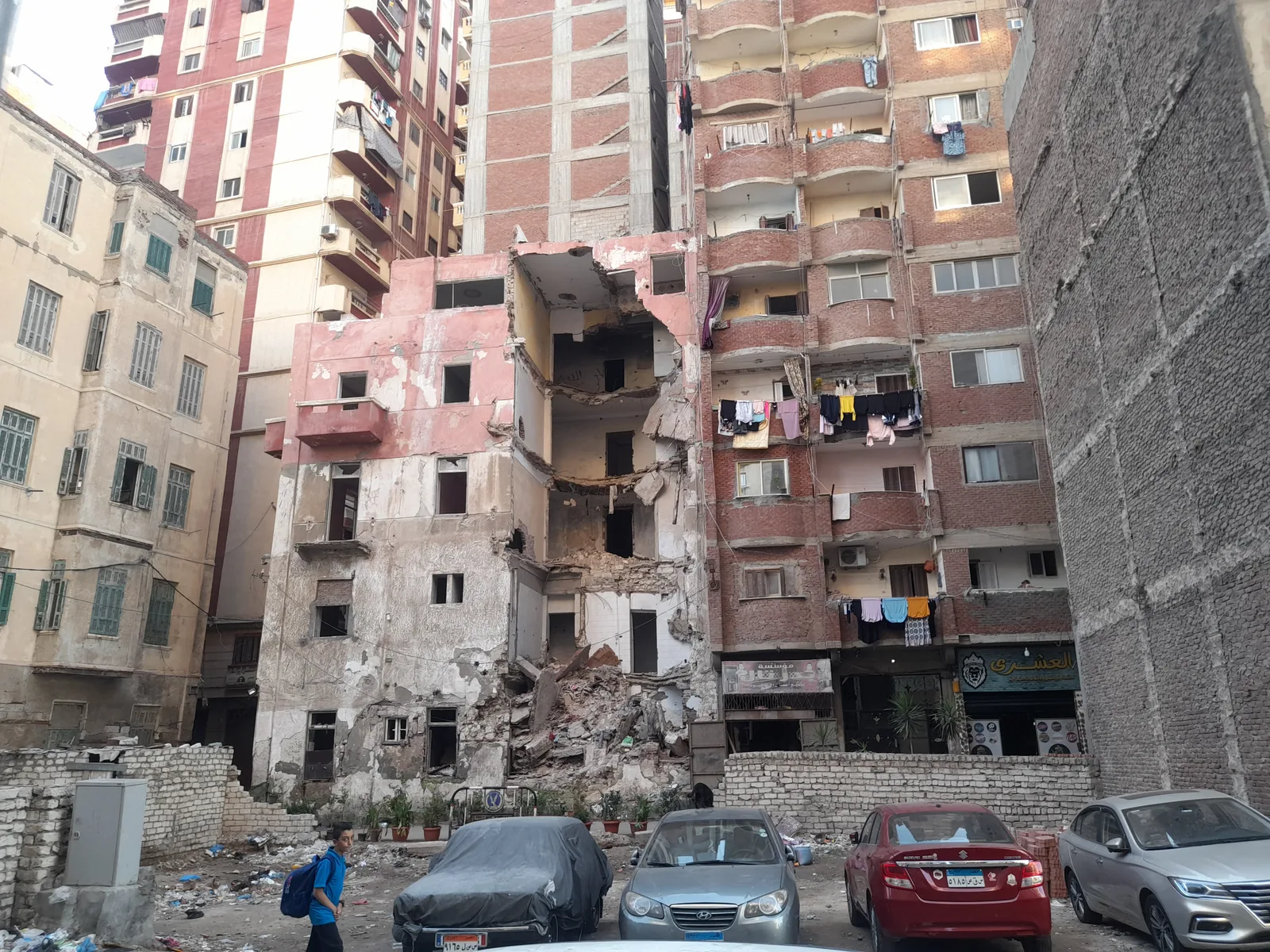
"That's Just Wrong": Digging Under the House for Treasure Finds No Gold — Only a Collapsing Roof and Years in Prison
The summer of 2026 alone brought a string of illegal digs that collapsed on people searching for buried treasure: five dead in Al-Qusiya, Assiut, in June; ten deaths in Assiut alone within less than a month, according to Masrawy; then three in Fayoum and one under an old house in Bilbeis in August. We tell what happened, explain what Egypt's Antiquities Protection Law says, and show how legitimate archaeological excavation actually works.
November 3, 2026 · 8 min read