Mental Health Is Not a Luxury: When Does Sadness Become an Illness, and Where Can You Find Help Without Stigma?
Caught between "man up" and "you just need more faith," people living with depression and anxiety wither in silence. A practical guide that separates passing sadness from an illness that requires treatment, explains the difference between a psychiatrist and a psychologist, and maps out the road to help in Egypt — in words that open the door instead of slamming it shut.

Picture a young office worker who wakes every morning with a stone in his chest he cannot name. He does his job behind a painted smile, answers "How are you?" with a mechanical "Fine," then goes home and shuts his bedroom door on a darkness he does not understand. When he once found the courage to tell the person closest to him that he could not take it any longer, the ready-made answer came straight back: "Man up — what on earth are you missing?" This is an imagined cautionary tale, not the story of any real person, but something like it plays out in countless homes every day, because we were taught that pain of the soul is a shame to be hidden, not an illness to be treated.
Stigma is the first barrier, and the cruellest. Words like "crazy," "attention-seeking" and "weak faith" make the road to a psychiatric clinic longer than any other road, so many people arrive years late — or never arrive at all. The irony is that nobody tells a diabetic to "tough it out and your body will sort the sugar on its own," even though depression is an illness with biological, psychological and social causes, exactly like diabetes. The first practical step in this report: to agree that asking for mental health support is an act of courage, not a scandal.
But when is sadness normal, and when does it become an illness? Sadness is a healthy human emotion: we grieve loss, failure and separation, and then life gradually carries us forward again. The dividing line used by international diagnostic manuals rests on three things — duration, severity, and disruption of daily life. If a depressed mood, or a loss of pleasure in everything, persists for most of the day, nearly every day, for two consecutive weeks or more, and begins to derail work, study and relationships, then we are looking at a condition that deserves a specialist assessment, not merely "a change of scenery."
Depression has faces other than tears. Sleep that collapses into too much or too little; appetite and weight that shift; exhaustion no amount of effort explains; thinking and movement that slow to a crawl; an inflated sense of guilt or worthlessness; and difficulty concentrating on the simplest tasks. In some people — especially men in our societies — it surfaces as irritability and bursts of anger rather than as openly declared sorrow. Its single most dangerous symptom is thoughts of death or self-harm, and that sign alone is reason enough to seek help immediately, without waiting for any checklist to be complete.
Anxiety, too, has two faces. Normal anxiety is an old friend of the human race: it wakes you up to revise before an exam and makes you check your papers before a job interview, then takes its leave once the moment has passed. An anxiety disorder, by contrast, is relentless, excessive worry that is hard to control, circling around everything and nothing at once, accompanied by genuinely physical symptoms: palpitations, muscle tension, shortness of breath, disturbed sleep and stomach trouble. Some people are ambushed by acute panic attacks they mistake for a heart attack, and spend a long time touring cardiology and internal medicine clinics before anyone tells them that the treatment begins in a different consulting room.
Here we must settle a common confusion: faith and depression are not two opponents in the same ring. Religious devotion can be a powerful source of support, but depression strikes the devout and the non-devout alike, just as hypertension and diabetes do, and it is plainly unjust to add to a patient's pain the accusation that he has failed his God. The World Health Organization, in its founding constitution, defined health as a state of complete physical, mental and social well-being, not merely the absence of disease. Peace of mind is neither a frill nor a luxury; it is a foundational pillar of human health.
Practically speaking, who should you go to? A psychiatrist is a doctor who graduated from medical school and then specialized in psychiatry. They are the ones qualified to prescribe psychiatric medication, monitor it and adjust it, and to rule out the physical causes that can mimic depression, such as certain glandular disorders. A psychologist has studied psychology and specializes in talking therapies of various kinds and in psychological testing, and does not prescribe medication. The two are not competing alternatives but the two wings of a single treatment, and many cases need both. A simplified rule to start with: severe symptoms, or symptoms accompanied by thoughts of self-harm, begin with a psychiatrist; milder cases may begin with psychotherapy sessions — and the two paths eventually meet.
Many people fear the phrase "psychiatric medication" more than they fear the illness itself. Broadly speaking, antidepressants and anti-anxiety medicines work by helping to restore the balance of the brain chemistry that carries nerve signals. Their effect does not appear overnight but takes weeks of consistent use, which is why some patients stop early, convinced the pills are useless. The two golden rules: never take a psychiatric medicine without a doctor's prescription and follow-up, and never stop one abruptly without going back to the doctor, because sudden discontinuation can cause distressing symptoms. As for names and dosages, their only proper place is the doctor's office — not a newspaper article, and not a friend's advice over a pharmacy counter.
Alongside medication stands cognitive behavioural therapy, one of the psychological treatments whose effectiveness against depression and anxiety has been documented by scientific studies over decades. Its idea is both simple and profound: our thoughts, feelings and behaviour form a single connected triangle, and illness feeds distorted automatic thoughts of the "I'm a failure" and "nothing will ever change" variety. In structured sessions, the patient learns to catch those thoughts, examine them, and replace them with a fairer reading of reality, alongside graded behavioural exercises that break the cycle of withdrawal and avoidance. It is not "venting," as some imagine, but a set of practical skills with homework attached — closer to physiotherapy for the mind.
Where can you find all of this without paying a fortune? Egypt has a public mental health network under the Ministry of Health, represented by the General Secretariat of Mental Health and Addiction Treatment, with hospitals and outpatient clinics in several governorates — the best known being El-Abbasia Hospital in Cairo — offering services at an affordable, within-reach cost. There is also a mental health support hotline run by the Ministry of Health, whose current number can be obtained through the ministry's official channels, in addition to the psychiatry departments of university hospitals. Egypt's law on the care of the mentally ill guarantees the confidentiality of patient data and patients' rights, so a visit to a psychiatric clinic is a private medical matter between you and your doctor — not a record of shame that follows you around.
And what if the patient is a relative rather than you? Here, words are either medicine or poison. Forget "man up," "there are people worse off than you" and "this is all because you have too much time on your hands" — such phrases make a person in pain feel that their pain is an accusation. Try instead: "I can see you've been struggling for a while, and I'm right here — talk to me," then listen far more than you speak, without interrupting, lecturing or handing out ready-made solutions. And offer concrete help: to look for a doctor, to book the appointment, to go with them to that first visit — because the clinic's first door is the heaviest door of all. Treat it as though you were accompanying them to the dentist, not to a courtroom.
There are red flags that cannot be put off: repeated talk of death or of wishing to disappear, unexplained goodbyes, giving away treasured possessions, or a sudden, puzzling calm after a stretch of deep despair. The settled clinical consensus is clear: asking directly and compassionately about thoughts of self-harm does not plant them in anyone's head; far more often, it opens a valve that saves a life. If you sense imminent danger, do not leave the person alone, remove the means of harm from their reach, and go together to the nearest emergency department or mental health hospital as fast as you can. In these moments above all, swift intervention saves lives.
The one thing to carry away from this article: passing sadness needs neither permission nor treatment, but sadness that outlasts two weeks and derails your life, or anxiety that keeps its grip on your day, needs to be assessed by a psychiatrist or a psychologist — and modern treatment, combining medication and therapy sessions, has a documented scientific record behind it. Ask, book the appointment, take the person you love with you, and say to those around you the sentence that brings down the wall of stigma: a psychiatric clinic is a door to health like any other clinic, and whoever walks through it is neither weaker in faith nor softer in character — they are the braver one, the one who decided not to wither in silence. Mental health is not a luxury, and you deserve to be well.
Related Stories

Pink October: a free check-up at the nearest health unit – why early detection is changing the fate of Egyptian women
“Nothing hurts” is no reason to put it off. Since July 2019, Egypt's health units have opened their doors free of charge to every woman aged 18 and over, and by June 2026 the share of cases caught at a late stage had fallen from 60% to 19.5%. We explain what happens at the unit, which signs call for a visit, and why fear and stigma keep delaying this check-up.
October 2, 2026 · 7 min read
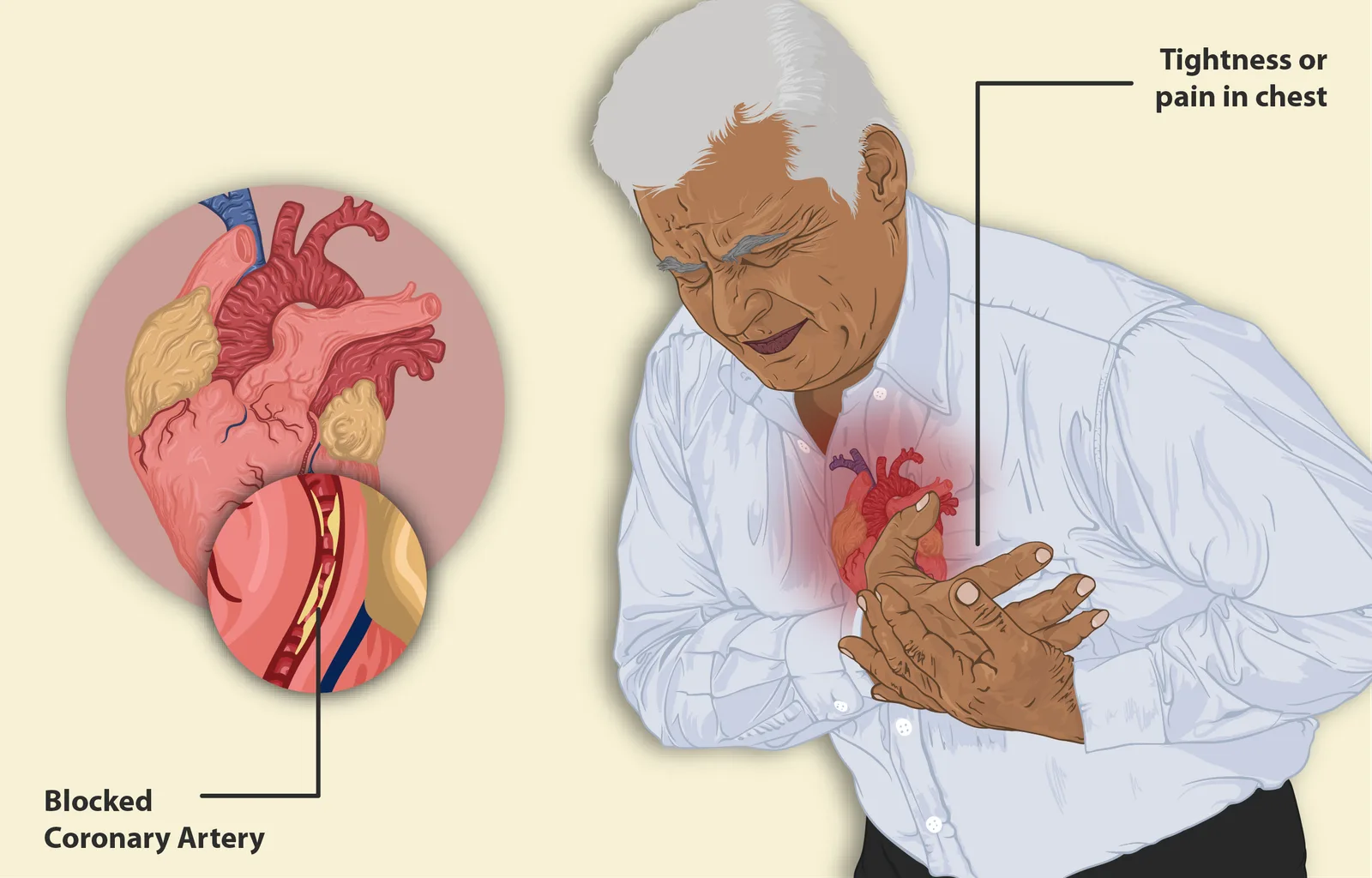
On World Heart Day: How to Spot Angina and a Heart Attack in Time, and What to Do First
A man in his fifties puts the heaviness in his chest down to "heartburn" from a heavy dinner and postpones the hospital until morning. On World Heart Day we explain the difference between angina, a heart attack, cardiac arrest and stroke, the warning signs listed by the World Health Organization, including how they differ in women, and what to do in the first minutes: call 123, which is free, sit down, and do not drive.
September 29, 2026 · 7 min read

Egypt's New Criminal Procedure Code 174/2025 Takes Effect: What Has Actually Changed for Citizens?
After roughly seventy-six years, Egypt's old Criminal Procedure Code has been retired, and Law No. 174 of 2025 took effect with the start of the new judicial year. A measured look at what has actually changed: alternatives to pretrial detention, expanded from three to seven; detention periods and their ceilings; the presence of a lawyer; notification by modern means; and new safeguards for victims and witnesses.
October 18, 2026 · 8 min read