‘The Tower on Our Building Causes Cancer’ — What the Measurements and the WHO Actually Say
A signature sheet at the building entrance, and WhatsApp messages warning the rooftop antenna “will give our children cancer.” We checked the claim: WHO says exposure near base stations is 0.002%–2% of international guidelines, and a 2024 review it commissioned found no likely rise in childhood leukaemia near fixed transmitters. Verdict: no scientific basis — with an honest account of the 2B classification and the legitimate route for residents.
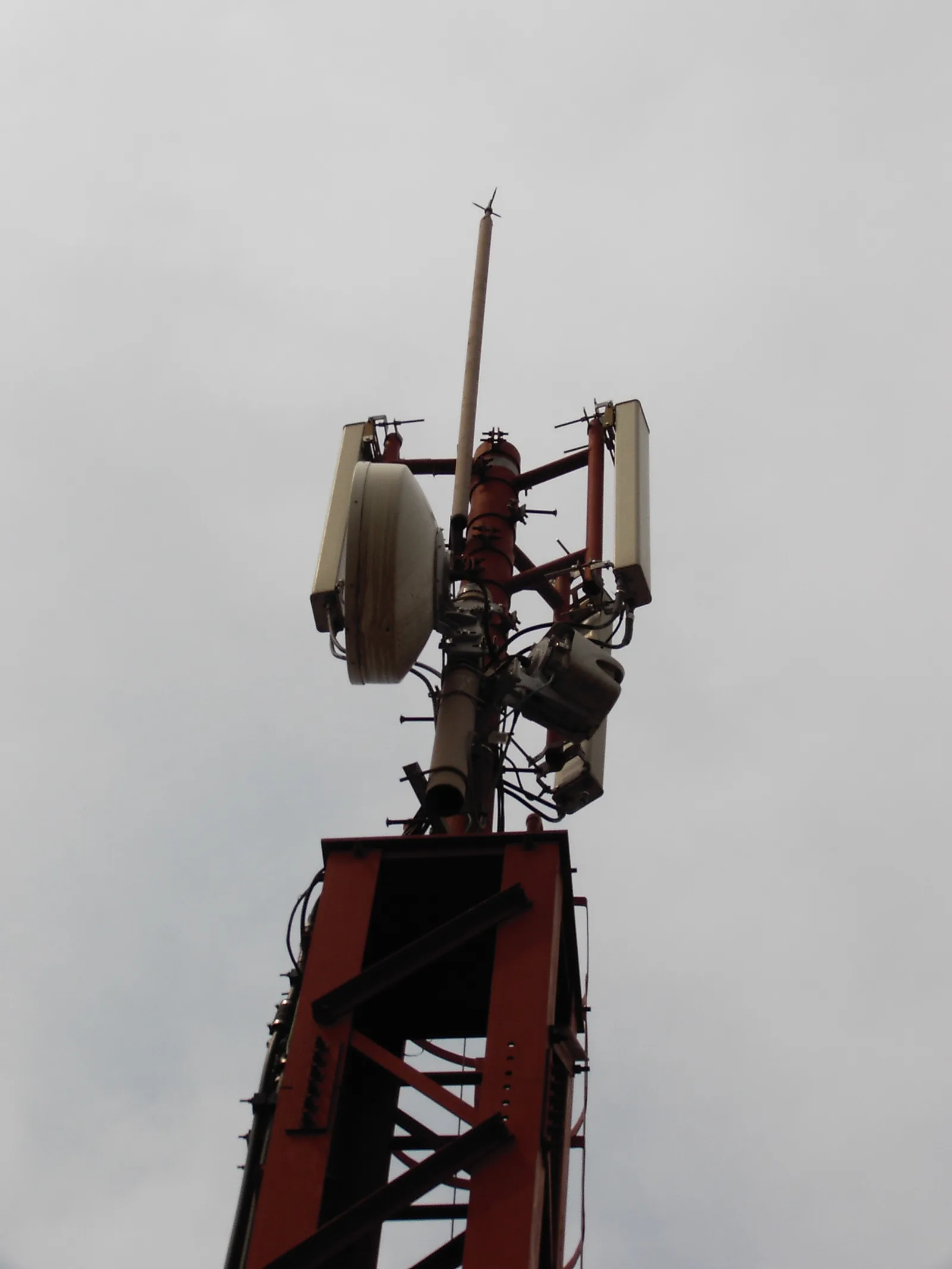
It makes no difference whether it is the entrance of an old apartment block downtown or the lobby of a new tower on the city's outskirts: two plastic chairs, a sheet of paper with two columns — ‘Name’ and ‘Signature’ — and talk of the antenna installed on the roof two weeks earlier. The messages that circulate in WhatsApp groups on such occasions tend to repeat one short, categorical line: this tower is going to give us cancer, and our children on the top floor are at risk. Some sign without hesitation; others hold back, a little embarrassed, and one quiet question goes unanswered: are we signing onto information, or onto fear?
The claim we are examining today is precisely this: that the presence of a mobile base station on a building's roof causes cancer among its residents, and among children in particular. Our verdict, after reviewing what the World Health Organization and regulatory bodies publish, is that this is a false claim with no scientific basis — false in the precise sense that it asserts a proven causal link nowhere reflected in the available evidence. But note what we are not saying: we are not issuing anyone a certificate of absolute safety, nor are we closing the door on further research. The difference between those two statements is the axis this article turns on.
Start with the nature of the wave itself. The signals emitted by mobile antennas are non-ionising radio waves — they do not carry enough energy to dislodge an electron or break DNA bonds, which is exactly what makes X-rays a genuine cause for concern. The only biological effect the World Health Organization considers established for radiofrequency fields is a rise in body temperature of more than one degree Celsius, and that occurs only at intensities so high they exist, in practice, in specific industrial settings — not on the roof of a residential building.
Now to the numbers, which matter most. The WHO states in plain terms that “radiofrequency exposure levels from base stations are between 0.002% and 2% of international guideline levels,” depending on factors including proximity to the antenna and the surrounding environment. It adds that the surveys behind this finding show exposure in places people actually occupy — including schools and hospitals — falls thousands of times below international standards. So we are not talking about a narrow margin edging toward some permitted ceiling; we are talking about a vast distance beneath it.
One comparison shatters the mental image that ties danger to appearance: the WHO's own fact sheet on base stations notes that the human body absorbs up to five times more energy from FM radio and television broadcasts than from a base station signal at a comparable exposure level — because their frequencies are lower, and because a person's height makes the body an efficient receiving antenna at those wavelengths. Radio and television stations have been broadcasting over our heads for more than half a century — Egyptian radio since 1934, television since 1960 — without any harmful effect ever being established. The steel tower frightens us because we can see it, not because it is the strongest signal around us.
One question remains: the ‘cluster’ argument — our neighbour fell ill, so did the boy on the third floor, and the tower is right there. The WHO addresses this directly, noting that cancer is, by its nature, distributed unevenly across any population, and that with base stations so widespread in the environment, clusters of cases are expected to appear near them by pure chance. It adds that reported cases are often different types of cancer with no common denominator, making a single shared cause unlikely. The road to certainty here is a carefully designed epidemiological study — not a tally of one's neighbours.
These studies have, in fact, already been done, and fairness requires dating them properly. The WHO's own page on base stations and wireless technologies, last updated in 2006, states that fifteen years of accumulated research up to that point had produced no evidence that exposure to radio transmitters raises cancer risk, and that long-term animal studies found no increase in risk even at levels far higher than base stations produce; its conclusion, in its own words: “No short- or long-term adverse health effects have been shown to result from the radiofrequency signals produced by base stations.” Then came the newest evidence, and the one most directly relevant to our claim: in August 2024, the journal Environment International published a systematic review commissioned by the WHO, which concluded with moderate certainty that far-field exposure to fixed transmitters — mobile base stations and broadcast antennas — is unlikely to raise the risk of childhood leukaemia, and that mobile phone use is unlikely to raise the risk of brain tumours.
Here the sceptic's question jumps in: aren't these fields classified as ‘possibly carcinogenic’? Yes — and fairness requires saying so in full. In 2011, a panel of experts convened by the International Agency for Research on Cancer (IARC) classified ‘radiofrequency electromagnetic fields’ — not mobile phone use alone — under ‘Group 2B’: “possibly carcinogenic to humans.” The detail of the evidence, as IARC itself published it, matters more than the headline: it was described as ‘limited’ among wireless-phone users for glioma and acoustic neuroma, and ‘inadequate’ for other cancer types; evidence drawn from occupational and environmental exposure — including that from broadcast and base stations — was likewise described as ‘inadequate.’ Group 2B is a category of possibility, not proof: it is used when a relationship deserves continued monitoring even though chance or bias cannot yet be ruled out.
It is also only fair to distinguish between two statements many people conflate: ‘there is no evidence of harm’ is one thing, and ‘there is evidence of no harm’ is another. The WHO explains this distinction with unusual clarity, noting that health studies are good at catching large effects — the link between smoking and cancer, for instance — but far less able to tell a very small effect apart from no effect at all; its absence in a large study may mean it doesn't exist, or it may simply mean it is too small for our instruments to detect. That is why the research continues, and why we do not issue any technology a permanent certificate of safety. As for the claims circulating about towers affecting fertility, that falls outside the scope of our verdict; our sources address health effects in general and cancer specifically, and we do not rule on what we have not examined. Our finding of falsehood concerns one specific claim: that the antenna on your building's roof causes cancer in its residents — a claim with no scientific basis as of this writing.
Now let's bring this down to your own home in Egypt. The National Telecommunications Regulatory Authority (NTRA) publishes on its website what it calls an ‘Electromagnetic Emissions Map,’ and states that it carries out field measurements with specialised equipment across the different frequency bands to confirm that the fields emitted by mobile stations stay within safe limits consistent with WHO standards and ITU-T Recommendation K.70. What matters most to the ordinary citizen is that, in the authority's own words, the map “allows citizens to choose the nearest measurement point to their location” and view its readings.
And this rests on unambiguous legal ground. The installation of mobile stations is governed by Telecommunication Regulation Law No. 10 of 2003, which gives the NTRA the authority to set the technical rules on health and environmental safety that must be followed when telecommunications networks are installed, operated, and used. On that basis, a committee was formed with the Ministries of Health and Environment to study citizens' exposure to these waves and set rules for building stations within residential areas; as a result — according to the authority's own statements — a station may not go into operation until it has been inspected, the required technical measurements taken, and a certified compliance certificate issued.
In practical terms, this means you have a legitimate path open to you, beyond a signature sheet alone. Start with the free, immediate step: check the emissions map and look up the nearest measurement point to your address. Then ask the property owner or the company operating the station for the compliance certificate issued by the NTRA. If the worry persists, file a complaint — through the complaints platform on the authority's website or app, or on hotline 155, available from 8 a.m. to 10 p.m. as of this writing — and ask for a field measurement of your specific location, understanding this as a request rather than an entitlement, since the authority does not commit to measuring every address on demand. Climbing onto the roof to dismantle equipment or cut a cable, on the other hand, is not a defence of public health; it is an assault on a licensed facility that exposes whoever does it to legal consequences, and deprives neighbours of a network they may need to call an ambulance.
After all this, go back to that signature sheet at the building entrance. No one is asking you to set aside your concern for your children; concern is neither ignorance nor naivety. What is needed is to point it somewhere useful: a signature on a request for measurement does more good than a signature on a rumour, and a figure in an official report will calm a household more than a message of unknown origin. And if you want to reduce your exposure without panic, the source closest to your head isn't the tower on the roof — it's the device you hold to your ear every day; using a headset or speakerphone for long calls costs nothing and needs no meeting on the stairs.
Related Stories

“The Americans never landed on the Moon”: an annual claim, answered by flags and footprints seen from orbit
As World Space Week opens, the short clips swearing that the Apollo landing was filmed in a studio are back. We examine the claim not through the astronauts’ testimony but through what any scientist in the world can check today: photographs from orbit, lunar rocks in laboratories, and the reflectors used every night to measure the distance to the Moon.
October 4, 2026 · 7 min read
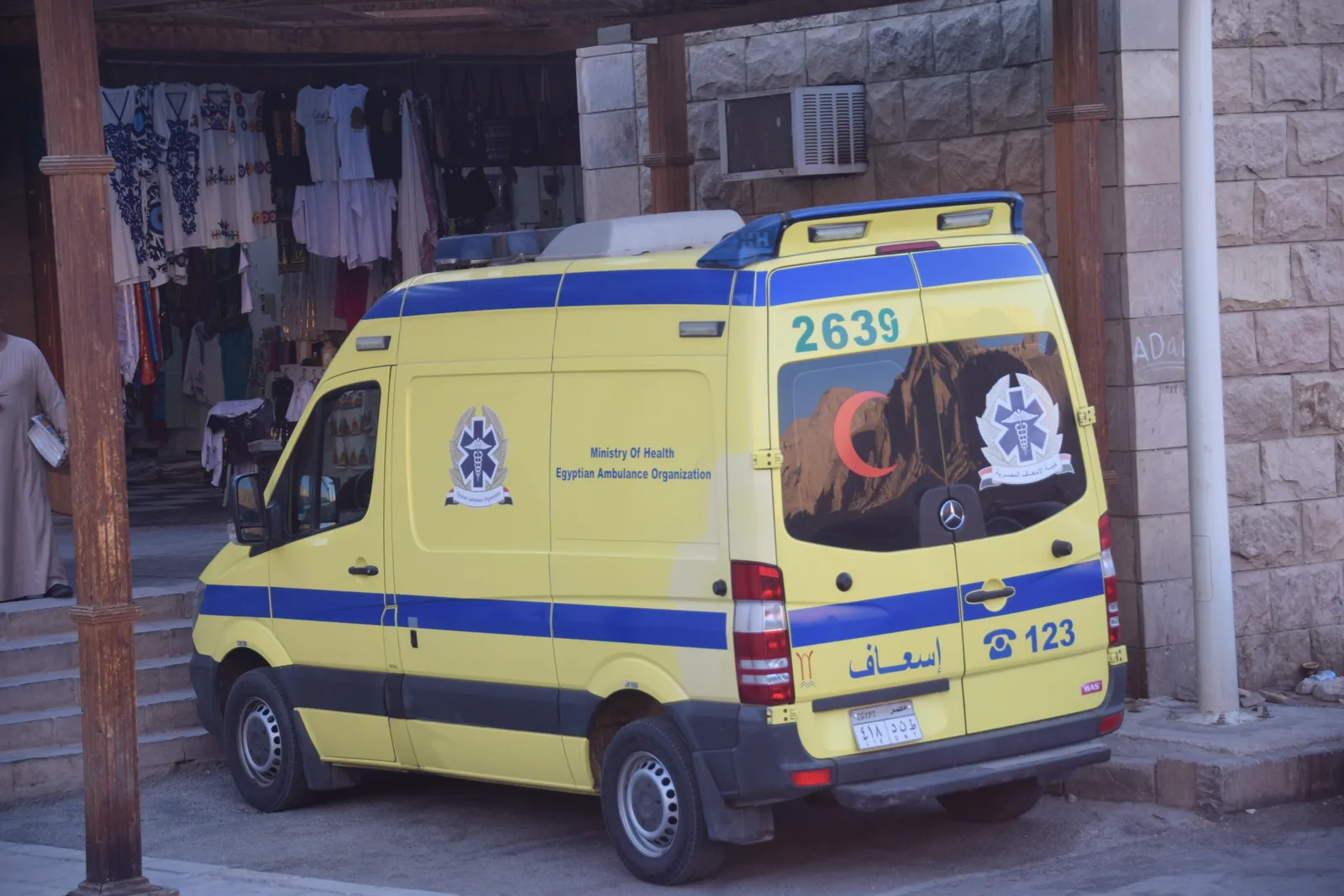
"Cough Hard to Survive a Heart Attack Alone": A WhatsApp Message Egyptian Homes Pass Around, and Medicine Says Otherwise
A chain message reaches nearly every phone in Egypt: if you have a heart attack alone, cough hard and in rhythm until your heart steadies. The American Heart Association flatly rejects "cough CPR," the message confuses a heart attack with cardiac arrest, and every minute spent coughing instead of calling the free 123 ambulance line is taken from the patient's life. This is what medicine says.
September 28, 2026 · 7 min read

"Reading in Dim Light Ruins Your Eyes": What Ophthalmologists Confirm, and the Risk Parents Really Overlook
With evening study sessions back under a single bulb, the old warning returns: "You'll go blind." We checked the claim word for word and found ophthalmologists of one mind: dim light and sitting close to the screen tire the eyes; they do not damage them. But behind that reassurance stands a real danger most households overlook, and regional estimates put Egypt's children at the top of it.
September 19, 2026 · 7 min read