Naguib Mahfouz: The Storyteller Who Put Cairo's Alleys on the World's Literary Map
From the lanes of Gamaliya to the Nobel podium, Naguib Mahfouz turned Cairo into a complete fictional universe. This is the story of a quiet civil servant who wrote in disciplined silence for decades — and became the first Arab writer to win literature's highest prize.
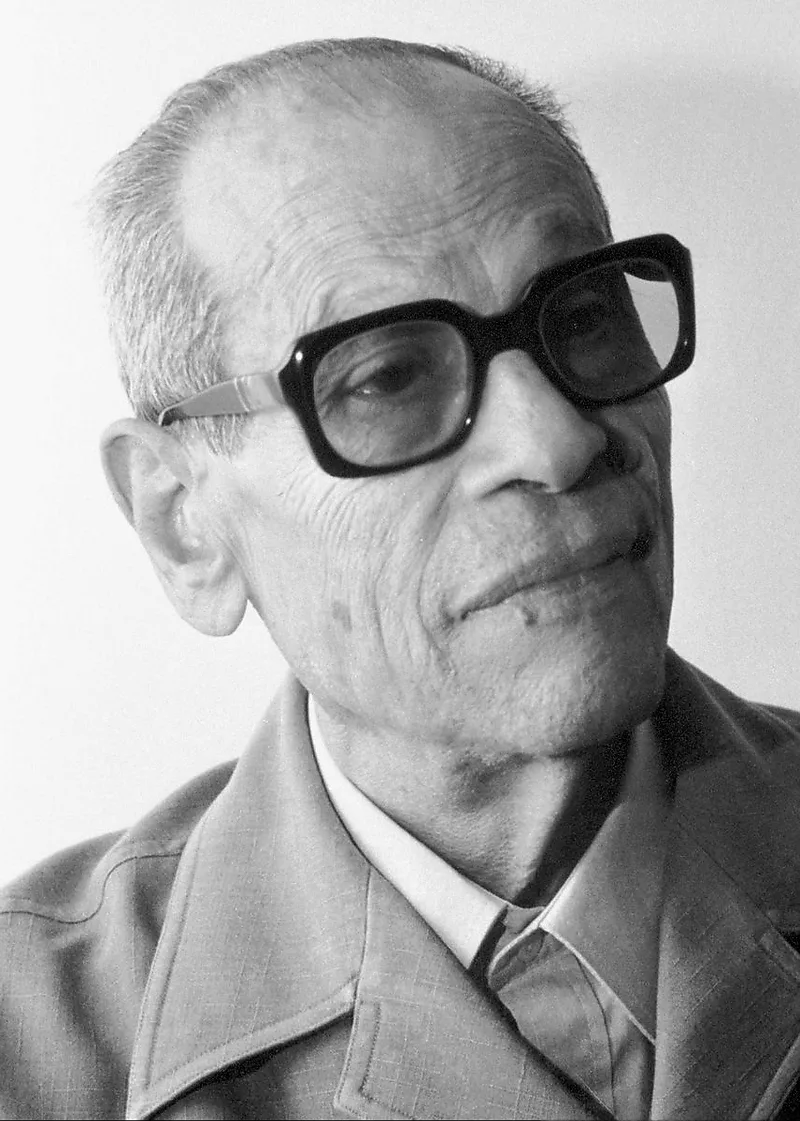
In the autumn of 1988, the Swedish Academy announced that the Nobel Prize in Literature had gone to a 76-year-old Egyptian novelist named Naguib Mahfouz. He was the first writer in Arabic to receive the award since its foundation. He did not travel to Stockholm to collect it — he was a man deeply attached to his daily routines in Cairo — so his daughters represented him while his lecture was read aloud, a speech in which he saluted the two civilisations, Pharaonic and Islamic, whose son he declared himself to be.
Mahfouz was born in December 1911 in the Gamaliya quarter at the heart of Fatimid Cairo, among the alleys, fountains and minarets that would later become the stage of his greatest works. Though his family moved to the Abbasiya district when he was a boy, his heart remained tied to the old quarter, until the alley — the hara — became for him a complete universe in which questions of justice, power and faith could be tested.
He studied philosophy at the Egyptian university and in his youth wavered between thought and literature before committing himself to the novel. For decades he worked as a government employee in the ministries of religious endowments and culture and in the state cinema apparatus, writing at rigidly fixed hours. He believed inspiration was no substitute for discipline, and into old age he kept faith with his appointed times for writing, walking and the coffeehouse.
He began with historical novels set in Pharaonic Egypt — Khufu's Wisdom, Rhadopis of Nubia, Thebes at War — moved by a nationalist dream that saw the distant past as a mirror of the present. But he soon discovered that his true material lived in the present, and he turned to realism with novels such as Cairo Modern, Khan al-Khalili and Midaq Alley, which drew a pulsing social map of 1940s Cairo.
Then came the summit on which critical judgement has settled: the Trilogy. In Palace Walk, Palace of Desire and Sugar Street, published in the 1950s, Mahfouz followed three generations of the family of al-Sayyid Ahmad Abd al-Jawad between the 1919 revolution and the Second World War. Through a single household he wrote the history of a whole nation in transformation, creating characters — from the imposing patriarch to the patient Amina — who entered the Egyptian imagination as if made of flesh and blood.
His road was not without storms. Children of Gebelawi, serialised in Al-Ahram in 1959, provoked a wide religious controversy over its allegorical structure; it did not appear as a book inside Egypt for decades and was printed in Beirut instead. The controversy pursued the novel until its tragic climax in 1994, when a young extremist stabbed Mahfouz in the neck outside his home. The octogenarian writer narrowly survived, but the injury weakened his writing hand, and he dictated his final short texts.
Between these stations, Mahfouz renewed his craft again and again. In the 1960s he wrote novels of existential anxiety and veiled critique such as The Thief and the Dogs, Adrift on the Nile and Miramar. In late works like Fountain and Tomb and Echoes of an Autobiography his prose attained the clarity of Sufi wisdom, proof that a great storyteller does not age so much as distil.
His name was tightly bound to Egyptian cinema in its golden age. He worked as a screenwriter and as an official in the state film organisations, and dozens of his novels and stories became films that are now classics, from Midaq Alley to The Beginning and the End and Cairo 30. Through the screen, his characters reached millions who had never read his books.
His daily rituals became part of his legend: the long morning walk, the coffeehouse sittings from Fishawi in Khan el-Khalili to the cafés of downtown, and the weekly gathering of friends known as the Harafish circle. In those sessions he listened more than he spoke, gathering from people's mouths what he would later transmute into literature.
Naguib Mahfouz died in August 2006, at ninety-four, and was mourned with both a military funeral and a popular one. Today his works are translated into dozens of languages, visitors seek out his museum at the Takiyat Abu al-Dhahab near al-Azhar, and his great question still hangs in every alley he wrote: how is a human being to live justly and freely in a world that never stops changing? Because the answer remains unfinished, Mahfouz will go on being read.
Related Stories

International Translation Day: From the 1835 Alsun School to Egypt's National Center for Translation
On 30 September the world marks International Translation Day, and behind the translated book you carry home from the fair lies a two-century Egyptian story: an Azhar sheikh back from Paris founded Egypt's first modern school for translators in 1835, and committees and projects rose and stalled, until the National Center for Translation was founded in 2006. This is the whole story, and what it means for you.
September 30, 2026 · 7 min read
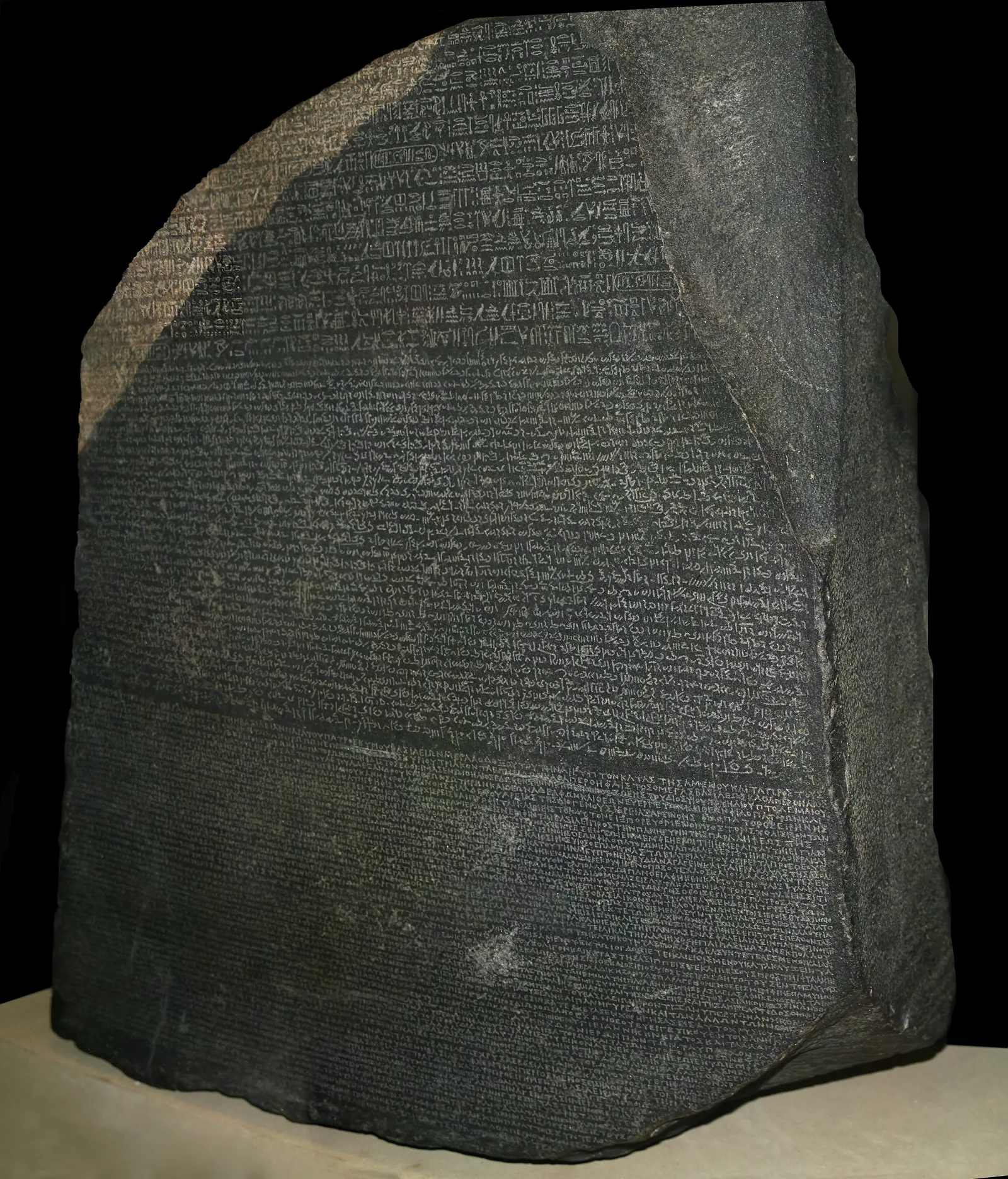
27 September 1822: The Day the Ancient Egyptians Found Their Voice Again — The Rosetta Stone and Its Key
In a hall in Paris, a 31-year-old read out a letter that gave Egypt's ancient walls back the power of speech after a long silence. From Rashid in 1799 to London in 1802 to the Academy in 1822, then on to Ahmed Kamal Pasha and the dictionary that was never printed in his lifetime, and finally to today's question: will the Stone come home? The story of a key that was lost and found again.
September 26, 2026 · 8 min read
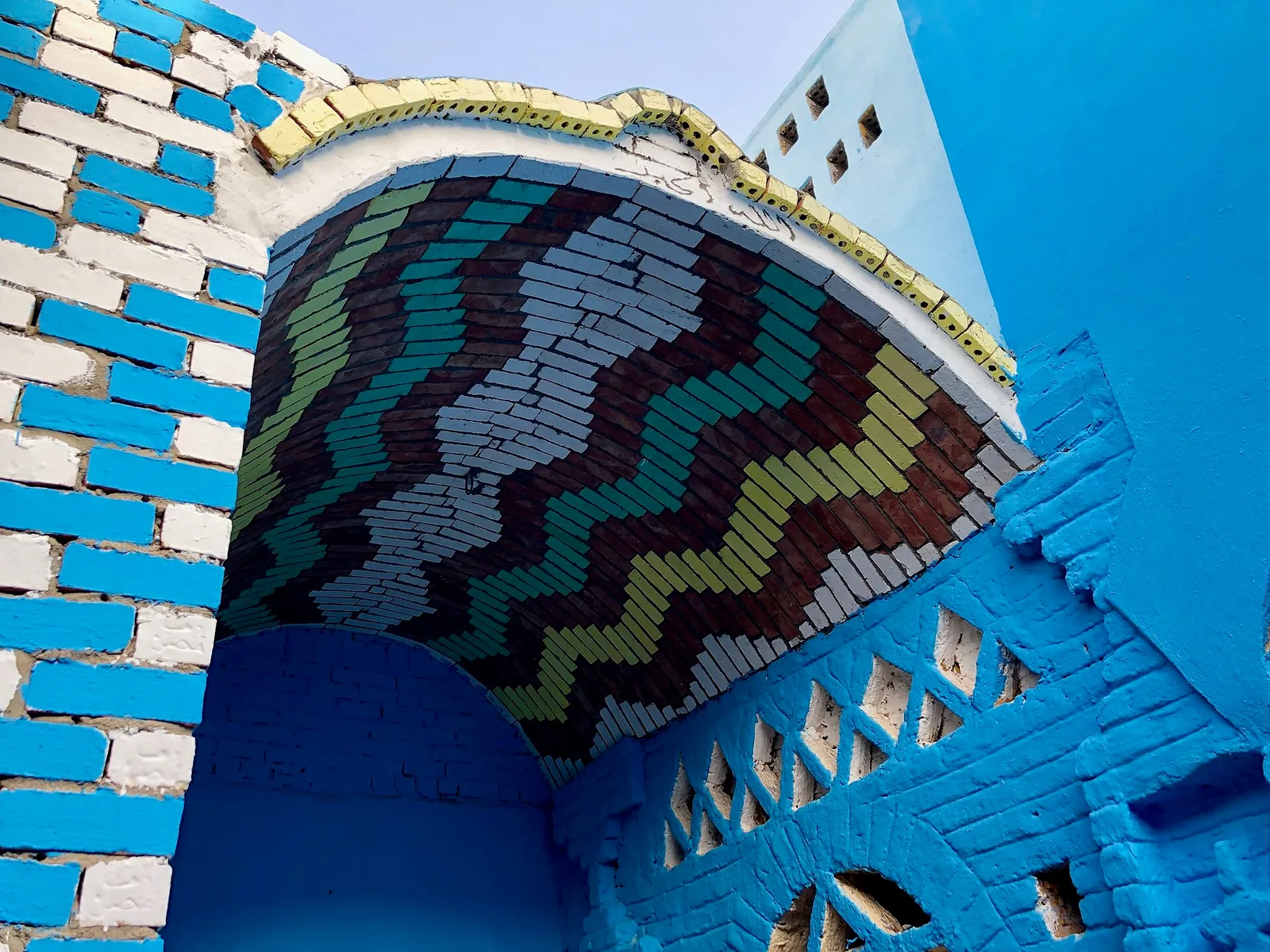
Hassan Fathy: The "Architect of the Poor" Who Built an Architecture from Egyptian Mud That Astonished the World
In an age when air conditioning devours the household budget, the life of Hassan Fathy revives an old question: why did we abandon an architecture that cooled our homes without electricity? The story of the "Architect of the Poor," who built an entire village out of Egyptian mud, wrote a book the world translated, and anticipated the green-building wave by decades.
September 4, 2026 · 8 min read