Parliament's Eye on the Government: From a Briefing Request to a Withdrawal of Confidence — The Oversight Toolkit as the Constitution Drew It
From a question put to a minister to an interpellation that can bring down a government: a practical tour of parliament's oversight toolkit as drawn by the 2014 Constitution and the 2019 amendments — what the House of Representatives can do that the Senate cannot, and how to follow it all for yourself.
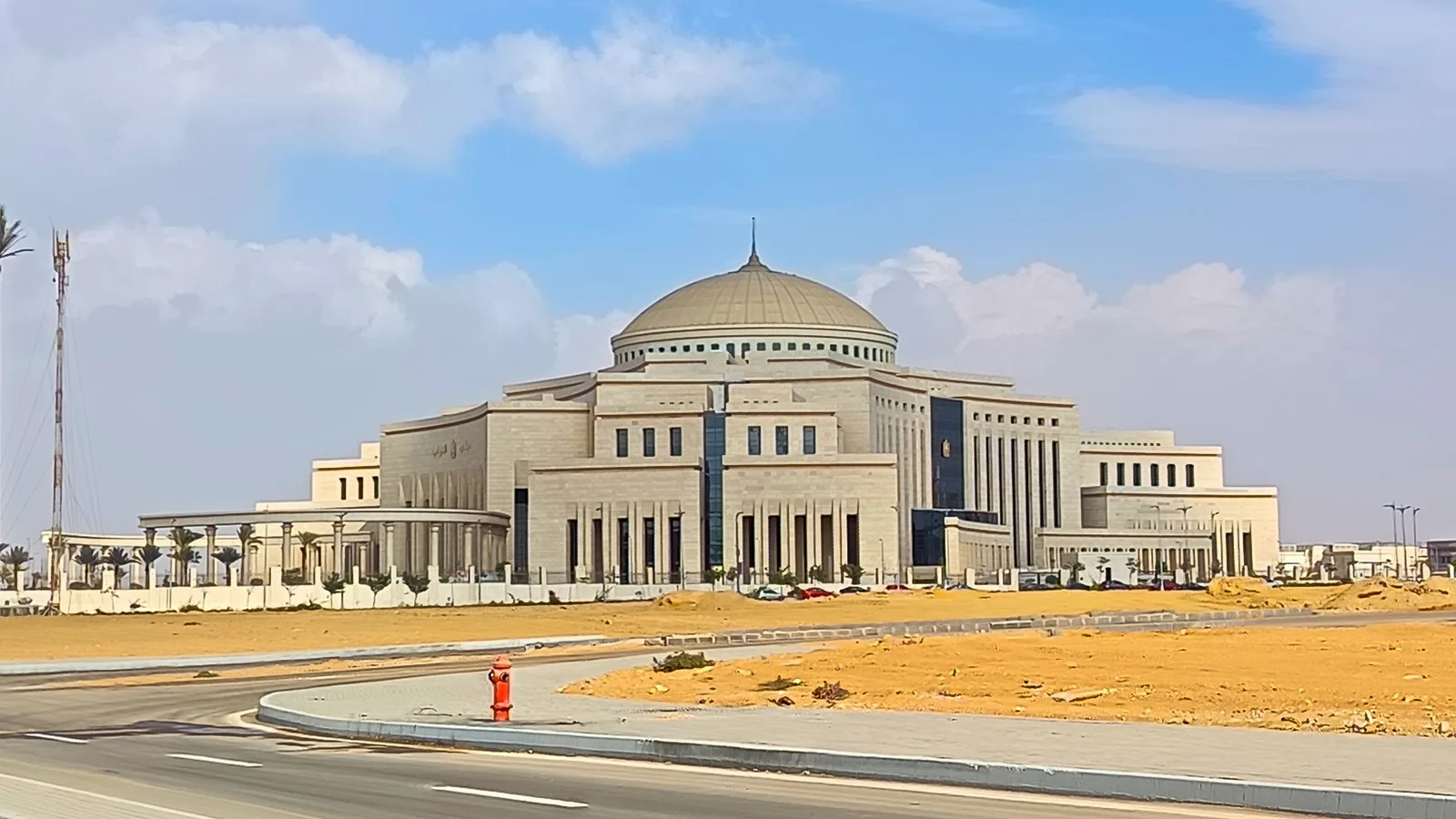
Picture the scene: a minister stands at the rostrum of the House of Representatives, and facing him a member leafs through his papers, then lifts his head to ask: why? No security detail shields the minister from the question here, no grand office screens him from accountability; under the dome, everyone stands equal before the Constitution. This is no political fantasy — it is the very thing parliament was designed for: to ask on your behalf. In this article we open together, tool by tool, the toolkit the 2014 Constitution placed in your representatives' hands, from the lightest instrument to the heaviest.
Why does parliament hold the right to call the government to account in the first place? Because the Constitution did not make it merely a law-making machine; it made oversight of the executive the twin of legislation, inseparable from it. The House of Representatives is the body that grants the government its confidence when it is formed, the body that approves the state budget, and the body before which the government answers for its conduct. The logic is simple: whoever holds a mandate from the voter may ask, in the voter's name, where that mandate has gone. So every oversight tool you are about to read about is nobody's favour to bestow — it is an original right written into the text.
Open the box now and you will find the tools arranged like the rungs of a ladder: it begins with inquiry and ends with sanction. At the bottom sit quiet instruments that request a piece of information or draw attention to something; at the top stands a single instrument capable of ending the political life of an entire government. The key to the whole ladder is one question: is the tool revelatory — content to bring the truth to light and stir public opinion — or binding, carrying a legal effect that must be enforced? Keep that question in mind, because we will come back to it at every rung.
The first rung is the parliamentary question, the lightest tool and the one in heaviest circulation. Every member of the House of Representatives may put a question to the Prime Minister, to one of his deputies or to a minister on a matter falling within their remit, and the official is bound to answer. Its register is interrogative, not accusatory: the member is seeking clarification, not conducting a trial; and the member who tabled the question may — under the rules governing the work of the House — withdraw it, the question itself carrying no penalty. Its real value lies in publicity: the minister's answer enters the official record and becomes a document he can be judged by later. A purely revelatory tool — yet often the first thread to pull.
And what if the matter cannot wait? Here comes the second rung: the briefing request, or urgent statement, reserved for urgent public matters of importance. Imagine — by way of illustration, not as a reported incident — a village left without drinking water for days on end; the constituency's member does not queue up with the ordinary questions but files a briefing request that places the crisis at once on the desk of the minister concerned, within earshot of the entire chamber. This is the toolkit's early-warning bell: it punishes no one, but it carries the voice of the street into the hall as fast as possible. It, too, is revelatory — yet a pile-up of briefing requests on a single file is a message no government misreads.
And when the issue is bigger than one constituency and one minister, the Constitution opens a third door: a request to table a matter of public concern for debate. Here a single member does not act alone; a group of members asks to debate the government's policy on a public question in order to clarify its plan, and for a few hours the chamber turns into a great national forum in which everyone has a say. No vote of condemnation follows at the end, but the recommendations it produces set the direction of the House and politically narrow the government's room for manoeuvre. A collective, revelatory tool whose merit is that it forces the executive to explain itself in the open rather than behind closed doors.
Now we climb to the rung where the mood of the whole chamber changes: the interpellation. The difference between it and a question is the difference between a request for clarification and an indictment; the interpellating member is not seeking information but calling the Prime Minister, one of his deputies or a minister to account for what the member regards as a violation or a failure to perform a duty. Because it is so grave, it is not debated the moment it is filed but after a period fixed by the Constitution, so that both sides may prepare; then the official rises to defend himself in a public sitting that resembles a political trial before the nation. An interpellation may end with the House persuaded by the reply and the file closed, or it may end with something heavier: a motion to withdraw confidence. This is precisely where oversight crosses from the shore of revelation to the shore of binding effect.
The withdrawal of confidence is the top of the ladder and the heaviest thing in the box, which is why the 2014 Constitution hedged it about with strict guarantees. It may not be brought forward at all except after an interpellation; it may be tabled only on a motion by a number of members set by the Constitution; and the decision may be taken only by a majority of the House's members. If the House resolves to withdraw confidence from a minister, he must resign; and if the government had declared its solidarity with him before the vote, the whole cabinet must tender its resignation. A binding tool par excellence: no recommendation here and no reproach, but a legal effect in force. And its presence in the background is what lends the lighter tools their authority; the minister who shrugs off a question knows that what waits at the end of the ladder is not a question.
One tool remains, of an altogether different kind: it does not climb the ladder but walks out of the chamber itself — fact-finding committees. The Constitution allows the House of Representatives to form a special committee, or to task one of its standing committees, with establishing the facts on a matter of public concern, or with examining the activity of an administrative body, a public authority or one of the public projects. The committee's weapon is that it does not settle for what it is told: it gathers evidence, demands documents and hears whomever it sees fit, and the bodies concerned are obliged to respond. Its report is in itself revelatory rather than binding, but it is often the fuel that ignites an interpellation or lays the ground for a larger reckoning. These are parliament's own eyes, for when the papers sent over by the government are no longer enough.
So where does the Senate stand in all this? The constitutional amendments of 2019 restored Egypt's second chamber, after the 2014 Constitution had in its original version made do with a single house; but they drew for the Senate a role different in essence: study, opinion and proposal, not accountability. Its opinion is sought on major matters such as proposals to amend the Constitution, draft laws complementing it, and whatever the President of the Republic refers to it, while the rules governing its work provide instruments deliberative and advisory in character. The government, however, is not answerable before it: no interpellation under its dome and no withdrawal of confidence. In short: the Senate is the house of expertise and opinion; the House of Representatives is the house of accountability and sanction.
Return now to the question we began with: what makes one tool revelatory and another binding? The revelatory ones — the question, the briefing request, the general debate, fact-finding reports and the whole of the Senate's advisory role — draw their power from light: they place the truth before public opinion and create a documented record that cannot be erased. The binding one — the withdrawal of confidence, to which no road leads except through the gate of interpellation — draws its power from the text: its effect must be enforced however much the official may resent it. And do not underestimate the revelatory; parliamentary experience in more than one country shows that publicity alone can end an official's career before matters ever reach a vote. Light, sometimes, is a punishment in full.
And now it is your turn. The plenary sittings of the House of Representatives are public by the text of the Constitution, publicity is the rule in the work of both chambers, and the minutes of sittings are published — which means that what is said under the dome is a secret to no one. You can follow the sittings broadcast through official outlets, read the agendas and reports each chamber publishes on its platforms, and track laws once they appear in the Official Gazette. Most useful of all in practice: learn the name of your constituency's member, because it is from that office that the journey begins which turns a public problem into a question or a briefing request. Following along is no luxury; it is the other face of the ballot paper.
The story of parliamentary oversight is completed with you, the reader, not at the edge of the dome. The member is an agent for those who elected him, and the tools you have just read about do not move of their own accord; they are set in motion by a member who senses a constituency behind him that follows, that judges, and that will decide whether to re-elect him or hold back. So when a public problem wears you down — in a school, on a road, at a utility — do not settle for complaining in the cafés: ask yourself which tool in the box fits it, then request it from your representative by name, whether a question, a briefing request or a call for a fact-finding committee. This is how the Constitution drew the circle: a citizen watching a member, and a member watching a government. And as long as the circle is complete, your eye — and no one else's — is the first of parliament's eyes.
Related Stories
Egypt's Senate in 2026: No Election This Year — What Voters Need to Know
No Senate election is scheduled in Egypt for 2026: the current chamber was elected in August 2025 for a five-year term, with the next vote due in 2030. A neutral guide to seats, voter eligibility, polling stations, and results.
August 20, 2026 · 7 min read
Women in Egypt's Parliament: How the Quota Rose, Fell and Returned
From Rawya Ateya's historic seat in 1957 to a constitutional guarantee of one quarter of the House of Representatives: the documented rise, fall and return of the women's quota that has shaped female representation in Egypt's parliament for seven decades.
August 18, 2026 · 6 min read

From Complaint to Law: How a Citizen's Issue Travels Through Egypt's Parliament
From a written complaint to the Proposals and Complaints Committee, to a briefing request, a parliamentary question, and sometimes a new law: a step-by-step guide to the documented route a citizen's issue travels inside Egypt's parliament.
August 18, 2026 · 5 min read