Women in Egypt's Parliament: How the Quota Rose, Fell and Returned
From Rawya Ateya's historic seat in 1957 to a constitutional guarantee of one quarter of the House of Representatives: the documented rise, fall and return of the women's quota that has shaped female representation in Egypt's parliament for seven decades.
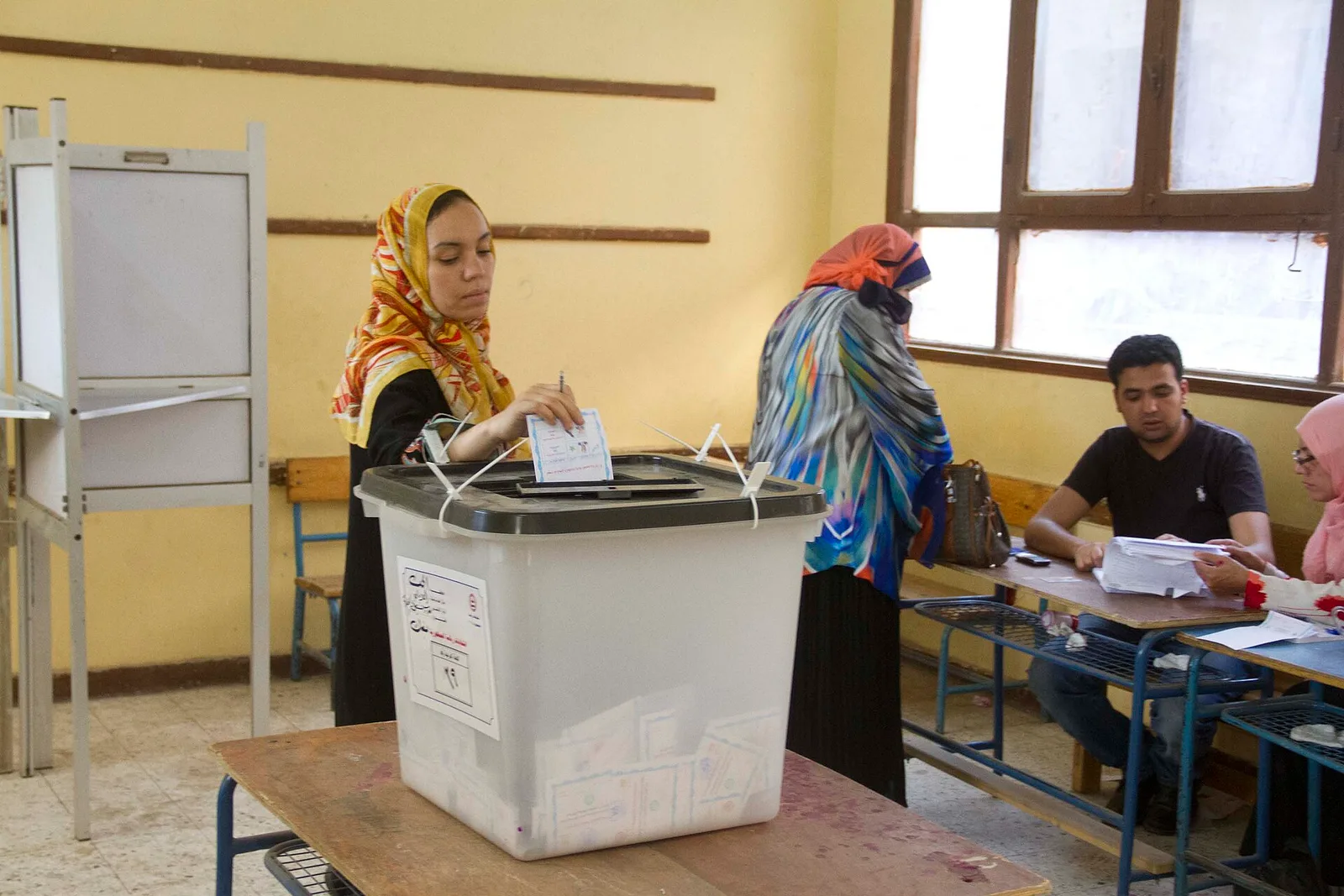
In 1957 a single woman took her seat in Egypt's parliament and made history across the Arab world. Today the constitution itself guarantees women at least a quarter of the seats in the House of Representatives. Between those two moments lies nearly seven decades of documented experiment: quotas introduced, abolished, reintroduced and finally entrenched. The story of women's representation in Egypt's parliament is, to an unusual degree, the story of its quota framework — and it is worth telling as a sequence of verifiable milestones rather than slogans.
The starting point is the constitution of 1956, which for the first time gave Egyptian women the right to vote and to stand for election. In the elections of 1957, Rawya Ateya won a seat and became the first woman member of an Egyptian parliament — widely described as the first woman parliamentarian in the Arab world. Amina Shukri entered the chamber in the same period. The barrier had fallen, but the numbers that followed showed how far a legal right could sit from a social reality.
Through the 1960s and much of the 1970s, women's presence in parliament remained marginal — a handful of members in a chamber of hundreds. The obstacles were the familiar ones documented in Egypt and elsewhere: parties reluctant to nominate women in winnable seats, campaign costs, and social attitudes about public roles. Without any institutional guarantee, each electoral cycle reproduced roughly the same outcome. It was against this background that Egypt tried its first structural remedy.
In 1979, under President Anwar Sadat, an amendment to the election law reserved a bloc of at least thirty seats for women in the People's Assembly. The effect was immediate and measurable: women's numbers jumped to their highest level to that date, and Egypt became an early regional example of a legislated gender quota. The measure was popularly associated with the era's broader reforms of family and personal-status law, and it demonstrated a pattern that would recur — when the guarantee exists, the numbers rise.
The converse was demonstrated soon after. In the mid-1980s the seat reservation was abolished amid successive constitutional challenges to the electoral system, and women's representation collapsed back toward its pre-quota levels in the elections that followed. For roughly two decades Egypt ran the counter-experiment: no quota, and persistently minimal female presence — often below three percent of the chamber. The documented Egyptian record thus offers an unusually clean before-and-after comparison of what quota abolition does.
The next attempt came in 2009, when a law added sixty-four seats reserved for women, intended to apply for two parliamentary cycles. The 2010 election was held under this system and produced a sharp rise in women's numbers. That parliament, however, was dissolved in the aftermath of the January 2011 uprising, cutting the experiment short. In the transitional elections of 2011-2012, the rule required only that each party list include at least one woman, without any placement guarantee — and women's share of seats promptly fell to a few percent.
The constitution of 2014 marked a change of philosophy. Its Article 11 committed the state to guaranteeing appropriate representation of women in the parliaments and, notably, wrote a fixed guarantee into the constitution for local councils: one quarter of their seats. For the House elected in 2015, the framework of party lists with reserved places for women, together with presidential appointments, lifted women to roughly fifteen percent of the chamber — the highest share in Egyptian parliamentary history to that point, though still below the constitutional ambition.
The decisive step came with the constitutional amendments approved in 2019. The amended Article 102 stipulates that women must hold no less than one quarter of the seats in the House of Representatives. For the first time, the quota was not a provision of an election law that a future majority could quietly repeal; it was entrenched in the constitutional text itself. The distinction matters precisely because of the earlier history — Egypt had already lived through the repeal of a statutory quota and its consequences.
The elections of 2020, the first held under the amended article, produced the largest women's bloc ever seated in an Egyptian parliament: through the combination of list seats, individual victories and appointments, women came to hold more than a quarter of the House. The Senate, restored in the same year, carried its own guarantee — its founding law required that women hold no less than ten percent of its seats. Women were also named to leadership positions within both chambers, including deputy speaker roles and committee chairs.
The quota debate itself deserves honest reporting. Supporters argue that quotas correct structural barriers that decades of formal equality never dissolved, and note that a large share of the world's parliaments now use some quota mechanism. Critics worry that reserved seats can be treated as a ceiling rather than a floor, or that they let parties avoid building genuine female leadership. What the Egyptian record contributes to this debate is empirical: in every documented cycle, the presence or absence of a guarantee has been the single strongest predictor of women's numbers.
Numbers are also not the whole story. Representation raises further questions researchers track separately: which committees women chair, how often they hold ministerial portfolios, and whether the constitutional quarter translates into influence over legislation. Alongside parliament, milestones such as women's appointment to the judiciary and the work of the National Council for Women form part of the same file. And one constitutional guarantee remains untested in practice: the quarter of local council seats reserved for women awaits the holding of local elections, which have not taken place since 2008.
Seven decades after Rawya Ateya walked into the chamber alone, the framework she inaugurated by example has become constitutional text. The documented evolution — 1956 rights, 1957 first seat, 1979 quota, mid-1980s abolition, 2009 reintroduction, 2014 principles, 2019 entrenchment, 2020 record numbers — gives Egyptians a rare thing in public debate: a policy question on which their own country's history supplies the evidence. Whatever position one takes on quotas in principle, the trajectory of women's presence in Egypt's parliament is no longer a matter of speculation. It is a record.
Related Stories
Parliament's Eye on the Government: From a Briefing Request to a Withdrawal of Confidence — The Oversight Toolkit as the Constitution Drew It
From a question put to a minister to an interpellation that can bring down a government: a practical tour of parliament's oversight toolkit as drawn by the 2014 Constitution and the 2019 amendments — what the House of Representatives can do that the Senate cannot, and how to follow it all for yourself.
September 6, 2026 · 7 min read
Egypt's Senate in 2026: No Election This Year — What Voters Need to Know
No Senate election is scheduled in Egypt for 2026: the current chamber was elected in August 2025 for a five-year term, with the next vote due in 2030. A neutral guide to seats, voter eligibility, polling stations, and results.
August 20, 2026 · 7 min read

Keda Ghalat (That's Just Wrong): Harming an Animal Has Been a Crime Under Egypt's Penal Code Since 1937
A neighbour sets out poisoned bowls beside the school wall; a cart driver beats his donkey across the face to make it haul a load beyond its strength. Many assume that "just an animal" means no law protects it. In fact, Articles 355, 356 and 357 of the Penal Code punish killing, poisoning and harming animals with penalties that go as far as prison. On the eve of World Animal Day, we explain what the law says and what the right thing to do is.
October 3, 2026 · 6 min read