Population Growth: From a Burden That Devours Development to a Human Fortune
Egypt's population has passed one hundred million, and population growth swallows a large share of every gain in development. Yet the experiences of Iran, Bangladesh, Indonesia, Tunisia and South Korea prove the transformation is possible: from a burden draining the economy to human wealth that powers a renaissance. Here is the practical menu — what the family, the state and the media can each do.
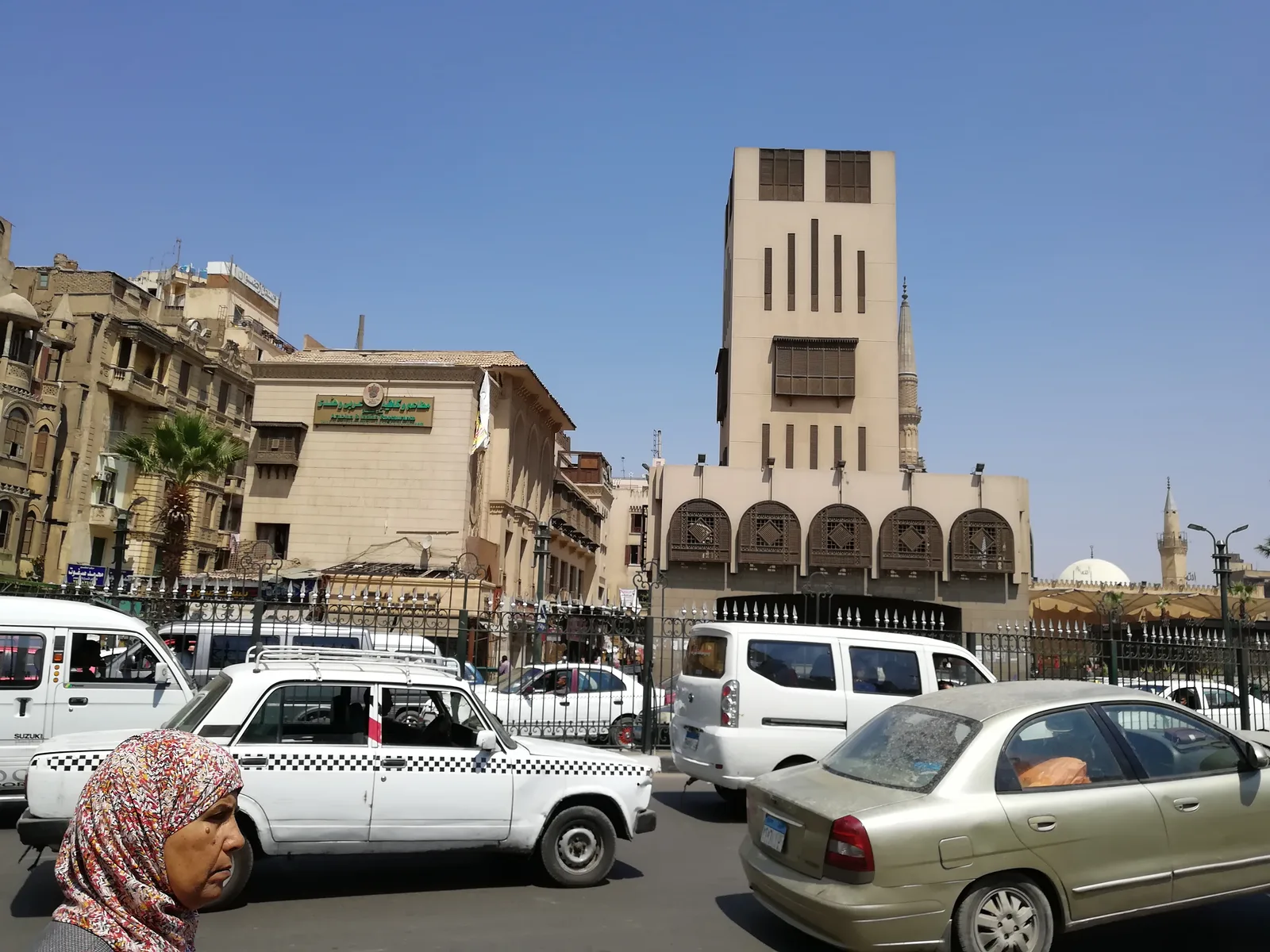
In February 2020, Egypt's population officially crossed one hundred million. Today it exceeds one hundred and six million. Every year the state builds schools and hospitals and adds jobs and housing units — and every year population growth arrives to swallow a large share of the gain before citizens can feel it. This is not sloganeering; it is arithmetic that every household lives daily in classroom density, hospital queues and the scramble for work.
The arithmetic of the burden is simple: economic growth is divided over the number of people. Whatever the economy adds, faster population growth erodes the individual's share of it — of water, whose per-capita share keeps falling year after year; of schooling; of housing; and of the hundreds of thousands of jobs that must be created every year merely to absorb new entrants to the labour market, before we even speak of improving conditions for those already in it.
Let us be precise about what we are saying — and what we are not. This is not a campaign against having children. It is a campaign against unplanned growth. A human being is a nation's greatest wealth if educated, healthy and employed; the burden lies in the gap between the pace at which people increase and the pace at which resources, schools and jobs can increase. Closing that gap is the whole question.
Egypt has not stood idle. The "Two Is Enough" campaign, launched by the Ministry of Social Solidarity in 2018, carried family-planning outreach to rural households; state health units offer family-planning services; and successive national population strategies have set targets. Official surveys point to a decline in fertility in recent years — real progress, though the rate remains above replacement level and the annual additions remain huge. The lesson of the world's success stories is that such efforts must be sustained for decades, not seasons.
Consider Iran in the 1990s — one of the fastest documented fertility declines in history. The religious leadership publicly endorsed family planning; a network of rural "health houses" carried free services to the villages; and couples took educational courses before marriage. In roughly a decade and a half, the average fell from around six children per woman in the mid-1980s to around two by the early 2000s.
Consider Bangladesh, which was poorer than Egypt when it began. Female health workers went door to door, carrying advice and contraceptives to women who could not reach clinics; girls' education expanded; and microcredit and jobs in the garment industry gave millions of women income and standing. Fertility fell from more than six children per woman in the 1970s to around two today.
Consider Indonesia, the world's most populous Muslim-majority country. From 1970 its national family-planning board built a programme that reached every village, and it enlisted community elders and religious scholars rather than confronting them — proof that this cause can be argued from within a society's faith and values, not against them.
And consider Tunisia, the Arab pioneer. As early as the late 1950s and the 1960s it raised the marriage age, invested in girls' education, expanded women's rights and made family planning available — and for decades it maintained fertility rates among the lowest in the Arab world.
Then comes the other half of the story: turning the youth bulge into a demographic dividend. South Korea around 1960 stood at a fertility rate near six children and a modest income. It brought births down while pouring investment into high-quality education and export industries, so that its large young generation entered the labour market as skilled workers rather than jobless youth. Economists attribute a substantial share of East Asia's growth miracle to precisely this dividend: fewer dependents, more workers, higher savings — provided the workers are educated and the jobs exist.
Across all these models the same threads recur. Girls' education and women's employment are the two most powerful levers ever tried: an educated working woman chooses a more mature marriage and fewer, healthier children. Services must travel to people rather than wait for them. Religious and community leaders must be partners. And the state's commitment must run across decades and governments, immune to changing moods.
What can the family do? Plan and space births, and ask the honest question: can I educate, feed and treat this child as I should? Two children well taught and well cared for lift a family higher than many left to chance. And the family's role also includes refusing child marriage and female genital mutilation — a crime punishable under Egyptian law — for both are links in the same chain of poverty passed from one generation to the next.
What should the state do? Sustain and widen the campaigns instead of letting them flare and fade; equip rural health units so that no woman is more than a short trip away from free family-planning services; keep expanding girls' schooling and adult literacy; open real employment paths for women; and, where possible, link support programmes to children's health and regular schooling. Above all: continuity, so that each government builds on what its predecessor erected.
And the media — ourselves included? Our commitment is to keep this cause alive at the forefront, not as a seasonal topic; to present the world's successful models honestly; to refute the rumours and myths that surround family planning; and to address the citizen in a language that respects rather than lectures or blames — for people respond to respect, not reproach.
The difference between a burden and a fortune was never the number of people; it is what a nation invests in them. Egypt today holds a large young generation that could fuel a genuine economic take-off — but the demographic window does not stay open forever. The countries that planned turned their peoples into their greatest assets. That choice is ours, and its time is now.
Related Stories
The Journey of a Wheat Grain: Four Loaves in Ten Come From Egypt's Soil, the Rest Crosses the Sea
On World Food Day, we trace a single grain of wheat from field and port to the neighborhood oven: how much does the Egyptian farmer produce, what does the state pay him per ardeb, and why has Egypt become one of the world's largest wheat importers — often the largest — despite harvesting ten million tonnes? And what does a "reserve nearing nine months" actually mean? Official figures, and the story of a journey.
October 15, 2026 · 7 min read

“A Cold Shot Cures a Cold”: A False Claim, and What Trials Say About the “Power” of the Vein
“Forget the pills, take a shot and you'll be back on your feet” is advice that returns with the first chill of every year. We test two claims: that a “cold shot” cures a cold, and that an injection is inherently stronger than tablets. Verdict: false. The evidence lies in the mixture itself, in randomized trials comparing vein with mouth, and in an official Egyptian guide. The route of a medicine is the doctor's decision alone.
November 22, 2026 · 9 min read

The Silent Killer in the Bathroom: The Danger Is Not the Gas Heater but an Unventilated Room and Neglected Upkeep
With the first cold snap each year, Egyptian homes light their gas water heaters and shut their windows, turning a small bathroom into a room with no fresh air. Carbon monoxide has no colour, smell or taste, and its early symptoms are easily mistaken for a cold or fatigue. Here is what official sources say about the real cause of the danger, and the order of actions in the first minutes that could save a whole family.
November 21, 2026 · 8 min read