Raising Readers: How Egyptian Families Grow a Child's Love of Books
A reading child is rarely an accident. From bedtime stories and Kamel Kilani's classics to public libraries, school shelves and the Cairo International Book Fair, a practical guide to how Egyptian families can grow a lifelong love of books and reading in Arabic.
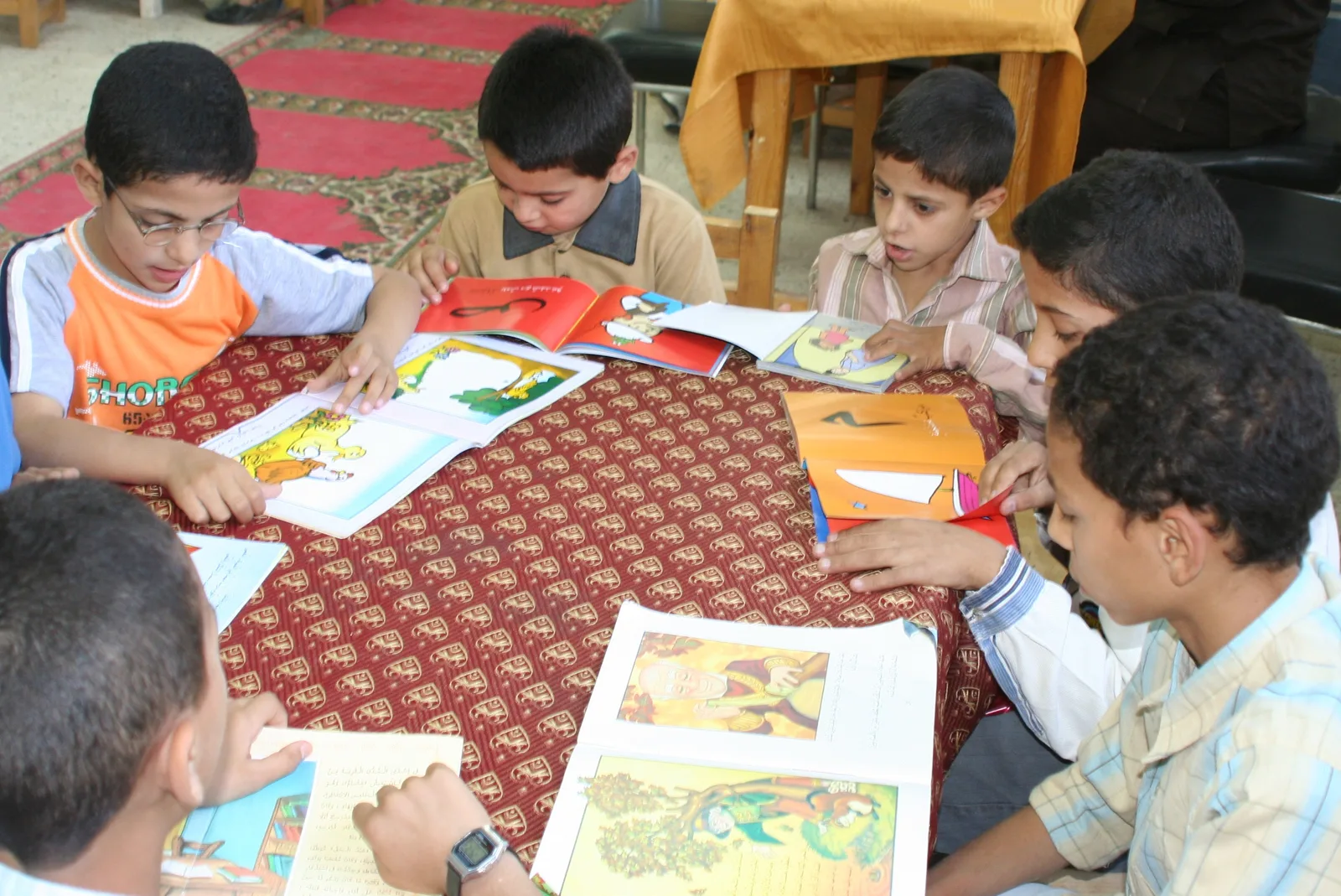
Ask any teacher what separates the children who thrive from those who struggle, and the answer rarely changes: the readers pull ahead. Reading feeds vocabulary, imagination, concentration and empathy, and its effects compound quietly across a school career. Yet a reading child is almost never an accident. Behind nearly every one stands a family that treated books as ordinary household objects — as present in the home as bread — and an adult who once made a story feel like a gift rather than a duty.
The habit begins earlier than most parents assume, long before a child can decode a single letter. Babies who are read to absorb the music of language; toddlers who handle board books learn that pages hold surprises. Egypt has a deep well to draw on here: the oral storytelling tradition of grandmothers and the country's folk tales is itself a form of early literature. A parent who tells stories aloud — from memory, from a book, from imagination — is already raising a reader.
The physical home matters more than lectures about the value of reading. Children copy what they see, not what they are told, so a parent glued to a phone while ordering a child to read is sending two messages, and the louder one wins. Families that grow readers tend to keep books low and visible, visit a bookshop or a book stall the way they visit the grocer, and protect a small pocket of quiet time in which everyone, adults included, reads something.
Arabic presents one honest difficulty that families should name rather than ignore: the distance between the colloquial Egyptian children speak at home and the modern standard Arabic of books. Specialists in Arabic literacy advise bridging the gap gently — reading the standard text aloud while explaining in the child's own dialect, choosing picture books whose language is simple and musical, and never turning fusha into an instrument of correction. A child who associates books with being scolded will close them.
Egyptian families are heirs to a rich tradition of children's writing. Kamel Kilani, widely regarded as the pioneer of Arabic children's literature, retold world classics and Arabic tales for young readers beginning in the first half of the twentieth century. Generations grew up on the children's magazines of the great publishing houses — Samir from Dar Al-Hilal and Alaa El Din from Al-Ahram — whose comics and serials taught millions of Egyptians that reading in Arabic could be pure pleasure.
Today's shelves are broader than many parents realise. Egyptian and Arab publishing houses produce picture books, novels for young people and Arabic translations of global series, and regional prizes dedicated to Arabic children's literature have raised both quality and visibility. Illustrated books in particular have flourished, with Egyptian artists giving Arabic stories a visual life that competes comfortably with imported titles. The old complaint that 'there is nothing good for children in Arabic' is simply out of date.
The Cairo International Book Fair, held every winter since 1969 and among the largest book fairs in the world, has long functioned as a national family outing. Its children's pavilions, discounted editions and author events give many Egyptian children their first experience of choosing a book with their own hands — an act librarians consider decisive, because a book a child selects is a book a child finishes. Regional fairs in the governorates extend the same experience beyond the capital.
Public libraries offer the habit a home outside the house. The Bibliotheca Alexandrina maintains a dedicated children's library within one of the world's most famous reading institutions; Egypt's public library networks and the culture palaces spread across the governorates run children's sections and activities; and many mosques and churches keep lending shelves of their own. A library card costs little, and the ritual of borrowing and returning teaches children that books circulate — that reading is a public habit, not a private luxury.
School libraries and classroom reading periods can ignite the habit or extinguish it, and parents have more influence there than they think. Asking a child what the class is reading, attending school book days, donating a shelf of titles, and gently pressing for library time to be protected rather than sacrificed to revision all signal that the family considers reading part of education, not a decoration on it. Teachers who read aloud to their classes are worth their weight in gold; parents should thank them.
The daily mechanics are simple and forgiving. A bedtime story, even ten minutes, is the single most reliable ritual. Let the child choose, and respect the choice: comics, football almanacs and joke books all count, because the goal at first is appetite, not curriculum. Keep screens out of the last hour before sleep and the book gains a natural slot. And when a child rereads the same story for the tenth time, celebrate — repetition is how young readers take possession of a book.
No family needs wealth to raise a reader; it needs consistency and a little theatre. A parent who does the voices, a shelf within reach, a weekly library visit, a fair once a year — these modest investments compound like savings. The child who reads for pleasure carries a private tutor everywhere for life. In a noisy age, giving children the ability to sit quietly inside a story may be one of the most practical gifts an Egyptian family can hand down.
Related Stories
A Bag Heavier Than the Child: How Much Should a School Backpack Weigh, and How Do You Protect Your Child's Back?
With the first week of school, one question is asked in every home: how many kilograms can a child's back take? We explain the 15 per cent rule recommended by the American Academy of Pediatrics, read an Egyptian study from Menouf that found three-quarters of pupils complaining of back pain, then set out a bathroom-scale method and simple daily steps that lighten the load before it turns into a pain that follows the child for life.
September 15, 2026 · 7 min read

Pocket Money, the First Lesson in Economics: How to Teach Your Child the Value of Money and Saving
Before algebra and geometry, your child takes their first economics lessons at the kiosk outside the school gate and in a small piggy bank. A practical guide, age by age: when to start pocket money, how to divide it between spending, saving and giving, and why it should never be tied to school grades or turned into a weapon of punishment.
September 3, 2026 · 7 min read

Bullying Among Children: How to Protect Your Child — Whether Victim, Bystander or Bully
When does a playground scuffle become bullying? A practical guide for parents: the silent signs a child hides, the safe conversation that opens him up, documented steps for approaching the school, and real alternatives to the advice to "hit back" — plus what to do when your own child is the bully, without humiliation or denial.
August 27, 2026 · 8 min read