16000: The Number Every Child Should Know — How Egypt's Child Helpline Works and When to Call
A free five-digit line that runs day and night, yet few know who answers it, how it differs from the police emergency line 122, or what happens after the call ends. We read the definition of "a child at risk" in Article 96 of the Child Law, and trace, step by step, where a report travels — all the way to the Child Protection Committees.
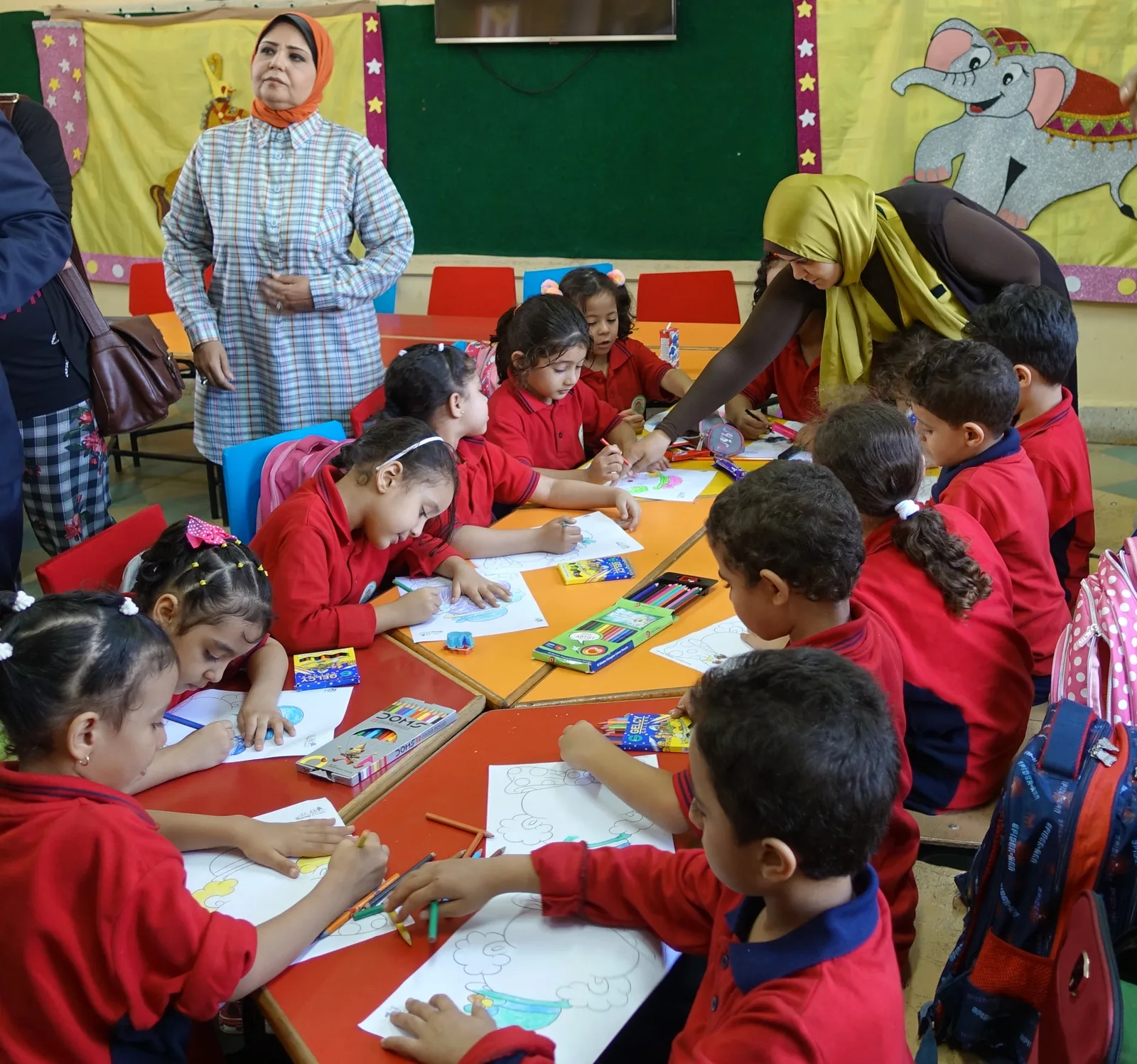
In many schools, minutes before the final bell, a teacher wipes the arithmetic numbers off the blackboard and writes five digits across the middle in bold: 16000. It won't be on the exam, the teacher says, but every pupil should memorize it the way they know their home address. Picture that schoolyard, small children chanting the digits like a song; few of them, and even fewer of their parents, know what lies behind the number. Who answers? When should you call? And what happens after you hang up?
The number is not five separate digits but a single five-digit line: the Child Helpline, run by the National Council for Childhood and Motherhood. It is free, operates twenty-four hours a day, seven days a week, and is staffed by a trained team that takes reports about children at risk in every governorate. It is listed with Child Helpline International, which credits it to the Council and confirms it runs around the clock, and Egypt's page on the European "Better Internet for Kids" programme describes it the same way. Its launch in 2005, and its remit to serve children from one day old to eighteen years, both trace back to an older official summary published on the Sohag governorate portal, citing the Council.
The helpline is rooted in the law itself, not in some passing administrative decision, and we quote its text here from Chapter Eight of Law No. 126 of 2008, which amended the Child Law No. 12 of 1996. Article 97 requires the Council to establish a "General Department for Child Helpline" mandated to receive complaints from children and adults alike, and to handle them so as to rescue the child from any violence, danger or neglect as quickly as possible; the department includes representatives of the ministries of justice, interior, social solidarity and local development. The article grants it real powers: to request that reports it receives be investigated, to follow up on the results, and to send its findings to the competent authorities.
Note the precision of the wording: "from children and adults." The child holds an original right to pick up the phone, not to wait for some adult to deign to speak on their behalf. The person who answers is, in most cases, a specialist trained to listen, not an investigator demanding papers — although the department does include Interior Ministry representatives who handle whatever needs a security response. The helpline's first job is to listen, then to refer the case to whichever body has the tools to address it: the Health Ministry for medical and psychological cases, Social Solidarity for shelter, and Education for violence at school.
But when is calling actually warranted? The law's definition is broader than most people assume. Article 96 states that a child is considered at risk "if found in a condition that threatens the safe upbringing to which they are entitled," then lists the circumstances: that the child's safety, morals, health or life is endangered; that the conditions of their upbringing — at home, at school, or in care institutions — are such as to expose them to danger, neglect, abuse, violence, exploitation or homelessness; that they are deprived, without justification, even partially, of their right to custody by or access to a parent; or that whoever is obligated to support them financially abandons them.
The article adds circumstances many people would not think of: that the child is denied basic education, or that their educational future is put at risk — language that places dropping out of school squarely inside the danger zone rather than in the realm of "private family matters" — and that the child is incited, at home or at school, toward violence, indecent acts, commercial exploitation or harassment. Bullying, children's online safety, and child marriage each have their own article on our site: "Bullying Among Children," "Safe Screens," and "Before Eighteen: What Does Egyptian Law Say About the Marriage of Underage Girls?" — all of them fall within the helpline's remit; the European page cited above says it receives, and refers on, reports of digital harm, including bullying, extortion and threats.
One question still confuses people: 16000, or the police emergency line, 122? The rule is simple — if the danger is imminent, happening right now, 122 is faster, and the ambulance line, 123, if it is a medical emergency. But the law does not treat these as rivals: Article 99 bis states that in cases of imminent danger, the General Department for Child Helpline or the Child Protection Committee, whichever is closer, must take urgent action to move the child from the place of danger to a safe location, calling on law-enforcement officers when needed.
So what happens after you hang up? This is the part most of us never see. A report does not stay locked up in Cairo; it moves along a path the law itself lays out. The same Article 97 establishes, in every governorate, a "General Committee for Child Protection" chaired by the governor, and beneath it, in the jurisdiction of every police station or precinct, a "sub-committee" of five to seven members drawn from security, social work, psychology, medicine and education, whose job is to monitor cases at risk, intervene preventively and therapeutically, and follow up on whatever measures are taken.
Article 99 spells out its work in detail: it receives complaints, and may summon the child, the parents, or whoever is responsible for the child, and hear them out; it must examine the complaint and work to remove its causes, and if it cannot, it refers a report on the case to the General Committee for Child Protection or to the Child Prosecution. Notice the order of these steps: listen, then examine, then try to remove the cause, and only then escalate if necessary. The first step is neither punishment nor an intrusion.
What follows should reassure every parent who fears the word "report." Article 99 bis ranks its measures from the lightest upward: keeping the child within the family, on condition that the parents remove the danger within a set deadline and submit to periodic monitoring; then keeping the child at home while arranging social, educational and health interventions to help the child and the family; then barring contact with whoever threatens the child's safety. Temporary placement with another family or an institution comes only as a recommendation submitted to the competent court. Article 99 bis (a) states that the goal is to keep the child within their family environment as far as possible, and that separation should be a last resort, for the shortest period possible.
At the same time, the law does not leave negligence without a price. Article 98 bis states that anyone who learns that a child is at risk must offer whatever urgent help is within their power to avert or remove the danger; helping is a duty on whoever knows, not a favor they may choose to extend. Article 96 closes its list of circumstances with a penalty: except for the third and fourth cases — unjustified denial of custody or access, and abandonment by whoever is obligated to provide support — anyone who exposes a child to one of these dangers is punished with imprisonment of not less than six months and a fine of between 2,000 and 5,000 Egyptian pounds, or either penalty. These provisions exist to protect children, not to hunt down families.
The real barrier in our homes remains psychological, not legal: families' fear that asking for help will turn into a "scandal" in the neighborhood. Calling the helpline is not an accusation against anyone, nor a police report; it is simply asking advice from a body whose job is to lift danger away from a child. Many cases need nothing more than psychological or legal counseling, or a social intervention that defuses tension inside the home. Asking for help early is kinder than waiting for a problem to outgrow what a household can bear.
The helpline deserves to be used well. Teach your child that this number is not a toy or a prank; a hoax call ties up a line that, at that very moment, another child with no one else to listen might need. Teach the child how to speak on it: their name, governorate and area, what happened, and whether they are somewhere safe. As for the additional channels sometimes mentioned alongside the number, such as WhatsApp or live chat, we prefer not to publish their details before confirming with the operating body that they remain active.
Go back now to that blackboard, and to the five digits in the middle of it. What we're asking of you takes less than two minutes: write 16000 on a piece of paper and stick it on the fridge door; write it on the inside cover of your child's exercise book; save it in your phone as "Child Helpline," not as a bare number the mind forgets in a moment of panic — and next to it, save 122 and 123. Most likely you will never need them, and that is the best outcome we could wish for you. But if a child ever crosses your path one day, and you catch in their eyes something they cannot say out loud, the difference between hesitation and action may simply be that, on one ordinary evening, you wrote down five digits and stuck them on the fridge.
Related Stories
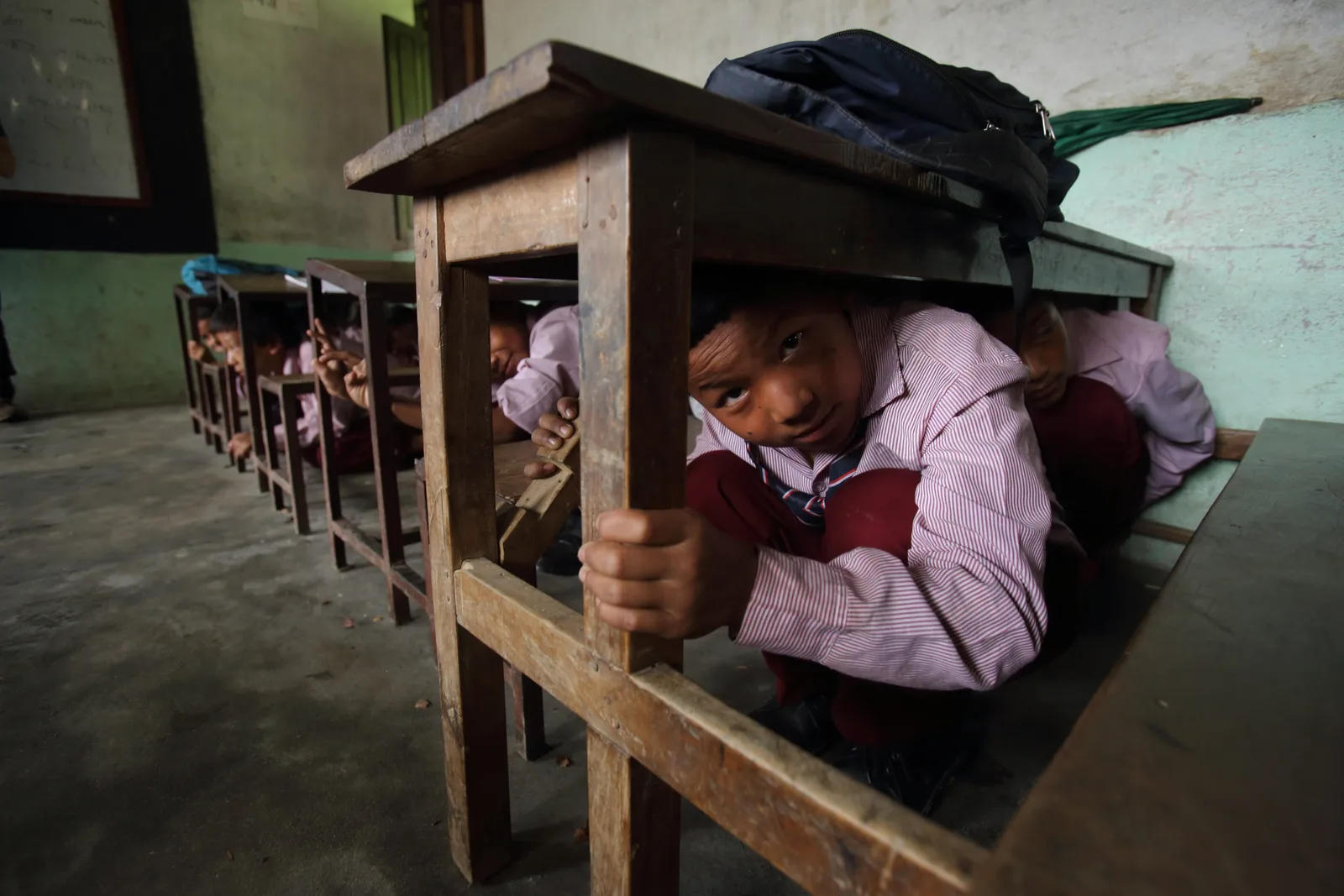
What to Do When the Ground Shakes: The Lesson of October 12, 1992 — 'Drop, Cover, Hold On,' Never Run for the Stairs
Not every victim of the 1992 Dahshur earthquake died under rubble — newspapers at the time reported that many were schoolchildren crushed while fleeing their classrooms. Marking the quake's 34th anniversary and the October 13 International Day for Disaster Reduction, we retell it through sourced figures, explain the international rule that can protect your child in sixty seconds, and offer a five-step family plan to pin behind the door.
October 13, 2026 · 8 min read
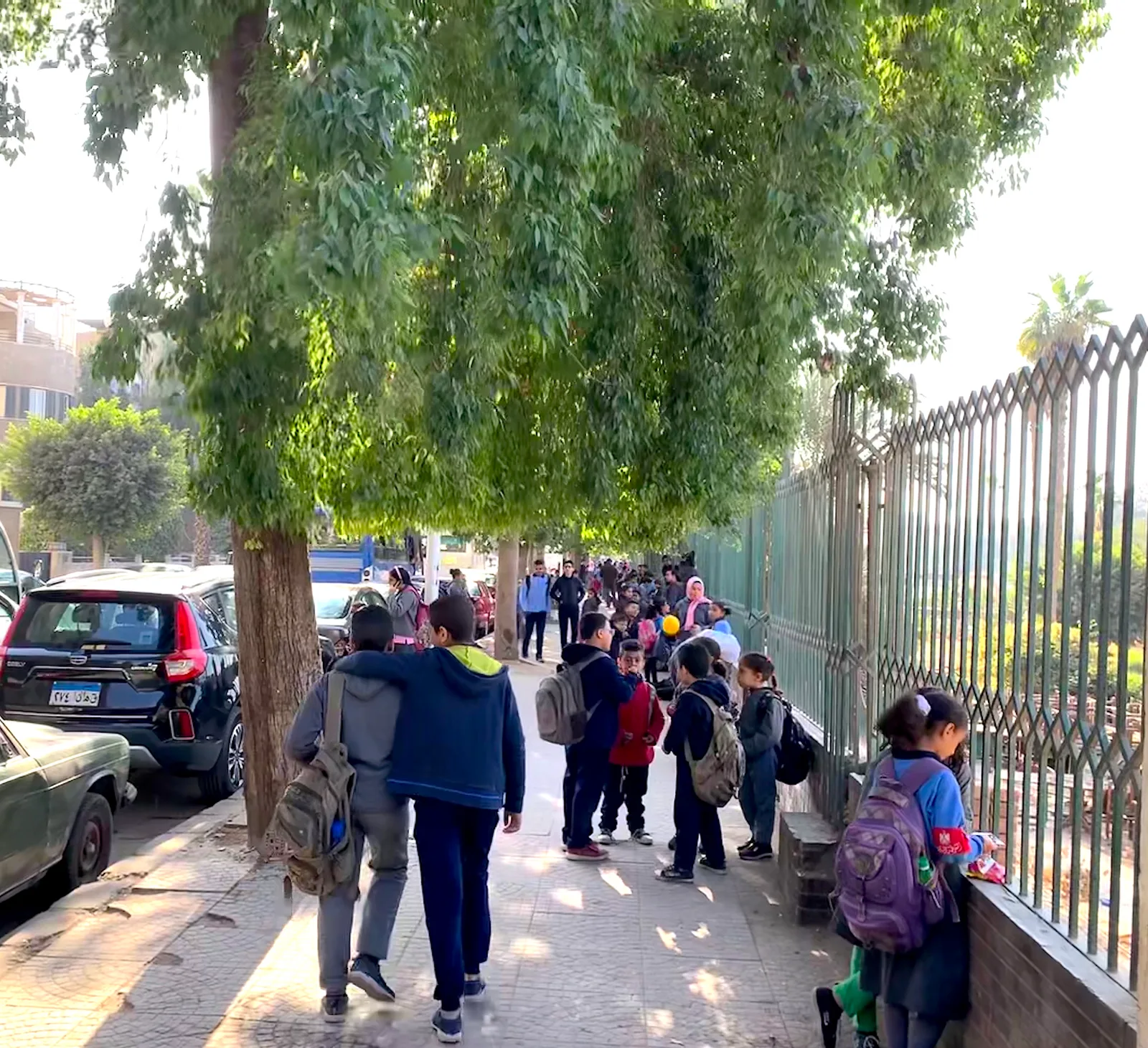
A Bag Heavier Than the Child: How Much Should a School Backpack Weigh, and How Do You Protect Your Child's Back?
With the first week of school, one question is asked in every home: how many kilograms can a child's back take? We explain the 15 per cent rule recommended by the American Academy of Pediatrics, read an Egyptian study from Menouf that found three-quarters of pupils complaining of back pain, then set out a bathroom-scale method and simple daily steps that lighten the load before it turns into a pain that follows the child for life.
September 15, 2026 · 7 min read

Pocket Money, the First Lesson in Economics: How to Teach Your Child the Value of Money and Saving
Before algebra and geometry, your child takes their first economics lessons at the kiosk outside the school gate and in a small piggy bank. A practical guide, age by age: when to start pocket money, how to divide it between spending, saving and giving, and why it should never be tied to school grades or turned into a weapon of punishment.
September 3, 2026 · 7 min read