What to Do When the Ground Shakes: The Lesson of October 12, 1992 — 'Drop, Cover, Hold On,' Never Run for the Stairs
Not every victim of the 1992 Dahshur earthquake died under rubble — newspapers at the time reported that many were schoolchildren crushed while fleeing their classrooms. Marking the quake's 34th anniversary and the October 13 International Day for Disaster Reduction, we retell it through sourced figures, explain the international rule that can protect your child in sixty seconds, and offer a five-step family plan to pin behind the door.
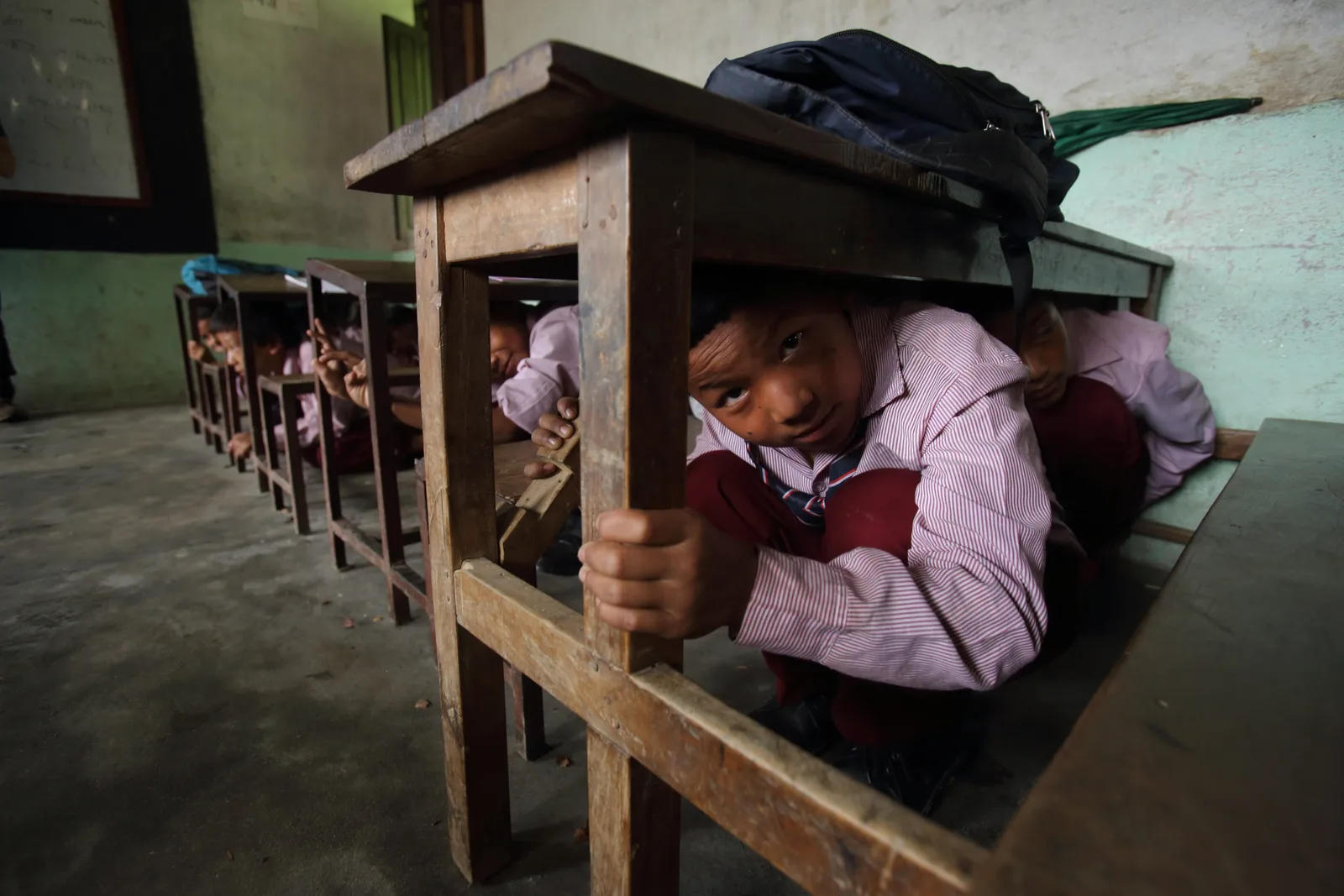
It is third period, the sun slanting through the classroom window, when pupils on the third floor hear a faint sound, as though someone were shaking the door from outside. The hanging lamp sways, the glass rattles in its frame, and one child screams a single word: "Earthquake!" In one second the desks overturn, and thirty children surge toward the door and then the narrow stairwell, schoolbags tripping underfoot as they push past one another. That moment — not the shaking itself — is the most dangerous part of the scene, and that is the lesson of a day Egypt has never forgotten.
On Monday, October 12, 1992, at about 3:09 p.m. according to reports published that day, the ground shook beneath Cairo and Giza for a few seconds. By global standards it was not a massive earthquake, yet the scientific literature describes it as one of the most destructive events in modern Egyptian history — not because of the force of the shaking alone, but because of how fragile the buildings were, and what people themselves did in those few seconds.
The United States Geological Survey's report on the October 12, 1992 Dahshur earthquake in Egypt puts its magnitude at 5.9 on the Richter scale, its focal depth at about 25 kilometers, and notes that the fault rupture never reached the surface. The report places the epicenter near the village of Dahshur, about 18 kilometers south of Cairo, while Egyptian sources and the press of the day described it as southwest of the capital. A scientific review of the National Seismological Network, published in 2020 in the journal of the National Research Institute of Astronomy and Geophysics, puts the magnitude at 5.8; the slight discrepancy is normal, since each scale has its own method. The American report's conclusion is a sentence worth posting in every school: a moderate earthquake is enough to cause widespread destruction when it meets fragile buildings — and it counted roughly 8,300 buildings damaged or collapsed.
The death toll remains disputed to this day, so honesty requires citing each figure to its source rather than giving a single number. The American newspaper The Christian Science Monitor reported on October 14, 1992, citing Egyptian authorities, at least 370 dead and more than 3,000 injured; the same report quoted Red Cross officials in Geneva as saying their Egyptian branch had reported at least 1,000 dead or missing and 10,000 injured. The USGS report cites more than 500 deaths and more than 6,500 injured. The figure, then, was never settled — what nobody disputes is that tens of thousands lost their homes in a single night.
But the figure that concerns this article is of a different kind. The same newspaper wrote that many of the dead were schoolchildren crushed while fleeing their shaking classrooms, and that some of the injuries occurred in the panicked stampedes of residents. Marsad Omran — an Egyptian research initiative focused on urban development and housing — notes, in its published review marking the anniversary, that among the victims were children trampled in stampedes inside three Cairo schools. In other words, the danger was not only a falling ceiling, but a narrow staircase descended by thirty children at once, unable to see where they were putting their feet.
Why does running kill in those seconds? Because the ground moves beneath your feet and you lose your balance and fall; because stairwells are among the most violently shaken parts of any building; because an elevator can trap you between floors if the power cuts out; and because balconies, glass, flowerpots and shop signs are the first things to fall into the street — so anyone who rushes outside trades a roof overhead for a sky that is falling. The few meters between a child's desk and the classroom door are the most dangerous meters in the building when the ground shakes.
That is why safety guidelines around the world — including guidance from the United Nations Office for Disaster Risk Reduction and the global earthquake drill known as ShakeOut — converge on a three-word rule: Drop, Cover, and Hold On. Drop immediately onto your hands and knees before the shaking knocks you down; take Cover under a sturdy desk and shield your head and neck with your arm; and Hold On to its leg until the shaking stops, moving with it if it shifts. If no desk is nearby, press against an interior wall, away from windows and high shelves, and cover your head and neck with both arms.
The rule has exceptions a child can easily remember: someone in bed stays there, turns face down, and covers the head and neck with a pillow; someone in a wheelchair locks the wheels, bends forward, and shields the head with both arms; someone outdoors stays outdoors and moves to open ground, away from buildings, trees and power lines; and someone in a car pulls over to the side, away from bridges, tunnels and power lines, sets the handbrake, and stays inside until the shaking stops. The same guidelines warn that standing in a doorframe is no longer sound advice in modern buildings, since it offers no protection from falling objects.
Only after the shaking stops — after, not during — does evacuation begin. Children leave in a calm line behind the teacher, floor by floor, using the stairs and never the elevator, each holding a schoolbag over the head, heading to an open yard away from walls, trees and columns. International guidelines recommend expecting aftershocks after the main shock, repeating "Drop, Cover, Hold On" with every new tremor, and not re-entering any building that shows cracks or a smell of gas without a specialist's clearance.
What did Egypt learn after that day? The state established the National Seismological Network under the National Research Institute of Astronomy and Geophysics in Helwan. The scientific review published in 2020, marking twenty years of the network's operation, notes that it was created in the aftermath of the October 1992 earthquake and began operating in 1997 with 66 stations, sending their recordings through five regional centers to the main center in Helwan, and that it has recorded tens of thousands of events since it went into service. In Cairo and the new cities, neighborhoods still known today as "Masakin al-Zilzal" (literally, Earthquake Housing) stand as a witness to what happened.
Fairness requires telling both child and parent what science says without hedging: no one can predict a specific earthquake — not its day, its hour, nor its exact location. What science can do is record what happens within seconds, map the most seismically active zones, and set building codes that let a structure sway instead of collapse. That is why the message that circulates on WhatsApp every year claiming "a scientist warns of an earthquake on such-and-such a day" is necessarily false, however convincing it sounds — and forwarding it does nothing but hand your neighbors a free dose of panic.
Because preparedness is the only alternative to prediction, the United Nations General Assembly, in Resolution 64/200 of December 21, 2009, designated October 13 of every year as an International Day for Disaster Reduction, later renamed the International Day for Disaster Risk Reduction. On the third Thursday of that same month, the global ShakeOut earthquake drill holds its annual rehearsal of "Drop, Cover, Hold On," lasting no more than a minute. In Egypt, the Ministry of Education issued instructions to schools in February 2023 — as reported in the Egyptian press — to stay inside the building and not go outside during the shaking, to take cover under sturdy desks while protecting the head and upper body, to press against interior wall corners where no desk is available, and then to evacuate in an orderly manner, floor by floor, after the shaking stops, to avoid a stampede. As far as we know, and as of this writing, we have found no published decree requiring every Egyptian school to hold an annual one-minute drill — so what follows is offered as international guidance and a family plan.
The home plan has five steps, written on a single page and pinned behind the apartment door. First: a safe corner in every room — a sturdy table or an interior wall away from glass — that the children can name. Second: securing anything that could fall — the tall wardrobe, the mirror, the water heater, the shelf above the bed. Third: a small bag by the door holding water, a flashlight, a whistle and copies of the family's papers. Fourth: an agreed meeting point in front of the house, and the number of a relative living farther away that everyone can call if the local network is jammed. Fifth: a sixty-second drill twice a year, in which the father knows where the gas and electricity shut-offs are, and the child knows the game is called Drop, Cover, Hold On.
Now return to that classroom on the third floor. If the scene repeated itself after the children had practiced for one minute a year, something different would happen: the children slide under their desks, cover their heads and necks, count silently until the glass falls still, then walk out in a calm line behind their teacher to the yard. No screaming, no stampede on the stairs. That is the entire difference one minute can make — the lesson Egypt paid for dearly thirty-four years ago. Pin the page behind the door tonight, read it with your children once, then rest easy and sleep: we are not trying to frighten anyone. We are only practicing.
Related Stories
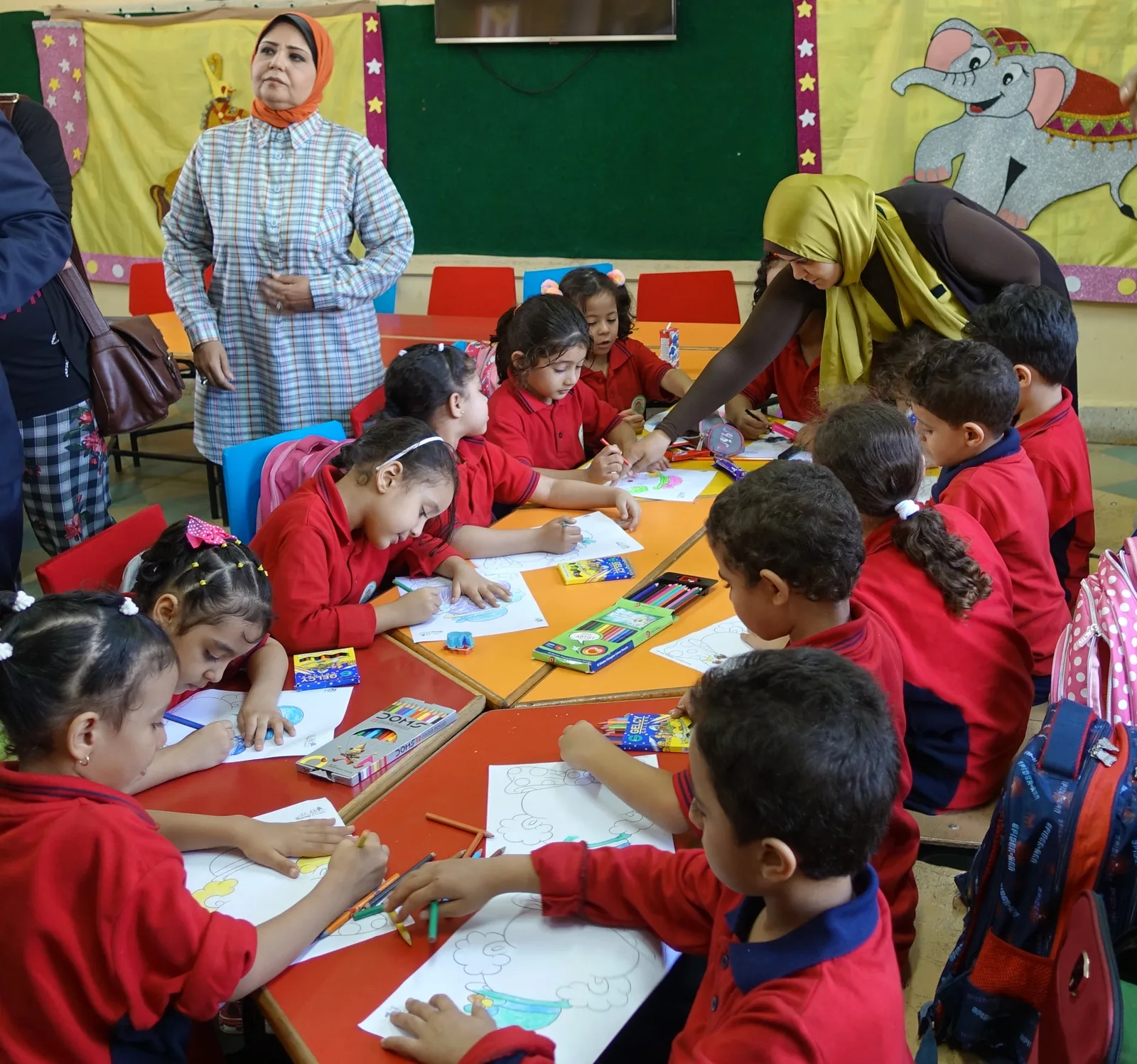
16000: The Number Every Child Should Know — How Egypt's Child Helpline Works and When to Call
A free five-digit line that runs day and night, yet few know who answers it, how it differs from the police emergency line 122, or what happens after the call ends. We read the definition of "a child at risk" in Article 96 of the Child Law, and trace, step by step, where a report travels — all the way to the Child Protection Committees.
October 16, 2026 · 7 min read
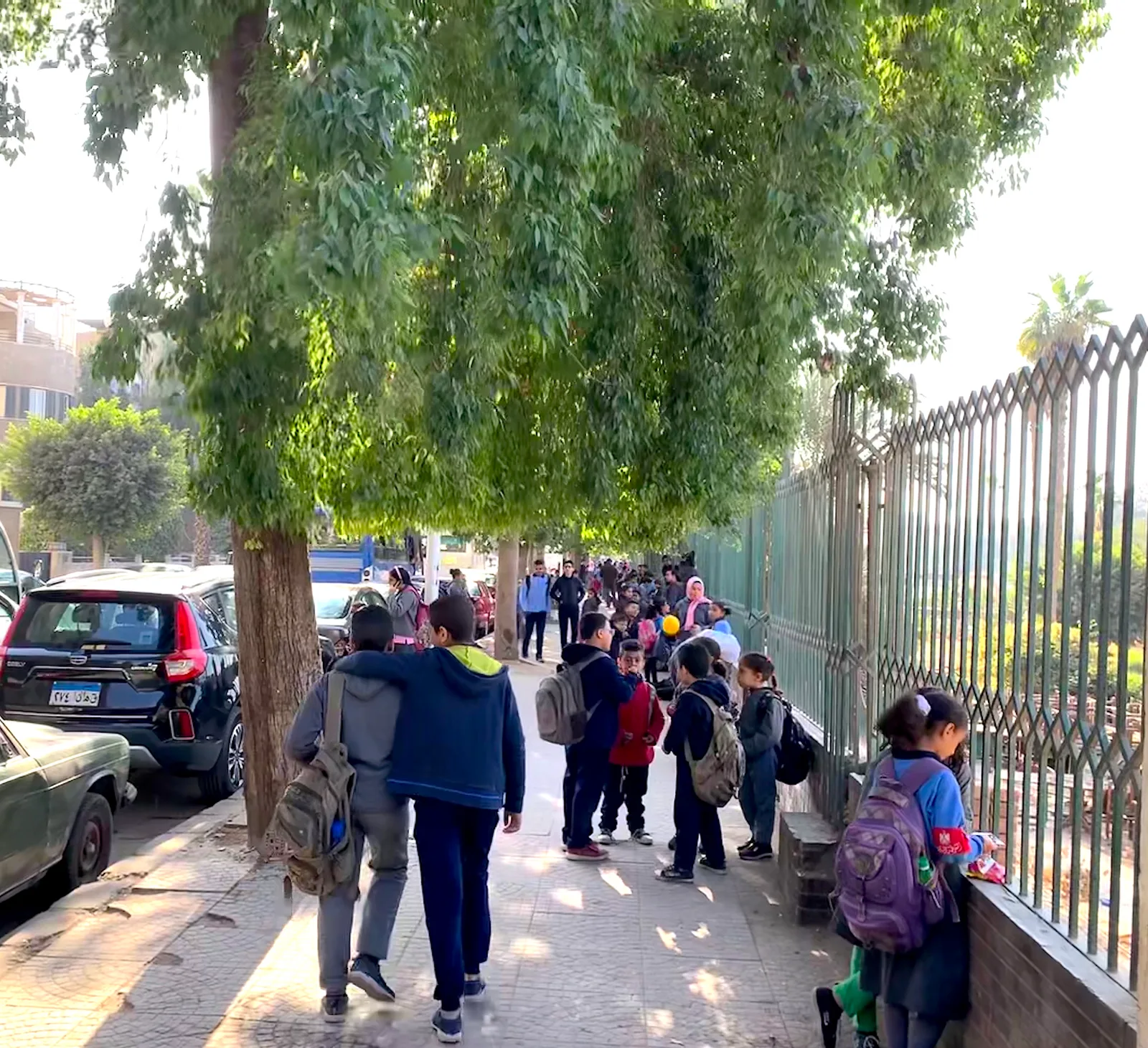
A Bag Heavier Than the Child: How Much Should a School Backpack Weigh, and How Do You Protect Your Child's Back?
With the first week of school, one question is asked in every home: how many kilograms can a child's back take? We explain the 15 per cent rule recommended by the American Academy of Pediatrics, read an Egyptian study from Menouf that found three-quarters of pupils complaining of back pain, then set out a bathroom-scale method and simple daily steps that lighten the load before it turns into a pain that follows the child for life.
September 15, 2026 · 7 min read

Pocket Money, the First Lesson in Economics: How to Teach Your Child the Value of Money and Saving
Before algebra and geometry, your child takes their first economics lessons at the kiosk outside the school gate and in a small piggy bank. A practical guide, age by age: when to start pocket money, how to divide it between spending, saving and giving, and why it should never be tied to school grades or turned into a weapon of punishment.
September 3, 2026 · 7 min read