A Bag Heavier Than the Child: How Much Should a School Backpack Weigh, and How Do You Protect Your Child's Back?
With the first week of school, one question is asked in every home: how many kilograms can a child's back take? We explain the 15 per cent rule recommended by the American Academy of Pediatrics, read an Egyptian study from Menouf that found three-quarters of pupils complaining of back pain, then set out a bathroom-scale method and simple daily steps that lighten the load before it turns into a pain that follows the child for life.
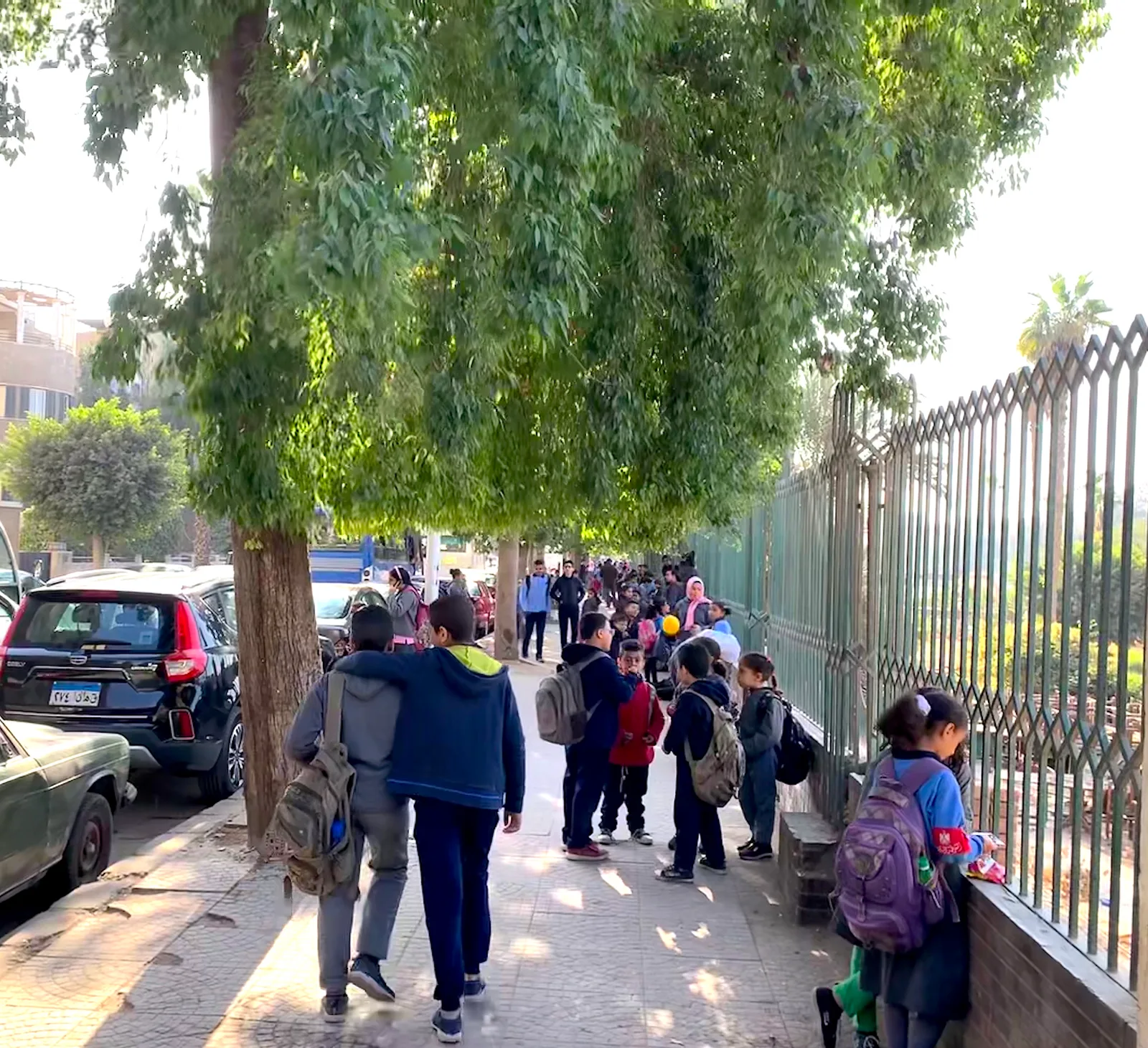
On the third floor of an apartment block on a side street, a boy in the third year of primary school stands on the first step of the staircase, swaying slightly forward as though someone were pulling him by the shoulders. On his back is a bulging backpack, its colour still glossy because it is new, its bulk covering him almost from the nape of his neck to below his waist. His mother comes down behind him, lifts the bag with one hand, sighs at its weight, and then carries it herself all the way to the classroom door. It is a scene repeated every morning in thousands of Egyptian homes during the first week of the school year, and it leaves behind a single question with no clear answer: how many kilograms can this child's back bear?
The short answer is that medicine does not give a fixed figure in kilograms, but a percentage of the child's own weight. A four-kilogram bag may be reasonable for a child who weighs thirty kilograms and far too heavy for one who weighs twenty. So when we ask "how much does the bag weigh?", the right question is really "how much does the bag weigh relative to my child's weight?"
The American Academy of Pediatrics, one of the references paediatricians around the world rely on most, says in its published guidance for families that a school backpack should weigh no more than fifteen per cent of the child's body weight. In figures: a child who weighs twenty-five kilograms should carry no more than three and three-quarter kilograms, and a child who weighs thirty kilograms has a ceiling of four and a half. The Academy adds a simple sign that needs no scale: if the child has to lean forward to support the weight of the bag, the bag is heavier than it should be. Which is exactly what the boy on the stairs was doing.
And the problem is not far from home. In 2017, an Egyptian study was published covering 598 pupils at the preparatory stage, Egypt's middle school, aged between twelve and fifteen, in ten government schools, rural and urban, in the Menouf district of Menoufia governorate. The researchers weighed the bags and found the average came to 14.36 per cent of body weight, almost on the edge of the limit recommended by the American Academy. More importantly, 74.1 per cent of those pupils said they had suffered back pain, and girls were roughly five times as likely as boys to report it.
What lies behind these figures deserves reflection. When the average sits close to the maximum, a large share of pupils are carrying above it. The sample here was drawn from preparatory pupils, children at an age when the spine is still growing and the bones have not yet fully matured. Younger primary-school children, like our boy on the stairs, were not covered by the study, as far as we know, even though their lighter bodies make the same percentage weigh all the more heavily on their backs.
In 2025, the Journal of Orthopaedic Surgery and Research, a peer-reviewed scientific journal, published a study of 384 pupils aged seven to thirteen in primary schools in Omdurman locality in Sudan. The study notes that the internationally accepted standard for backpack weight is that it should not exceed ten to fifteen per cent of body weight. More than half the pupils in that sample (200 of 384, or about 52 per cent) carried bags exceeding fifteen per cent of their weight, and not one of them carried a bag below ten per cent; at the same time, about half as well (52.1 per cent) complained of back pain, and the researchers found a statistical association between the pain and bags exceeding the fifteen per cent threshold. The sentence from that study that ought to stay in every parent's mind is that a heavy backpack may cause back pain in childhood, and that such pain raises the risk of chronic back pain in adulthood. This is not a passing ache at the age of nine; it may be the start of a much longer story.
A cross-sectional study published in 2024 on three hundred pupils in Toronto, Canada, aged eleven to eighteen and not yet skeletally mature, shows the relationship in an almost graded fashion: among those carrying less than ten per cent of their body weight, 21.1 per cent complained of pain; among those carrying between ten and twenty per cent, about half did, 50.6 per cent; and among those exceeding twenty per cent, eighty per cent complained. The researchers concluded that the upper limit some guidelines allow, twenty per cent, may be higher than it should be, especially for younger children.
Here a moment of honesty is required. As of the time of writing, we have found no official publication from Egypt's Ministry of Education setting a maximum weight for the school bag, and so we attribute no figure to the ministry. The ten-to-fifteen per cent range presented here is an international medical recommendation, not a legal rule that anyone is held to account for. Nor is what we write here a medical diagnosis for any particular child; it is general information to help a family ask the right question.
So how does a family know where its child stands in relation to this percentage? The method is simpler than it sounds and needs nothing more than an ordinary bathroom scale. The child stands on the scale without the bag and the weight is noted; then he stands with the bag on his back as he carries it in the morning, and the first figure is subtracted from the second. If the child weighs thirty kilograms and the bag five, the ratio is roughly seventeen per cent, above the limit. Repeating the exercise once every two weeks is enough, because a school bag grows fatter as the term goes on without anyone noticing.
Then comes the manner of carrying, which matters no less than the weight itself. The American Academy of Pediatrics recommends two wide, padded, adjustable shoulder straps, and using both straps always, never one strap over one shoulder, because a load on one side tilts the spine. It recommends placing the heaviest books in the compartment closest to the back and distributing the rest evenly between right and left. A waist or chest strap, if there is one, brings the bag closer to the body and spreads the weight. As for position, the bag should sit in the middle of the back, from waist level to about three to five centimetres below the shoulders, and should not hang more than ten centimetres below the waistline. The low-slung bag that older boys think looks stylish is the worst possible position for the back.
The third step is the cheapest and the most neglected: lightening what is in the bag. Every evening, with the child rather than instead of him, the bag is emptied onto the table and repacked with tomorrow's books only, according to the weekly timetable stuck to the fridge, not with the whole week's books "just in case", with one simple question about each book: will you need it tomorrow? The water bottle is filled at school where possible rather than carried full, and extra toys and storybooks stay at home. If the school allows wheeled bags or provides lockers for leaving some books, that is a demand worth raising at the parents' meeting, along with asking teachers about keeping copies of the largest books in the classroom.
And when does the matter shift from household organisation to a visit to the doctor? When back pain lasts weeks rather than days, or wakes the child at night, or comes with tingling in the arms, or when the family notices that one shoulder sits higher than the other or that the child stands tilted even without a bag. We do not diagnose these signs here, but they are reason enough to take the child to an orthopaedic specialist or a paediatrician, because some cases of spinal curvature appear at precisely this age and have nothing to do with the bag at all, and a doctor needs to see them early.
Back to the mother on the stairs. Carrying her son's bag to the classroom door is genuine tenderness, but it does not solve the problem: the child will carry the same bag in the morning line-up ["tabour" in Arabic; the assembly children stand in before lessons begin in Egyptian schools], between lessons, and on the way home. The real solution starts tonight at the kitchen table: the bathroom scale, the weekly timetable, and the question "will you need it tomorrow?" In a few years the child will grow up and leave the bag behind, but the back that carried it will stay with him for the rest of his life.
Related Stories

Pocket Money, the First Lesson in Economics: How to Teach Your Child the Value of Money and Saving
Before algebra and geometry, your child takes their first economics lessons at the kiosk outside the school gate and in a small piggy bank. A practical guide, age by age: when to start pocket money, how to divide it between spending, saving and giving, and why it should never be tied to school grades or turned into a weapon of punishment.
September 3, 2026 · 7 min read
Bullying Among Children: How to Protect Your Child — Whether Victim, Bystander or Bully
When does a playground scuffle become bullying? A practical guide for parents: the silent signs a child hides, the safe conversation that opens him up, documented steps for approaching the school, and real alternatives to the advice to "hit back" — plus what to do when your own child is the bully, without humiliation or denial.
August 27, 2026 · 8 min read

Safe Screens: A Calm, Practical Guide to Children's Internet Safety
Children are safer online when parents talk with them than when they only monitor. From parental controls and platform age rules to the strangers conversation and Egypt's 16000 child helpline, an evidence-based family guide without scare stories.
August 18, 2026 · 5 min read