Pocket Money, the First Lesson in Economics: How to Teach Your Child the Value of Money and Saving
Before algebra and geometry, your child takes their first economics lessons at the kiosk outside the school gate and in a small piggy bank. A practical guide, age by age: when to start pocket money, how to divide it between spending, saving and giving, and why it should never be tied to school grades or turned into a weapon of punishment.
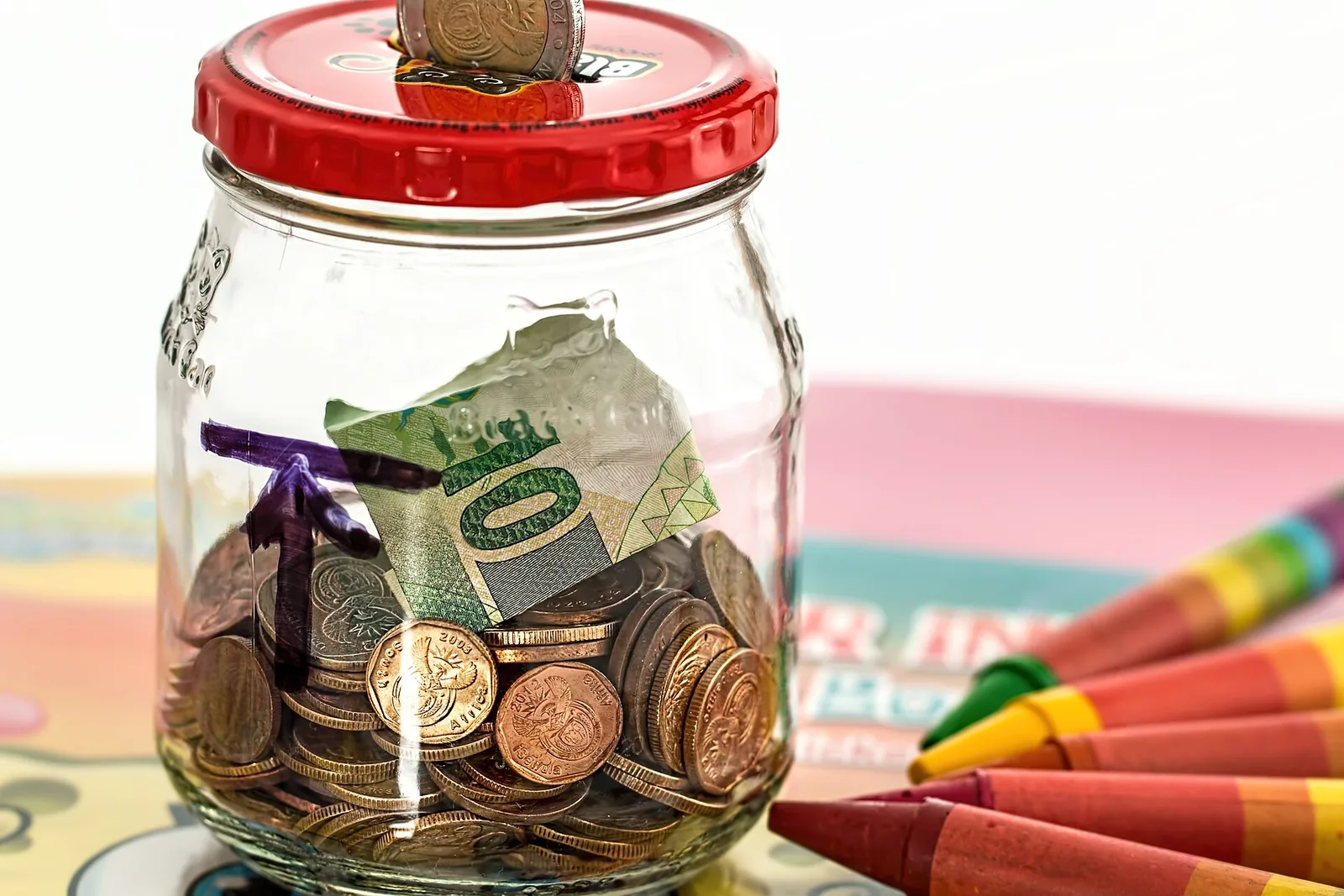
Stop for a moment outside any kiosk near a primary school and watch a child clutching a coin, eyes darting along the shelves of sweets. This small scene we walk past every morning without noticing is, in truth, the first economics lecture of a human life: limited resources, endless wants, and a decision that has to be made right now. School will teach them addition and subtraction, but pocket money alone teaches them what a choice is and what it costs. That is why the way you handle your child's pocket money today may well be the most important financial lesson they receive before they grow up.
So when do we begin? The rule is less a particular age than a set of signs of readiness: once a child can count, understands that money is exchanged for things, and starts asking to do the buying themselves, they are ready for the experiment — and that usually coincides with the first years of school. At this age, pocket money rests on three conditions, and it does not work without them: it must be small enough to suit the child's age, regular on a fixed day that never slips, and predictable rather than hostage to an adult's mood. A young child is given money week by week, because a month is an eternity in their sense of time; as they grow towards adolescence, the cycle widens gradually so that they learn to plan over a longer horizon. Consistency matters more here than the amount, because what we are building is not a fortune but a habit.
The first thing a child learns from pocket money is that it should not all go in one direction. Teach them from the very start the famous three-way split: a share for spending, to be used freely; a share for saving, set aside for a more distant goal; and a share for giving, to someone in need or to a good cause the child chooses themselves. Make it three piggy banks, or three coloured envelopes, and let the child share the money out with their own hands — an abstract idea only settles in a small head once the fingers have touched it. Through this simple division, and without a single sermon, a child absorbs three concepts that trip up a great many adults: conscious spending, planning for the future, and responsibility towards others.
The piggy bank cannot do the job on its own: a piggy bank without a goal is a silent container that is soon forgotten. Sit down with your child and agree on something they genuinely want and cannot buy out of a single week's money — a toy, a storybook, a small bicycle, anything that belongs to them and not to you. Stick a picture of the goal on the piggy bank and let them feel it grow heavier week after week; that accumulating weight in their hands is their first physical encounter with the idea that patience pays. And on the day they buy that goal with money they gathered themselves, they will discover a joy no ready-made gift can give: the joy of achievement, the psychological foundation of every act of saving to come.
On the way to that goal, your child will run into the question that governs the wealth of nations and household budgets alike: what is the difference between "I need" and "I want"? Do not hand them a definition; turn it into a running game at the supermarket and in front of shop windows. Is a bottle of water a need or a want? What about a packet of crisps? What about new shoes when the old ones are still perfectly good? Let them answer, get it wrong and argue back — the aim is not the correct answer but the habit of asking before buying. A child who pauses for a single second to ask, "do I really need this?" has acquired an immunity that many adults would envy, adults drowning in instalments for things they never needed at all.
Then comes the moment that tests this whole handsome structure: your child spends the entire week's money on the first day, and then stands in front of you pleading for a top-up. This is exactly where the lesson is either made or demolished. Be gentle with them, listen — and then hold firm: no money before its date, and no advances handed out lightly. A small mistake now costs a few days without sweets; the very same mistake in adulthood can cost debts, loans and sleepless nights. Leave your child the luxury of getting it wrong while they are still small: it is the cheapest tuition they will ever pay.
Here a first warning is needed, one many parents walk into with the best of intentions: tying pocket money to school grades. When you pay your child for good marks, you are telling them, without meaning to, that studying is a transaction and that knowledge is a commodity with no worth of its own — and the day the payments stop, so does the effort. Many educators distinguish between motivation that comes from within and motivation bought from outside, and the second eats the first the way rust eats iron. Celebrate achievement with pride, with a hug, with a family outing, and keep pocket money a standing right with no connection to an end-of-year report card. The child who learns in order to understand will always outrun the child who learns in order to get paid.
The second warning is graver still: never make pocket money a weapon of punishment. A child whose allowance is cut at every slip learns one poisoned lesson — that money is an instrument of control in the hands of whoever is stronger — and may one day use it on those weaker than them, or submit to it from those stronger. Behaviour has its own appropriate consequences: a conversation, a temporary loss of screen time, putting right what was damaged. Pocket money, by contrast, is a standing contract between the two of you, to be honoured as contracts are honoured. Draw a line, too, between the basic household chores a child does simply because they belong to the family, with no payment attached, and exceptional extra tasks they may earn from if they wish — so that the whole home does not turn into a marketplace.
Perhaps the most valuable thing pocket money grows in a child is a hidden muscle called delayed gratification. In a famous psychological experiment conducted decades ago at Stanford University, young children were offered a choice between one sweet to eat immediately and a larger reward for those who could wait a little. Setting aside the academic debate that followed about what the experiment really shows and how far its conclusions stretch, its simple idea still holds true as a lesson in upbringing: patience is a skill to be trained, not a temperament one is born with. And a piggy bank with a goal is the longest and loveliest exercise in delayed gratification there is — a small daily temptation resisted for the sake of a large, deferred joy. Every time your child succeeds at that kind of waiting, they grow readier to resist temptations far heavier than a sweet.
And because children learn through play rather than lectures, open a small market for them at home. The old game of "shop" is still the smartest economics school a house can offer: empty boxes on a shelf, prices written on scraps of paper, one child selling and another buying, haggling and counting out the change. On real shopping trips, put them in charge of comparison: which pack is better value? What comes off the list if we want to save? Let them help plan a family outing on a budget fixed in advance, dividing it between transport, food and fun. And board games built around buying, selling and property make a family evening that plants financial thinking while the players believe they are merely having fun.
Once your child reaches the threshold of adolescence, it is time to widen the arena. Hand over greater responsibility: the clothing budget for a whole season, say, or a monthly allowance they manage themselves from the first day to the last — and accept that they will stumble in the early months, because that is part of the curriculum, not a departure from it. Introduce them to the idea of a bank account and to the notion that money has a home other than a pocket or a piggy bank, and open a frank conversation about the advertising that hunts them on their screen and the peer pressure that makes them buy in order to fit in rather than because they need anything. Encourage them, within the limits of their age and their country's rules, to take a simple summer job: a coin earned by the sweat of one's own hands weighs more in a teenager's mind than many times as much handed over as a gift.
After all of that, one question remains, the one most of us dodge: what model are we ourselves putting on display before those small eyes? A child learns nothing from your talk about saving; they learn from the sight of you shopping, and from the tone of the house whenever money is mentioned — is it a calm subject to be discussed, or the spark of a quarrel that puts the lights out? Involve them in small decisions, said out loud: we will put off buying this because we are saving for that; we will compare before we choose. A home that speaks about money calmly and clearly raises children who handle it calmly and clearly; a home that turns it into a terrifying secret or a permanent battle bequeaths them anxiety about it no matter how much they come to own.
In the end, years from now, your child will not remember the price of the sweets they bought or the toy they saved up for, but they will carry inside them everything it shaped: a hand used to dividing before it spends, a mind that asks "need or want?" before it reaches out, and a heart that knows others have a share in what it owns. So start small and start regular; split the money three ways; give the piggy bank a goal; let the small mistakes happen; keep money well away from grades and punishment; play the shop game together; and be the lesson before you deliver it. Pocket money is not cash handed over — it is an early daily rehearsal for a whole economic life, and the best thing you can leave your child is not what is in your pocket, but what you have planted in the way they think.
Related Stories
16000: The Number Every Child Should Know — How Egypt's Child Helpline Works and When to Call
A free five-digit line that runs day and night, yet few know who answers it, how it differs from the police emergency line 122, or what happens after the call ends. We read the definition of "a child at risk" in Article 96 of the Child Law, and trace, step by step, where a report travels — all the way to the Child Protection Committees.
October 16, 2026 · 7 min read
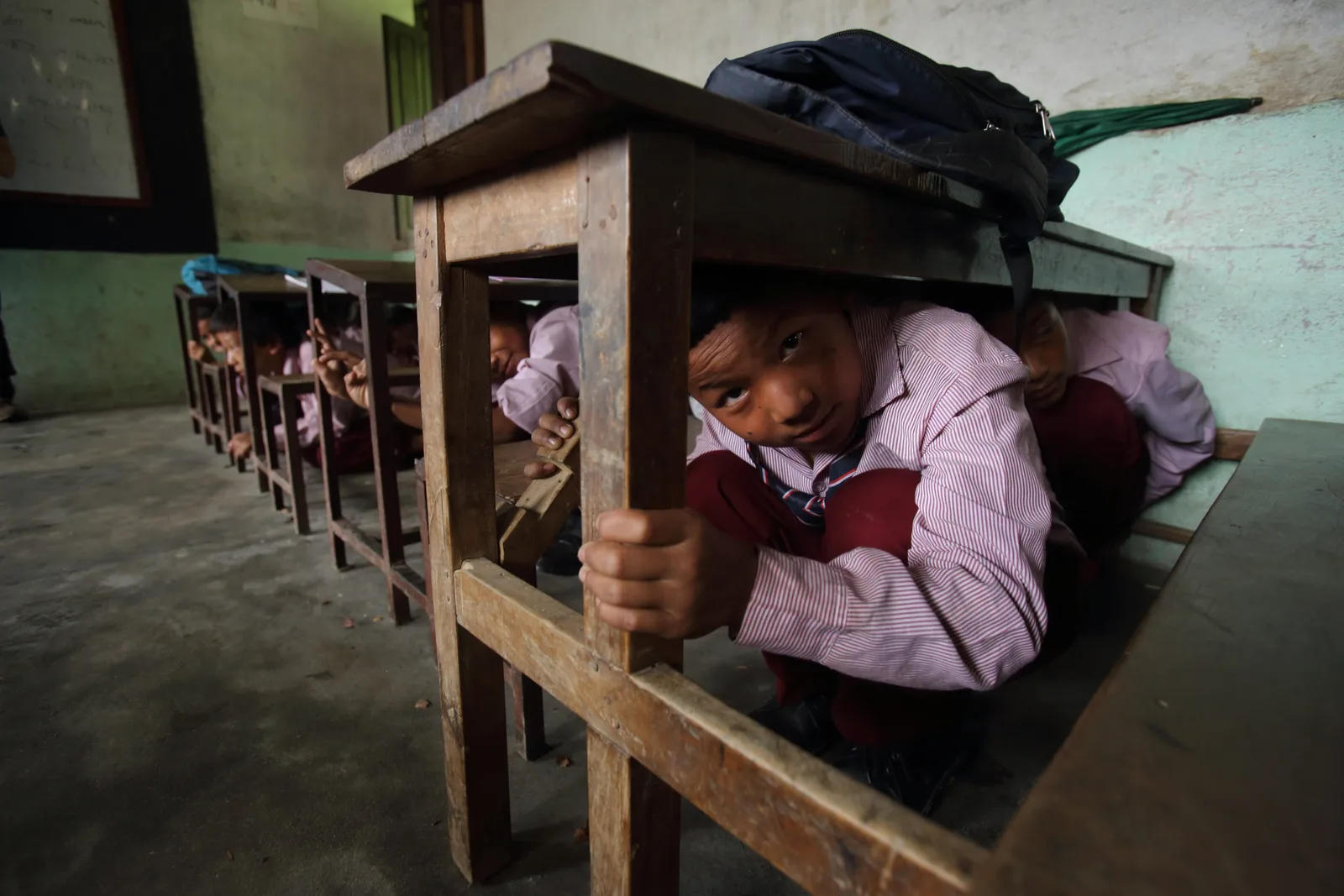
What to Do When the Ground Shakes: The Lesson of October 12, 1992 — 'Drop, Cover, Hold On,' Never Run for the Stairs
Not every victim of the 1992 Dahshur earthquake died under rubble — newspapers at the time reported that many were schoolchildren crushed while fleeing their classrooms. Marking the quake's 34th anniversary and the October 13 International Day for Disaster Reduction, we retell it through sourced figures, explain the international rule that can protect your child in sixty seconds, and offer a five-step family plan to pin behind the door.
October 13, 2026 · 8 min read
A Bag Heavier Than the Child: How Much Should a School Backpack Weigh, and How Do You Protect Your Child's Back?
With the first week of school, one question is asked in every home: how many kilograms can a child's back take? We explain the 15 per cent rule recommended by the American Academy of Pediatrics, read an Egyptian study from Menouf that found three-quarters of pupils complaining of back pain, then set out a bathroom-scale method and simple daily steps that lighten the load before it turns into a pain that follows the child for life.
September 15, 2026 · 7 min read