No, Egypt's August 2026 Public Salaries Are Not Being Paid Early — Payday Starts August 23
Viral posts claimed Egypt would pay August 2026 public-sector salaries early. The Finance Ministry says otherwise: it is sticking to the announced schedule, with deposits for some 5.5 million state employees starting August 23.

The claim: Over the past several days, viral posts and recycled headlines have asserted that Egypt's August 2026 public-sector salaries will be paid ahead of schedule, with deposits supposedly landing in employees' accounts within days. Some versions presented this as a confirmed government decision.
The spread: The claim circulated in near-identical wording across pages and sites that specialize in salary and allowance news. Even widely read outlets such as El-Watan and El-Dostor ran question-mark headlines — will August salaries be paid early? — a sign of how far the question had traveled among state employees.
Step one of verification: what has the Ministry of Finance actually announced? According to Al-Ahram Gate and Youm7, the ministry begins paying August salaries on the 23rd of the month, covering roughly 5.5 million employees across ministries, authorities, and other state bodies.
Step two: the denial itself. Several news outlets reported the ministry's clarification that reports of an early payout "have no basis," and that disbursement will follow the pre-announced timetable with no advancement.
Step three: the grain of truth. July's salaries genuinely were paid early, starting July 20, as reported by Masrawy and El-Dostor among others — the first payroll to carry the new wage-improvement package that coincided with the start of fiscal year 2026/2027. That was a one-off circumstance tied to the package, not a new monthly norm.
The schedule in detail: per Al-Ahram Gate and Youm7, the ministry has arranged with banks to deposit salaries starting August 23, available for withdrawal throughout the day via ATMs, as well as through bank branches and Egypt Post offices.
Verdict: False. There is no official announcement of early payment for August 2026. The denial comes from the very body responsible for payroll, and the only announced date is August 23.
What employees will actually notice in August's paycheck is not an earlier date but the continuation of increases in force since July: a minimum monthly income of EGP 8,000, a periodic raise of 12 percent of the job wage for civil-service-law employees and 15 percent of base salary for others, and an additional monthly incentive of EGP 750, according to Youm7's reporting on the wage law ratified in July.
How to verify salary news yourself: start with the source. Payment dates are issued by the Ministry of Finance in official statements that national papers and major outlets carry in nearly identical wording. Any story lacking explicit attribution to the ministry, or to a named official within it, deserves skepticism.
Check the publication date, too: many salary rumors are recycled headlines from earlier months when early payment really did happen. And watch for question-mark headlines ("Paid early?") that answer "no" in the body — stripped of context as they are shared onward, they mutate into a confirmation nobody ever gave.
Why do salary rumors return almost every month? The answer lies in economics before media. Under sustained cost-of-living pressure, payday becomes an intensely sensitive piece of information that millions of employees search for as mid-month approaches. That enormous demand creates a market for fast content, where a confident headline promising an early payout or a surprise raise earns far more engagement than the unglamorous truth: salaries are on schedule.
July's genuine early payment gave the August rumor a veneer of plausibility — a hallmark of the rumors that travel farthest: an old, true seed planted in a new, false context. What is confirmed, for now, is that August 2026 salary deposits begin on August 23; any earlier date has no official basis.
Related Stories

"Cough Hard to Survive a Heart Attack Alone": A WhatsApp Message Egyptian Homes Pass Around, and Medicine Says Otherwise
A chain message reaches nearly every phone in Egypt: if you have a heart attack alone, cough hard and in rhythm until your heart steadies. The American Heart Association flatly rejects "cough CPR," the message confuses a heart attack with cardiac arrest, and every minute spent coughing instead of calling the free 123 ambulance line is taken from the patient's life. This is what medicine says.
September 28, 2026 · 7 min read

"Reading in Dim Light Ruins Your Eyes": What Ophthalmologists Confirm, and the Risk Parents Really Overlook
With evening study sessions back under a single bulb, the old warning returns: "You'll go blind." We checked the claim word for word and found ophthalmologists of one mind: dim light and sitting close to the screen tire the eyes; they do not damage them. But behind that reassurance stands a real danger most households overlook, and regional estimates put Egypt's children at the top of it.
September 19, 2026 · 7 min read
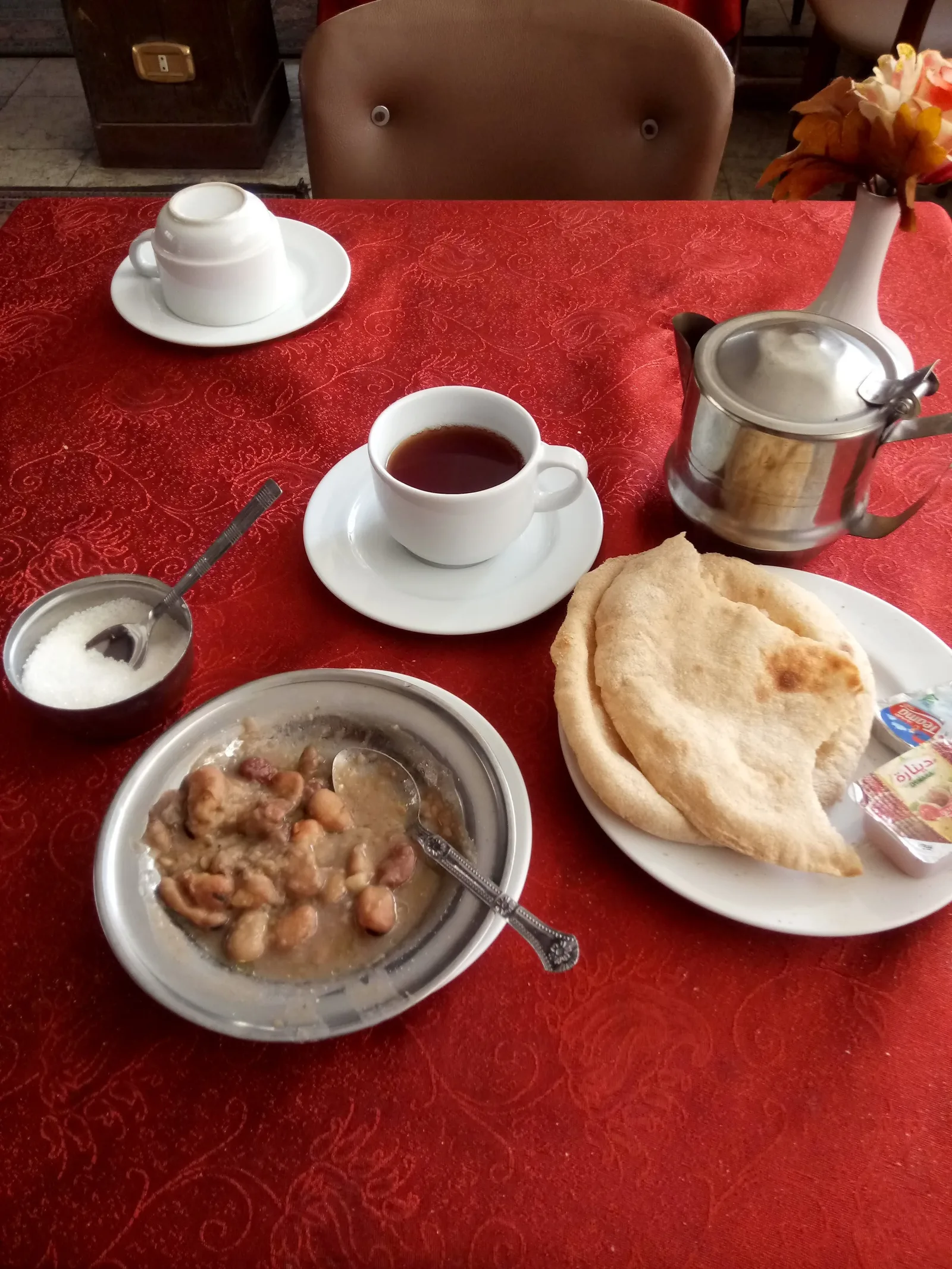
“Tea After Meals Blocks Iron”: The Mothers’ Warning Science Confirmed, and a Simple Fix
It is rare for a warning from the Egyptian kitchen to be backed so clearly by the laboratory. Black tea taken with a meal cuts the absorption of iron from bread, lentils and vegetables by startling margins, and milk does not rescue it. But the answer is not to banish the tea tray; it is to hold it back by a single hour, and to put a wedge of lemon on the table. We lay out the evidence, and why it matters for Egypt in particular.
September 10, 2026 · 7 min read