Umm Kulthum: The Voice That Still Holds the Arab World Together
From a small Delta village to the title 'Star of the East', Umm Kulthum created a phenomenon never repeated: an entire nation that stopped to listen. This is the story of a voice that became a national institution — and still fills cafés and airwaves half a century on.
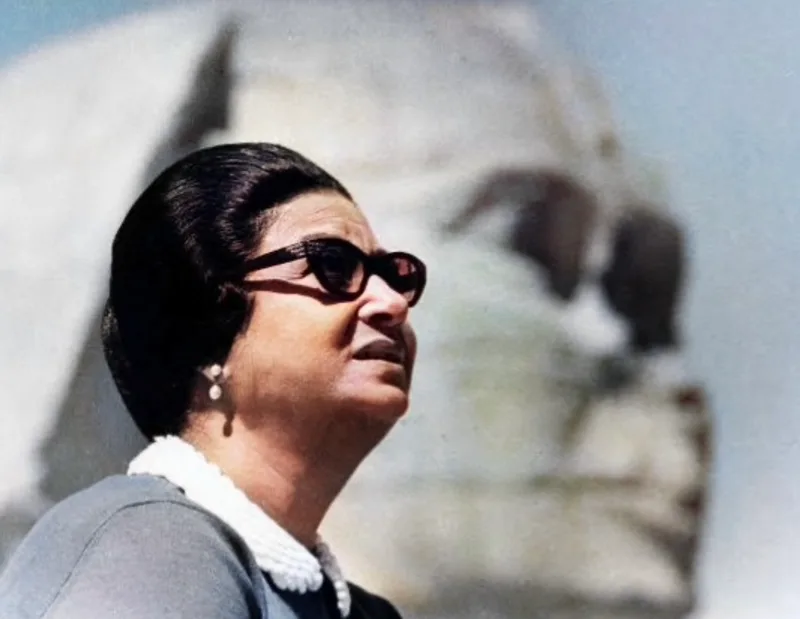
In February 1975, Cairo witnessed one of the largest funerals in its modern history. Millions poured into the streets to bid farewell to a woman who had never ruled and never held office — she had sung. Mourners wrested Umm Kulthum's bier from its official route and carried it on their shoulders for hours through the city, as if all of Egypt wanted to bear her voice to its resting place with its own hands.
The story began in the village of Tamay al-Zahayra in Dakahlia governorate, where Umm Kulthum was born to a modest family around the opening years of the twentieth century — her exact birth date has always been disputed. Her father was the village imam and its religious chanter, and when he sensed an extraordinary power in his small daughter's voice, he brought her into his inshad troupe; in her earliest performances she sang dressed as a boy, in deference to the rural conventions of the time.
In the early 1920s the family moved to Cairo, where artistic life was at the boil. There the country girl refined her gift under the great composers and poets of the day, mastering the modal system of Arabic music and the arts of classical language. Within a few years she was transformed from a village chanter into a singer who rivalled the capital's established stars — and then surpassed them, one by one.
With the spread of radio, the true Kulthum phenomenon was born: the concert on the first Thursday of every month. For decades, the broadcast of her monthly performance emptied the streets of Cairo, Beirut, Baghdad and Casablanca, as families gathered around radio sets from the Atlantic to the Gulf. What she offered was not a song in the familiar sense but a journey — a single piece could stretch beyond an hour, the Lady repeating one line in dozens of variations in answer to the audience's cries, in a living dialogue that is the essence of the art of tarab.
Behind this glory stood an army of geniuses. Mohammed El-Qasabgi and Zakariyya Ahmad composed for her in her early phases; Riad al-Sunbati became the artistic partner of her life, setting her masterpieces of classical verse, above all Al-Atlal to the poetry of Ibrahim Nagi. In 1964 came what critics called 'the meeting of the clouds', when her historic rival Mohammed Abdel Wahab composed Enta Omri for her, bringing the electric oud and modern rhythms into her kingdom; the young Baligh Hamdi later added fresh blood.
Her voice alone was not the secret of the legend; her mind was too. Umm Kulthum managed her career with a statesman's precision: choosing each poem word by word, imposing endless revisions on her composers, and controlling every detail of her concerts, contracts and recordings. That rigour kept her on a throne unchallenged for more than half a century.
After the defeat of June 1967, she delivered a lesson in what patriotic art can mean. In her late sixties she toured the capitals of the Arab world and performed at the Olympia hall in Paris, in a series of concerts whose proceeds went to support Egypt's war effort. She was transformed from a singer into something like a travelling national institution, received by whole peoples as heads of state are received.
Musically, scholars linger over her instrument: a voice of great range and power, a legendary command of breath and of the finest details of a musical phrase, and a mastery of the maqam system that let her improvise inside a melody without ever losing it. Her recordings have become study material in music conservatories East and West, and a reference for every student of Arabic song.
Today, roughly half a century after her death, Umm Kulthum remains present as if she had never left. Her museum at the Manesterly Palace on Roda Island in the Nile receives visitors and displays her famous gowns, dark glasses and scarf; Arab radio stations still reserve fixed hours for her voice; and the Cairo cafés that hang her portraits still play her records for customers born decades after she was gone.
They called her Kawkab al-Sharq, the Star of the East, and Egyptians called her the Fourth Pyramid — and both titles are exact. She is a celestial body whose light still arrives after crossing the distance of time, and a towering monument whose features every Arab knows even without approaching it. In an age when tastes splinter across platforms, her voice remains one of the last shared spaces where Arabs of every persuasion still meet without dispute.
Related Stories

International Translation Day: From the 1835 Alsun School to Egypt's National Center for Translation
On 30 September the world marks International Translation Day, and behind the translated book you carry home from the fair lies a two-century Egyptian story: an Azhar sheikh back from Paris founded Egypt's first modern school for translators in 1835, and committees and projects rose and stalled, until the National Center for Translation was founded in 2006. This is the whole story, and what it means for you.
September 30, 2026 · 7 min read
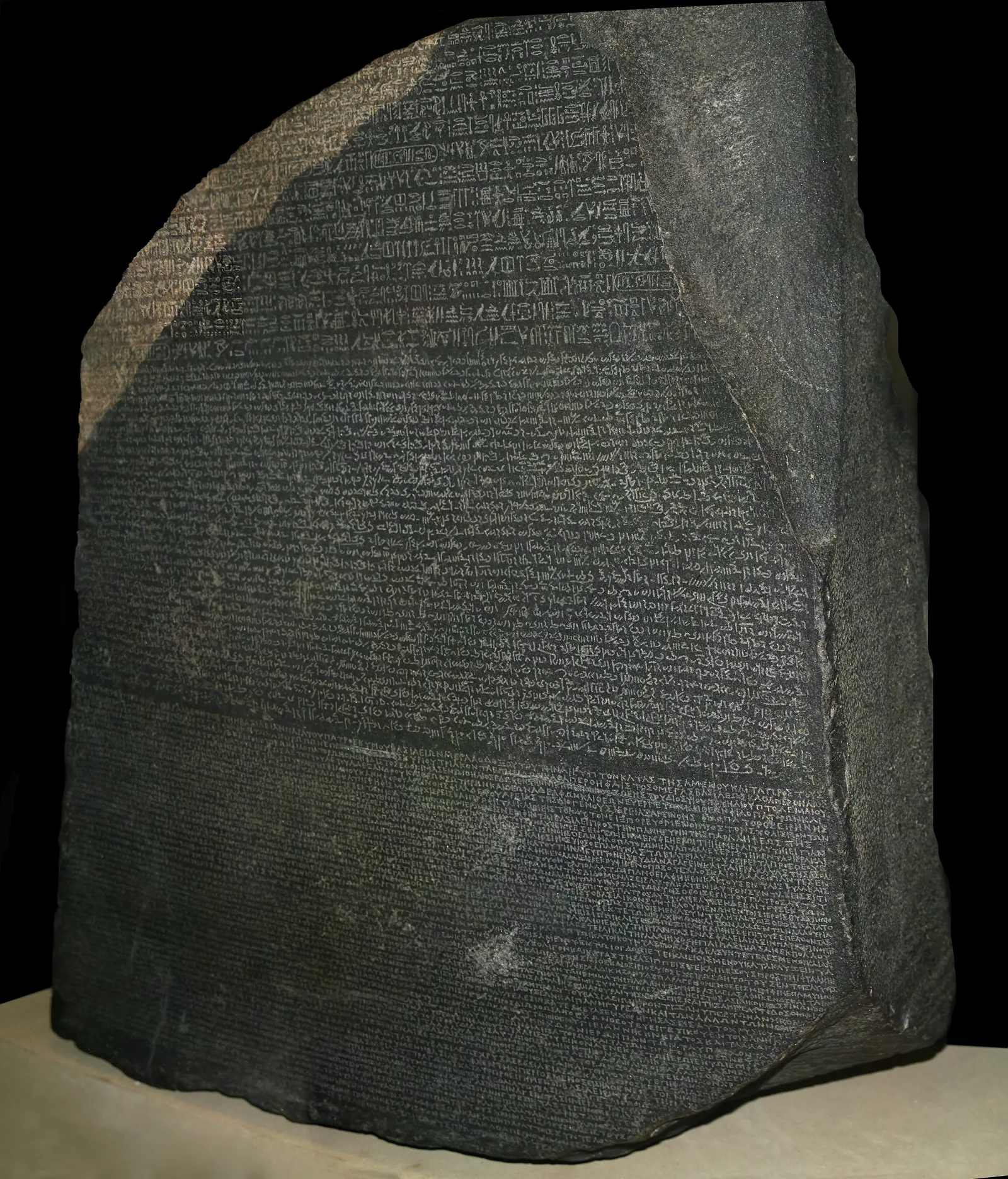
27 September 1822: The Day the Ancient Egyptians Found Their Voice Again — The Rosetta Stone and Its Key
In a hall in Paris, a 31-year-old read out a letter that gave Egypt's ancient walls back the power of speech after a long silence. From Rashid in 1799 to London in 1802 to the Academy in 1822, then on to Ahmed Kamal Pasha and the dictionary that was never printed in his lifetime, and finally to today's question: will the Stone come home? The story of a key that was lost and found again.
September 26, 2026 · 8 min read
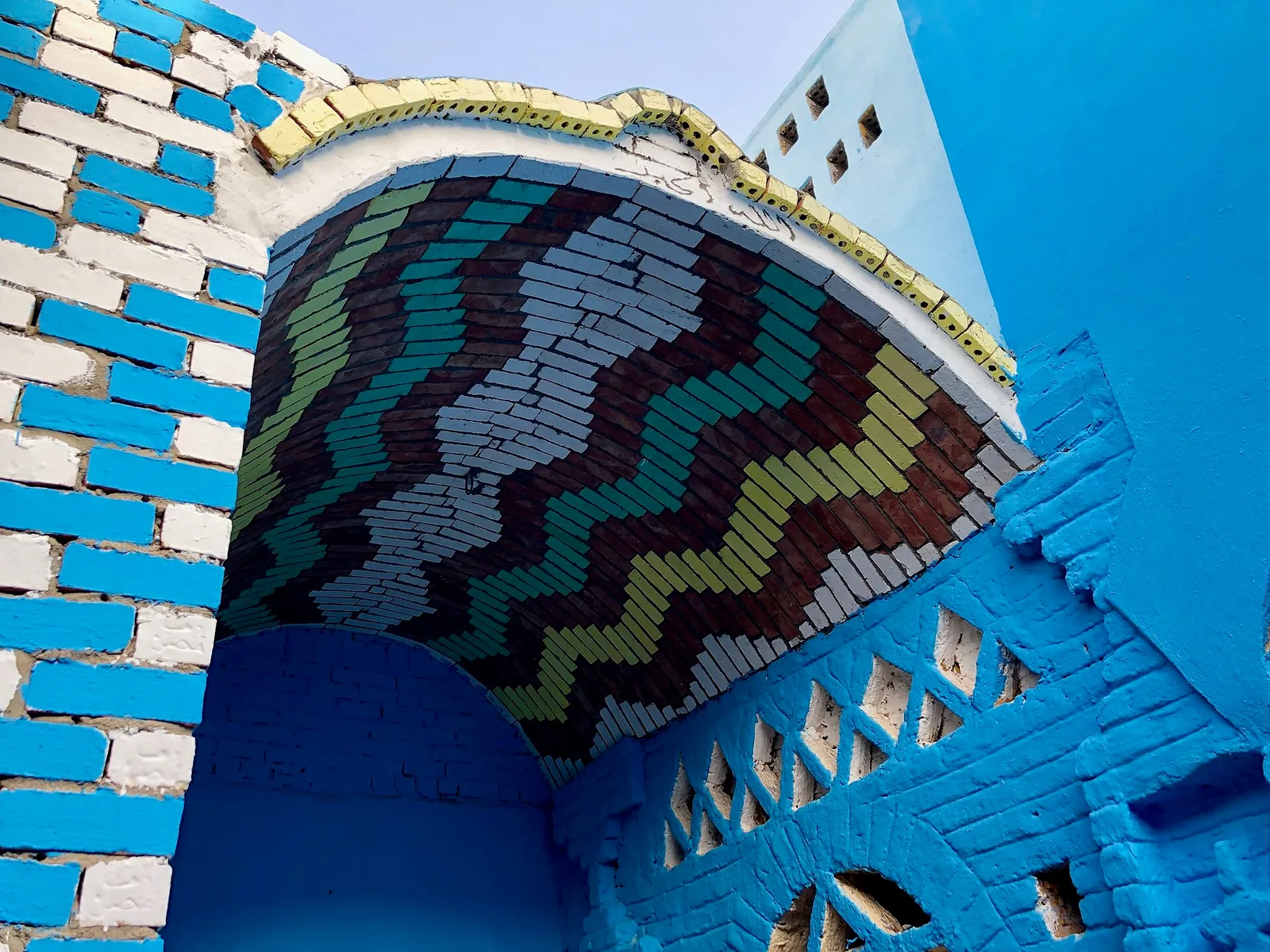
Hassan Fathy: The "Architect of the Poor" Who Built an Architecture from Egyptian Mud That Astonished the World
In an age when air conditioning devours the household budget, the life of Hassan Fathy revives an old question: why did we abandon an architecture that cooled our homes without electricity? The story of the "Architect of the Poor," who built an entire village out of Egyptian mud, wrote a book the world translated, and anticipated the green-building wave by decades.
September 4, 2026 · 8 min read