Does Vitamin C Prevent Colds? What Decades of Trials Actually Show
Millions swear by vitamin C at the first sneeze. Decades of controlled trials tell a subtler story: for most people it does not prevent colds, though taken regularly it may modestly shorten them — and real prevention appears only in marathon runners, skiers and soldiers under extreme exertion. Verdict: partly true.

It is one of the most repeated pieces of health advice in the world, and Egyptian homes are no exception. At the first sneeze of winter, someone presses a glass of orange juice or an effervescent tablet into your hand: take vitamin C, it prevents colds. The advice is offered by grandmothers and pharmacists alike, and money is spent on supplements every cold season on the strength of it. But what does the scientific evidence — decades of controlled trials on tens of thousands of people — actually say? The answer is more interesting than a simple yes or no.
The modern version of the claim has a precise birthplace. In 1970, the American chemist Linus Pauling — winner of two Nobel Prizes — published a best-selling book, 'Vitamin C and the Common Cold', arguing that large daily doses could ward off the illness. Pauling's enormous scientific prestige carried the idea around the world, and an industry grew up behind it. The trouble is that his conclusions ran far ahead of his evidence, and researchers have spent the half-century since testing the claim properly.
The tool science uses to settle such questions is the randomised controlled trial: one group takes vitamin C, another takes an identical-looking placebo, nobody knows which they received, and researchers count the colds. Dozens of such trials have been run over the decades, involving tens of thousands of participants, and their pooled results are periodically synthesised by the Cochrane Collaboration, whose systematic reviews are a gold standard of evidence-based medicine. The picture that emerges is consistent — and it splits the popular claim into three distinct parts.
Part one: prevention in ordinary life. For the general population — office workers, students, parents — taking vitamin C every day does not meaningfully reduce the number of colds caught. People on daily supplements caught roughly as many colds as people on placebo, year after year, trial after trial. On the claim as most people mean it — that a daily tablet will stop you catching a cold — the evidence says no. Whatever your grandmother's tablet is doing, it is not building a wall against the virus.
Part two is where the claim earns its 'partly'. Among people who took vitamin C regularly, before infection and throughout the season, colds were modestly shorter and somewhat milder. Pooled analyses put the reduction in duration at roughly eight per cent in adults and around fourteen per cent in children. In practical terms, that means shaving something like half a day to a day off a week-long cold. It is a real, measurable effect — and a distinctly unspectacular one.
Part three is the genuine surprise. A handful of trials studied people under extreme physical stress: marathon runners, competitive skiers, and soldiers on exercises in subarctic cold. In these groups, regular vitamin C roughly halved the risk of catching a cold — a large, consistent effect that does not appear in anyone else. Scientists suggest that severe exertion temporarily strains the immune system in ways the vitamin helps buffer. If you are running a marathon in the snow, the supplement may genuinely protect you. Most of us are not.
What about the most common real-world habit — reaching for the effervescent tablet at the first scratch of the throat? Here the trials are clearest of all: starting vitamin C after symptoms begin showed no consistent effect on how long or how severe the cold turned out to be. The one scenario in which nearly everyone actually uses the vitamin is precisely the scenario the evidence does not support. The modest benefits that exist belong to people who were already taking it before the virus arrived.
Why, then, does the belief survive so vigorously? Because the common cold is self-limiting: it resolves on its own within roughly a week to ten days no matter what you do. Whatever you happened to take near the end — vitamin C, herbal tea, chicken soup — collects the credit for a recovery that was coming anyway. Add confirmation bias, an industry with an interest in the story, and the word 'vitamin' glowing with health, and you have a myth with excellent survival skills.
None of this makes vitamin C useless — it is an essential nutrient the body cannot manufacture, needed for healthy tissues and wound healing. It is water-soluble, so a modest excess is simply passed in urine, though very large doses can cause stomach upset and may raise the risk of kidney stones in susceptible people. And no supplement is needed to meet daily requirements: guava — among the richest everyday sources and abundant in Egyptian markets — along with oranges, lemons, strawberries and peppers, covers them comfortably.
So the verdict on 'vitamin C prevents colds' is: partly true. False for the way most people use it — a tablet at the first sneeze does nothing measurable, and daily use does not stop ordinary people catching colds. True in a narrow, real sense — regular use modestly shortens colds, and genuinely prevents them in people under extreme physical exertion. The claim is neither a folk delusion nor a proven shield; it is a small truth inflated into a big one.
For anyone who wants fewer colds, the unglamorous evidence points elsewhere: wash hands often, especially in crowded seasons; avoid touching the face; sleep enough, since chronic sleep deprivation measurably weakens immune defences; and keep rooms ventilated. A balanced diet with fresh fruit and vegetables supplies all the vitamin C the immune system needs. The orange remains an excellent thing to eat — just eat it because it is delicious and nourishing, not because it stands guard against winter.
Related Stories

"Cough Hard to Survive a Heart Attack Alone": A WhatsApp Message Egyptian Homes Pass Around, and Medicine Says Otherwise
A chain message reaches nearly every phone in Egypt: if you have a heart attack alone, cough hard and in rhythm until your heart steadies. The American Heart Association flatly rejects "cough CPR," the message confuses a heart attack with cardiac arrest, and every minute spent coughing instead of calling the free 123 ambulance line is taken from the patient's life. This is what medicine says.
September 28, 2026 · 7 min read

"Reading in Dim Light Ruins Your Eyes": What Ophthalmologists Confirm, and the Risk Parents Really Overlook
With evening study sessions back under a single bulb, the old warning returns: "You'll go blind." We checked the claim word for word and found ophthalmologists of one mind: dim light and sitting close to the screen tire the eyes; they do not damage them. But behind that reassurance stands a real danger most households overlook, and regional estimates put Egypt's children at the top of it.
September 19, 2026 · 7 min read
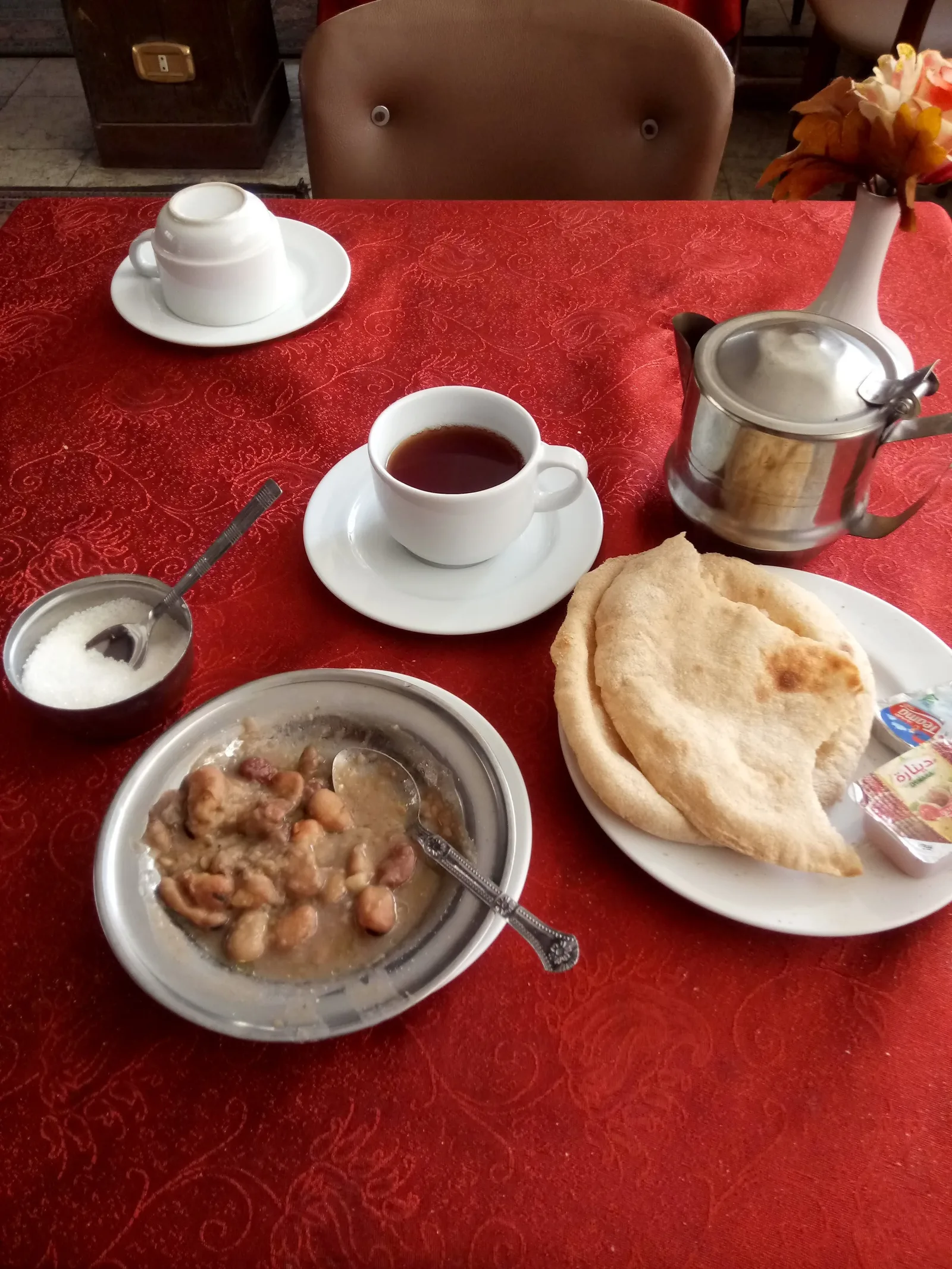
“Tea After Meals Blocks Iron”: The Mothers’ Warning Science Confirmed, and a Simple Fix
It is rare for a warning from the Egyptian kitchen to be backed so clearly by the laboratory. Black tea taken with a meal cuts the absorption of iron from bread, lentils and vegetables by startling margins, and milk does not rescue it. But the answer is not to banish the tea tray; it is to hold it back by a single hour, and to put a wedge of lemon on the table. We lay out the evidence, and why it matters for Egypt in particular.
September 10, 2026 · 7 min read