从月球上能看到中国长城吗?宇航员早已给出答案
教科书里有个人们津津乐道的说法:中国长城是从月球上唯一可见的人造建筑。但亲身登上太空的宇航员——包括中国首位航天员本人——都给出了否定答案,光学原理也支持他们。至于从太空真正能看到什么——从城市灯火到熠熠生辉的尼罗河三角洲——那是一个更精彩的故事。结论:错误。
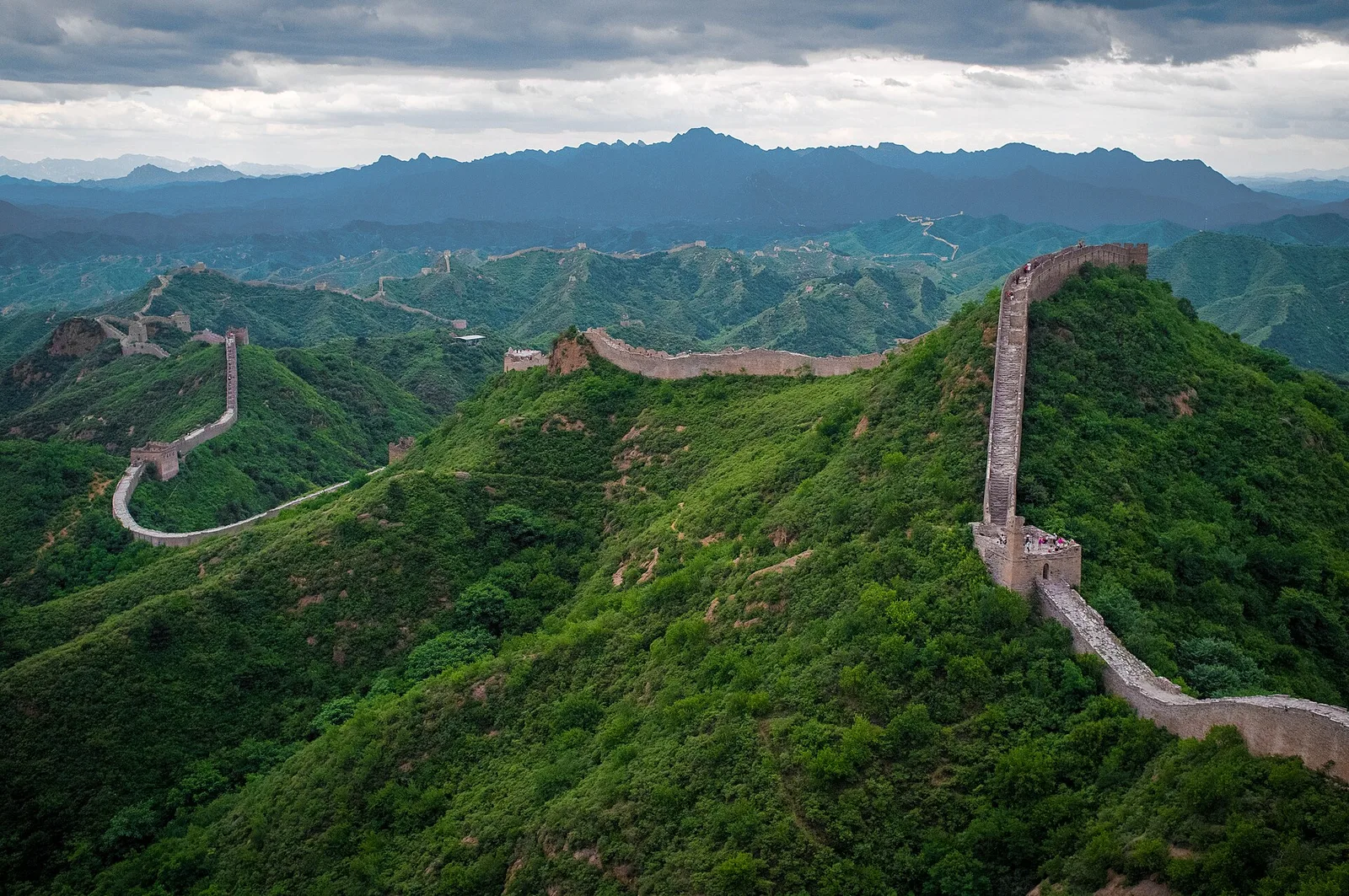
It appears in school textbooks, quiz shows and confident dinner-table conversation on every continent: the Great Wall of China, we are told, is the only human-made structure visible from the Moon with the naked eye — or, in the softer version, visible 'from space'. Few claims are repeated with such assurance, and few are so easy to check, because human beings have actually stood on the Moon and orbited the Earth for decades. Their testimony, backed by simple optics, is unambiguous — and it says the opposite.
The most remarkable thing about the myth is its age: it was born long before anyone could fly. As early as the eighteenth century, the English antiquarian William Stukeley mused in a letter that the wall might be visible from the Moon, and nineteenth-century writers repeated the flourish. In the twentieth century the popular feature 'Ripley's Believe It or Not!' broadcast it to millions. By the time rockets existed, the 'fact' was already installed in textbooks — a guess about space made from an armchair, centuries before spaceflight.
Start with the Moon, some 384,000 kilometres away. From that distance the whole Earth appears about the size of a thumbnail held at arm's length: a shining blue-and-white disc on which astronauts could distinguish oceans, continents and swirling clouds — and nothing whatsoever built by human hands. Scientists have offered a vivid comparison for the scale involved: making out the Great Wall from the Moon would be roughly like spotting a single human hair from more than three kilometres away.
The people best placed to know have said so plainly. Apollo astronauts who flew to the Moon reported that no human structure of any kind could be seen from it; Alan Bean of Apollo 12 described the view as a beautiful sphere of white cloud, blue ocean and patches of yellow desert, with nothing man-made distinguishable at that distance. Twelve people walked on the lunar surface and many more orbited it; not one reported seeing the wall. On the 'from the Moon' version of the claim, the testimony is unanimous.
What about low Earth orbit, only about 400 kilometres up, where the International Space Station flies? Here the wall's own design defeats the eye. Most of it is only five to nine metres wide — narrower than many highways — and it was built from local earth and stone, so its colour blends into the ridgelines it follows. A structure's visibility from above depends on its width and its contrast with the surroundings, and the wall has little of either. Roads, airports and dams, being wider and brighter, are actually easier to pick out.
The decisive testimony came in 2003 from Yang Liwei, the first Chinese astronaut, after he orbited Earth aboard Shenzhou 5. Asked the question his whole nation wanted answered, he replied honestly that he had not been able to see the wall. His answer caused a stir in China precisely because the claim had appeared in Chinese textbooks, and it prompted public discussion about correcting them. Astronauts on the International Space Station have photographed the wall — but with powerful telephoto lenses, knowing exactly where to look, which is a different thing from naked-eye visibility.
Why did the myth prove so durable? Partly because it flatters: it crowns a genuinely awe-inspiring monument with a superlative no rival can claim. Partly because it circulated for two centuries before anyone could test it, hardening into 'common knowledge'. And partly because 'visible from space' is conveniently vague — from a low enough orbit, in perfect light, with trained eyes, almost-visibility can be argued about forever. The Moon version, at least, admits no argument at all.
The truthful version of the question has a far better answer. What astronauts actually see from orbit with the naked eye includes coastlines and cities by day, and at night the glittering webs of city lights — among the most photographed sights from the space station. Egyptians can take particular pride here: the night-time Nile Valley and Delta, blazing with light against the dark desert, form one of the most famous views in orbital photography, often likened to a luminous lotus flower. Wide, bright, high-contrast things are what the eye catches — never a nine-metre wall.
Other human works visible or photographable from orbit in good conditions include the vast greenhouse fields of Almería in Spain, which read as a pale gleaming patch on the coast; major airports; large dams and reservoirs; and artificial islands off Dubai. The lesson of the list is consistent: area and contrast matter, length does not. A structure thousands of kilometres long but a few metres wide simply vanishes, the way a long thin thread disappears on a patterned carpet viewed from across a room.
The verdict is false on both versions of the claim. From the Moon, no human structure whatsoever is visible — the astronauts who went are unanimous, and the optics make the point mathematically. From low Earth orbit, the Great Wall is, at the very best, at the edge of naked-eye visibility, and China's own first astronaut reported that he could not see it. A claim can hardly be tested more directly than by sending people to the vantage point in question — and it failed the test.
None of this diminishes the wall itself. Official Chinese heritage surveys measure its many branches and sections at more than twenty thousand kilometres — a defensive system built and rebuilt across some two millennia, and one of the most extraordinary construction feats in human history. It needs no myth. If anything, the truth carries the more humbling lesson: from just a few hundred kilometres up, almost everything humanity has ever built fades into the surface of the planet — a useful thought for a species inclined to overestimate its own visibility.
相关报道

维生素C能预防感冒吗?数十年临床试验的真实结论
数百万人一打喷嚏就把希望寄托在维生素C上。但数十年的对照试验讲述的故事更为微妙:对大多数人而言,它并不能预防感冒;若平时坚持服用,或可略微缩短病程——真正的预防效果只见于马拉松选手、滑雪运动员和承受极端体能消耗的士兵。结论:部分属实。
2026年8月18日 · 5 分钟阅读
迎战“第四代战争”:我们这样用科学方法粉碎谣言
我们不只是新闻的搬运工;我们是第一家公开宣布迎战“第四代战争”的新闻平台。在这篇文章中,我们向读者讲清这类战争究竟是什么,谣言如何被炮制出来、用以打击埃及的经济与社会安定;我们公开自己依靠专家与专业人士层层核实的科学方法,也告诉每一位公民:在按下“分享”键之前,如何为自己筑起免疫屏障。
2026年8月18日 · 6 分钟阅读

鱼和奶同食会中毒或得白癜风?老一辈的说法可信吗
一个在埃及、阿拉伯世界乃至更远地区代代相传的迷思:鱼与奶同食会导致中毒或白癜风。对于这个仍左右着千家万户餐桌的说法,医学和营养学怎么说?核查结论:不实。
2026年8月18日 · 6 分钟阅读