Your Dog Is Free at Home: Aggressive Dogs on Public Beaches Violate Everyone Else's Rights
A scene repeated every summer on our beaches: a large, unmuzzled dog charging between children while its owner shrugs, "He doesn't bite." In our "That's Just Wrong" section we say it plainly: the freedom to own an animal ends where other people's safety and peace of mind begin. A public beach belongs to every citizen — it is not a training ground for somebody's dog.
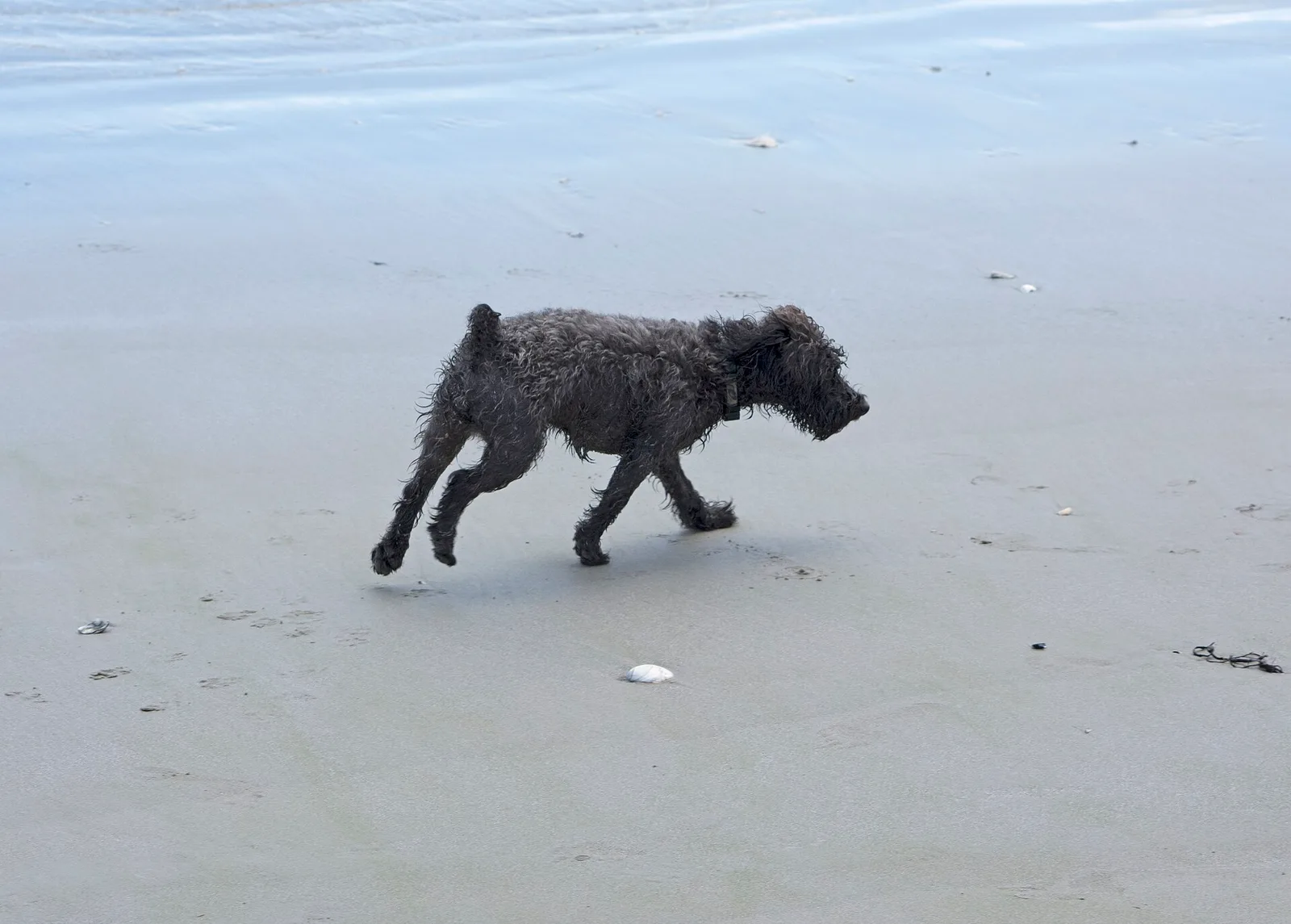
Anyone who has visited a public beach in summer knows the scene: a family settles near the water, children build sandcastles, and suddenly a large dog of a breed known for aggression appears — no muzzle, no leash — with its owner strolling behind, reassuring everyone with a single phrase: "Don't worry, he's friendly." But the child who burst into tears cannot tell friendly from fierce, and the mother who scooped up her toddler and ran is not interested in the dog's certificate of good conduct.
Before any talk of law, this is a moral wrong. A public beach is shared space — everyone paid for their entry or inherited it as a public right — and whoever releases a frightening animal into it is effectively declaring: my comfort, and my dog's, matter more than your children's safety. That is precisely the offence this section exists to name: the insult, the provocation, and the harm done to a citizen's peace in a place he came to for rest.
The fear here is neither a luxury nor an exaggeration. A single dog bite can mean wounds, stitches and a course of rabies shots, plus a psychological terror that may shadow a child for years — turning fear of one dog into fear of all animals and of the beach itself. And even when the dog bites no one, the mere sight of a powerful breed sprinting between beachgoers is enough to ruin the day for dozens of families.
Then there is what the eye cannot see: bathing dogs in the very seawater people swim in. A dog carries microbes and parasites on its coat and in its waste, some of them transmissible to humans, and the children swallowing seawater as they play are the most exposed. Whoever washes his dog in water where other people's children swim is treating the sea as his private bathtub. That is selfishness, plain and simple.
Let us be fair: the problem is not dog ownership, and it is not animal lovers. Caring for animals is a value we respect and encourage. The problem is the owner who refuses the most basic rules of responsibility: a leash, a muzzle for dangerous breeds, choosing appropriate places, and one simple question before approaching any family: do you mind?
Egyptian law has not left this unregulated. The Civil Code holds the keeper of an animal liable for the harm it causes, and in 2023 the legislature passed a dedicated law regulating the possession of dangerous animals and dogs — requiring licensing, setting rules for taking dogs into public spaces, and penalising violators. Whoever lets an aggressive dog loose among beachgoers is not merely committing a moral offence; he is placing himself squarely within reach of the law.
But in this section we do not bet on punishment alone, because before this is a legal problem it is a problem of public decency. Imagine each of us exporting whatever annoys our own household into the shared space: one blasts loudspeakers, another grills on the pavement, a third lets his dog loose among children. Nothing called "public space" would remain — only a jungle where the strongest and boldest claims his patch at everyone else's expense.
What is required of the dog owner is clear and needs no interpretation: do not bring a dangerous breed to a crowded public beach in the first place; if you bring a gentle dog, keep it leashed at all times and muzzled when needed; do not bathe it in water where people swim; clean up after it; and respect other people's fear even when it seems excessive to you — fear is a right that does not require your permission.
What is required of the state and local authorities is no less clear: enforce the dangerous-animals law on the beaches rather than leaving it in the Official Gazette; post explicit signs at beach entrances setting the rules for animals; and designate separate areas or hours for dog owners away from crowded family sections, so that everyone gets their due without collision.
A final message to everyone who says "I'm free and so is my dog": yes — free at home and in designated spaces. On a public beach, your freedom stops where the safety of a child begins, a child whose only strength is his scream. That's just wrong — and doing it right is simpler than you think: a leash, a muzzle, the right place, and respect for everyone else.
Related Stories
Keda Ghalat (That's Just Wrong): Harming an Animal Has Been a Crime Under Egypt's Penal Code Since 1937
A neighbour sets out poisoned bowls beside the school wall; a cart driver beats his donkey across the face to make it haul a load beyond its strength. Many assume that "just an animal" means no law protects it. In fact, Articles 355, 356 and 357 of the Penal Code punish killing, poisoning and harming animals with penalties that go as far as prison. On the eve of World Animal Day, we explain what the law says and what the right thing to do is.
October 3, 2026 · 6 min read
Four on a Motorcycle and No Helmet: A Bare Head Is the Dearest Thing a Family Can Lose on the Road
In the second week of school the same scene repeats: a father driving, one child in front, another behind, the mother clutching the bags, and not a single helmet among them. Press reports citing CAPMAS show deaths jumping from 190 to 897 between 2020 and 2024, while a Cochrane review finds a helmet alone cuts the risk of death by 42%. The law has punished the bare head since 1999, fine raised in 2008. So why do we not comply?
September 23, 2026 · 8 min read
"A Hook-Up on the Cable" Is No Clever Trick: Electricity Theft Is a Crime the Whole Neighbourhood Pays For
A bare wire dangling from a lamp post to a balcony, an air conditioner on a meter that never moves, and a fuse blowing for the third time, plunging a bill-paying neighbour into darkness. Article 71 of the Electricity Law calls this unlawful appropriation of current, punished by prison and a fine, while a tougher amendment awaits the House of Representatives. What does a whole street lose from one hook-up? And what is the right alternative?
September 14, 2026 · 7 min read