In the Bread Queue: Egypt's Daily Ritual of Patience and Shared Life
Before dawn, outside every Egyptian bakery, a small self-governing parliament convenes: the baladi bread queue. A street-level portrait of the ritual — its unwritten rules, its smart cards, its rough equality, and why the line outside the bakery has always been a barometer of the country.
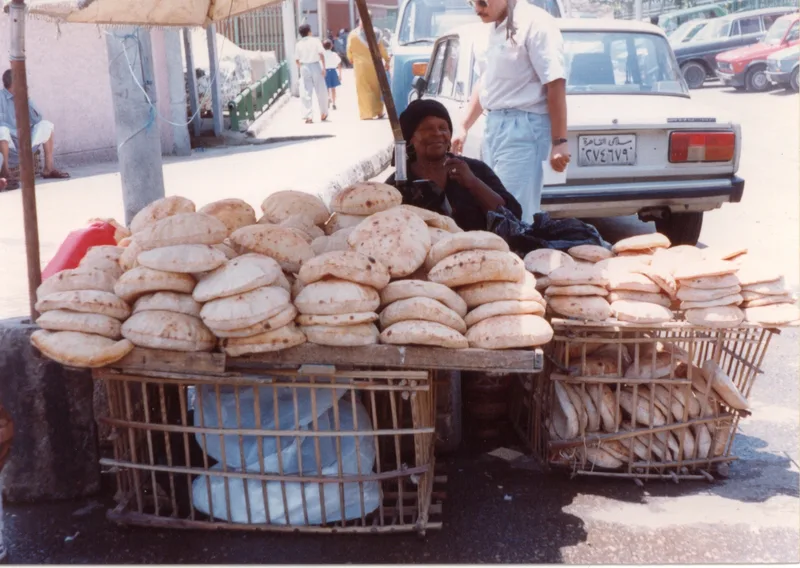
The day begins with smoke. Before the echo of the first call to prayer has faded, the chimney of the neighbourhood bakery is already breathing, and the smell of baking dough drifts down streets that are otherwise still asleep. By the time the metal shutter rattles up, a line has formed: men in galabeyas, women with cloth bags, a sleepy boy sent down by his mother with the family's smart card in his fist. The bread queue — one of the oldest, most ordinary and most revealing institutions of Egyptian daily life — has convened.
The object of all this attention is a flat, round loaf: aish baladi, baked dark from coarse flour, blistered and hot from a roaring oven. In Egyptian Arabic the word for bread is aish — literally 'life' — and the language is not exaggerating. Subsidised baladi bread has anchored the Egyptian table for generations, its price protected by the state for decades at a level measured in piasters, so that the poorest household on the street can put bread on the table every single day.
The queue has its own unwritten constitution. A hand on a shoulder reserves a place while its owner runs a quick errand. An elderly man is waved forward without discussion. A woman balancing a toddler is handed her loaves first, and everyone pretends this was always the order. Someone tries to push in and the line erupts, argues, negotiates and settles itself within a minute — a small parliament, self-governing, that convenes every morning without a chairman and without minutes.
Technology has joined the ritual. For years now, the subsidy has run on smart cards: each registered family member entitles the household to a set number of subsidised loaves a day, and the card is tapped or handed through the window before the bread is. The soft beep of the card reader has become part of the queue's soundtrack, alongside the scrape of the wooden peel on the oven floor and the eternal question shouted from the back of the line: 'Is there bread or not?'
Inside, the choreography is precise. One worker feeds rounds of dough onto a long wooden peel and swings them into the flames; another catches the finished loaves as they puff and blister; a third counts them through the window at a speed no cashier could match, flicking loaves onto outstretched trays and open newspapers. The heat at the oven mouth is brutal in summer, and the men who work there do so through Ramadan fasts and August afternoons alike.
Then comes one of the most Egyptian sights there is: the bread leaving. Hot loaves cannot be bagged — they would steam and turn soggy — so they travel in the open air, carried flat on palm-frond racks and wire trays, balanced on heads, on bicycle handlebars, on car roofs, laid out to cool on any clean surface a street can offer. The pavement in front of a bakery at seven in the morning is a mosaic of cooling bread and unhurried conversation.
The conversation is the point, or at least half of it. The queue is where the street compares notes: prices at the vegetable cart, a wedding on Thursday, a neighbour in hospital, the exam results, the match. Regulars know each other's orders and each other's troubles. For older residents living alone, the morning trip to the bakery may be the day's main social event, a guaranteed encounter with familiar faces at a fixed hour.
What the queue teaches is a kind of rough equality. The doctor's family and the doorman's family collect the same loaf at the same window at the same price. There are few places left in a stratified city where that is true. People who would otherwise never meet stand shoulder to shoulder, bound by the same modest errand, and the bread that emerges is identical for all of them — hot, imperfect, dusted with bran, and entirely democratic.
By mid-morning the first rush is over; a second bake will draw a smaller line before lunch. The boy runs home with the loaves stacked along his forearm and the card in his pocket, a corner already torn off and eaten — the tax every child in Egypt levies on the way home. Tomorrow, before dawn, the chimney will breathe again and the parliament of the pavement will reconvene. As long as it does, something essential in the country's daily life is holding.
Related Stories
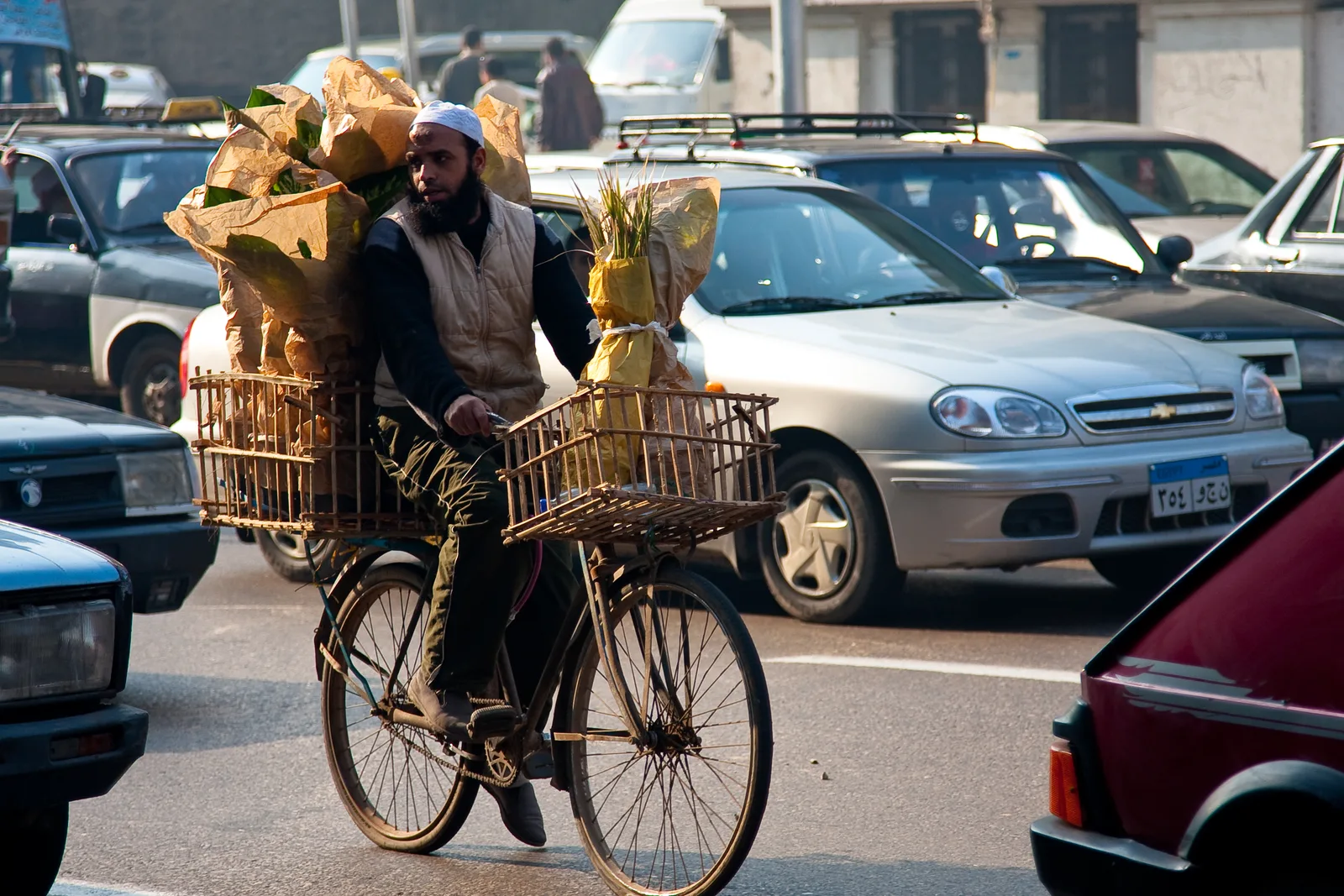
Two Wheels in the Gridlock: Where Does the Bicycle Stand on Egypt's Streets on Car-Free Day?
On 22 September the world marks Car-Free Day, while on our streets the bicycle threads its way between microbuses and along a painted lane with a car parked on it. From Cairo Bike to the "Your Bike, Your Health" scheme to a boy carrying a tray of bread on his head down a side street: a report on what any passer-by can see, and a single question: whom is the bicycle for in Egypt, and why does a safe lane remain a dream?
September 22, 2026 · 8 min read
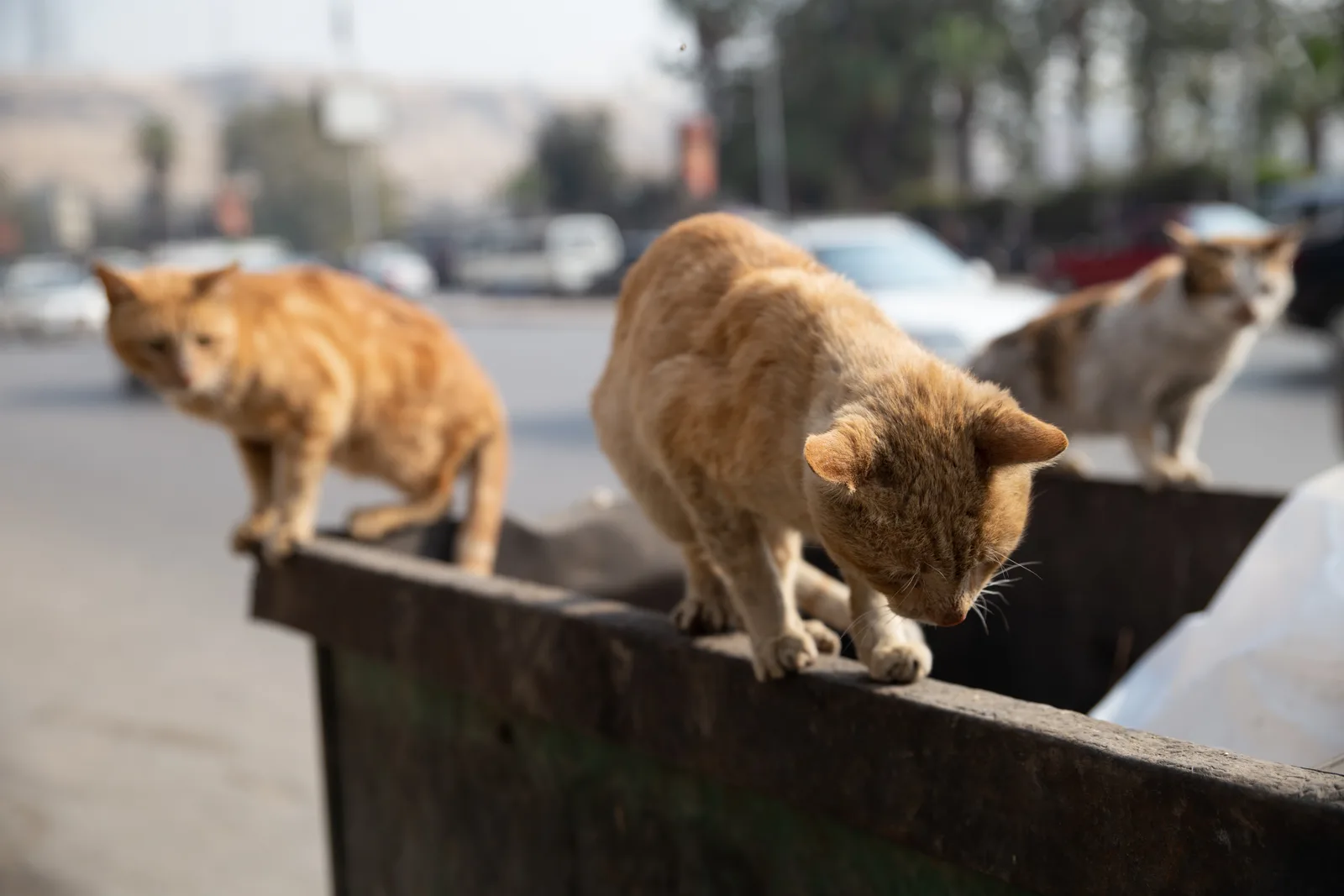
Keda Ghalat (That's Just Wrong): Harming an Animal Has Been a Crime Under Egypt's Penal Code Since 1937
A neighbour sets out poisoned bowls beside the school wall; a cart driver beats his donkey across the face to make it haul a load beyond its strength. Many assume that "just an animal" means no law protects it. In fact, Articles 355, 356 and 357 of the Penal Code punish killing, poisoning and harming animals with penalties that go as far as prison. On the eve of World Animal Day, we explain what the law says and what the right thing to do is.
October 3, 2026 · 6 min read

Pink October: a free check-up at the nearest health unit – why early detection is changing the fate of Egyptian women
“Nothing hurts” is no reason to put it off. Since July 2019, Egypt's health units have opened their doors free of charge to every woman aged 18 and over, and by June 2026 the share of cases caught at a late stage had fallen from 60% to 19.5%. We explain what happens at the unit, which signs call for a visit, and why fear and stigma keep delaying this check-up.
October 2, 2026 · 7 min read