Two Wheels in the Gridlock: Where Does the Bicycle Stand on Egypt's Streets on Car-Free Day?
On 22 September the world marks Car-Free Day, while on our streets the bicycle threads its way between microbuses and along a painted lane with a car parked on it. From Cairo Bike to the "Your Bike, Your Health" scheme to a boy carrying a tray of bread on his head down a side street: a report on what any passer-by can see, and a single question: whom is the bicycle for in Egypt, and why does a safe lane remain a dream?
It is coming up to eight in the morning on a street in downtown Cairo. Along the edge of the road, a line of short plastic bollards marks out a narrow lane no more than a metre or two wide, and parked squarely in the middle of it is a car with its hazard lights on, its driver stepping out to buy something from the kiosk next door. Behind it a young man appears on a delivery bike with a box on the back. He slows for a moment, then swings out to the left of the barrier and squeezes between a microbus that has pulled up without warning, one of the privately run minivans that serve as the city's de facto public transport, and a taxi touting for passengers. Nobody looks at him. The scene is so ordinary that no one sees it, and that is exactly what deserves our attention today.
Today is 22 September, World Car-Free Day. The idea was born neither in Egypt nor in the region. According to the documented record, its worldwide programme was launched in 2000 by the Carbusters network, which later became the World Carfree Network, and the network says, with no independent tally to confirm it, that more than 100 million people in some 1,500 cities take part, in different ways and on different dates. In Europe, the European Commission adopted the day in 2000 under the slogan "In town, without my car!", an idea that had originated in France in 1998, and since 2002 has made it the closing day of European Mobility Week, held from 16 to 22 September, when many cities shut streets to cars for hours and people take to them on foot and by bicycle.
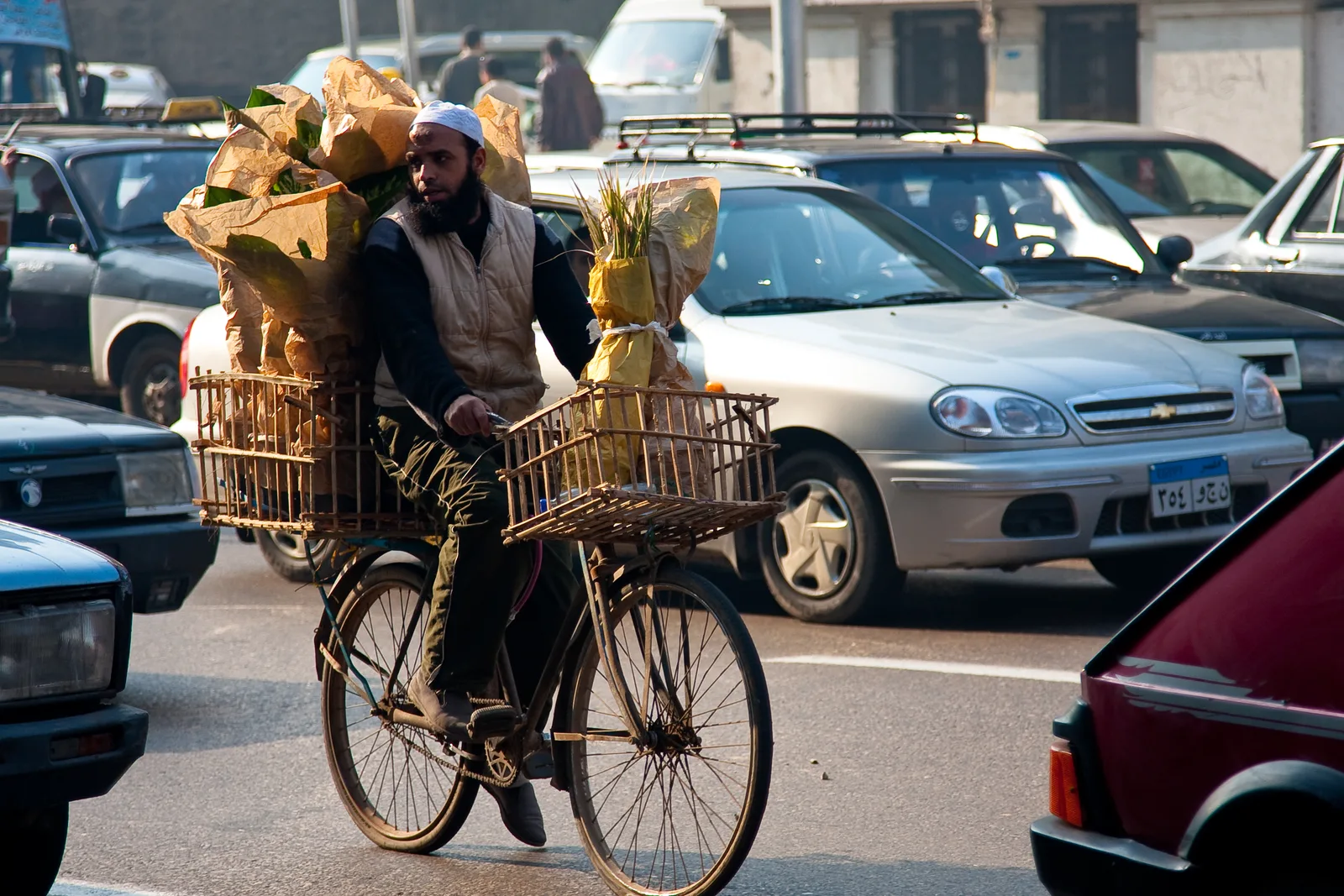
In Egypt the day mostly passes without anyone noticing. No street is closed; not a single car gives up an inch. But anyone who walks through an Egyptian city with their eyes open will discover that the bicycle was never absent from the street; it simply is not counted. A boy balances a tray of eish, the everyday bread, on his head and steers one-handed down a side street; a labourer rides across the agricultural highway at dawn, one of the old roads through Egypt's farmland, on a bicycle with no rear light as lorries roar past; a vendor hangs bags from the handlebars that nobody can explain how they stay balanced. Egypt has bicycles in abundance, but they live on the margins, between the asphalt and the kerb, in a space no one has set aside for them.
The space that was set aside came late and came small. In October 2022 the Cairo Governorate launched Cairo Bike, a bike-sharing scheme it described as the first public system of its kind in Egypt, with 250 bicycles spread across some 25 stations in downtown, Abdeen, Azbakeya, Sayeda Zeinab, Garden City, Ramses and Zamalek, along with cycle lanes between one and two metres wide and roughly two kilometres long, protected by plastic barriers. The partnership brought together UN-Habitat, the Drosos Foundation and the Institute for Transportation and Development Policy, and a second phase was to target 500 bicycles at 45 stations.
At launch the price was nominal: one Egyptian pound an hour, paid through the app or with prepaid cards, the stations ran on solar power, and the city was talking of a plan to build 14 kilometres of protected lanes. Then the first operator faltered; the governorate terminated its contract in February 2023 and signed with a new Egyptian company, Baddel, and the scheme was relaunched in September 2023, according to reports published that October: 250 bicycles at 26 stations, five pounds an hour plus a two-pound usage fee, all payment through the app by scanning a code on the bicycle, no staff at the stations, and a promise to expand into Zamalek and Garden City. As for the state of the scheme today, in September 2026, we were unable to verify it ourselves as of the time of writing; the last official figures were announced in December 2023 before the Local Administration Committee of the House of Representatives: around 20,000 users, 20,000 trips and takings of close to 200,000 pounds, together with a promise to launch the second phase within three months, and we found nothing to confirm that it ever was.
Anyone passing a metro entrance downtown may catch sight of one of these stations: a solar panel atop a metal pole, a row of bicycles locked to their steel docks, a small screen or a sticker explaining how to use them. The station stands there as if it belonged to another city, clean, orderly, running on sunlight, while a few metres away a pickup truck unloads goods onto the lane painted for bicycles on Talaat Harb or Qasr el-Nil.
And here is the question that comes up on every street: why does a safe lane remain a dream even once it has actually been painted? Ten minutes standing on the kerb is enough to find out. The lane serves as parking for cars, as a stop for the microbus when it picks up a passenger, as a place to display merchandise, and as a route for motorbikes whenever the road gets congested. The plastic barriers are light, they can be shifted by hand, and some break or simply disappear. When the lane becomes unusable, the cyclist moves out into the main carriageway, where in drivers' eyes he becomes an obstacle rather than a road user, and where reaching his destination in one piece becomes a matter of luck more than of design.
And yet the bicycle endures, because those who ride it cannot afford the luxury of giving it up. The delivery bikes that have multiplied in recent years, with their brightly coloured boxes on the back, have become part of the urban landscape in Cairo, Alexandria and other cities; young men ride them in the heat and the cold, carrying meals, medicines and orders, racing against an app that counts the minutes. On the agricultural roads and the edges of towns another bicycle appears, older and heavier, with a worn leather saddle and a rear rack, carrying a labourer to a workshop or a farm before the sun is up. This bicycle does not wait for a world day; it is the transport of those who have no other.
Then there is a third bicycle, seen on Friday mornings on the roads of the new desert cities and inside sports clubs and gated compounds: light, with thin tyres, a helmet and colourful kit, riding in groups, and costing many times the price of the bicycle offered by the government initiative we will come to shortly. There is nothing wrong with that; sport is a right. But when the two scenes are set side by side they reveal a silent truth: Egypt has not one bicycle but two, one a necessity for the poor and one a luxury for those who can afford it, and between them a street that protects neither.
The state has tried to narrow the gap, on price at least. In February 2024 the "Your Bike, Your Health" initiative (Daragtak Sahetak), run by the Ministry of Youth and Sports, released the second batch of its fourth phase: 1,000 mountain bikes at 4,242 pounds each, or 4,570 pounds including delivery, with instalment plans of up to 24 months at 224 pounds a month, which is less than eight pounds a day, as the ministry's own announcement put it, and deliveries in the governorates began on 25 February 2024. The idea is a noble one, but the initiative hands over a bicycle, not a lane, and sends people out onto a street that has not changed.
Why all this attention to two wheels? Because the body keeps its own accounts. The World Health Organization, in its fact sheet on physical activity, recommends that adults get at least 150 minutes a week of moderate-intensity physical activity, and estimates that around a third of the world's adults, 31 per cent or close to 1.8 billion people, fall short of that threshold. More importantly, the WHO does not stop at addressing individuals; it explicitly calls on public policy to guarantee access to walking, cycling and non-motorised transport. Put more simply: the bicycle is not just a pastime but part of a public health that is built in the planning of streets, not in doctors' advice.
A car-free day in Egypt does not mean, as far as we know, that anyone is going to close the Nile Corniche tomorrow. But it could mean smaller, closer things: that the painted lane stays clear of parked cars, if only for a single day; that the flimsy barriers are bolted down or replaced with ones that cannot be shifted by hand; that a post for locking bicycles is installed at every metro entrance; and that the microbus driver, when he stops without warning to pick up a passenger, remembers that behind him is a person on two wheels with no sheet of metal to protect him. These are things that call less for big budgets than for an eye that sees the bicycle.
Tomorrow morning the same scene will return to the same street: the narrow lane with its plastic barriers, the car parked on top of it, and the young man swerving out into the carriageway among the microbuses. If you drive a car, you might remember, before you pull up over the line, that this single metre is all the bicycle owns in the city. And if you are one of those who ride it for a living, for sport or simply because it is the cheapest way to get around, know that you are not a footnote on the road, even if the road treats you like one. World Car-Free Day passes in a single day; the bicycle passes every day, and it deserves to be seen.
Related Stories
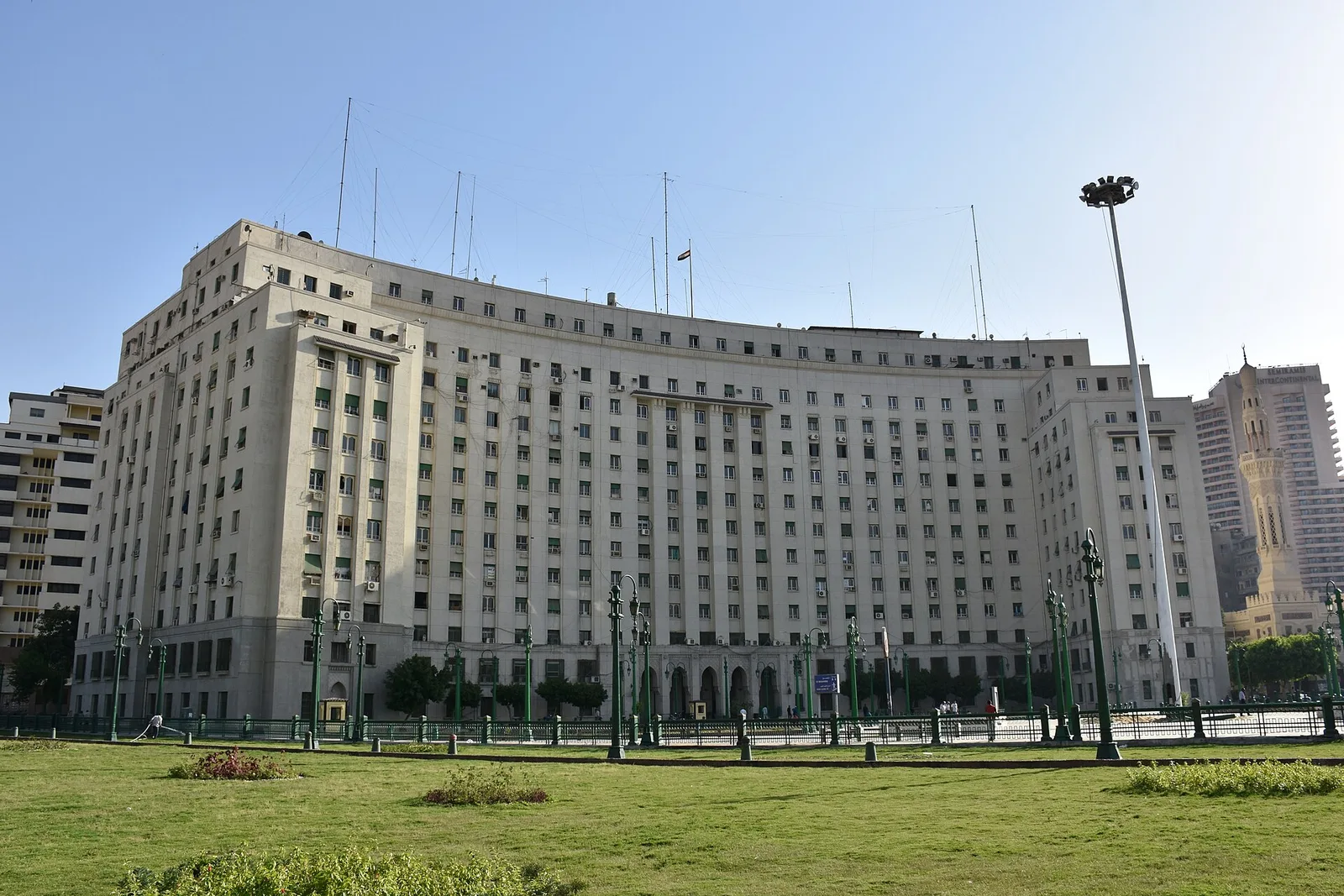
From the Queue to the Screen: The Citizen, the Government Office and Digital Egypt
From the pre-dawn queue to the 'come back tomorrow' window, the journey through Egypt's government offices is a shared national experience. Now a documented digitisation drive — the Digital Egypt portal, home delivery of documents and electronic payment — is quietly rewriting the relationship between citizen and counter.
August 18, 2026 · 6 min read
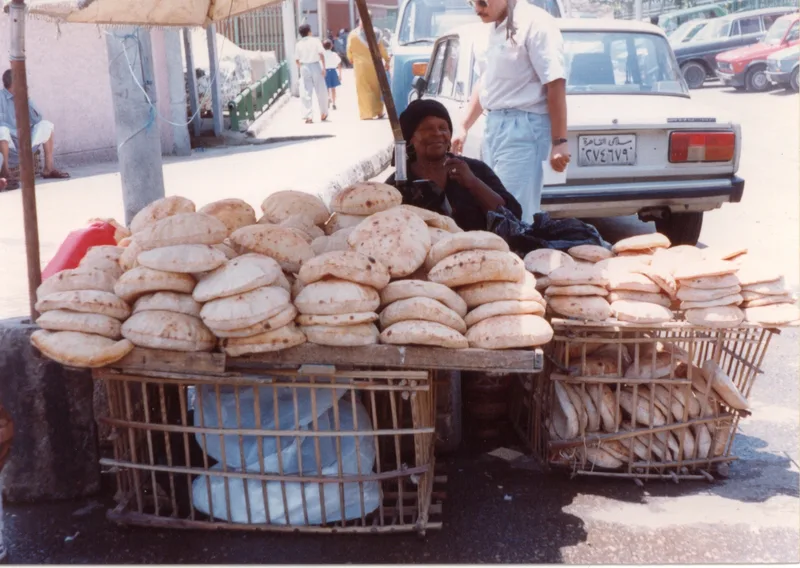
In the Bread Queue: Egypt's Daily Ritual of Patience and Shared Life
Before dawn, outside every Egyptian bakery, a small self-governing parliament convenes: the baladi bread queue. A street-level portrait of the ritual — its unwritten rules, its smart cards, its rough equality, and why the line outside the bakery has always been a barometer of the country.
August 18, 2026 · 5 min read
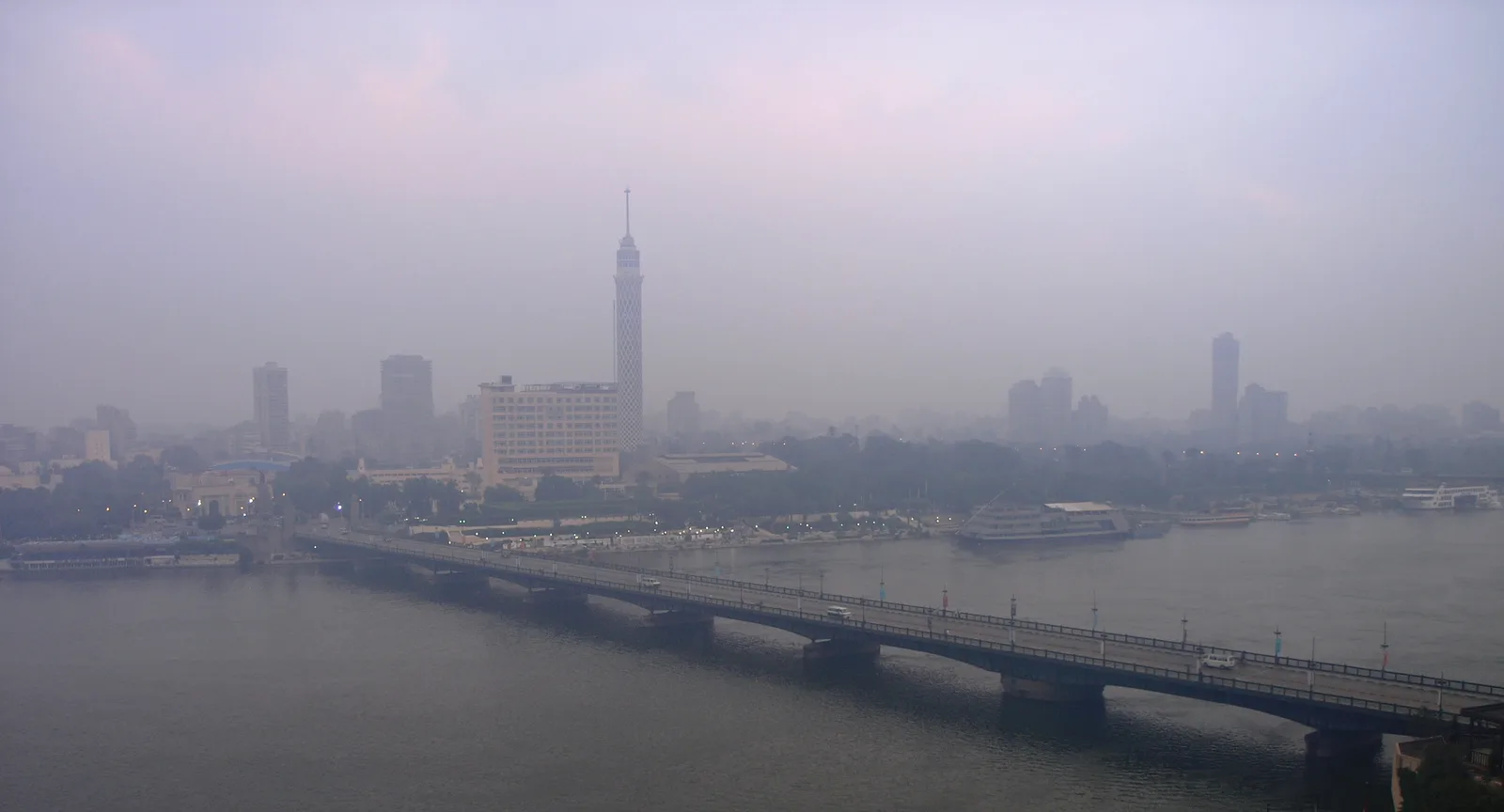
Cairo's air is a national cause: from the 'Black Cloud' to the electric bus, the battle for every breath
Every autumn the 'Black Cloud' returns to choke Greater Cairo, but what actually kills is what we cannot see: particles finer than a hair that slip into the lungs and the bloodstream. On the eve of World Car-Free Day, we open the file on one of the gravest environmental health problems facing Greater Cairo: what the numbers say, what is being done, and what you can do in your own day.
September 21, 2026 · 7 min read