The Horn Is Not a Vent for Your Temper: One Hand on the Horn Assaults a Whole Street's Nerves
A hand slams down on the horn and the noise bursts through your window without asking permission. Why is random honking not "letting off steam" but an act of acoustic aggression against an entire street? On the line between a warning that averts danger and a din that makes people ill — and on the medicine, the law and the common decency that all stand on the side of your ear.

A red light on a scorching afternoon, cars packed tight as the teeth of a comb with nothing between them but road dust. Then one long blast goes off, a second horn answers it, then a third, until the street turns into a hysterical chorus, as though the noise could melt steel and carve a new road through the asphalt. Roll your window down for a moment and ask yourself honestly: what did all this racket actually move? Nothing. The road is where it was, the jam is where it was, and only the faces have grown more flushed, the heartbeats faster, for nothing at all.
We have grown used to laughing at the scene and calling it "letting off steam," as if a driver's frayed nerves granted him a licence to disturb an entire city. But let us call things by their names: leaning on the horn at random is not innocent release, it is an acoustic assault on people who never chose to listen. You can close your eyes to a sight that bothers you; your ear has no eyelid. Sound forces its way in — into your home, your bed, your prayer, your children's homework. And whoever imposes his noise on a whole street is committing real aggression, even if he is sitting there smiling behind the wheel.
Remember why the horn was fitted to the car in the first place: to warn a human being of imminent danger, exactly as the brakes were fitted to avoid a collision. It is a safety device, not a musical instrument; a distress call, not a language of everyday conversation. The test is astonishingly simple: is there a danger right now that one short note could avert? A child stepping suddenly off the kerb, a car drifting into your lane, a door about to swing open in a cyclist's face? Then press without hesitation — that is the horn's one honourable function. Anything else is not a warning; it is noise dressed up as one.
Watch a single day on any crowded street and you will find the complete lexicon of misuse. A horn hurrying a light that has not yet turned green; a horn greeting a friend at a café; a horn calling up to a resident on the fourth floor because its owner cannot be bothered to climb the stairs; a horn celebrating a wedding or a football match past midnight. And there is the most absurd kind of all: honking in the heart of a frozen jam where nobody can move an inch. All these uses have one thing in common — there is no danger in them whatsoever, only a hand that has learned to speak in noise instead of waiting or thinking.
The aggression reaches its peak outside doors that must never be knocked on with noise: hospitals and schools. Behind the hospital wall lies a patient just out of surgery trying to catch his first sleep, a tired heart that startles at every blast, a mother keeping vigil over a child in intensive care. Behind the school wall, pupils are trying to grasp an arithmetic problem or follow a lesson, and every horn outside snaps the thin thread between concentration and drifting away. That is why hospitals have long written on their walls: "No sounding of horns." It is not decoration on a sign; it is a moral and legal line before it is ever a traffic one.
What medicine has to say here is settled and well known, and needs no argument. Chronic exposure to loud sound wears down hearing and can damage it gradually and irreversibly; continuous noise keeps the body on permanent alert, which surfaces as tension and disturbed sleep; and health research links it to trouble with the heart and blood pressure, even if you believe you have "got used to it." Health authorities around the world have long counted noise as a form of pollution that affects human health, not a passing nuisance to be endured. If you notice ringing in your ears, weakening hearing, or insomnia tied to noise, do not shrug it off — see a specialist. These lines are general awareness, not a substitute for an examination.
The irony is that this entire health bill is paid for nothing at all. The horn moves no traffic and opens no road; all it does is raise the street's anger by one degree, provoking another driver to answer, until the road becomes a contest of metallic shouting with no winner. Noise is contagious like yawning: one horn is enough to set off a storm, and one hand held back is sometimes enough to quiet it. Worse still, the constant din distracts the drivers themselves and drowns out the genuine warning when real danger comes, until nobody can tell a cry for help from a headache.
And the law is not on the side of the nervous hand to begin with. Traffic codes in most countries do not treat the horn as an absolute right; they confine its use to cases of necessity and forbid using it as a nuisance in particular places and circumstances, while rules governing the environment and public order set limits on noise in general. In other words, whoever honks at random is not merely offending good taste; he is breaking written rules that can expose him to penalty. You need not memorise article numbers. It is enough that the principle is settled almost everywhere: the horn for necessity, and nuisance is an offence.
And if you would rather weigh the matter with the heart than with the law, imagine this cautionary tale. A nurse comes home from a long night shift to sleep before the next one, and some hand beneath her window keeps calling for someone with the horn, minute after minute; her sleep is lost, and with it her concentration the following night among her patients. Or imagine a pupil in an exam hall gathering the loose ends of his memory, only for a passing chorus of horns to scatter them — drivers who know nothing about him and never will. In neither imagined case did anyone mean any harm, yet harm exactly like this happens every day. And that is precisely what noise does: it distributes its losses among strangers its owner never sees.
And this is the line this column takes every time we write it: your freedom ends at another person's lungs, ears and night. The street's soundscape is common property like air and water, and whoever fills it with noise is seizing other people's share of it with no right to do so. Nobody would accept a neighbour reaching into his plate or his pocket — so why do we accept that hand reaching into our ears, our sleep and the rest our bodies need? Quiet is neither a luxury nor a class privilege; it is a daily right belonging to everyone who lives in the city, from the infant in the cradle to the old man in his bed.
And the hand laid on the horn says more about its owner than he imagines. It says that his time is worth more than everyone else's, that his irritation matters more than the peace of an entire street, that his arm is faster than his mind. Whereas the driver who holds his hand back in traffic is not showing weakness but strength: patience behind the wheel is a muscle you train, and refraining from hurting people while the instrument of harm sits under your palm is civility in its purest form. Measure a driver's refinement by what he does not do when he is angry, not by what he does when he is pleased.
So what is the practical alternative? Rule one: before you press, ask yourself a single question — is there an imminent danger right now? If the answer is yes, one short note is enough; if it is no, lift your hand. Rule two: treat the causes of honking before the honking itself; set out early enough, keep a comfortable safety gap, and do not turn your own lateness into a problem the whole road pays for. Rule three: when there is no danger, replace the horn with quieter means: a quick flash of the lights at night, a phone call to the person you are waiting for instead of shouting up at the building, or simply a few seconds of patience until the driver ahead notices. You will be amazed how many situations resolve without a single sound.
The street is a mirror, and every hand on a steering wheel is a pen writing one line in the city's biography. Noise will not be cured by a single decision or a single article, but it recedes driver by driver, exactly as it took hold driver by driver. Let it start with you: drive your whole day tomorrow without a horn except in real necessity, and you will find you arrived at the very same time, with steadier nerves and an ear kinder to your neighbours. And whenever irritation calls you to "let off steam," remember that your nerves are yours to empty as you please, but other people's ears are not a dump for your acoustic waste. Sounding a warning to avert danger is decency; everything else is aggression — and between the two stands your hand, so choose for it what befits you.
Related Stories

Keda Ghalat (That's Just Wrong): Harming an Animal Has Been a Crime Under Egypt's Penal Code Since 1937
A neighbour sets out poisoned bowls beside the school wall; a cart driver beats his donkey across the face to make it haul a load beyond its strength. Many assume that "just an animal" means no law protects it. In fact, Articles 355, 356 and 357 of the Penal Code punish killing, poisoning and harming animals with penalties that go as far as prison. On the eve of World Animal Day, we explain what the law says and what the right thing to do is.
October 3, 2026 · 6 min read
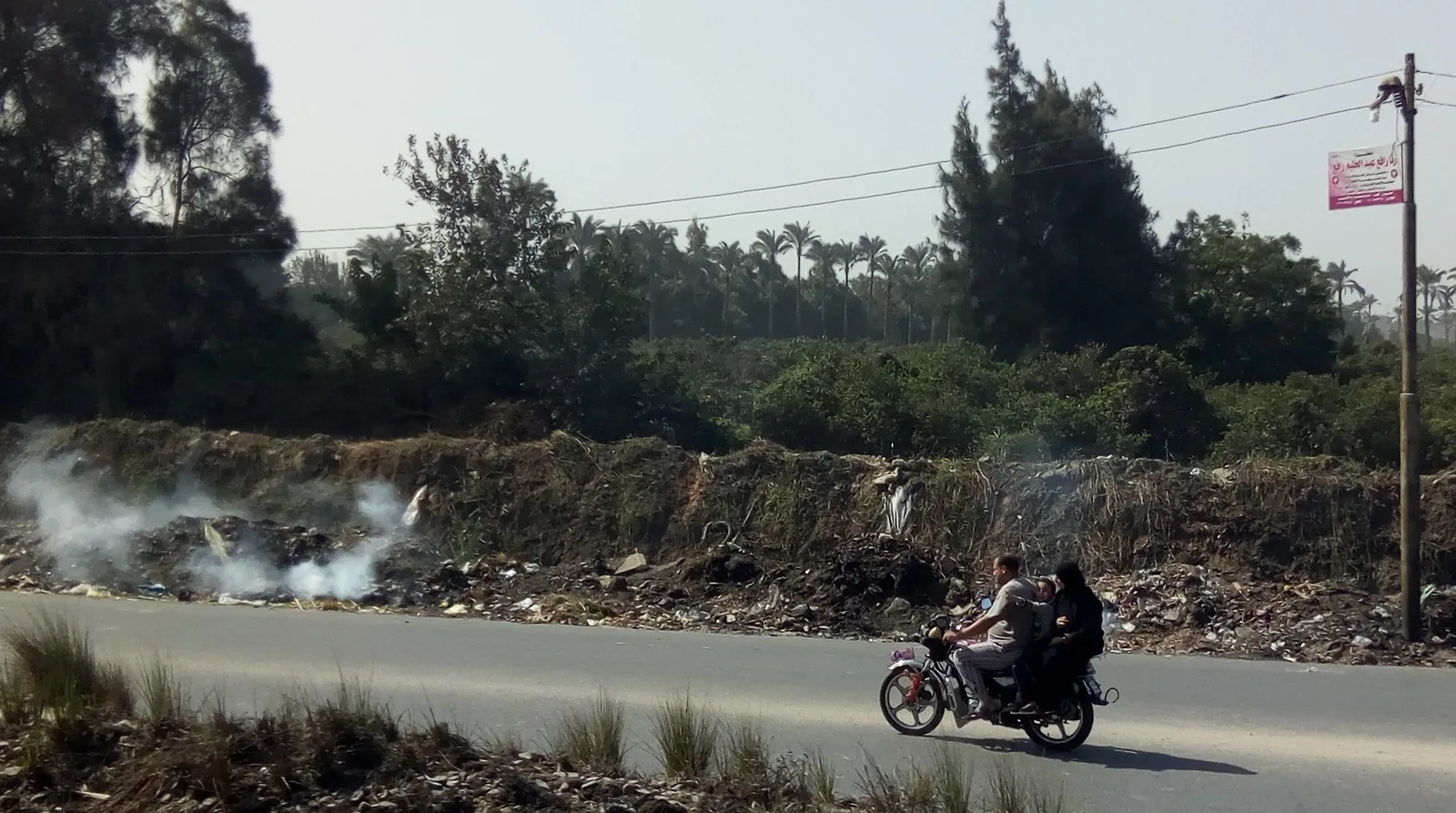
Four on a Motorcycle and No Helmet: A Bare Head Is the Dearest Thing a Family Can Lose on the Road
In the second week of school the same scene repeats: a father driving, one child in front, another behind, the mother clutching the bags, and not a single helmet among them. Press reports citing CAPMAS show deaths jumping from 190 to 897 between 2020 and 2024, while a Cochrane review finds a helmet alone cuts the risk of death by 42%. The law has punished the bare head since 1999, fine raised in 2008. So why do we not comply?
September 23, 2026 · 8 min read

"A Hook-Up on the Cable" Is No Clever Trick: Electricity Theft Is a Crime the Whole Neighbourhood Pays For
A bare wire dangling from a lamp post to a balcony, an air conditioner on a meter that never moves, and a fuse blowing for the third time, plunging a bill-paying neighbour into darkness. Article 71 of the Electricity Law calls this unlawful appropriation of current, punished by prison and a fine, while a tougher amendment awaits the House of Representatives. What does a whole street lose from one hook-up? And what is the right alternative?
September 14, 2026 · 7 min read