Egypt's Eye on the Sky: Kottamia Observatory's 74-Inch Mirror, Watching the Universe Since 1964
On a desert plateau east of Cairo, a dome has opened at sunset for more than sixty years. For World Space Week, we tell a story that begins with the Khedivial observatory at Abbassia, then Helwan and Halley's Comet, and reaches a giant mirror Egypt contracted for in 1948 and later upgraded with Japanese instruments. It is a reminder to every student that astronomy in Egypt is a living profession, not just heritage.
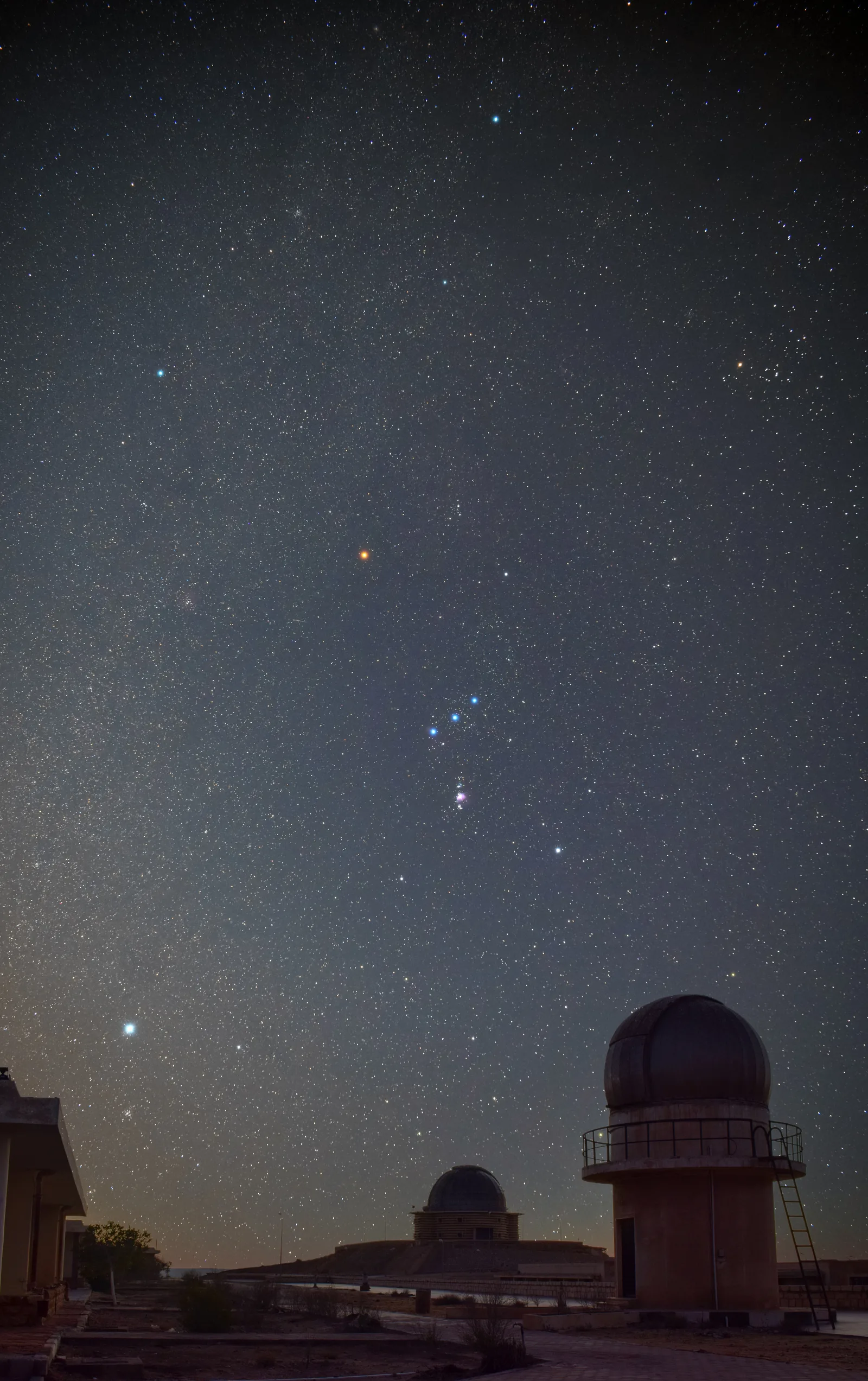
The sun is sinking toward the horizon over the Eastern Desert, and the air turns cold all at once, as it always does in the desert. On a high plateau east of Cairo, a huge white dome begins to turn slowly, then its long slit opens little by little, like an eye lifting its lid after a long day. Inside, an Egyptian astronomer checks a computer screen and types in the coordinates of a distant star, and the giant telescope glides quietly toward a point in the sky that no one can see with the naked eye. Tonight there is no dust, the sky is clear, and nights like this are what the people of this place wait for all year long.
This place is the Kottamia Astronomical Observatory, some sixty kilometres east of Cairo, home to a mirror 74 inches across, roughly 1.88 metres, that has been in operation since 1964. We publish these lines during World Space Week, marked every year from 4 to 10 October. We have written before about satellites and what circles above our heads; today we come back down to Earth, to a silent dome on the edge of the desert that has kept Egypt's eye on the sky for six decades.
World Space Week is not a passing occasion dreamed up by a company or a magazine. It was established by the United Nations General Assembly in Resolution 54/68 of 6 December 1999. The dates were chosen because 4 October is the anniversary of the launch of the first artificial satellite in history, Sputnik 1, in 1957, and 10 October is the anniversary of the Outer Space Treaty entering into force in 1967. But humanity's journey into space began centuries earlier, from the ground, from observatories that looked upward, and Egypt was among the first to look.
The story starts long before Kottamia. According to the astronomical heritage register overseen by the International Astronomical Union in cooperation with UNESCO, the first Khedivial Observatory (from the era of the khedives, Egypt's hereditary viceroys under Ottoman suzerainty) was founded in 1865 at Abbassia, in north-eastern Cairo, by Mahmoud Ahmed Hamdi al-Falaki, the Egyptian scientist whose name is carried by a well-known street in downtown Cairo. Then, as the city and its lights spread, the observatory moved between 1903 and 1904 to Helwan, about thirty kilometres south of Cairo, at an altitude of 116 metres above sea level.
In Helwan, something happened that deserves to be told to children in schools. The British astronomer and industrialist John Henry Reynolds gave the Helwan observatory a reflecting telescope with a thirty-inch mirror, which the same register describes as the first large telescope on the entire African continent. Reynolds chose Egypt specifically, as the register records, because its climate was suited to astronomical photography for most months of the year. In other words, the sun we complain about every summer was, in the eyes of Europe's scientists, a treasure, because it meant clear, cloudless skies.
It was with this very telescope that the astronomer Harold Knox-Shaw, who worked at Helwan from 1907 to 1924, observed Halley's Comet on its famous visit of 1910 and photographed it as it crossed the Egyptian sky, before going on to study the structure of distant nebulae. That is how an observatory on the outskirts of Helwan became part of the world's scientific memory: the comet that frightened so many people around the globe at the time was being studied calmly from a plateau nearby.
But Cairo never stops growing, its lights never stop spreading, and dust and smoke are the astronomer's oldest enemies. Scientists needed somewhere farther away, higher and darker. In 1948, according to the same register, Egypt signed a contract to purchase a giant reflecting telescope with a 74-inch mirror, to be installed at Kottamia. The instrument did not enter service until 1964, a full sixteen years after the contract, years in which the country passed through a revolution and radical change in everything. We do not know for certain the detailed reasons for this long delay, but what matters is that the dome was opened in the end, and is still being opened.
A reader may ask: what does it mean that the mirror is 74 inches across? The answer is that a telescope is, at heart, a bucket for collecting light, and the wider its mouth, the more light it gathers from faint, distant objects. A mirror of this size collects many times more light than the human eye, and so it sees stars and galaxies that neither the eye nor small binoculars can. For decades, this telescope was described in the papers of the International Astronomical Union as the largest in North Africa and the Middle East. Today it has been overtaken by newer telescopes in Iran, where a telescope with a 3.4-metre mirror saw first light in October 2022, and in Turkey, where there is a four-metre telescope. But it remains, as far as we know, the largest in the Arab world as of this writing.
As for the institution that houses all of this, it evolved over the decades from the Khedivial Helwan Observatory into the Helwan Institute of Astronomy and Geophysics in 1960, and then into the National Research Institute of Astronomy and Geophysics in 1986, the name we know today. Under its umbrella, it is not only the universe that is monitored but earthquakes too: this is the same institute whose name we hear whenever the ground shakes beneath our feet. Egypt's eye that looks upward is also the ear that listens to the depths of the Earth.
Most important of all, the instrument Egypt contracted for in 1948 was not left to grow old. The register notes that in 1995 Egypt contracted the German firm Zeiss to refurbish the telescope, including fitting it with two new mirrors, a primary and a secondary, made of Zerodur glass-ceramic, after the original mirror had been damaged by repeated acid cleaning before recoating; the new optical system entered service in 2003, after a delay caused by problems in the design of the mirror support system. A scientific paper by researchers from the observatory, published in 2008 and made available on the arXiv preprint server in 2014, describes the upgrade: a new optical system, computer control of both the telescope and the dome, and CCD digital cameras for direct imaging and spectroscopy. On top of this, the Okayama Astrophysical Observatory in Japan donated to Kottamia a grating spectrograph, which was successfully tested and installed at the f/18 Cassegrain focus.
The word spectrograph may sound heavy, but its meaning is simple and enchanting. When a star's light passes through a fine grating, it splits into its colours like a rainbow, and thin dark lines appear in it: the fingerprints of the chemical elements in that star. From these lines the astronomer learns what the star is made of, how hot it is, and whether it is moving toward us or away from us. In other words, an astronomer sitting in the Eastern Desert can read the chemical composition of a star hundreds of light-years away without leaving his chair, using an instrument built by the Japanese and installed by Egyptians.
Life at Kottamia is not without its troubles. The dust that creeps in from the desert, the occasional humidity, and the lights of the new cities that edge closer to the plateau year after year all compete with the stars for that sky. The National Research Institute of Astronomy and Geophysics states on its website that the site has enjoyed more than 220 clear nights a year since 1964, a figure the institute cites and which we were unable to verify by independent measurement, but it makes plain that clear nights are the observatory's real capital, and that every night the dust forces the dome shut is a night lost from the life of research.
The message we want to get across is that astronomy in Egypt is not a page in a history book about the pyramids and their alignment with the stars, nor merely a lovely story about Halley's Comet over Helwan. It is a working facility, with a dome that turns, a mirror that captures light, a computer that points and a camera that records, and with Egyptian researchers who publish their papers in international journals. The student standing in the school morning line-up today, or sitting in a physics lecture, can dream, a realistic dream and not a fantasy, of one day standing in that dome and typing in the coordinates of a star.
And when you go home tonight and step out onto the balcony or the roof for a glass of tea, lift your head a little. Among the streetlights and the billboards, you may catch sight of a star or two. Remember that an hour's drive east of Cairo, someone is lifting their head at that very moment, but with a 74-inch mirror, and that in what you see as a faint star, they see stars and galaxies and chemical messages hundreds of years old. Egypt's eye has been open on the sky since 1964, and it is still open, and it needs someone from the next generation to keep watch over it. Perhaps your son, or your daughter, or you.
Related Stories
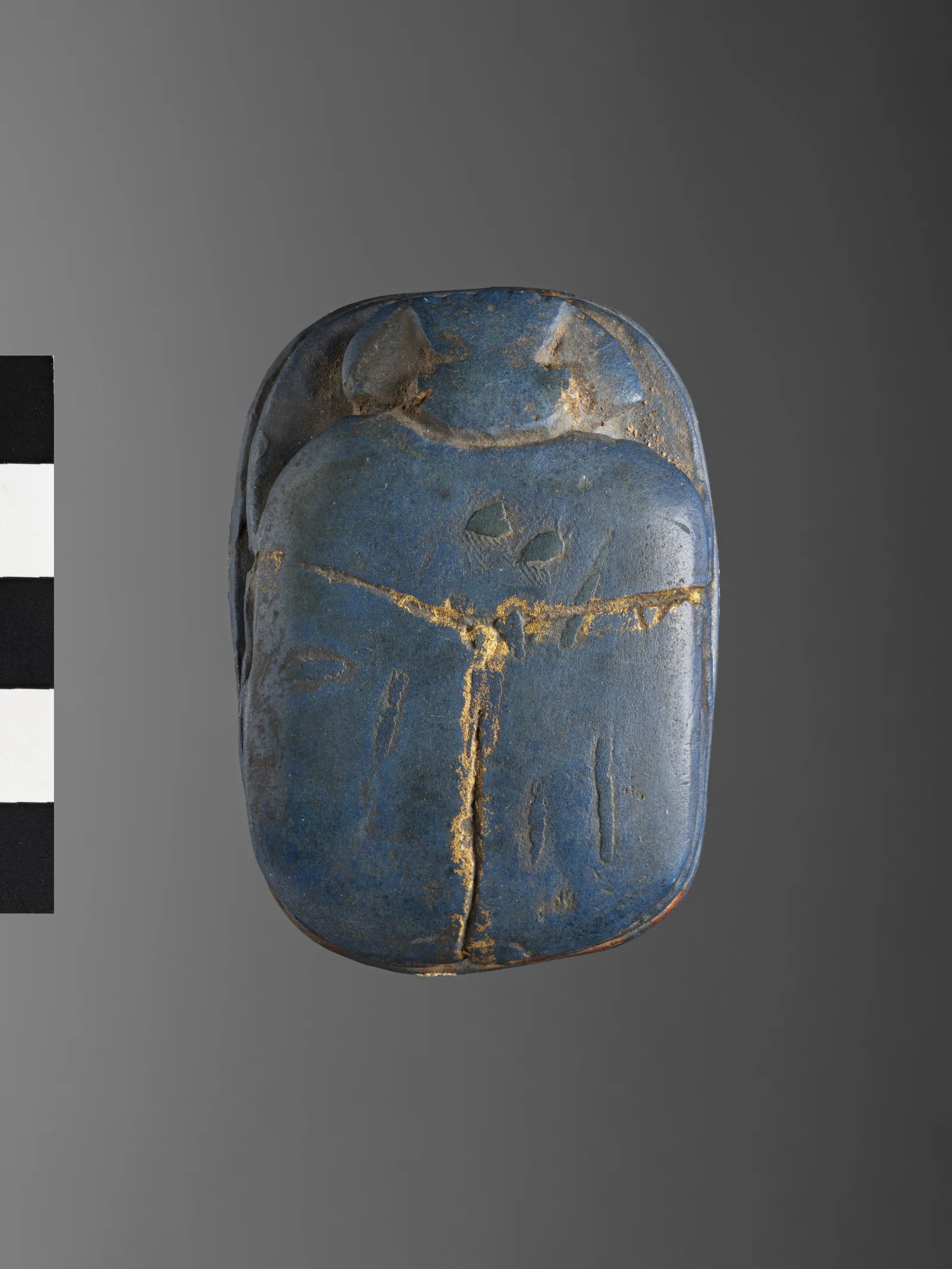
Egyptian Blue: History's First Synthetic Pigment Is Back, Lifting Fingerprints and Lighting Up Cells
A blue that Egyptian chemists made from sand, copper and lime thousands of years ago turned out, in 2013, to break apart into nanosheets that glow in the infrared. It has since become a powder that reveals fingerprints in Australia and a probe that lights up fly embryos and plant leaves in Germany. The story of an ancient material with a thoroughly modern property, and a question about our own laboratories today.
September 17, 2026 · 7 min read
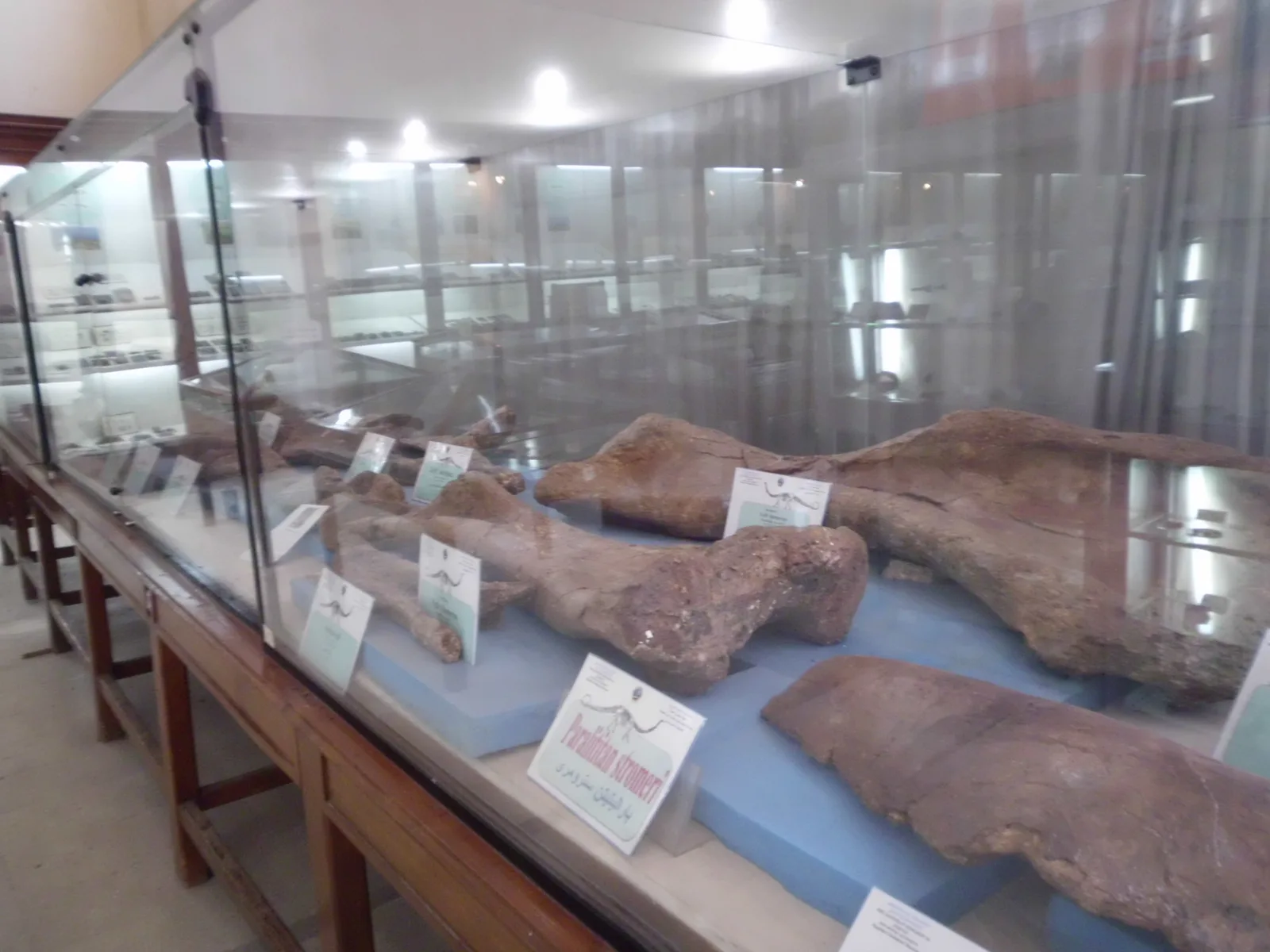
Eighty Million Years Before the Pharaohs: Mansoura's Dinosaur and the Oasis Fossils the War Burned
Egyptian students from Mansoura University pulled from the rocks of Dakhla Oasis the bones of Mansourasaurus, the most complete Late Cretaceous dinosaur skeleton ever found in Africa. A century before them, a German scientist laid the dinosaurs of Bahariya Oasis to rest in Munich, and the war burned them. The story of the Earth's archive in Egypt's desert, and of a science your child can study here.
September 8, 2026 · 7 min read
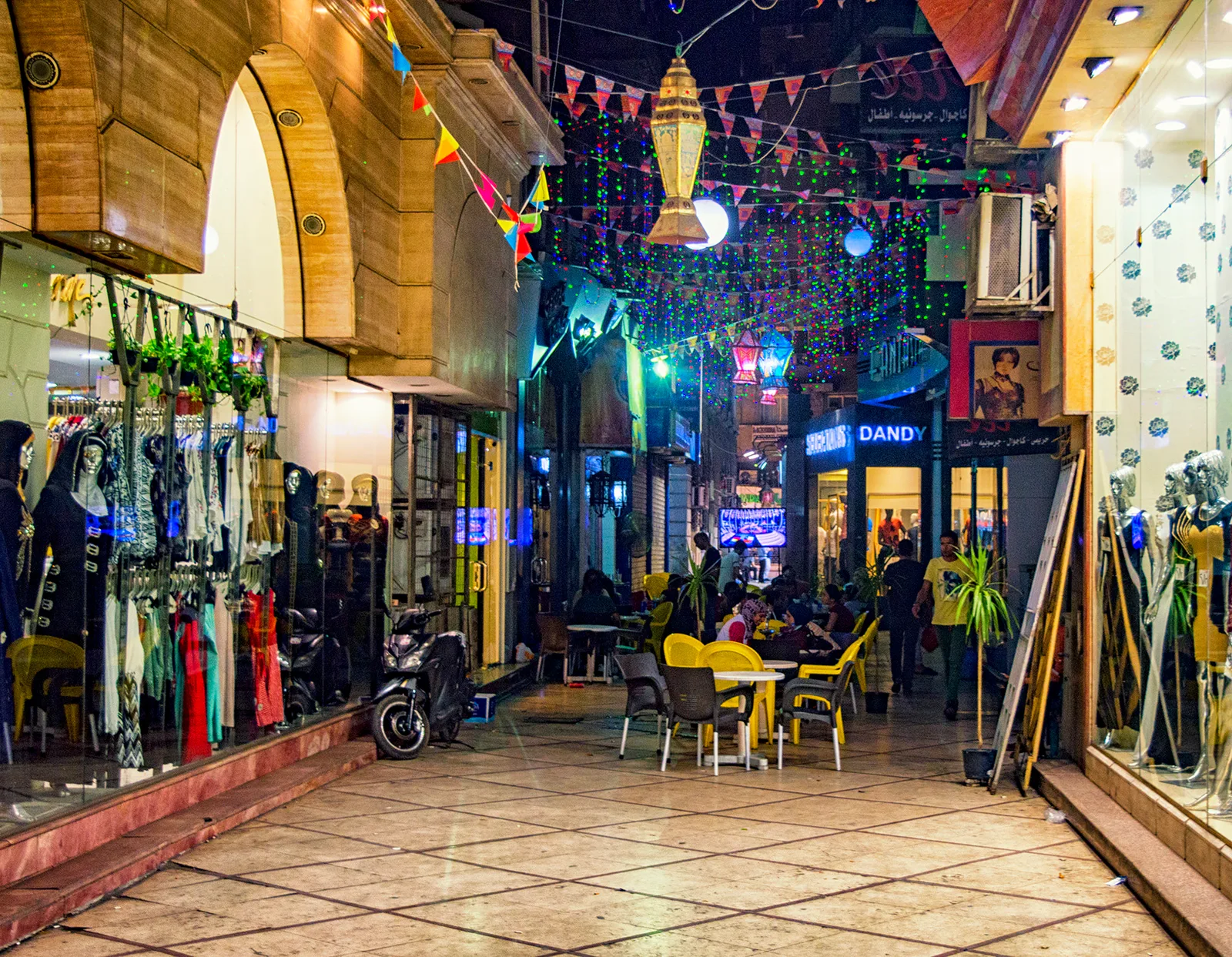
After the Final Bell, a Second School Day Begins: Evenings at the 'Sanater' on an Egyptian Street
At seven in the evening a side street is lit more by the signboards of the 'sanater', Egypt's private tutoring centres, than by its lampposts: taxis pull up and pull away, bags carry the 'sheet' instead of the textbook, and children queue on the stairs. A report from the pavement, on World Teachers' Day, on a scene every Egyptian home knows and the policies that have tried to change it since 2022.
October 5, 2026 · 7 min read