157 Years After the Suez Canal Opened: Hundreds of Species Reached the Mediterranean, and the “Rabbit Fish” Story
The canal opened to shipping 157 years ago this week, and it did more than link two ports: it joined two seas that had been separate for millions of years, starting a marine migration scientists call “Lessepsian.” The story ends at the fish counter: one species carries a poison that cooking does not destroy, while the popular name is also used for other fish that are caught, sold and eaten safely.
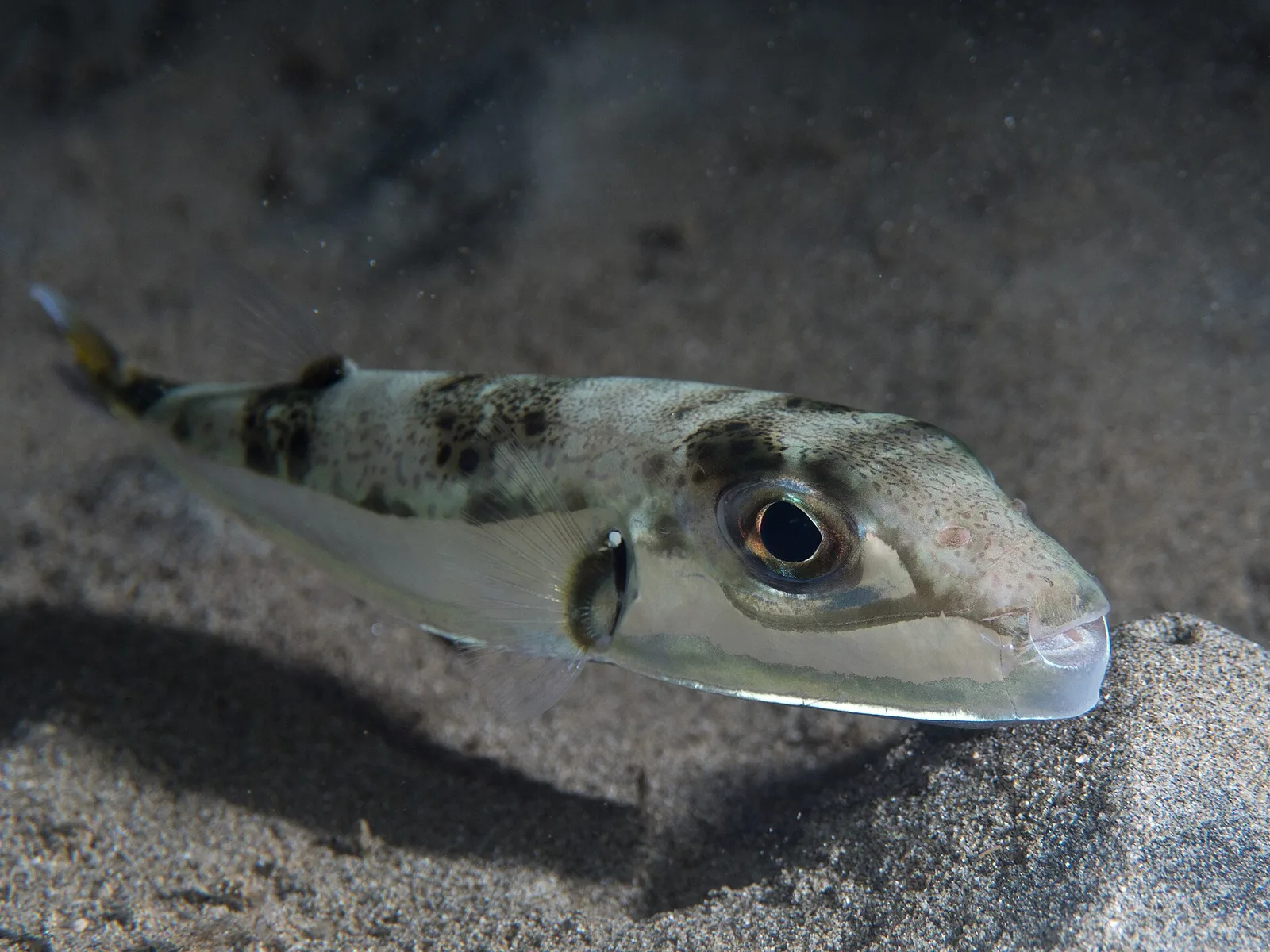
Anyone who frequents the fish markets of Egypt’s coastal cities knows that the crate on the quayside is not always a repeat of the one before. Among the mullet, sea bream and tilapia, a silvery, round-bellied fish with a small mouth and fused teeth like a cutting beak sometimes turns up. Neither the seller nor the buyer is used to it, and it carries more warnings than meat. The story of this fish does not begin out at sea. It begins in a channel dug through sand, on a distant day when the waters of two seas touched for the first time in millions of years.
It was 157 years ago this week, on November 17, 1869, that the Suez Canal opened to navigation. The Suez Canal Authority notes on its history page that digging began on April 25, 1859 at Pelusium (al-Farama), the site of present-day Port Said, that the waters of the two seas met on August 18, 1869, and that the canal measured 164 kilometers at its opening. Engineers measure the event in meters excavated and ships passing through. Marine scientists measure it differently: a continuous waterway, without locks separating two water levels, that connects the Red Sea to the Mediterranean directly and permanently.
The phenomenon has a name in the scientific literature: “Lessepsian migration,” after Ferdinand de Lesseps, the man associated with the canal project. By it, scientists mean the movement of Red Sea and Indian Ocean organisms into the Mediterranean through the canal, including fish, crustaceans, mollusks, algae and sponges. They number in the hundreds. A peer-reviewed review by Ullmann and colleagues, published in 2024 in the journal Biology, describes the Mediterranean as the marine region in the world most exposed to non-native species. It cites an inventory published in 2023 that recorded more than a thousand alien species there, a figure that is revised upward with each new inventory.
What intrigues researchers is that the traffic is nearly one-way: far more moves from south to north than the other way. The explanations in the literature combine the characteristics of the two seas with the canal’s own history. The Red Sea is saltier and poorer in nutrients, and its organisms are already adapted to warm, salty water, so they find a viable environment in the eastern Mediterranean. Mediterranean species heading the other way meet harsher conditions. In addition, a barrier of extreme salinity that once existed in the Bitter Lakes lost its force over the decades.
But the presence of an alien species in the Mediterranean does not automatically mean it swam through the canal. There is another route: ballast water that is drawn in at one port and discharged at another, along with organisms attached to ships’ hulls. Researchers tell the two routes apart through indirect evidence. First, where the species was first recorded: proximity to the canal entrance and a gradual spread northward point to active movement, while a sudden appearance inside a port far from the canal points to arrival aboard a ship. Second, the nature of the species itself, since the swimming ability of larvae and adults varies. Third, genetic analysis, which assesses how closely Mediterranean individuals are related to their Red Sea kin. As of this writing, the balance between active and passive transport remains an open scientific debate.
Nor, in the scientists’ own assessment, does the effect point in only one direction. A peer-reviewed checklist published in 2011 by Halim and Rizkalla in Mediterranean Marine Science counted 42 Red Sea fish species that had entered Egyptian Mediterranean waters. Four were new records at the time, 17 were commercially exploited, and 15 were known from a single record only. The authors concluded that these species benefit local fisheries and have little effect on the ecosystem. By contrast, the literature on invasive species places some of the newcomers among those with the highest environmental cost, when an arrival competes with a native species for food or space. That question is studied species by species and cannot be settled by one verdict on the whole phenomenon.
Among the newcomers, one species has changed the way fishermen look at their nets. Its scientific name is Lagocephalus sceleratus. It belongs to the pufferfish family, whose members inflate themselves with water or air until they become balls, and it has strong fused teeth resembling a beak. The literature attributes its first confirmed record in the Mediterranean to a paper published in 2005 by Akyol and colleagues in the Journal of Fish Biology, which says it has been recorded in the Mediterranean since 2003 and that its earliest records came from the Turkish coast in the Aegean Sea. Sightings then followed westward: a 2012 paper in BioInvasions Records documented its first appearance in the central Mediterranean, in the Gulf of Gabès in Tunisia, from a single fish caught in December 2010. The 2024 review says that six of the thirteen pufferfish species recorded in the Mediterranean entered through the Suez Canal.
In Egypt’s own waters, the clearest published, peer-reviewed evidence that the species is no longer a passing visitor but a resident is a study published in 2024 in the journal Parasitology Research. Egyptian researchers examined 134 fish of this species collected off the Alexandria coast over a season running from December to May 2022. They found a parasitic crustacean on 32 of them, about 23.9 percent according to the paper’s results. The paper says it is the first report of parasites of this species in Egypt’s Mediterranean waters, which suggests the species has settled there long enough for its ecological relationships to develop.
The same paper relays reports from local fishermen that the species is caught incidentally in large numbers, attacks fish caught in the net and damages fishing gear with its strong teeth. The 2012 paper that documented its appearance in the central Mediterranean notes that it is listed among the “100 worst” invasive species in the Mediterranean, a list published by Streftaris and Zenetos in 2006 for impacts documented on biodiversity, fisheries, health and infrastructure. In other words, what the fisherman sees in his cut net and what the researcher sees in her spreadsheet are two sides of the same phenomenon.
Before saying anything about safety, a confusion over names has to be corrected. The name “rabbit fish” (samakat al-arnab) is used locally for more than one fish, species that are entirely different in their classification. Fish of the family known in Arabic as safi or sayyagan are caught, sold and eaten in Egypt and neighboring countries, and they do not carry the poison discussed here, although the FishBase database describes the dorsal spines of some of them as venomous, causing a painful sting to anyone who handles them carelessly. The species at issue in this article is the one named by its scientific name alone. Generalizing toxicity to everything that carries the popular name is a scientific error, and it is also an injustice to wholesome fish and to those who sell them honestly. Telling species apart is the work of specialists and regulators, not of a hurried glance at a crate on the quayside.
The health dimension of this species is settled in the scientific literature. An updated review of tetrodotoxin by Katikou and colleagues, published in 2022 in Marine Drugs, says this neurotoxin dissolves in water and withstands heat, so neither frying, boiling, baking nor cooking for hours destroys it. It says the highest concentrations are in the gonads, liver and digestive tract, followed by muscle and skin, that there is no antidote to date, and that treatment of victims is supportive care in hospital. The 2024 review adds that the toxin has been found in all tissues, including the flesh, and that a cook cannot remove it during preparation. Two things follow for readers: do not eat this species at all, and go straight to the nearest hospital if you or anyone near you feels numbness in the lips or fingertips, or difficulty breathing, after eating fish.
The 2024 review states outright that this species is marketed in Egypt despite rules prohibiting its sale. In its table it lists 28 incidents of pufferfish biting or attacking people in the Mediterranean, injuring fishermen and swimmers, some to the fingers and some ending in amputation, while noting that its authors do not yet regard the attacking behavior as an imminent health hazard. The practical upshot is this: it is not a fish to be picked up by hand or tried at home. Oversight of fish markets belongs to specific bodies, among them the governorates’ health directorates. Anyone who sees this species on sale should report it to the directorate responsible for the area, not argue at the crate, and not pass judgment on any particular market or shop without evidence.
Pufferfish poisoning in Egypt is known through dated incidents, not through statistics. The case table in the 2024 review lists two non-fatal incidents for Egypt: one victim in 2004 and five in May 2022. The latter is the one the Egyptian press reported from Port Said, concerning five members of one family who showed symptoms of poisoning after eating a fish the report called by its popular name, and which prompted awareness statements from the governorate’s health directorate. The same review says Egypt has recorded no deaths from pufferfish poisoning. To date, there are no compiled, published Egyptian figures on poisonings from these fish, and a case relayed by a newspaper remains a case, not a percentage or a rate.
The scientific conclusion is simple in outline and deep in consequence: a single waterway can rearrange the map of life in an entire sea, its effects appear after generations rather than months, and they are measured with quiet instruments, such as species inventories, peer-reviewed papers on the parasites of a single fish, and fishermen’s logbooks. The most useful thing a reader can take to the fish market, then, is neither fear of the sea nor abstention from Egypt’s good fish, but calm knowledge: one species known by its name, whose verdict is not applied to others, and a silvery crate on the quayside with 157 years of a waterway joining two seas behind it.
Related Stories
On World Science Day, how does a non-specialist read a scientific study, and who opens the door to one in Egypt?
A message arrives after midnight beginning “a new study confirms”, and anyone who tries to check it hits a page demanding tens of dollars. On World Science Day for Peace and Development, we explain the legal routes to studies in Egypt, what peer review means, and why one study of twenty people is not a final verdict.
November 10, 2026 · 9 min read
Alexandria's 'Day of Terror': What Happened in July 365, and How Science Watches the Med
On November 5 the world marks World Tsunami Awareness Day. We look back to July 21, 365 CE, when the sea withdrew from Alexandria's shore and then returned, and ask: what does science say about that story today? Why is Mediterranean warning time measured in minutes, not hours? And how did Alexandria become the first 'Tsunami Ready' city in Egypt and Africa?
November 5, 2026 · 7 min read
October 12, 1999: The Day a Son of Damanhur Watched Atoms Move — Ahmed Zewail and Femtochemistry
Twenty-seven years ago today, the Royal Swedish Academy of Sciences announced that Ahmed Zewail had won the Nobel Prize in Chemistry for "his studies of the transition states of chemical reactions using femtosecond spectroscopy." Here, in everyday language, we explain what a femtosecond is, how scientists managed to capture the instant a chemical bond breaks, and what Law 161 of 2012 and its 2019 amendment say about the city that bears his name.
October 12, 2026 · 8 min read