One River, Eleven Nations: Nile Basin Diplomacy Explained
Egypt draws more than nine tenths of its fresh water from a river shared by eleven countries — and sits last in line. From the 1929 and 1959 agreements to the Nile Basin Initiative and the Grand Ethiopian Renaissance Dam, here is the map of law, interests and negotiation behind one of Egypt's defining national security files.
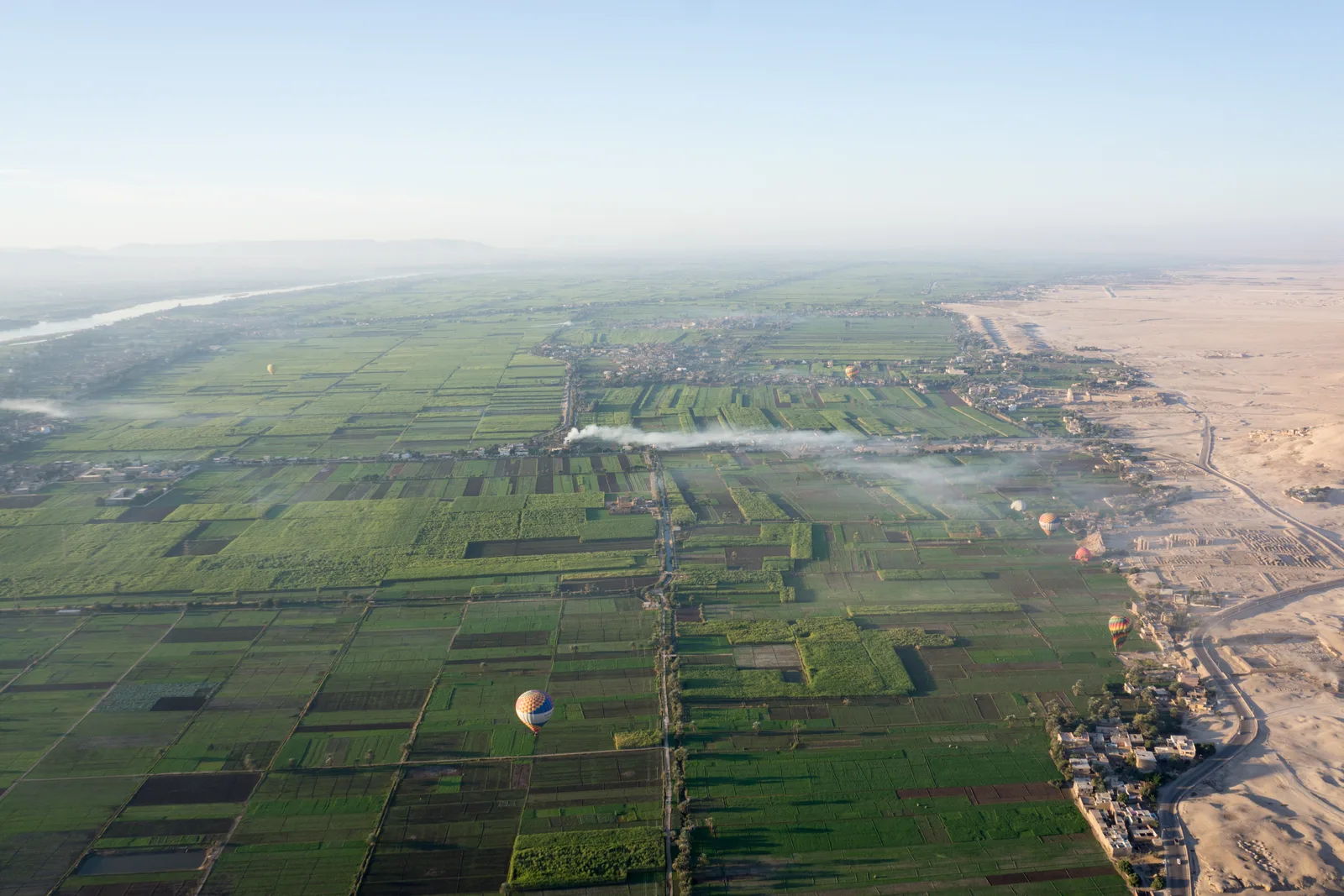
The Nile is not simply a river that flows through Egypt; it is the reason Egypt exists, as the Greek historian Herodotus observed when he called the country 'the gift of the Nile'. Today the river's basin is shared by eleven countries stretching from the equatorial lakes of Africa to the Mediterranean, and Egypt stands at the very end of the line, depending on the river for more than nine tenths of its renewable fresh water. That is what makes basin diplomacy an existential file in the fullest sense.
The river runs some 6,650 kilometres, making it the longest in the world or among the longest, fed by two main branches: the White Nile descending from the equatorial lake plateau, and the Blue Nile plunging from the Ethiopian highlands, which together with the Atbara contributes the lion's share — around eighty-five per cent — of the water that reaches Egypt, above all in the flood season.
Egypt's dependence is near absolute. Rainfall is scarce, desert covers most of the country, and with the population past one hundred million, the per-capita share of renewable water has fallen well below the internationally recognised water-poverty line of one thousand cubic metres a year — in recent years approaching half that threshold.
Egypt's legal position rests on historic agreements, chiefly the 1929 treaty concluded with Britain on behalf of its East African colonies and the 1959 agreement with Sudan, which divided the river's yield as measured at Aswan: about 55.5 billion cubic metres for Egypt and 18.5 billion for Sudan. The upstream states, however, were never parties to these agreements and openly reject them as a colonial legacy that does not bind them.
The basin countries have tried to build a common framework: first through the Nile Basin Initiative, launched in 1999 as a forum for technical cooperation and confidence-building, then through the Cooperative Framework Agreement signed at Entebbe in 2010, which several upstream states joined while Egypt and Sudan objected to provisions touching on water security and historic rights. To this day the basin has no legal framework that gathers all its states.
The Grand Ethiopian Renaissance Dam placed the dispute at the centre of international politics. Since construction began in 2011 on the Blue Nile near the Sudanese border, it has grown into one of Africa's largest hydropower projects, with a reservoir of roughly seventy-four billion cubic metres. Ethiopia sees it as an engine of development that will electrify tens of millions of homes; Cairo and Khartoum see a project touching their lifeline unless it is governed by binding rules.
Egypt's and Sudan's demands centre on a legally binding agreement regulating the filling of the reservoir and the rules of the dam's operation, with clear protocols for prolonged drought years, regular mechanisms for data exchange, and guarantees of structural safety — so that management of the river does not become a matter of unilateral decisions taken upstream whose consequences are borne downstream.
The negotiating track has passed through several stations, most notably the Declaration of Principles signed by the three countries' leaders in Khartoum in 2015, followed by rounds sponsored by the United States and the World Bank and then by the African Union — without reaching a binding accord. Ethiopia meanwhile proceeded with successive fillings across rainy seasons, and the dam's turbines have begun generating electricity.
At home, Egypt is not waiting idly for the talks to conclude. It has expanded the treatment and reuse of agricultural drainage water through giant plants — led by Bahr El-Baqar, ranked among the largest in the world — alongside seawater desalination on the coasts, the rehabilitation and lining of canals, more efficient field irrigation, and limits on the acreage of water-hungry crops such as rice.
Many experts insist the river can be a bridge rather than a battleground. Electricity interconnection, power trade and joint investment in storage, agriculture and navigation could yield benefits for the whole basin exceeding any unilateral gain — especially as basin populations grow steadily and climate change presses on every state without exception.
For Egyptian and Arab readers, this remains a national security story par excellence. Water here is not merely an economic resource but the condition of life itself, which is why Nile basin diplomacy — its negotiations, summits and legal frameworks — will remain one of the foremost fronts of Egyptian foreign policy for decades to come.
Related Stories
A Hole in the Sky, Mended by a Treaty: The Montreal Protocol and Egypt’s Part in Saving the Ozone Layer
On 16 September the world marks the International Day for the Preservation of the Ozone Layer, the anniversary of a treaty ratified by every country on Earth that actually worked. From a 1974 scientific paper to the 1987 Montreal signing, Egypt's 1988 ratification and the 2023 Kigali Amendment: the story of a refrigerant cylinder in a technician's hand, and why scientists expect the sky to heal around 2040.
September 16, 2026 · 7 min read
The Arab League: The House of the Arabs, Whose Windows Look Out on Tahrir Square
A few steps from Tahrir Square stands "the House of the Arabs": one of the oldest regional organisations in the world, born in Cairo before the United Nations Charter itself. How do its summits and its secretariat actually work? Why do its resolutions bind only those who accept them? And what lies behind the departure to Tunis and the return home? A tour inside an old neighbour we walk past every day and barely know.
September 2, 2026 · 7 min read
Beneath the Blue Ceiling: How the United Nations Works, and Who Holds the Veto at the Security Council
Every time a crisis flares, you hear that the Security Council has met and that some state has raised its veto. But what actually happens beneath the blue ceiling? A journey from the General Assembly hall to the horseshoe table: how a UN resolution is born, when it binds, how a single word kills it, and where Egypt sits in the picture.
August 26, 2026 · 8 min read