A Bomb on Wheels: Speeding in Dilapidated Cars Is Contempt for Human Life
Half-working brakes, bald tires, dead lights — and a driver flying down the road as if the car had just rolled off the factory line. A speeding, dilapidated car is not transportation; it is a moving hazard threatening every family on the road. That's just wrong: your freedom behind the wheel ends at other people's right to reach home alive.
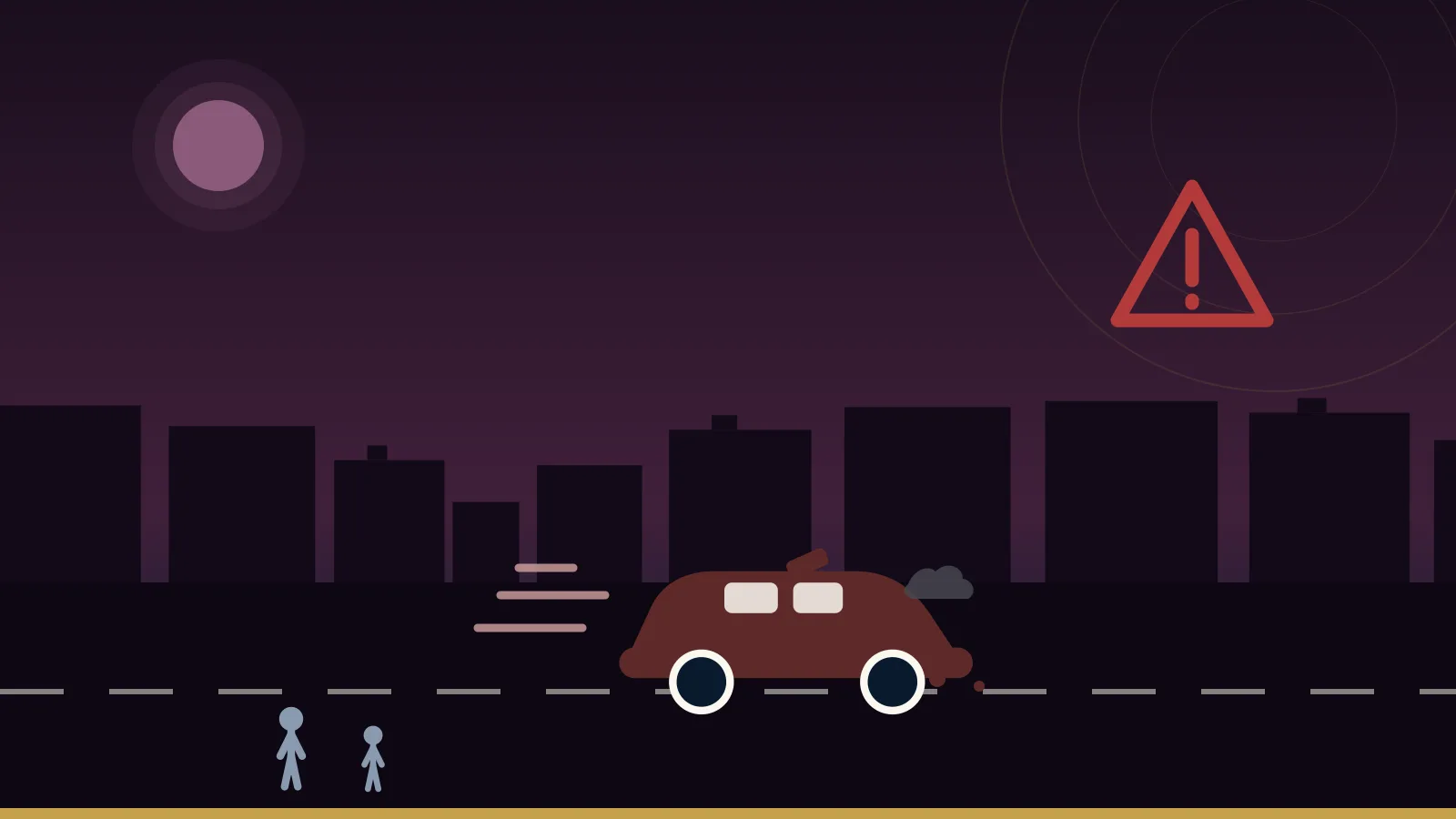
We have all seen it on the highways and inside the cities: a car whose body rust has eaten through, swaying as it overtakes, one taillight broken and another dead, black smoke pouring from its exhaust, tires worn smooth from years of use. What is frightening is not its condition — its owner may well be excused by hard circumstances. What is frightening is that it devours the road at reckless speed, weaving left and right, as if its driver were piloting a race car rather than a collapsing frame.
Let us say it plainly: driving a mechanically unfit car at high speed is neither cleverness nor necessity — it is a moral assault on everyone who shares the road with you. Brakes that need two pumps to respond, a bald tire that slides at the first patch of moisture, a loose steering wheel: these are not technical details. They are the distance between a near-miss and a catastrophe that shatters entire families.
Picture the scene we wish on no one: a crowded road at rush hour, a battered microbus surging forward to overtake, then suddenly a slowing car ahead. The driver of the sound car brakes and the car responds. The dilapidated one responds late, or not at all. In those seconds the price is not paid by the car's owner alone, but by the family in the next lane, the worker at the roadside, and a passenger whose only fault was boarding the wrong vehicle.
And here we must pause at a painful irony: many of these vehicles work in transporting people themselves — microbuses and taxis whose service life expired years ago. The potential victim pays a fare for her own ride toward danger, with no luxury of choice in areas that offer no alternative. That multiplies the moral responsibility of the owner and driver — and multiplies it again for the authorities that supposedly inspected and licensed the vehicle.
The law is not absent on paper. Egypt's traffic law makes technical inspection a condition for licensing a vehicle and renewing its registration, and it penalises driving an unfit vehicle and exceeding speed limits. So how do vehicles that any passerby can see are unfit still move among us? The unfortunate answer is known to all: an inspection that sometimes becomes a formality, and a driver betting that no one will stop him.
But before we place the whole burden on enforcement, let us face ourselves: a man who drives a car he knows has weak brakes, and then speeds in it, does not need a traffic checkpoint to know he is wrong. He knows. He simply gambles on his luck every day — and the problem is that the stake is not his life alone, but the lives of people who never agreed to join his bet.
And we will say it without evasion, exactly as we say it to the owner of the luxury car who throws garbage from his window: poverty is not an accusation, and hardship is no disgrace — but reckless speed in a dilapidated car is not a fate imposed on anyone. You can drive that same car slowly and carefully until you can afford to repair it. Driving a weak car slowly is honourable humility; driving it fast is lethal arrogance.
What is required of the driver and owner: be honest with yourself about your car's condition, and fix whatever touches safety before anything else — brakes, tires and lights are not accessories. If you cannot repair yet, then at least drive at a speed that respects your vehicle's state. And whoever earns his living carrying passengers bears double responsibility, because the people paying him the fare have entrusted him with their lives.
What is required of the state: a real technical inspection rather than a routine stamp; road enforcement that targets visibly decrepit vehicles before accidents happen, not after; and genuine, affordable replacement programmes for aging vehicles — especially those in mass transport — so the poor driver's only option is never to gamble with people's lives.
The road is common property, and its weakest users — pedestrians, children, transit passengers — deserve that its strongest users be its most careful. A dilapidated car crawling along earns our understanding and its owner our respect. A dilapidated car flying down the road is a bomb on wheels. That's just wrong — and people's lives are no arena for testing anyone's luck.
Related Stories
Keda Ghalat (That's Just Wrong): Harming an Animal Has Been a Crime Under Egypt's Penal Code Since 1937
A neighbour sets out poisoned bowls beside the school wall; a cart driver beats his donkey across the face to make it haul a load beyond its strength. Many assume that "just an animal" means no law protects it. In fact, Articles 355, 356 and 357 of the Penal Code punish killing, poisoning and harming animals with penalties that go as far as prison. On the eve of World Animal Day, we explain what the law says and what the right thing to do is.
October 3, 2026 · 6 min read
Four on a Motorcycle and No Helmet: A Bare Head Is the Dearest Thing a Family Can Lose on the Road
In the second week of school the same scene repeats: a father driving, one child in front, another behind, the mother clutching the bags, and not a single helmet among them. Press reports citing CAPMAS show deaths jumping from 190 to 897 between 2020 and 2024, while a Cochrane review finds a helmet alone cuts the risk of death by 42%. The law has punished the bare head since 1999, fine raised in 2008. So why do we not comply?
September 23, 2026 · 8 min read
"A Hook-Up on the Cable" Is No Clever Trick: Electricity Theft Is a Crime the Whole Neighbourhood Pays For
A bare wire dangling from a lamp post to a balcony, an air conditioner on a meter that never moves, and a fuse blowing for the third time, plunging a bill-paying neighbour into darkness. Article 71 of the Electricity Law calls this unlawful appropriation of current, punished by prison and a fine, while a tougher amendment awaits the House of Representatives. What does a whole street lose from one hook-up? And what is the right alternative?
September 14, 2026 · 7 min read